
Maggie St. Thomas’s unique upbringing sparked a lifelong passion for capturing special moments within the world of punk rock.
Growing up, St. Thomas had an unusual childhood. Even as a young girl, around six years old, her dad would take her to punk rock shows featuring bands like Motörhead and TSOL, even on school nights. When she was eleven, she randomly brought a camera to a political rally at Los Angeles City Hall where bands like L7 and Red Hot Chili Peppers were playing. That’s when she realized she loved photography, and for the next thirty years, her life revolved around photographing punk rock and taking pictures.
As a huge fan of her work, I’m so excited about Susan St. Thomas’s new book, “Subject: Punk!” She’s a Southern California photographer who really got the punk scene, and this book is a collection of her incredible photos from the ’90s until now. It’s not just pictures of bands like the Ramones and Motörhead on stage – she captured a lot of intimate, behind-the-scenes moments with musicians like Lemmy and Johnny Thunders. What’s even cooler is that it also includes her own writing – music journalism and interviews she did with legends like Wayne Kramer and the Ramones. The second edition just came out in October, and it’s a must-have for anyone who loves punk rock photography.
This interview has been edited for length and clarity.
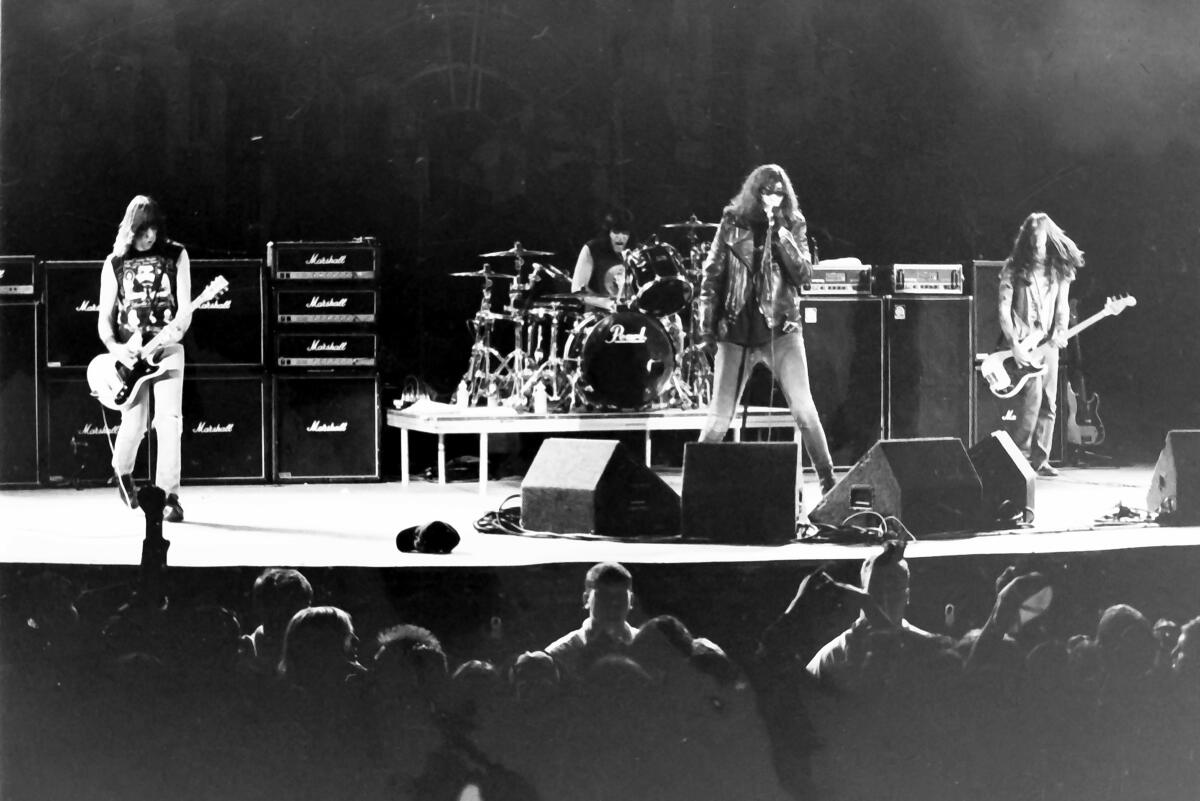
Your new book, “Subject: Punk,” showcases your photos of the Southern California punk scene from the 1990s until now. You photographed a lot of amazing bands early in your career, but you always hoped to photograph the Ramones. What was it like when you finally got the chance?
I’ll always remember June 17, 1995 – the day I photographed the Ramones. I even still have the signed T-shirt, which I’ve barely washed and only worn a few times. Seeing them meant everything to me, especially since I grew up watching “Rock ‘n’ Roll High School” on TV – my dad would rush me home to catch it! I had no idea what to expect, but watching the Ramones, I was instantly hooked. That concert was huge, with bands like Rage Against the Machine, Hole, White Zombie, and Sublime also performing. During the Ramones’ set, I felt like I’d achieved a lifelong dream. It felt like a calling, and I knew I wanted to pursue photography. I’m so grateful to still be here and experience everything life has offered since then.
You developed a close relationship with Arturo Vega, the Mexican artist famous for designing the Ramones’ instantly recognizable logo – many fans even consider him an unofficial member of the band, calling him “the fifth Ramone.” Can you describe what your relationship with him was like, and how he helped you with your creative work?
Let me tell you, Arturo Vega was a phenomenal guy – incredibly supportive and just did so much for everyone around him. He really went to bat for me and helped me land an interview with Johnny Ramone, which was huge, considering how private Johnny was. I was honestly blown away. Arturo always believed in me, even early on, constantly urging me to write a book. I still have an email from him, dated 2001, where he shared some amazing thoughts about my work with the Ramones – it’s something I truly cherish. I remember being in his loft in New York, photographing him, and CJ Ramone actually walked in while Arturo was showing me Ramones artwork and telling incredible stories. He’d point to things like a stain on the floor and say, “That’s where Dee Dee burned candles!” Arturo was a walking encyclopedia of Ramones history, and I admired him so much. He didn’t just see the Ramones as a band; he saw them as a complete work of art. Honestly, I owe so much to Arturo Vega.

Your book paints a vivid picture of your unusual childhood – instead of typical bedtime stories, you spent your nights at rock concerts with your dad, seeing bands like Motörhead, Johnny Thunders, and TSOL. How much did your dad influence your love of music, and how did that contribute to your career as a photographer?
Growing up with my father was definitely unusual. As a child, I just assumed everyone’s life was like mine, but I later realized it wasn’t. It was a really different experience than most kids had. I’ll always remember telling Lemmy Kilmister, while we were working on a portrait for a book, that I’d seen Motörhead in concert when I was only six years old. He gave me a thumbs up and said that was what real rock ‘n’ roll was all about.
I realized what I wanted to do with my life very young, and I’m grateful for that. It happened in sixth grade when I skipped school to go with my dad to Los Angeles. He was filming a show, and I just wanted to get out of class. We drove in his classic 1984 El Camino to a rally at L.A. City Hall, where bands like the Red Hot Chili Peppers and L7 performed. I was right at the front of the crowd, filming with my 8-millimeter camera while my dad documented the event. It was amazing being a kid, looking back and seeing thousands of people. That experience made school seem pretty unimportant.

Once you realized this was what you were meant to do, which bands did you start photographing first?
Shortly after that, in 1992, I photographed Dr. Timothy Leary with my dad at Chapman University. Then, in 1993, I began photographing anarchy and crustcore punk bands at the Hong Kong Cafe in Los Angeles. I also shot bands like MDC and Total Chaos while I was there.

Can you describe what your experience was like as a female concert photographer in the 1990s, considering the field was largely dominated by men at that time?
Even today, this field is largely dominated by men. It’s often a challenge for women, as I’m sure many can relate. Things haven’t always been easy, and in some ways, they still aren’t. From my experience, women often have to work harder than men to earn the same level of respect, not just in photography, but in most careers.
What tips would you give to women hoping to start a career in concert photography and succeed in this field?
As a film lover and creator, I quickly learned you need a lot of resilience and self-belief. I didn’t come from a fancy film school, I was learning everything as I went, and back then, working with film was really demanding – one mistake and you had to start over. I have boxes of undeveloped film with blurry shots and exposure problems, but I just kept shooting. It’s wonderful when people cheer you on, but you can’t rely on that for growth. You have to believe in your vision, even when you’re the only one, and just keep pushing forward. That’s what really matters.

The book “Subject: Punk” documents the history of the Southern California punk music scene over time. But beyond just being a photo collection, what’s the deeper meaning or significance of this book?
This book is deeply personal to me – it truly represents my heart and soul. It was a real struggle to create, with many obstacles along the way, but I received incredible support from some wonderful people. The artists featured on the cover – Exene Cervenka of X, Lou Koller of Sick of It All, Corey Parks (from Die Hunns and Nashville Pussy), Gina Volpe of the Lunachicks, and the legacy of the Ramones – all believed in me and this project. I poured everything I had into it – every ounce of effort, every tear, every drop of sweat. This book, “Subject: Punk,” is completely authentic and honest.

What’s your favorite photograph in the book?
You know, every photo I’ve taken of the Ramones holds a special place in my heart, but flipping through these pages… it’s like looking back at my whole life. Some of these were shot thirty years ago! It reminds me of everything I did when I was younger, and I’m just so grateful I’m still around to see this book come together. So many people in here are no longer with us, and it really hits me how lucky I am to still be experiencing life and seeing the results of my work. Honestly, just being able to talk about it now is amazing – it’s the best gift I could ask for. I look at this book and I just think, ‘Wow, I actually did it.’ And it feels perfect that a quote from Arturo Vega, something he told me over twenty years ago, is finally right where it belongs – in the book he always encouraged me to create. And here it is!

Other than the Ramones gig, what was the most memorable show or band you’ve ever shot?
After my mom died – an experience that solidified my belief in something bigger than ourselves – I went to see Etta James perform. I somehow managed to get a press pass, allowing me to bring my camera inside. After the show, I navigated past her numerous security guards and approached her, handing her a magazine featuring my photography. She was surprised and delighted, asking if it was for her. I happily confirmed it was, and we had a wonderful conversation. I even got to take some photos of her holding the magazine. Moments like that feel truly magical – it’s hard to explain how I was able to get past all that security on my own. It really makes you believe there’s something greater at play.
What main idea or feeling do you hope readers experience after engaging with your work in this book?
I want people to remember to never give up on their dreams and always believe in themselves. Life is challenging, and it’s easy to forget the beautiful moments that become lasting memories. Looking back at this book, I’m incredibly moved, realizing the amazing journey it represents – my journey. It’s humbling to think these photos, started as a teenager, are now part of a book celebrating an entire culture. Whatever your passion is, pursue it wholeheartedly, because you absolutely can. We all have a unique magic within us, and it’s vital to nurture and never lose that belief. That’s the main message I hope readers take away from this book.
Read More
- Clash Royale Best Boss Bandit Champion decks
- Vampire’s Fall 2 redeem codes and how to use them (June 2025)
- World Eternal Online promo codes and how to use them (September 2025)
- How to find the Roaming Oak Tree in Heartopia
- Mobile Legends January 2026 Leaks: Upcoming new skins, heroes, events and more
- Best Arena 9 Decks in Clast Royale
- ATHENA: Blood Twins Hero Tier List
- Brawl Stars December 2025 Brawl Talk: Two New Brawlers, Buffie, Vault, New Skins, Game Modes, and more
- Clash Royale Furnace Evolution best decks guide
- Clash Royale Witch Evolution best decks guide
2025-11-12 14:36