Summary
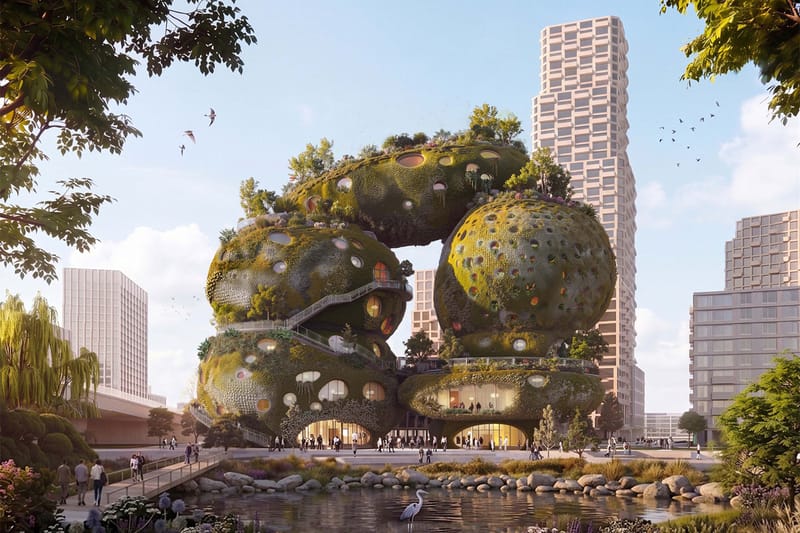
MVRDV has won the international design competition for Rotterdam’s new Shift Embassy with their innovative “Rotterdam ROCKS!” concept. The building will feature a unique design of stacked, rock-like structures, intriguing cave-like spaces, and terraces resembling vertical tidal parks. Located in the Waterkant district, this project emphasizes sustainable, low-carbon construction and incorporates elements to support local biodiversity.
I’m so excited MVRDV won the competition to design the Shift Embassy in Rotterdam! Their design, called “Rotterdam ROCKS!”, is seriously cool. It’s not just a building, it’s like a landscape and a building all in one. They’ve created these two towers that look like big, rounded rocks – it’s a really striking and innovative way to think about sustainability and connecting with the city’s culture. I can’t wait to see it built!
Okay, so imagine this building isn’t just on the river, it feels like it grows out of it! It’s basically a vertical park – tons of plants spilling down the sides in terraces, cool water features, and habitats built to bring wildlife into the city. Inside, it’s designed like a cave system, which is awesome; you wander through these interconnected spaces as you explore the galleries and public areas. And the centerpiece? This incredible space called ‘The Elysium.’ It’s huge – over 50,000 square feet! – and totally immersive. They want to show you what sustainable living could look like with interactive exhibits and storytelling; it’s less about seeing the future and more about experiencing it.
This large complex, covering 25,000 square meters, will be more than just an exhibition space. It’s designed as a lively destination with a 200-room hotel, meeting rooms, learning centers, a food court, and a viewing platform. The project is also committed to sustainability, using recycled steel, plant-based materials, and low-carbon concrete – even exploring innovative building techniques like robotic construction and large-scale 3D printing. In keeping with its open approach, the building will track and share real-time data on its energy and water usage, as well as how its materials are performing. This allows it to learn and improve over time as new environmental technologies become available.
2026-07-24 15:26