
Director Rob Reiner once quipped that he wanted his tombstone to simply say, “Now I’m in this place!”
It feels way too soon to be talking about Rob Reiner like this. Thinking back on his incredible career – over five decades! – what always struck me was how he never settled into one thing. He jumped between genres so effortlessly, from the hilarious mockumentary “This Is Spinal Tap” to genuinely scary films like “Misery,” then to intense thrillers like “A Few Good Men” and heartwarming stories like “Stand by Me.” He even did both silly teen comedies and really smart romantic comedies like “When Harry Met Sally….” He just seemed to always be having fun, and in doing so, gave us so many of the movies we all love.
If I were stranded on a desert island and could only have one movie from all of Hollywood, I’d pick Rob Reiner’s 1987 film, “The Princess Bride.” It’s a perfect example of adventure, comedy, and romance—plus, it has fantasy elements too! It’s everything you could want in a movie, all packed into under 100 minutes.
Those films represent just the first seven movies directed by Rob Reiner, a remarkably consistent run of quality worthy of celebration – almost as impressive as the 20 bottles of Beaujolais Nouveau he once saw Andre the Giant consume in a single day while filming “The Princess Bride.”
Movies
Rob Reiner directed a wide range of films, successfully moving between different genres throughout his career. He’s known for beloved movies like ‘This Is Spinal Tap,’ ‘The Princess Bride,’ ‘When Harry Met Sally,’ and ‘Misery.’
Beyond just his achievements, I admire Reiner for being an artist who prioritized creative freedom over financial gain. He consistently defied expectations and resisted being pigeonholed by the industry.
I remember hearing how tough it was for Rob at the beginning. Being Carl Reiner’s son was a huge shadow to step out from under – people would just assume that was all there was to him. And his dad, as amazing as he was, didn’t immediately see a performer in Rob. He actually wanted him to be an athlete or a doctor! Luckily, Norman Lear, who knew the family, saw something special. He told everyone he was cracking up watching young Rob just playing jacks – he knew he was funny, even then.
In 1971, when Norman Lear offered him the role of Michael “Meathead” Stivic – Archie Bunker’s son-in-law – Reiner was still trying to figure out who he was as an actor. While the role brought him fame, he later realized it didn’t represent the kind of identity he was looking for.
At 23, Rob Reiner was tired of being seen as the typical 1960s rebel – a role he’d played many times, even with a quick appearance on “The Beverly Hillbillies.” He agreed to play Meathead on “All in the Family” thinking the show’s controversial and offensive humor wouldn’t last beyond the first season. However, the sitcom became a massive hit, topping the ratings for eight seasons.
Rob Reiner jokingly complained in 1985 that people still called him ‘Meathead,’ and he felt that role would always define him. As someone who only knows his later work, I hope he realized that many fans didn’t consider ‘Meathead’ to be among his best or most memorable achievements.

Rob Reiner, the director of popular films like ‘When Harry Met Sally’ and ‘The Princess Bride,’ passed away on Sunday at his home in Brentwood. He was 78 years old. His wife was also found deceased.
However, Reiner’s subsequent decision is what truly shaped his career. Even though he’d already won two Emmys and didn’t have many other opportunities lined up, he rejected offers worth $1 or $2 million a year to appear in spin-offs of “All in the Family.” Similar to his character Meathead, who left his wife for a new lifestyle, Reiner gave up a guaranteed income to build his own reputation. He was determined to see if he could succeed as a director.
He showed what he wanted to do with two very different comedies released one after the other: the 1984 fake documentary “This Is Spinal Tap” and the 1985 romantic comedy “The Sure Thing,” starring John Cusack and Daphne Zuniga as teenagers on a road trip. Though the films seem unrelated, both were Reiner’s way of playfully mocking common Hollywood clichés. “Spinal Tap” parodied serious rock documentary films like “The Last Waltz,” while “The Sure Thing” aimed to create a teen comedy that wasn’t based on the crude humor of films like “Porky’s.”
Obey a studio formula? Absolutely not. He didn’t even want to repeat himself.
Looking at Rob Reiner’s career, you could say it’s defined by doing the unexpected – constantly going against the grain. But you could also see it as a drive to personally validate his own talent, and perhaps earn his father’s approval. He’s said the night his father, Carl Reiner, truly complimented him was a pivotal moment in his life.
“Stand by Me” is a deeply moving and genuine film, and a real achievement for director Rob Reiner – it’s a story his own father never could have brought to life. Reiner faced resistance from studios who didn’t support his unique vision. Thankfully, Norman Lear stepped in to fund Reiner’s early work, including “Stand by Me” when production was halted just before filming began. Lear’s $8 million investment ultimately paid off, as the film went on to earn $52 million at the box office.
Interestingly, getting “The Princess Bride” made wasn’t any simpler. Studio executives consistently pushed Reiner to recreate the success of his previous film. His father, who initially declined to adapt William Goldman’s novel, surprisingly passed the project—considered impossible to film—on to him. Reiner accepted the challenge, and Norman Lear ultimately provided the funding.
Rob Reiner felt he had more to offer creatively, but he wasn’t sure audiences would embrace it. That’s why he started his own production company, Castle Rock Entertainment, in 1987 – to avoid needing anyone else’s permission to pursue his vision, as he explained to the Los Angeles Times.

Movies
Singer Reiner, starting his career as a photographer and later becoming a producer, worked with director Rob Reiner on various social and political issues. He even had a hand in shaping the famous ending of the film “When Harry Met Sally.”
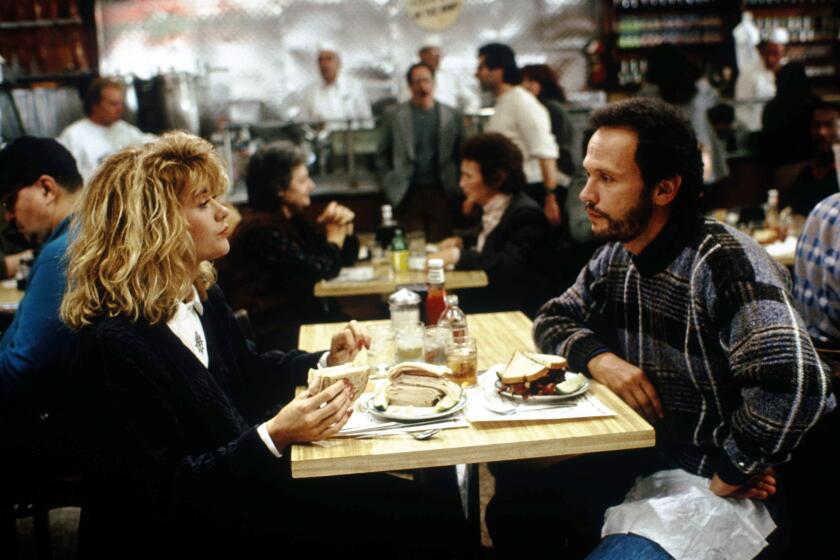
Many consider “When Harry Met Sally…” to be Rob Reiner’s most personal film. Freshly divorced from Penny Marshall in 1981, Reiner shared his frustrations with dating to his friend Nora Ephron, who used his experiences as inspiration for the character of Harry, played by Billy Crystal. Famously, Reiner demonstrated the now-iconic orgasm scene for Meg Ryan, with his mother, Estelle, present as an extra – she’s the woman who famously says, “I’ll have what she’s having.” During a lunch break on set, the cinematographer, Barry Sonnenfeld, introduced Reiner to a photographer named Michele Singer. They married before the film’s release, which led Reiner to change the ending from a sad separation to a joyful reunion.
I think I’ll watch that movie again to pay tribute to them. It’s easily the best romantic comedy made in recent years – smart, funny, and genuinely touching. It was such a huge success that he was encouraged to make something similar right away. He even said people were constantly telling him to keep making films like that one.
If you want to understand Rob Reiner’s independent spirit, I’d recommend watching “Misery,” the 1990 thriller he directed. It’s a darkly humorous and often disturbing film about a novelist held captive.
Inspired by Stephen King’s own experiences, the story explores his fears about how fans react to his writing. After his attempt to write a fantasy novel for young adults, “The Eyes of the Dragon,” wasn’t well-received, King imagined what might happen if a fan took things to the extreme. In the film, successful author Paul Sheldon (James Caan) is held captive and threatened by his obsessed fan, Annie Wilkes (Kathy Bates), who demands he resurrect a beloved character he previously killed off by writing a new sequel.
Naturally, Reiner saw his own hurdles in “Misery.”
He explained that he connected with the character’s desire for a fresh start and personal growth. He was drawn to the story ‘Misery’ because it captured the frightening feeling that comes with significant life changes.
Reiner’s personal feelings – his worries, ambitions, and inquisitive nature – deeply influenced his films. He connected with audiences without becoming overly identified as the sole creative force, instead allowing the unique qualities of each film to shine.
The director explained to journalist Robert J. Emery that his goal in filmmaking was to create an immersive experience where the audience wasn’t distracted by the technical aspects – things like the acting, script, or camera work. He aimed for everything to feel seamless. Ultimately, he hoped each of his films would explore some aspect of the human condition and the challenges people face.
Reiner consistently made excellent films, with many considered true masterpieces. His movies were so captivating that audiences always looked forward to his next project. It’s incredibly sad to think there won’t be any more.
Read More
- Clash Royale Best Boss Bandit Champion decks
- Vampire’s Fall 2 redeem codes and how to use them (June 2025)
- Mobile Legends January 2026 Leaks: Upcoming new skins, heroes, events and more
- Clash Royale Furnace Evolution best decks guide
- M7 Pass Event Guide: All you need to know
- Clash of Clans January 2026: List of Weekly Events, Challenges, and Rewards
- Best Arena 9 Decks in Clast Royale
- Clash Royale Season 79 “Fire and Ice” January 2026 Update and Balance Changes
- World Eternal Online promo codes and how to use them (September 2025)
- Clash Royale Witch Evolution best decks guide
2025-12-15 23:32