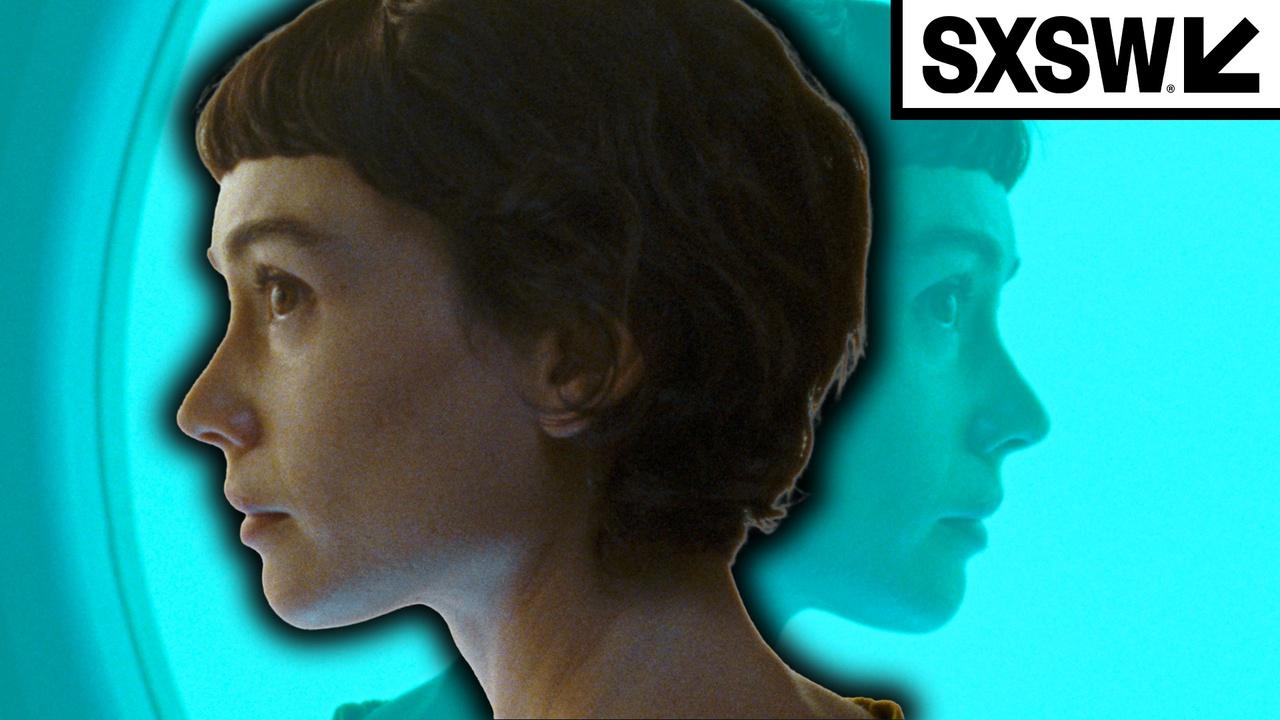
At the 2026 South by Southwest Film and TV Festival, a thought-provoking sci-fi film captivated audiences. Though set in a future with advanced technology, the story felt surprisingly relatable and emotionally resonant. The film centers on Beck, played by Sydney Chandler (known from Alien: Earth), who works for a company that digitally preserves people’s consciousness after death. Her job is to guide Paul, portrayed by Takehiro Hira (Shogun), a man nearing the end of his life, through the process of creating his digital afterlife.
If you enjoy independent films, Anima is a great choice – it has a distinctly indie spirit. Strong acting from Chandler and Hira elevates the movie, and its classic style creates a memorable atmosphere. The film’s fascinating concept opens the door to explore many thought-provoking ideas, all presented in a fresh and imaginative way.
Before and during SXSW, TopMob interviewed the cast and creators of a film exploring our fascination with creating online personas and the intriguing idea of living eternally as digital code.
We interviewed a skilled group of actors and filmmakers, including Sydney Chandler, who played Beck, Takehiro Hira and Maximilian Lee Piazza, who both played Paul, and director/writer Brian Tetsuo Ive.
Society’s Need for a Digital Presence Plays Into SXSW’s Anima
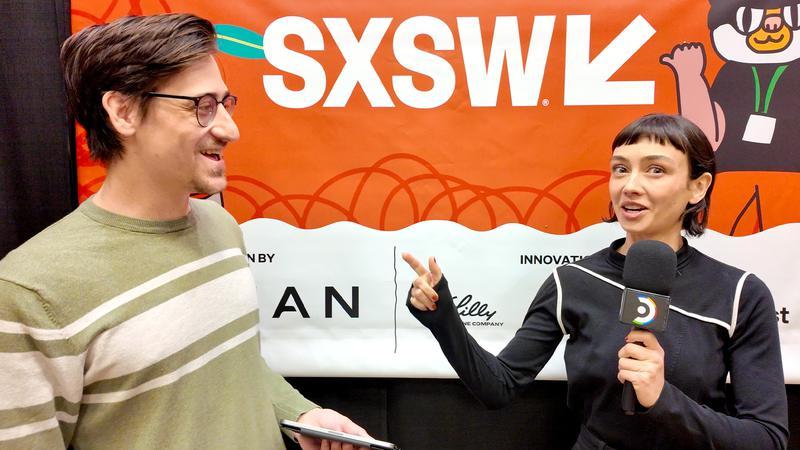
“I Think We All Fear Death…”
- TopMob: “My first question is just, the concept of creating a digital replica of yourself has been around for a long time within science fiction, but it’s really kind of become a reality, I think, back in the days of like Myspace and Facebook, and that’s kind of evolved throughout social media. Obviously, we don’t have the technology that’s in this film, but I wanted to ask you both what your thoughts are on society’s need to always have a version of themselves out there, present, interactive, and able to have an opinion?”
I often think about the movie Ready Player One, which I really enjoy. I think we all fear death, and honestly, I see it as the one certainty in life – it’s the natural end for everyone. We’re all born, and we all die, and everything in between is personal and unique. Trying to control that, to ‘play God,’ seems misguided. I’m not sure it’s even possible, and even if it were, I find the mystery of life and death fascinating. I’m curious to see what happens next, as that’s where we’re all headed eventually. Maybe trying to avoid death would actually mean missing out on something important. I’m just not sure.
Takehiro Hira described his character, Paul, as someone striving to appear successful and appealing. However, as time passes, Paul is forced to confront reality and accept himself. Hira feels this is a universal experience – eventually, we all need to come to terms with who we are as human beings.
It’s strange, because the person you’re seeing in this interview isn’t entirely me. It’s a version I created for it. Actually, that idea – questioning whether you’re talking to the genuine person or just an image they present – was a major theme I struggled with throughout the entire process of making this film, both in writing and filming.
It’s frustrating how much pressure there is to constantly have an opinion or be aware of everything happening around us. There’s just too much information, and it leaves us feeling scattered and unable to focus. It’s like we’re just skimming the surface of life instead of truly experiencing it. Poet David Whyte points out that it’s hard to connect with people who aren’t operating at the same pace as us. That’s why we aimed to create something that encourages slowing down and taking a breath, as you saw in the project.
I’m drawn to a style that feels authentic and personal – think something like Lo-Fi, created with a human touch, maybe even shot on older 16mm film. I hope my work can make people think, explore difficult questions, and take a moment to reflect on their lives instead of rushing through them. And then there’s the whole transhumanist movement… we could talk about that for hours!
Maximilian Lee Piazza believes the film isn’t about criticizing technology itself. Instead, it demonstrates how technology can sometimes get in the way of genuine connection and emotional openness between people.
The Beauty of Living Forever In a Digital Afterlife
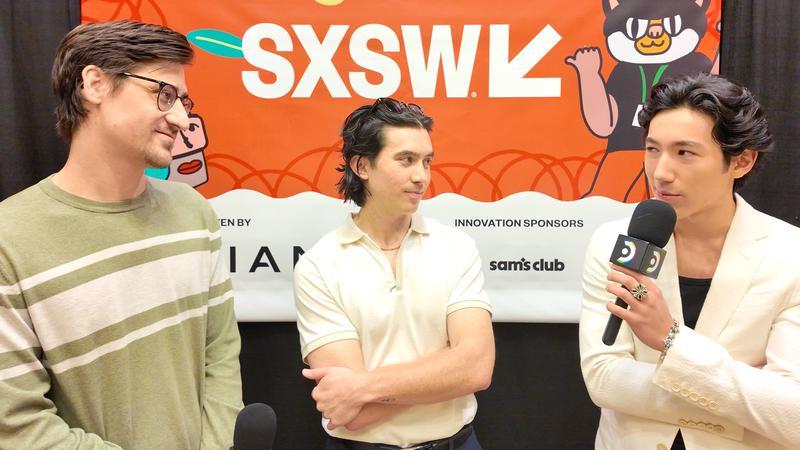
“I Struggled With That Question While We Were Filming.”
- TopMob: “The film obviously paints the idea of kind of transferring your consciousness into an afterlife avatar as not necessarily the greatest thing. You know, you have the corporate greed aspect of it, the kind of uncanny, hard-to-accept part of it. All of that aside, I’m wondering, in your words, what do you think is the actual true beauty to the idea of living past your time as a digital construct?”
I’m not sure. I actually wrestled with that question a lot while we were filming – would my character, Beck, even want that? I get why people might feel like they need closure, but honestly, everyone has things left unresolved, and that’s okay, even beautiful. You’re never going to figure everything out. And what about living forever? What if you just get bored? It’s overwhelming. If you learned and experienced everything, I think you’d lose what makes you human. So I’m not sure what the benefit would be. It’s a fascinating idea, and I’d be willing to try it temporarily, but it’s such a permanent decision.
I believe the film deliberately avoids judging the desire to continue living and maintain connections with others. As the film gains wider attention, it will become even clearer that we intentionally steered clear of portraying this as something inherently sinister or caused by a malicious force.
You see videos of companies working on this technology, and they’re sometimes called ‘death capitalists.’ But I believe these are simply people who have experienced loss and are trying to honor the memories of loved ones by creating something lasting for others. The wonderful thing is that this technology will only improve, allowing us to preserve a significant part of what makes us human.
This leads to a bigger question: what truly defines who we are at our core? And is it possible to hold onto that essential self? It’s heartening to see that many startups aren’t solely focused on profit. They’re driven by a desire to protect something valuable – the unique contributions a person would lose if they weren’t here.
I agree with that. It’s also wonderful that life isn’t endless. Knowing it has an end is what makes it so valuable. It’s all about finding a balance, I think.
I think this really resonates with my character. Ryan especially feels secure when he’s lost in his own thoughts, and he’s drawn to things like technology and virtual reality. He’s the kind of kid who struggles to share his true feelings, so he keeps them bottled up inside. For him, technology is a way to avoid real-life interactions. While there are both good and bad sides to that, I think it mostly creates a barrier to genuine human connection.
The full interviews with the cast and filmmakers behind Anima can be viewed below.
Anima does not currently have a release date.
Read More
- Invincible Season 4 Episode 4 Release Date, Time, Where to Watch
- Physics Proved by AI: A New Era for Automated Reasoning
- How Martin Clunes has been supported by TV power player wife Philippa Braithwaite and their anti-nepo baby daughter after escaping a ‘rotten marriage’
- CookieRun: OvenSmash coupon codes and how to use them (March 2026)
- American Idol vet Caleb Flynn in solitary confinement after being charged for allegedly murdering wife
- Goddess of Victory: NIKKE 2×2 LOVE Mini Game: How to Play, Rewards, and other details
- Total Football free codes and how to redeem them (March 2026)
- Only One Straw Hat Hasn’t Been Introduced In Netflix’s Live-Action One Piece
- Olivia Colman’s highest-rated drama hailed as “exceptional” is a must-see on TV tonight
- Gold Rate Forecast
2026-03-26 23:07