Summary
- Cuban-American artist Ana Mendieta gets the spotlight in a new major retrospective at Tate Modern
- On through January 2027, the exhibition spans sculpture, performance, photography, film, drawing, and installation, painting a full, tender picture of an artist of a generation
- Rarely seen works, newly remastered films, and her iconic Silueta series are also on view
London’s Tate Modern is celebrating the work of Ana Mendieta, a Cuban-American artist known for her groundbreaking creations. The major new exhibition, on view until January 2027, confirms Mendieta’s importance as one of the great artists of the 20th century, beautifully showcasing how she explored the connections between the human body, the natural world, and personal identity.
Okay, so I was reading about Ana Mendieta, and her story is pretty intense. She was born in Cuba back in ’48, but had to leave when she was only twelve – basically, she was exiled to the US. She grew up in Iowa, which is a total change of scenery, and got really into both archaeology and art. It sounds like a lot of her work was about trying to reconnect with Cuba, and she used all sorts of different art forms to do it.
I’ve always been fascinated by this artist! She worked in so many different mediums – sculpture, performance, photography, film, and these incredible installations. But what really got me were her ‘earth-body’ works. They were so unique because, unlike a lot of the big, dramatic land art being made at the time (mostly by men), hers felt much more personal and delicate. She didn’t try to change the landscape; she subtly left impressions of the human body within it – like she was becoming part of nature itself.
Ana Mendieta’s most famous work, called Silueta, was a key part of her Tate Modern exhibition. She began this series in 1973 by creating temporary sculptures in landscapes across the Americas and Europe. Using fire, sculpting, and molding, she shaped forms directly into the earth, essentially leaving an impression of herself on the land. Through these pieces, she explored ideas about feeling lost, finding new life, a sense of community, and connecting with something greater than herself.
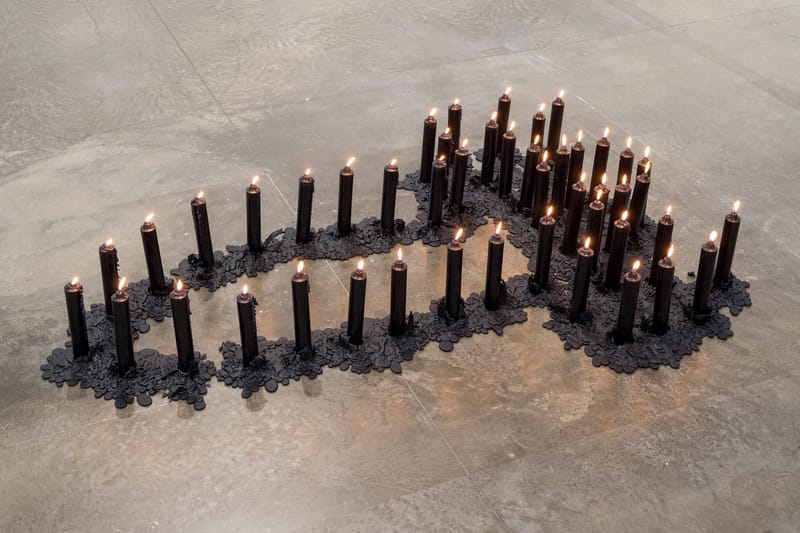
The exhibition includes “Ñañigo Burial” (1976), a live performance where the artist created a ‘Silueta’ using black candles, as well as her earliest indoor work involving earth and the body. Several of the artist’s early films will be shown, including newly restored versions of “Anima, Silueta de Cohetes (Firework Piece)” (1976), “Bird Run” (1974), “Ochún” (1981), and “Parachute” (1973). The show also features delicate drawings of leaves and a selection of paintings from her Amategram series.
Although Ana Mendieta has recently been featured in several important exhibitions, the Tate’s presentation is unique because it avoids focusing on the tragedy of her death in 1985 – a story often linked to Carl Andre that tends to overshadow her artistic accomplishments. The exhibition instead highlights the scope and originality of her work, reminding viewers why she was such an influential artist.
She explained that her work explores different stages, starting with its presence in nature and ultimately its gradual disappearance through erosion.
You can see Ana Mendieta’s work at a current exhibition in London until January 17, 2027. Visit the museum’s website to learn about planning your visit.
Tate Modern
Bankside,
London SE1 9TG,
United Kingdom
2026-07-20 22:56