Author: Denis Avetisyan
A novel architecture merges sensing, communication, computing, and control at the network edge, paving the way for robust and responsive autonomous systems.
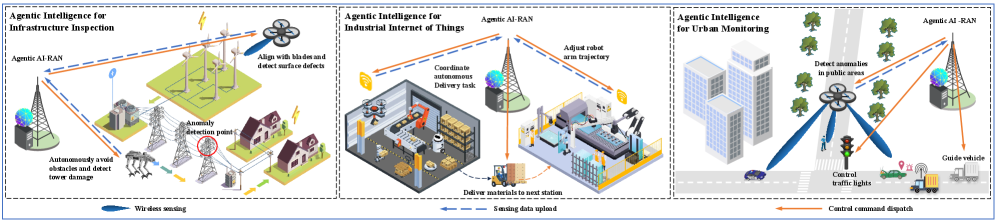
This review details an Agentic AI-RAN framework leveraging MIG partitioning to achieve tightly-coupled SC3 and enable reliable low-latency operations in low-altitude wireless networks.
Achieving truly autonomous operation in dynamic low-altitude environments demands a paradigm shift beyond traditional network architectures. This paper, ‘Agentic AI-RAN Empowering Synergetic Sensing, Communication, Computing, and Control’, proposes an Agentic AI-RAN architecture that enables tightly coupled sensing, communication, computation, and control within a single edge node. By leveraging hardware-level resource isolation via MIG partitioning and containerized deployment, this design facilitates low-latency, reliable performance for mission-critical applications. Will this integrated approach unlock the full potential of sixth-generation networks for increasingly complex low-altitude wireless networks and embodied intelligence systems?
Beyond Reactive Maintenance: Embracing Embodied Intelligence for Infrastructure Resilience
Current methods for assessing critical infrastructure-bridges, pipelines, power plants-are plagued by substantial financial burdens, inherent risks to human inspectors, and a reliance on responding to failures after they occur. This reactive approach is unsustainable given the aging infrastructure across the globe and the increasing demand for consistent, reliable service. A fundamental shift is therefore required – one that prioritizes preventative maintenance through continuous monitoring and autonomous assessment. This necessitates moving beyond periodic manual inspections towards systems capable of proactively identifying potential issues before they escalate into costly repairs or dangerous situations, demanding a new generation of robotic and intelligent solutions to ensure long-term infrastructure health and resilience.
Current infrastructure assessment relies heavily on human inspection and, increasingly, simple robotic platforms. However, both approaches present significant drawbacks; manual processes are resource-intensive, prone to subjectivity, and potentially dangerous, while basic robotic deployments often lack the adaptability to navigate complex, real-world environments and interpret nuanced data. This inadequacy stems from a reliance on pre-programmed routines and limited environmental awareness. Consequently, a fundamental shift is occurring towards systems that seamlessly integrate advanced sensing capabilities – including visual, thermal, and acoustic data collection – with robust communication networks and sophisticated intelligent control algorithms. This convergence allows for autonomous operation, real-time data analysis, and the ability to identify and prioritize critical issues, ultimately promising a more proactive and efficient approach to infrastructure maintenance and safety.
The escalating demands for infrastructure maintenance are fostering the development of embodied intelligence systems – robots and autonomous devices designed to function effectively within real-world complexities. These systems move beyond pre-programmed routes, utilizing advanced sensors and onboard processing to perceive, interpret, and react to dynamic environments like bridges, pipelines, and power plants. By integrating capabilities such as simultaneous localization and mapping (SLAM) with machine learning algorithms, these robots can autonomously navigate obstacles, build 3D models of structures, and pinpoint anomalies – from hairline cracks to corrosion – with greater speed and accuracy than traditional methods. This proactive approach promises not only reduced costs and enhanced safety, but also the potential to predict failures before they occur, ultimately extending the lifespan of critical infrastructure.
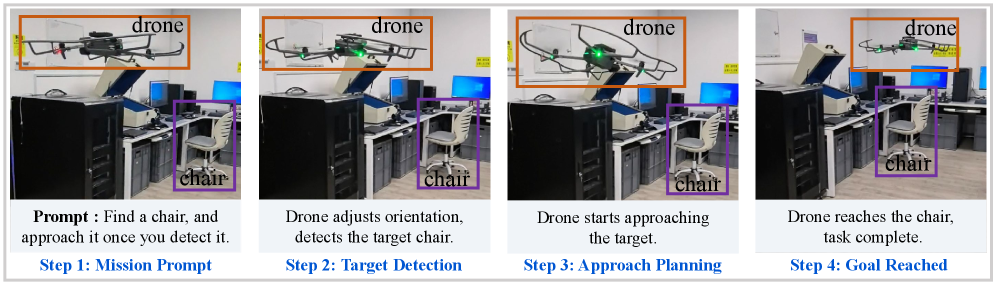
Agentic AI-RAN: A Framework for Autonomous Network Operation
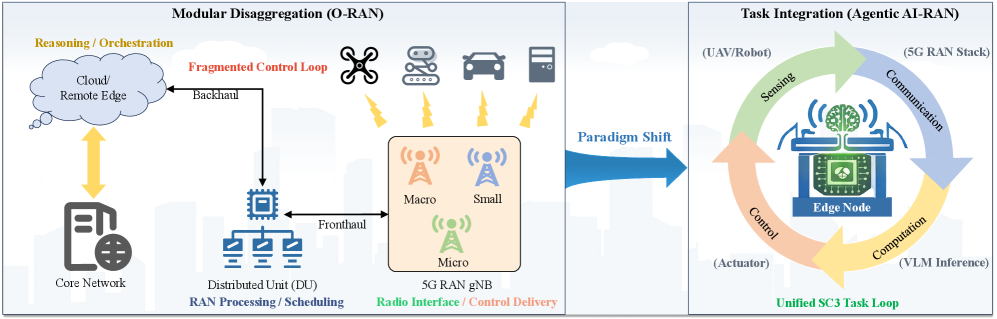
Agentic AI-RAN establishes a unified architecture for autonomous operation by integrating sensing, communication, computation, and control within a closed-loop system. This framework moves beyond traditional network management by enabling a continuous cycle of perception, decision-making, and action. The core principle involves coordinating resources across the radio access network (RAN) to achieve a specified task without requiring constant human intervention. By dynamically allocating and managing these resources, Agentic AI-RAN facilitates real-time responsiveness and adaptability to changing conditions, ultimately supporting fully autonomous RAN functionality and reducing operational overhead.
Agentic AI-RAN fundamentally shifts the operational paradigm of edge nodes by treating them as autonomous agents. These agents are not merely data relays, but actively perceive their environment through sensor data, reason about the current state and desired outcomes, and execute control actions to achieve specified goals. This perception-reasoning-control cycle is implemented within each edge node, enabling localized decision-making and reducing reliance on centralized control. The agentic approach allows for distributed intelligence, where individual nodes can adapt to dynamic conditions and contribute to the overall system objective without constant external direction, fostering a more resilient and responsive network architecture.
Agentic AI-RAN’s functionality is predicated on the availability of dependable low-altitude wireless networks to facilitate data transmission and control signaling between agents and the broader system. This reliance is effectively addressed through the adoption of Open RAN principles, which provide a modular architecture allowing for flexible deployment and scalability of network resources. The disaggregated nature of Open RAN enables the integration of diverse radio access technologies and facilitates the implementation of network slicing, optimizing performance for the specific requirements of Agentic AI-RAN applications. Furthermore, Open RAN’s standardized interfaces promote interoperability and reduce vendor lock-in, contributing to the overall robustness and resilience of the communication infrastructure supporting autonomous operation.
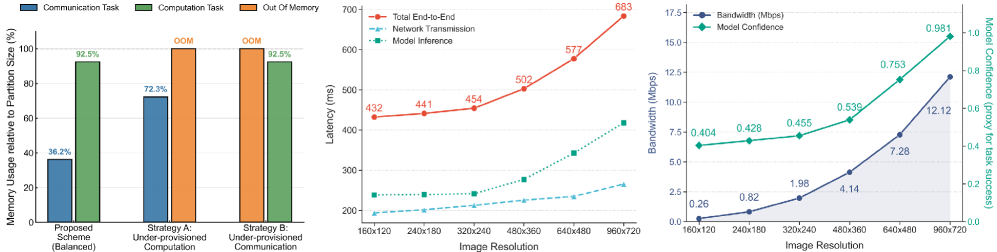
SC3 Task Execution forms the core operational loop within the Agentic AI-RAN framework, enabling real-time responsiveness and adaptability through the integration of sensing, communication, computation, and control. This closed-loop process facilitates autonomous operation by continuously monitoring the environment, processing data, and executing actions based on defined objectives. Performance benchmarks demonstrate stable closed-loop latency ranging from 500 milliseconds to 680 milliseconds, which is critical for time-sensitive applications and maintaining stable system control. The SC3 loop ensures that the AI agents can react to dynamic conditions and adjust their behavior accordingly, achieving a level of autonomy previously unattainable in traditional RAN architectures.
Optimizing Computational Resources for Intelligent Agents
Containerization, utilizing technologies such as Docker or Kubernetes, provides a method of virtualizing software to decouple Agentic AI-RAN components from the underlying infrastructure. This approach packages each functional element – including the agent’s reasoning engine, communication modules, and perception pipelines – into a standardized unit with its dependencies. The resulting containers enable consistent execution across diverse environments, simplify deployment and scaling, and improve resource utilization through isolation. This isolation prevents conflicts between components and facilitates independent updates and maintenance without disrupting the entire system. Furthermore, containerization supports portability, allowing agents to be readily moved between different hardware and cloud platforms.
MIG (Multi-Instance GPU) Partitioning is a technique used to logically divide a single NVIDIA GPU into multiple, isolated instances. Each MIG partition functions as a separate GPU with its own dedicated compute cores, memory, and bandwidth. This allows for the concurrent execution of multiple agent instances on a single physical GPU, improving overall utilization. By allocating specific resources to each partition, MIG ensures quality of service and prevents interference between agents, which is critical for maintaining predictable performance in a multi-agent system like Agentic AI-RAN.
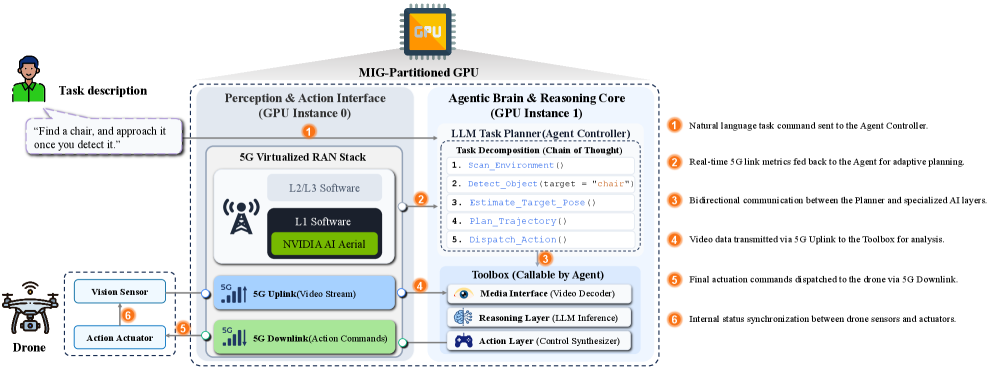
Large Vision-Language Models (VLMs) form a critical component in the Agentic AI-RAN system by bridging the gap between natural language task requests and actionable instructions. These models process both visual and textual inputs to accurately discern user intent, going beyond simple keyword recognition to understand the underlying goal. The incorporation of Chain-of-Thought (CoT) Reasoning further enhances this capability by enabling the VLM to decompose complex tasks into a series of intermediate steps, improving the reliability and transparency of the generated task structures. This step-by-step reasoning process allows the agent to not only determine what needs to be done, but also how to achieve the desired outcome, resulting in more robust and effective task execution.
The Agentic AI-RAN system achieves operational efficiency through specific GPU memory allocation on an NVIDIA A100X GPU. Current deployments utilize 14.5 GB of GPU memory dedicated to inter-agent communication processes, facilitating data exchange and coordination. A further 37.0 GB is allocated to multimodal inference, enabling the processing of diverse input data types and the execution of complex reasoning tasks. This partitioning strategy ensures sufficient resources are available for both communication overhead and computationally intensive inference operations, optimizing overall system performance.
Scaling Intelligence: Federated Learning and Efficient Communication
Federated Inference represents a significant advancement in collaborative artificial intelligence, building upon the foundations of Agentic AI to achieve both scalability and enhanced data privacy. This technique allows multiple agents to collectively construct a robust model without the necessity of centralized data storage or the direct exchange of sensitive raw information. Instead, individual agents train models locally on their respective datasets, then share only model updates – essentially learned patterns – with a central server for aggregation. This process minimizes privacy risks and reduces communication overhead, making it particularly well-suited for decentralized environments and applications where data sovereignty is paramount. The result is a globally intelligent system that benefits from the collective knowledge of numerous agents, while preserving the confidentiality of their individual data contributions, thereby unlocking new possibilities for collaborative learning across diverse and geographically distributed networks.
Maintaining reliable connectivity across low-altitude wireless networks presents significant challenges, demanding highly efficient communication protocols. Recent advancements address these concerns by integrating Data Plane Development Kit (DPDK) technologies, which dramatically accelerate packet processing speeds. DPDK operates by circumventing the kernel and enabling direct access to network interface cards, reducing latency and maximizing throughput. This optimization is crucial for applications requiring real-time responsiveness, such as coordinating fleets of autonomous drones or facilitating seamless data exchange between edge devices. By minimizing communication bottlenecks, DPDK not only enhances the overall performance of Agentic AI systems but also enables scalability to larger, more complex deployments within these dynamic wireless environments.
Agentic systems benefit significantly from the implementation of contextual memory, a mechanism allowing them to retain and utilize information regarding the evolving state of their operational environment. This isn’t simply data storage; it’s the creation of a persistent record of past observations, actions, and their corresponding outcomes, effectively building an internal representation of the ‘mission history’. By referencing this accumulated knowledge, agents move beyond reactive responses and achieve greater consistency in decision-making, particularly crucial in complex or dynamic scenarios. The ability to recall previous states and adapt strategies accordingly directly translates to improved performance over time, enabling agents to refine their approaches, avoid repeating errors, and ultimately, operate with increased efficiency and robustness without requiring constant external reprogramming or intervention.
The system’s core functionality is unified within a dedicated Toolbox, a comprehensive suite of tools designed to empower autonomous agents with the capabilities of SC3 – Sensing, Communication, Computation, and Control. This encapsulation streamlines the execution of complex tasks by providing pre-integrated modules for perception, data analysis, and action planning. Rather than requiring agents to independently develop these essential functions, the Toolbox offers a readily available, standardized resource, accelerating deployment and fostering interoperability. This approach not only simplifies the development process but also enhances the robustness and reliability of autonomous operations, allowing agents to seamlessly adapt to dynamic environments and effectively address unforeseen challenges through a consistent, pre-validated framework.
The pursuit of an Agentic AI-RAN architecture, as detailed in this work, mirrors a fundamental principle of elegant engineering. It isn’t simply about integrating sensing, communication, computation, and control-the SC3 framework-but about achieving a harmonious interplay between these elements. As Isaac Newton observed, “If I have seen further it is by standing on the shoulders of giants.” This sentiment resonates deeply; the advancements presented here-particularly the use of MIG partitioning for resource isolation-build upon decades of research in edge intelligence and wireless networks. The resulting system strives for a balance of functionality and efficiency, demonstrating that true innovation lies not merely in complexity, but in achieving a refined and cohesive whole.
Where the Signal Goes
The pursuit of tightly coupled SC3-sensing, communication, computation, and control-reveals a persistent tension. This work rightly identifies resource isolation, via MIG partitioning, as a means toward reliability. Yet, isolation introduces its own entropy. A node perfectly partitioned is, in a sense, a node refusing synergy. The challenge isn’t merely achieving this coupling, but discerning where it genuinely elevates performance, and where it’s a solution in search of a problem. Beauty scales-clutter doesn’t.
Future iterations must address the orchestration of these agentic nodes. A network of isolated intelligences is merely a collection of isolated intelligences. True autonomy demands negotiation, not edicts. How does this architecture accommodate dynamic workloads, unexpected interference, or the inevitable compromise between local optimization and global coherence? These are not engineering problems alone; they are questions of distributed cognition.
Refactoring the current approach-editing, not rebuilding-should focus on quantifying the cost of isolation. What is the minimum necessary partitioning to ensure reliability, and at what point does that partitioning stifle innovation? The long game isn’t about creating the most capable edge node, but the most adaptable one. And adaptability, like elegance, often resides in restraint.
Original article: https://arxiv.org/pdf/2601.16565.pdf
Contact the author: https://www.linkedin.com/in/avetisyan/
See also:
- Invincible Season 4 Episode 4 Release Date, Time, Where to Watch
- How Martin Clunes has been supported by TV power player wife Philippa Braithwaite and their anti-nepo baby daughter after escaping a ‘rotten marriage’
- Beyond Accuracy: Gauging Trust in Human-AI Teams
- Gold Rate Forecast
- Clash Royale Balance Changes March 2026 — All Buffs, Nerfs & Reworks
- ‘Project Hail Mary’s Unexpected Post-Credits Scene Is Worth Sticking Around
- CookieRun: OvenSmash coupon codes and how to use them (March 2026)
- eFootball 2026 is bringing the v5.3.1 update: What to expect and what’s coming
- We talked to ‘Bachelorette’ Taylor Frankie Paul. Then reality hit pause on her TV career
- Only One Straw Hat Hasn’t Been Introduced In Netflix’s Live-Action One Piece
2026-01-26 23:02