 1
1
Sergei Loznitsa’s latest film creates a deeply unsettling atmosphere. Stairwells and hallways feel threatening, and the color palette is dominated by bleak grays and browns. Characters rarely smile, and doors are consistently locked, adding to the sense of confinement and dread.
Authoritarianism can be shown in many ways, but the film “Two Prosecutors” offers a particularly insightful and disturbing look at how a society can be gradually corrupted. It’s a difficult film to watch, but its cleverness and skillful production make it powerfully effective.
The year is 1937 in the Soviet Union. A Ukrainian director uses a claustrophobic, box-like visual style to take viewers inside a decaying prison where men are wrongly held as state enemies. An old man’s job is to burn letters prisoners write to Stalin, hoping for a review of their cases. However, one plea survives – a blood-written note from an elderly Bolshevik, claiming he is innocent.
Shortly after, Kornev (played by Aleksandr Kuznetsov), a new prosecutor, arrives at the prison with a note from an inmate. He intends to look into the inmate’s claims, and the rest of the story, “Two Prosecutors,” focuses on the many obstacles he faces during the investigation.
Movies
Few people know how to navigate a crowd quite like Sergei Loznitsa.
I recently watched “Two Prosecutors,” and it really stuck with me. It’s based on the true story of a physicist who spent years in the Soviet gulag, and you can feel that weight throughout the film. The story kicks off with this prosecutor, Kornev, who wants to simply check on a prisoner, Stepniak, and it immediately becomes a frustrating ordeal. He’s bounced around – told to talk to a supervisor, then that Stepniak’s sick… it’s just obstacle after obstacle. What’s compelling is Kornev’s youth and unwavering belief in doing the right thing. He’s not letting these guys brush him off, and that really sets the stage for what’s to come.
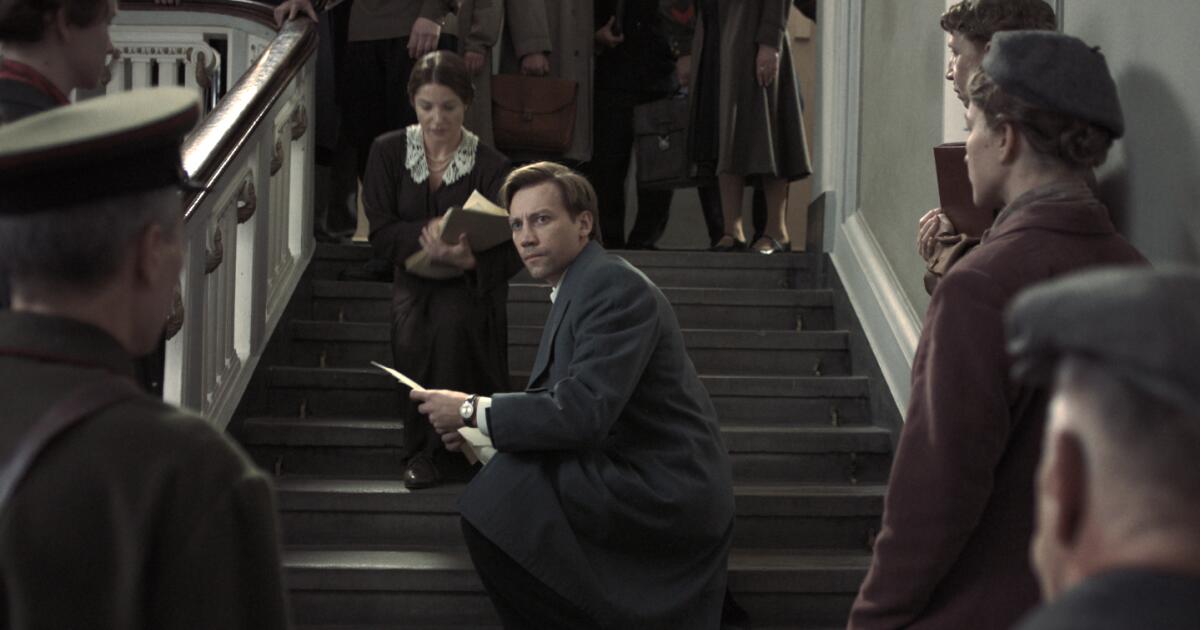
The film uses tight shots and a static camera to build a feeling of mounting tension. While “Two Prosecutors” doesn’t show any violence, it constantly hints at it. Director Sergei Loznitsa includes several stark scenes of the main character, Kornev, endlessly climbing stairs or waiting for a reluctant guard to unlock door after door. Editor Danielius Kokanauskis expertly cuts these scenes, reflecting the cold, unfeeling efficiency of the Soviet system. Working with cinematographer Oleg Mutu, Loznitsa portrays the prison—and the nature of authoritarianism itself—with a disturbing beauty, while still acknowledging its grim reality.
After finally meeting Stepniak, a former lawyer who once shared his ideals, Kornev reveals the terrible mistreatment he suffered from the Soviet secret police. This conversation was difficult enough, but now Kornev faces an even bigger challenge: a train journey to Moscow to warn his superiors. Knowing his local authorities are likely working with Stalin’s agents – and that he’s now at risk himself – Kornev can only hope the General Prosecutor will intervene. Though he understands the nature of his country, Kornev hasn’t lost faith in justice, and he’s willing to risk everything to see if it still exists.

Movies
The 27 best movie theaters in Los Angeles
We’ve compiled a list of 27 fantastic movie theaters in Los Angeles, including iconic spots like the TCL Chinese and New Beverly, popular chains like Alamo Drafthouse, and the best AMC location in Burbank.
Kuznetsov conveys such integrity and strength of character with minimal dialogue, bringing to mind classic, heroic lawyers from older stories who fought against injustice. Director Loznitsa, a skilled storyteller in both fiction and documentary, subtly references the styles of Jacques Tati and Roy Andersson – filmmakers known for their dry humor and focus on the simplest human actions. In “Two Prosecutors,” the seemingly insignificant figures obstructing Kornev’s path are precisely positioned, visually representing the suffocating control Stalin had over everyone’s lives and spirits.
With each new challenge, Kornev becomes increasingly paranoid, and reality starts to feel strange and distorted. When a secretary accidentally drops some papers, his attempt to help is natural, but it’s awkward and highlights the coldness around him. Later, a stranger excitedly approaches, claiming to recognize him, and the encounter is unsettling—a brief, almost magical moment of connection in a disconnected world.
I haven’t seen a film handle its style quite as deliberately – and to such chilling effect – since Jonathan Glazer’s ‘The Zone of Interest.’ But where that film felt distant, ‘Two Prosecutors’ focuses on a genuinely good man, a determined fighter for justice, and watches him slowly get ground down by the sheer power of Stalin’s Soviet system. Given the current political climate, especially with Trump’s return, I think American audiences are really drawn to films like this – stories from other countries that show us how authoritarianism takes hold, hoping to learn from history and understand what’s happening now.
“Two Prosecutors” doesn’t offer solutions or a satisfying conclusion. While audiences might guess what happens to the young lawyer, the director isn’t focused on surprises. Instead, he aims to deliver a stark and unavoidable emotional impact. The real tragedy for Kornev isn’t imprisonment itself, but his inability to recognize the constraints that hold him captive.
Read More
- Invincible Season 4 Episode 4 Release Date, Time, Where to Watch
- Physics Proved by AI: A New Era for Automated Reasoning
- How Martin Clunes has been supported by TV power player wife Philippa Braithwaite and their anti-nepo baby daughter after escaping a ‘rotten marriage’
- Gold Rate Forecast
- American Idol vet Caleb Flynn in solitary confinement after being charged for allegedly murdering wife
- Olivia Colman’s highest-rated drama hailed as “exceptional” is a must-see on TV tonight
- Total Football free codes and how to redeem them (March 2026)
- Nicole Kidman and Jamie Lee Curtis elevate new crime drama Scarpetta, which is streaming now
- “Wild, brilliant, emotional”: 10 best dynasty drama series to watch on BBC, ITV, Netflix and more
- Goddess of Victory: NIKKE 2×2 LOVE Mini Game: How to Play, Rewards, and other details
2026-03-26 13:34