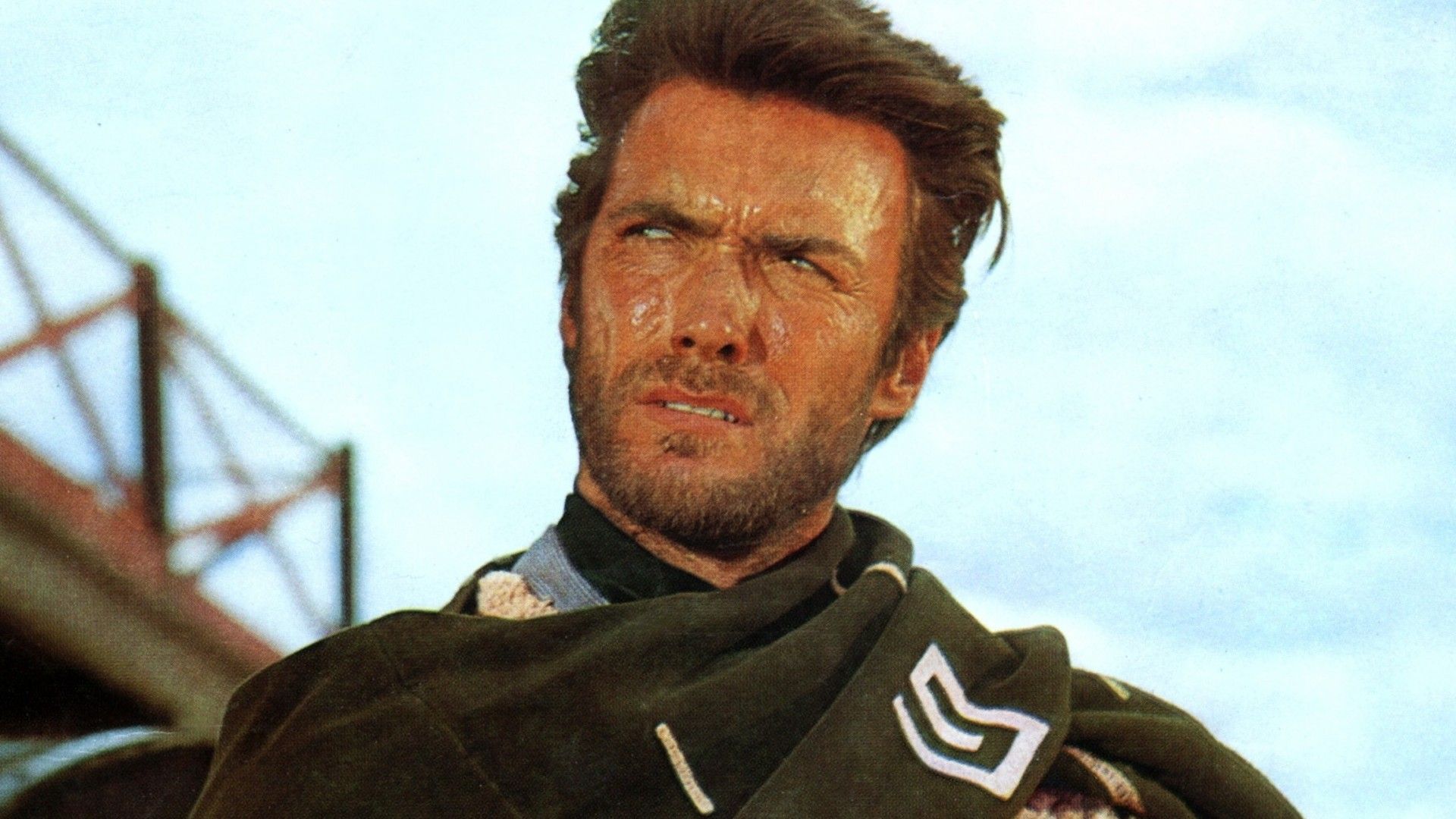
In 1964, director Sergio Leone and actor Clint Eastwood created a hugely influential film called A Fistful of Dollars. Inspired by classic Westerns like Shane and The Gunfighter, it presented a legendary and romanticized view of gunslingers in the Old West. While many consider it the first film in the “Dollars Trilogy,” some evidence suggests viewers actually watch the films in the wrong sequence.
The Western film genre underwent a major shift in the 1960s, thanks to directors like Sergio Leone and Sergio Corbucci who completely reimagined classic cowboy stories. These new films were grittier, with heroes who weren’t always ‘good guys,’ and featured more exciting action. While the Dollars Trilogy was the most popular Western of the decade, some believe audiences have been misinterpreting its themes all along.
How The Dollars Trilogy Changed Cinema Forever
Sergio Leone’s 1965 film, A Fistful of Dollars, unknowingly signaled a shift away from classic Hollywood filmmaking and the start of a new style. Compared to Westerns from the 1940s and 50s – which often featured simple good-versus-evil stories, sentimental songs, and deliberately slow pacing – Leone’s films felt fresh and modern, thanks to their vibrant opening credits, compelling characters, and innovative score by Ennio Morricone. Considered a pivotal moment in film by directors like Steven Spielberg, Martin Scorsese, and Quentin Tarantino, as well as comic book creator Frank Miller, its influence extends far beyond the Western genre.
The success of the trilogy had a huge impact on filmmaking, popularizing Sergio Leone’s unique style. Westerns began to feature complex, flawed heroes motivated by self-interest, sparking a new wave of revisionist films. Directors shifted their focus from simply portraying frontier life to creating larger-than-life characters who inhabited it, and bounty hunters became a common figure in movies. Previously, bounty hunters were typically depicted as dishonorable villains, not as central characters.
The lasting impact of Sergio Leone’s ‘Dollars Trilogy’ is clear if you look at films like Drive, Quentin Tarantino’s work, and even Back to the Future. Leone and Clint Eastwood perfected the idea of the mysterious, nameless hero – a character who doesn’t need a detailed past or complex personality to be captivating. These films present skilled gunslingers right away, focusing on thrilling action rather than traditional hero stories. Plus, for many viewers, Ennio Morricone’s music in these films was as essential to the experience as the actors themselves.
The Dollars Trilogy’s Chronology Can Be Confusing
Initially, these films weren’t presented as a traditional trilogy. While Clint Eastwood’s character is often referred to as nameless, he’s actually known as Joe, Monco, and Blondie throughout the series—though only one of those is his actual name, the others being nicknames. The films were later grouped together and marketed as a trilogy, but director Sergio Leone subtly hinted at a connected storyline, making it easy to see them as part of a larger, ongoing story about a single gunslinger.
When looking at the films in order, it makes the most sense to start with the one set during the Civil War, as the others happen later on. Fans think this first film is a prequel because it shows Blondie getting his famous poncho. Next comes For a Few Dollars More, which is generally believed to take place in 1872 and includes a quick nod to the hat the character will wear in a later film. Finally, A Fistful of Dollars, set in 1873, is the last film in the timeline, regardless of whether you see them all as connected or not.
Movie timelines are often intentionally unclear, requiring viewers to piece together details like dates on tombstones or in newspapers to understand when the story takes place. This lack of precision actually enhances the films, as exact dates aren’t crucial to the narratives. These stories aren’t meant to be historically accurate depictions of the American West, a point even director Clint Eastwood acknowledged in his 1992 film, Unforgiven.
Viewers can enjoy Sergio Leone’s films in order, starting with A Fistful of Dollars, then For a Few Dollars More, followed by The Good, the Bad and the Ugly, and finally, a more reflective film. While The Good, the Bad and the Ugly isn’t officially part of the ‘Dollars Trilogy,’ it shares a similar theme of the legendary gunslinger. Many believe Charles Bronson’s character in that film, Harmonica, is essentially a continuation of Clint Eastwood’s ‘Man With No Name,’ especially considering the enigmatic nature of Harmonica’s past. Both are incredibly skilled with a gun, and connecting their stories gives some viewers the richer backstory they’ve always wanted.
Why The Dollars Trilogy Should Actually Be Seen In Order of Release
Even if viewers don’t agree with the idea that the films’ timeline is shared or presented out of order, there’s still a good reason to watch them as they were originally released. When Sergio Leone created A Fistful of Dollars, he realized how important a strong first impression was for his hero – and fans get that the moment he walks into town. The director felt this was the defining moment for the character and wanted it to be the foundation of the story, no matter where it fell in the overall timeline.
Quentin Tarantino points out that the ‘Dollars Trilogy’ is rare in that each film is better than the last. Unlike many sequels that disappoint, director Sergio Leone skillfully built upon his vision of the American West. The first film set the stage, but For a Few Dollars More cleverly introduced a ‘buddy cop’ dynamic to the Western genre. Finally, The Good, the Bad and the Ugly truly delivers, becoming a massive, sweeping adventure set during the Civil War.
With each film, the characters became more developed and the music more impactful. As Sergio Leone’s reputation grew, he received larger budgets, which allowed him to fully realize his vision of the Wild West and its gunfighters. Ultimately, viewers embraced the complex nature of the protagonist, Blondie, recognizing that his story is more compelling without a clear beginning or end. He’s a wandering hero, a rootless figure who drifts across the West, appearing wherever he’s needed – almost like a legendary figure similar to the character Shane.
Sergio Leone didn’t create the Western genre, but he completely reshaped how we see it. His influence is so strong that most modern Westerns echo elements of his iconic ‘Man With No Name’ character. He had a clear vision for his stories, and like many great series, his films work well even if you don’t watch them in order.
Sergio Leone’s Unique View of the West Explains a Lot
As a huge fan of Sergio Leone, I’ve always felt his Westerns weren’t about realism at all. They were something much more interesting – a beautiful blend of romantic storytelling and a fresh, unconventional take on the genre. He moved away from the traditional, heroic cowboy, presenting characters who were flawed and more relatable, while still making them larger-than-life. For me, his films weren’t trying to show what the West was like, but rather create a myth about the West, relying on simple, iconic character types instead of complex heroes. That’s why Clint Eastwood’s ‘Man with No Name’ feels like the same person across all three films – they all build up the legend of this one specific type of gunslinger.
Sergio Leone redefined the classic Western with a fresh take on the gunslinger myth, and his three films can be enjoyed as standalone stories or as part of a larger narrative. If viewers choose to see the ‘Dollars Trilogy’ as one continuous story, it actually starts with The Good, the Bad and the Ugly and concludes with A Fistful of Dollars.
Found an error? Send it so it can be corrected.
Read More
- The Division Resurgence Best Weapon Guide: Tier List, Gear Breakdown, and Farming Guide
- Last Furry: Survival redeem codes and how to use them (April 2026)
- Clash of Clans Sound of Clash Event for April 2026: Details, How to Progress, Rewards and more
- Guild of Monster Girls redeem codes and how to use them (April 2026)
- Kagurabachi Chapter 118 Release Date, Time & Where to Read Manga
- GearPaw Defenders redeem codes and how to use them (April 2026)
- After THAT A Woman of Substance cliffhanger, here’s what will happen in a second season
- Limbus Company 2026 Roadmap Revealed
- Wuthering Waves Hiyuki Build Guide: Why should you pull, pre-farm, best build, and more
- Gold Rate Forecast
2026-04-08 16:08