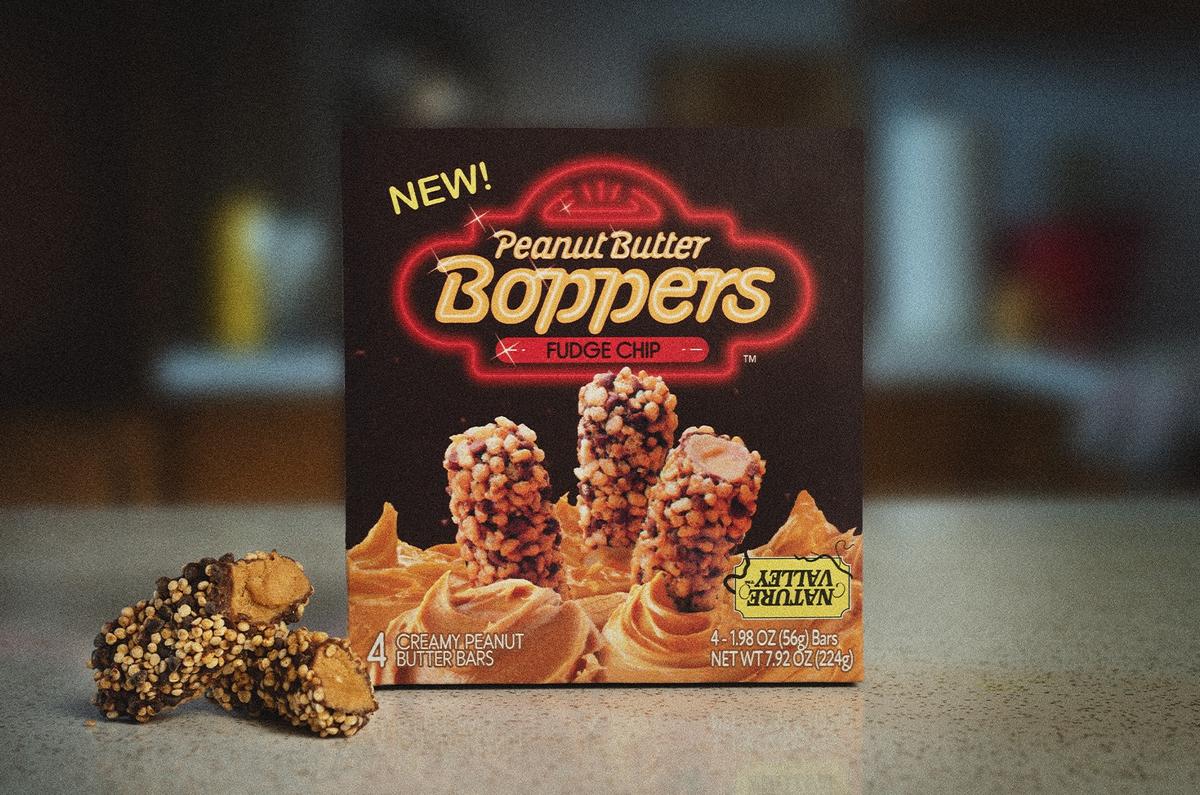
The popular Netflix series Stranger Things features many supernatural creatures, and it’s also brought back a snack food that was popular in the 1980s.
Fans were excited to see Peanut Butter Boppers make a brief appearance in the show’s last season. These were like peanut butter-filled granola bars, but without the oats! We previously called them out as a fantastic ’80s snack we miss, saying they “need to come back,” so we’re happy to see them revived and feel we played a small part in it.
Okay, folks, prepare for a major nostalgia trip! Boppers, those delightfully crunchy, dual-flavored snacks, are back! It’s been over thirty years – since 1989, can you believe it? – and they’re available for a limited time only. I checked it out, and you can snag a box at sreppob.com (catch the clever backwards spelling!). Even better, they’re giving away 250 boxes later this week, so keep an eye on their site if you want a free taste of the past!
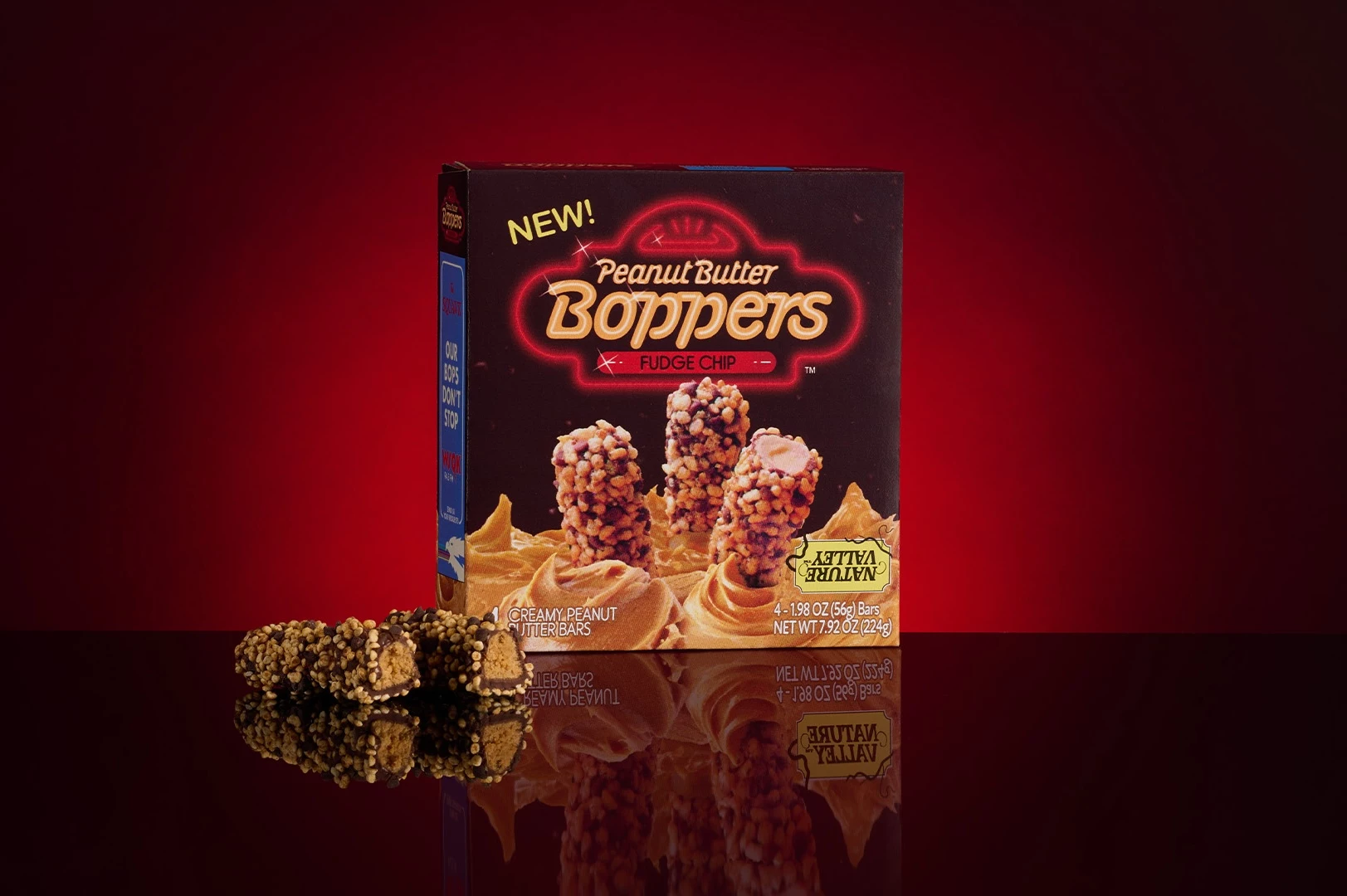
The reappearance of Boppers, a candy briefly featured in the show, further solidifies Stranger Things‘ place in history as the TV show with the most product tie-ins ever. Beyond the iconic Stranger Things strawberry Eggo waffles and pizza-flavored Doritos, the show has branded a huge range of existing products. They even brought back glass bottles of Gatorade and created limited-edition items like “Demogorgon Crunch” cereal and, surprisingly, *Stranger Thingsflavored toothpaste! It seems like there’s no limit to the merchandise being released.
You can still watch Stranger Things on Netflix until it concludes. The first part of the final season is currently available, with the remaining episodes premiering on Christmas. The very last episode will air on New Year’s Eve.
Famous Movies Featuring Once-Beloved Products That No Longer Exist
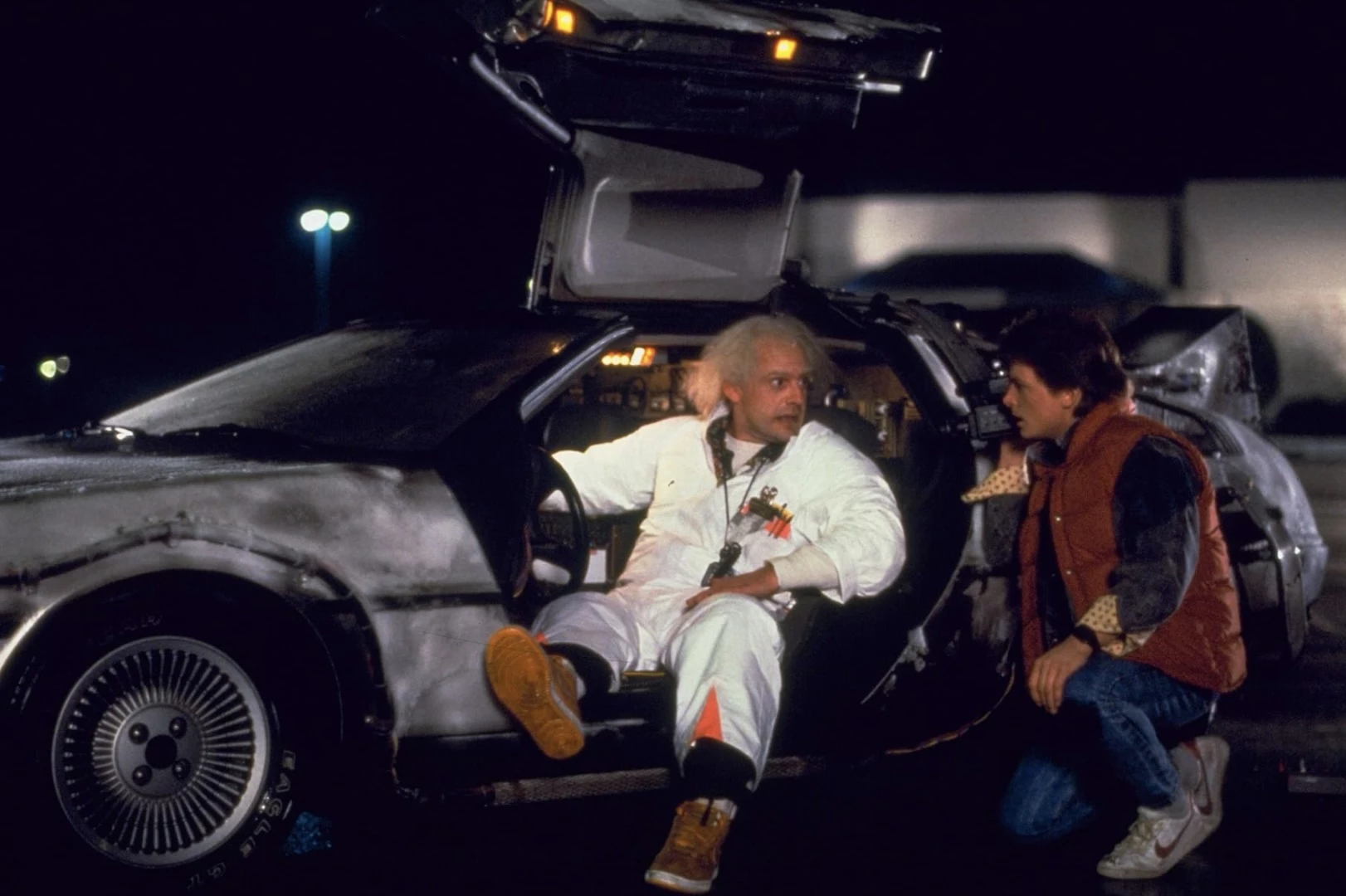
The DMC DeLorean (In Back to the Future)
By the time it appeared as Doc Brown’s time machine in the first Back to the Future movie, the DeLorean car had been out of production for years. It continued to play a key role in the two sequels, firmly establishing its place in pop culture and becoming forever linked with the film series. Without Back to the Future, this unusual car – of which fewer than 10,000 were ever made – would likely be a forgotten relic. Instead, it will always be remembered as “The DeLorean” from the movie.

Tab (In Back to the Future)
It’s interesting that 1985 now feels as distant as 1955 did when Back to the Future first came out. This means some of the things shown as “modern” in the movie now seem like relics of the past. For example, Marty asks for a Tab soda in the 1950s diner, and the server jokingly replies that they only offer “tabs” – meaning a running bill – unless he orders something.
A younger audience likely wouldn’t understand the humor, as Tab was a popular diet soda from the 1960s until 2020. Perhaps in a future remake of Back to the Future, Marty could travel to 1985 and ask to “start a tab” at a bar, only to be handed a can of Tab soda instead.

A Phone Booth (In Phone Booth)
For about a hundred years, pay phones were everywhere – you could almost always find one nearby. But as cell phones became popular in the early 2000s, pay phones quickly became outdated. When almost everyone carries a phone in their pocket, there just wasn’t much need for those coin-operated booths anymore.
Pay phones appear in many films, but the 2003 thriller Phone Booth, starring Colin Farrell, really puts one at the center of the story. It’s about a man who gets held hostage by a sniper after answering a pay phone. This movie couldn’t be made today – New York City removed all its pay phones by the early 2020s – which gives the film a unique, nostalgic feel.

BlackBerry (In BlackBerry)
Remember pay phones? One device that really helped replace them was the BlackBerry, recently featured in the movie BlackBerry. If you ever used one of these phones with its small keyboard, watching the film might bring back memories – or maybe a little thumb pain!

Nokia 8110 Phones (In The Matrix)
The 1990s and 2000s saw a lot of now-outdated cell phone technology. I especially remember the Nokia 8110, made famous by The Matrix. It seemed incredibly futuristic back then, but now it looks quite bulky and awkward. The sliding cover that revealed the keypad was considered really cool at the time, making it a perfect fit for the movie’s simulated world. Today, it just looks primitive.

America Online (in You’ve Got Mail)
The popular movie You’ve Got Mail is a modern take on The Shop Around the Corner, and it was directly inspired by the early days of dial-up internet. In fact, the film’s title comes from the greeting users heard when logging onto America Online – a message delivered by the voice of Elwood Edwards. The story centers on Tom Hanks and Meg Ryan as characters who fall for each other through anonymous email exchanges on AOL, unaware they’re actually competitors in business. It was a simpler time, when online anonymity was a charming plot device for romantic comedies.

AIM Instant Messenger (In Cry Wolf)
AOL created AOL Instant Messenger, known as AIM, which became incredibly popular for online chatting in the late 1990s and early 2000s. It eventually lost popularity with the rise of text messaging and was shut down in 2017, though it had appeared in many films beforehand.
In the 2005 movie Cry Wolf, a killer uses AIM to track victims. Surprisingly, instead of distancing itself from this potentially negative portrayal, AOL actively promoted AIM’s role in the film. They created an alternate reality game (ARG) that turned the movie’s premise into a digital version of the game Mafia, allowing users to participate in a similar online experience.

Nuprin (In Wayne’s World)
Most people probably wouldn’t recognize Nuprin – it was a pain reliever similar to Advil – except for its memorable appearance in the movie Wayne’s World. There’s a funny scene where Wayne and Garth are told to accept sponsorships for their show. When Wayne says he can’t discuss it anymore because of a headache, Garth immediately offers him Nuprin, describing it as “Little. Yellow. Different.” This joke references the very common Nuprin commercials that were on television at the time, though you might not remember them – or maybe you weren’t even born yet when they aired!

Jolt Cola (In Jurassic Park)
Throughout nearly every shot of the command center in Jurassic Park, you can spot cans of Jolt Cola, a popular high-caffeine soda from the 80s and 90s. This could be considered a subtle form of product placement, but it also makes sense – the programmers working long hours to launch the park would likely be relying on caffeine to stay alert.

Pepsi One (In The Thomas Crown Affair)
In stark contrast to subtle product placement, a scene in The Thomas Crown Affair features Rene Russo’s character, Catherine, clearly displaying and drinking a Pepsi One immediately after suspecting Pierce Brosnan’s Thomas Crown of art theft. She makes sure the label is prominently visible throughout the scene, even finishing the entire can on camera. Pepsi One had only been released a few months prior to the film, and it’s obvious Pepsi paid a significant amount to have this blatant advertisement—which essentially pauses the movie—included.

The Lotus Espirit (In The Spy Who Loved Me)
The James Bond films are famous for showcasing products, giving viewers a look at the fashion, drinks, and cars popular during each movie’s release. They often showed what people drove, or what they wished they could drive, like a sophisticated secret agent.
A great example is 1977’s The Spy Who Loved Me, where Roger Moore’s Bond drove a Lotus Esprit, a sports car made from 1976 to 2004. While Bond’s car had some special features—like the ability to transform into a submarine—it significantly increased the real Lotus Esprit’s popularity as the car was being introduced to the public.

The Sharper Image Credit Card (In A View to a Kill)
A memorable James Bond moment comes in A View to a Kill, when Roger Moore’s 007 cleverly unlocks a door using a credit card from The Sharper Image. Back then, The Sharper Image was a trendy brand known for its high-end catalog and stores, which first opened in 1985—the same year the film came out. It’s hard to picture James Bond shopping for a massage chair, but it makes sense why a store selling cool gadgets would want to be linked to the famous spy. While The Sharper Image still operates online, its brick-and-mortar stores and credit card are sadly no longer around, much like some of James Bond’s older gadgets.

Sony Camcorder (in American Beauty)
As a movie buff, I’ve always noticed how camcorders pop up all the time in films from the 80s, 90s, and even the early 2000s. It’s interesting to see how they changed in the movies as they went from tape to digital. You could probably trace the history of these devices just by watching films! A really famous example is in the movie American Beauty from 1999. The teen character, played by Wes Bentley, is so bored with his life that he starts filming things with his Sony camcorder, trying to find beauty in the everyday. His most iconic shot? A plastic bag blowing in the wind. Seriously, it’s a surprisingly deep moment!

Blank VHS Tapes (In The Ring)
Video tapes were everywhere before digital recording, and they even showed up frequently in movies. This everyday quality is what made them so unsettling in the film The Ring, where a cursed VHS tape causes death a week after viewing. When The Ring came out in 2002, most people still had unlabeled tapes around the house, leading to a spooky thought: could one of those be haunted too? This made watching The Ring on VHS particularly chilling.

Blockbuster Video (In Last Action Hero)
If you grew up with VHS tapes, you probably remember Blockbuster Video – the huge rental chain that once had over 9,000 stores worldwide. Blockbuster often appeared in movies, and one memorable scene is in Last Action Hero. Arnold Schwarzenegger’s character, Jack Slater, visits Blockbuster because his young sidekick is trying to prove they’re inside a movie. Jack isn’t convinced – in his reality, Sylvester Stallone was in Terminator 2, not Arnold – but the scene gives you a good look at what a typical Blockbuster Video store was like in 1993.

Mac PowerBook (In Independence Day)
Just like we can trace the history of camcorders by seeing them in films, we can do the same with personal computers. In the 1990s, laptops were often featured in science fiction movies because they were new and made the films seem more advanced. For example, in Independence Day, Jeff Goldblum’s character uses an Apple PowerBook 5300 to upload a virus that disables the alien mothership. It’s quite a product placement – buy this laptop and save the world!

Nintendo Entertainment System (In The Wizard)
Throughout 20th-century movies, we see the gradual introduction of new technologies, and video games are a prime example. The film The Wizard essentially functioned as a long advertisement for the original Nintendo Entertainment System (NES). Starring a young Fred Savage, the movie tells the story of three kids traveling to California for a video game competition. It even included a sneak peek at the unreleased Super Mario Bros. 3, which made it incredibly popular with gamers. While The Wizard wasn’t a great movie overall, it was remarkably effective at generating excitement for the NES and particularly for Super Mario Bros. 3.

Sega Genesis Hockey (In Swingers)
Early consoles like the Nintendo Entertainment System led to more advanced 16-bit systems such as the Super Nintendo and Sega Genesis, both popular throughout the 1990s. The Sega Genesis is famously featured in the movie Swingers, where Jon Favreau and Vince Vaughn’s characters relax between jazz clubs by playing NHLPA Hockey ’93, one of the first games in the NHL series from EA.

Mr. T Cereal (In Pee-wee’s Big Adventure)
In the mid-1980s, Mr. T was a huge pop culture icon, largely due to his roles in Rocky III and The A-Team, and his instantly recognizable style—a mohawk, denim, and lots of gold chains. His popularity with kids led to a strange animated TV show where he played a gymnastics coach who also solved mysteries. For a decade, from 1984 to 1993, Mr. T’s face was on boxes of a popular Quaker cereal shaped like the letter ‘T’ and made from corn and oats. The cereal even made a memorable appearance in the opening scene of Tim Burton’s Pee-wee’s Big Adventure, further boosting its fame.

Talkboy (In Home Alone 2: Lost in New York)
Most of the items featured in movies are real objects brought into the fictional world of the film. But sometimes, props created for a movie become so popular they’re actually made for consumers to buy. A great example is the Talkboy, the recording device Kevin McAllister uses in Home Alone 2: Lost in New York to trick the adults.
John Hughes, the writer and producer, wanted Kevin to use a modern, high-tech tape recorder. So, 20th Century Fox partnered with Tiger Electronics to create a prototype for the film, with the idea that Tiger could then sell it as a real product.
When Home Alone 2 became a huge hit, demand for the Talkboy exploded, especially after Tiger released a “deluxe” version with voice-changing features around the same time the movie came out on video. Tiger sold hundreds of thousands of Talkboys that Christmas, and likely could have sold even more if they’d been able to keep up with demand. Several different Talkboy (and Talkgirl) models were made over the next few years, but the craze eventually faded. Now, vintage Talkboys can be quite valuable, selling for high prices on sites like eBay.
Read More
- Clash Royale Best Boss Bandit Champion decks
- Vampire’s Fall 2 redeem codes and how to use them (June 2025)
- Mobile Legends January 2026 Leaks: Upcoming new skins, heroes, events and more
- World Eternal Online promo codes and how to use them (September 2025)
- How to find the Roaming Oak Tree in Heartopia
- Best Arena 9 Decks in Clast Royale
- Clash Royale Furnace Evolution best decks guide
- Clash Royale Season 79 “Fire and Ice” January 2026 Update and Balance Changes
- Clash Royale Witch Evolution best decks guide
- Brawl Stars December 2025 Brawl Talk: Two New Brawlers, Buffie, Vault, New Skins, Game Modes, and more
2025-12-03 22:00