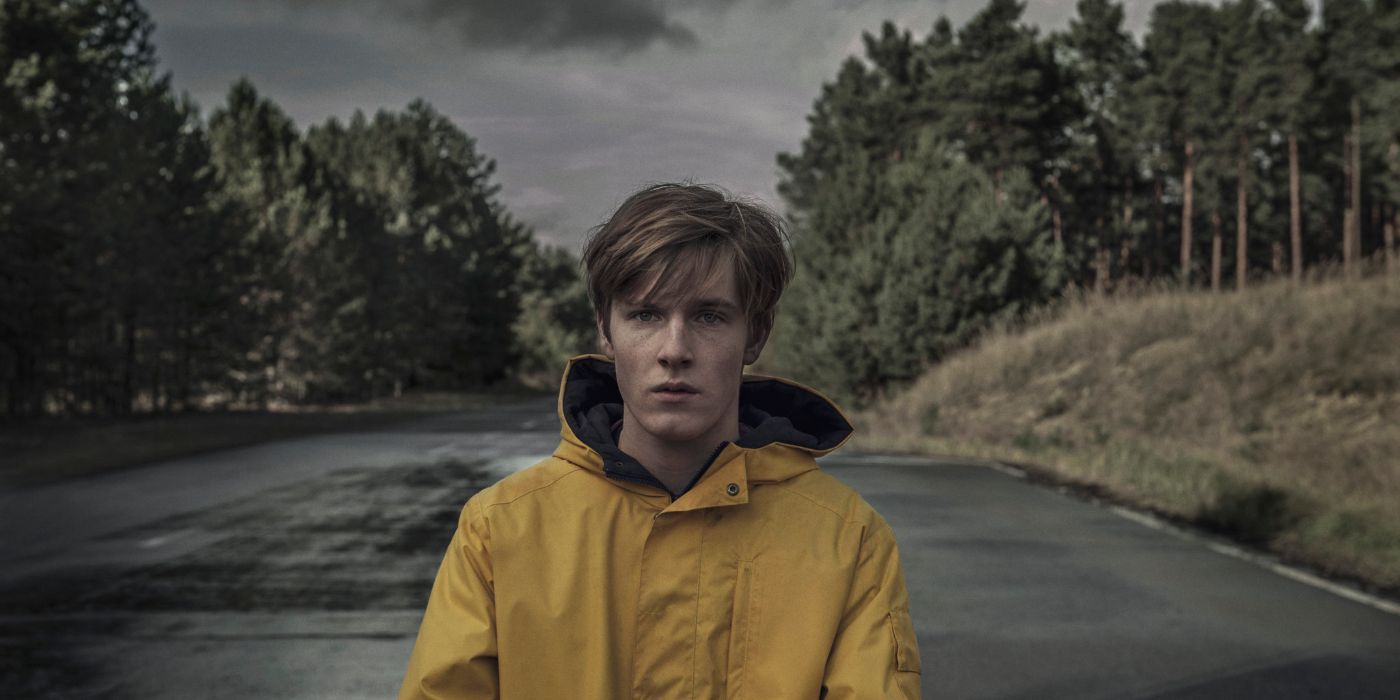
The German sci-fi series Dark debuted on Netflix in 2017 and quickly became known for its complex time travel story. It’s widely considered one of the best shows in the science fiction genre. Though it ended in 2020 after three seasons, Dark built a dedicated international fanbase and still holds a remarkable 97% rating on Rotten Tomatoes.
Though critically praised, many people haven’t yet watched Dark, possibly because it’s known for being complex. But it’s more than just a confusing mystery – it’s a moving story about people, set against a backdrop of fascinating science fiction, and it’s one of the best TV shows of the last ten years.
Netflix’s Dark Is the Sci-Fi Show of the Decade
The series Dark begins in the gloomy German town of Winden with the disappearance of a child near a mysterious cave. This event sets off a chain reaction, exposing the hidden secrets and underlying unhappiness of four families who are all connected. Initially, it feels like a suspenseful mystery, possibly with a supernatural element, and it resembles other shows in its early stages. But Dark soon proves to be much more complex and far-reaching in its scope.
As a total film and TV buff, what really grabbed me about this show wasn’t some spooky monster, but the clever idea of a time loop – a wormhole, basically – that traps everyone in this awful, repeating pattern of bad things happening. It wasn’t just about solving a disappearance, like ‘Where’s the missing boy?’ but something much deeper. It made me think about whether we really have control over our lives, or if everything is already set in stone, with the future somehow affecting the past. It’s this exploration of fate versus free will – whether we’re destined to repeat mistakes or can actually change things – that truly sets it apart.
Creators Baran bo Odar and Jantje Friese aimed to make the show’s complex philosophical themes feel real, building a consistently gloomy and unsettling mood. Unlike some mystery shows, such as Lost, which often felt improvisational, Dark stands out because of its meticulously planned storyline from start to finish.
Friese explained that figuring out the overall direction of the show was difficult as a writer and creator. They struggled to stay true to their original vision and create an ending that felt satisfying and conclusive.
In a recent IndieWire interview, showrunner J.D. Friese discussed the challenges of writing a final season. He explained that many assume it’s simpler when you have a clear ending in mind, but he actually thinks it’s harder. When you don’t know the destination, you have complete freedom, but planning a season towards a specific conclusion requires a much more intricate structure.
The writing is exceptionally well-crafted. Every detail, clue, and character’s behavior serves a specific purpose, creating a tightly woven plot. This careful construction ensures that the eventual revelations feel both logical and rewarding, making the intricate story truly worthwhile.
The story explores how the characters’ struggles aren’t simply caused by destiny, but by their own very human motivations—like wanting to save someone they love, correct a past error, or keep a secret. This creates a repeating, painful pattern that continues through families. Each character is burdened by something they’ve done because of these desires, and they all eventually realize how complicated life is and how capable people are of doing terrible things when caught in difficult circumstances.
Time Travel Is Done Right in Dark
Stories about time travel are notoriously tricky to pull off, often riddled with plot holes and complicated rules. However, the show Dark manages to avoid these common pitfalls.
The show expertly manages its complex plot, centering the fascinating and often confusing concept of time travel. Its central idea is a repeating 33-year cycle, with events in 1953, 1986, and 2019 – and other years – all linked and impacting each other through a mysterious connection within the caves of Winden.
Unlike some time travel stories, ‘Dark’ doesn’t offer easy fixes to the past. Trying to change things usually causes the very tragedies the characters are desperate to avoid. This cyclical nature is what makes the show so compelling. It dives deep into complex ideas, like the ‘bootstrap paradox,’ where things can seemingly appear with no beginning.
A central mystery in the show revolves around the time machine itself. Its design appears to have no clear origin, as the plans are passed down through generations, with older characters giving them to those who will eventually build it. This circular pattern extends to the show’s family history, where characters sometimes become their own ancestors. At times, characters even end up as both mother and daughter to each other, creating a confusing question of which came first – the parent or the child.
As a huge fan, I’ve seen so many people trying to figure out the family tree – it’s seriously complicated and always seems to circle back on itself! But what’s really amazing about the time travel isn’t just the sci-fi stuff; it’s how it hurts the characters. The show really hits hard when you see how these loops mess up people’s lives. Take Jonas and Martha, for example. They fall in love, but then this awful secret about their connection comes out, something tied to the time travel, and it completely destroys any chance they have.
Ulrich is another character who attempts to travel back in time to save his son, Mikkel, from vanishing. However, his efforts don’t succeed and instead result in him being stuck in the past, suffering for years. The show uses science fiction not as the main focus, but to emphasize the deeply emotional stories of love, loss, and sadness.
Despite adding a complex element like a parallel universe in Season 3, the show remained consistent and easy to follow. This twist actually helped bring the story to a surprisingly satisfying and heartfelt ending.
Dark Is a Masterclass in Storytelling, Acting, and Atmosphere
Louis Hofmann is captivating as Jonas Kahnwald, realistically portraying his transformation from a typical teenager grieving a loss into a world-weary time traveler burdened with saving the world. The show’s strength lies in how a local mystery cleverly unfolds into a sprawling, thought-provoking conflict that stretches across time, families, and ultimately, different worlds.
As the show progresses, a major conflict emerges between two powerful and enigmatic characters, known as Adam and Eva, who embody opposing ideologies. Adam, a brooding and secretive figure, thinks the only way to stop the constant pain in Winden is to completely unravel time itself. Eva, on the other hand, leads a group determined to maintain the time loop, convinced it’s essential for the survival of her loved ones.
The central conflict between fate and free will throws the characters Jonas and Martha into a battle for the very nature of reality, extending far beyond the mysteries of their town. This compelling story is enhanced by a striking and atmospheric visual style. Dark uses a cold color scheme of grays and blues, and the town of Winden—with its gloomy skies, eerie forest, and the stark, imposing nuclear power plant—creates a pervasive sense of dread, constantly leaving viewers on edge.
Beyond a clever and intricate story, Dark is brilliantly made. Every aspect of the production—from acting to visuals—contributes to its distinct and memorable atmosphere. A standout achievement is the show’s casting; the actors who play the same characters at different ages are remarkably similar to each other.
When a story covers many years, it’s helpful if the actors portraying the same character at different ages – as a teen, adult, and senior – look alike. This strong visual connection helps the audience believe the story and follow the character’s journey through time.
While the show can be slow-moving, even the calmer scenes in Dark feel significant and build tension, making it a truly gripping experience. It definitely requires viewers to pay close attention. However, this series has become a modern classic because it fully lives up to its potential and delivers a satisfying story.
As a movie and TV lover, I really appreciate when a show knows what it wants to be and delivers. This one does just that – it’s clever, visually appealing, and, thankfully, tells a full story over three seasons, wrapping things up perfectly. It’s ambitious in the best way, and at its heart, it feels incredibly human.
Found an error? Send it so it can be corrected.
2026-03-12 03:09