Author: Denis Avetisyan
New research reveals how thoughtfully designed social media platforms can foster more inquisitive behavior and reduce negativity among users.
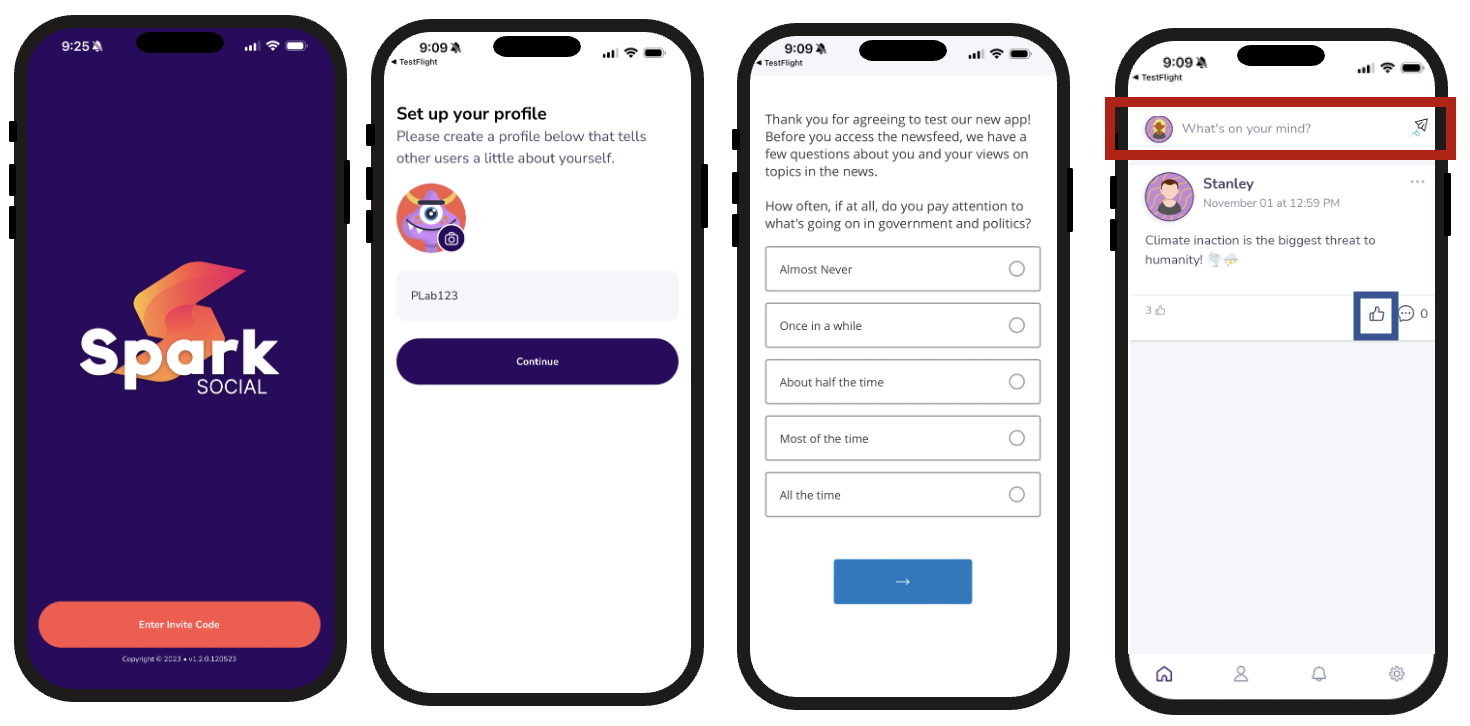
A randomized controlled trial demonstrates that platform interventions promoting curiosity can increase question-asking, decrease toxicity, and improve user engagement without impacting satisfaction.
Despite widespread concerns about the antisocial effects of social media, interventions to foster prosocial dispositions have been hampered by limited experimental control over platform features. This challenge is addressed in ‘Can Platform Design Encourage Curiosity? Evidence from an Independent Social Media Experiment’, which presents a randomized controlled trial-conducted on a novel research platform-demonstrating that priming curiosity through modified social norms and interface affordances significantly increases question-asking and reduces toxicity. These interventions improved user engagement without negatively impacting reported enjoyment or time spent posting, suggesting that platform designs prioritizing curiosity can foster prosocial behavior. Could strategically designed platforms help cultivate more constructive online interactions and mitigate the negative consequences of social media?
The Fractured Landscape of Online Discourse: A Temporal Distortion
Despite their promise of global connection, social media platforms frequently cultivate conditions conducive to affective polarization and the rapid dissemination of inaccurate information. Algorithms designed to maximize engagement often prioritize emotionally charged content, inadvertently creating filter bubbles where users are primarily exposed to viewpoints confirming their existing beliefs. This constant reinforcement, coupled with the speed and scale of social sharing, can amplify partisan divides and make individuals more susceptible to misinformation, as emotionally resonant falsehoods often spread more quickly than factual corrections. The architecture of these platforms, therefore, doesn’t simply reflect societal polarization; it actively contributes to it, creating environments where reasoned debate is overshadowed by emotionally driven reactions and the erosion of shared factual ground.
Social media architectures frequently cultivate what are known as echo chambers, digital spaces where users are primarily exposed to information and opinions that confirm their existing beliefs. This isn’t simply about selective exposure; algorithms actively prioritize content aligning with user preferences, inadvertently limiting diverse perspectives. Simultaneously, these platforms can incentivize performative outrage – the public expression of anger intended to signal virtue or group affiliation rather than genuine concern. This combination stifles constructive dialogue, as individuals are less likely to encounter challenging viewpoints and more inclined to engage in emotionally charged reactions. The result is a reinforcement of pre-existing biases, making compromise or nuanced understanding increasingly difficult and contributing to a fractured online landscape where genuine exchange is often replaced by polarized pronouncements.
The pervasive toxicity within online spaces demonstrably erodes the potential for meaningful exchange. Studies reveal a correlation between heightened emotionality and decreased cognitive processing, meaning that hostile or aggressively polarized content actively inhibits the ability to thoughtfully consider opposing viewpoints. This isn’t simply a matter of disagreement; the constant barrage of negativity and personal attacks fosters an environment of distrust, where individuals become less willing to share perspectives or engage in good-faith debate. Consequently, online interactions frequently devolve into unproductive cycles of defensiveness and condemnation, effectively silencing nuanced arguments and reinforcing pre-existing beliefs, ultimately hindering the pursuit of collective understanding and informed decision-making.
Curiosity as a Catalyst for Prosociality: A Countercurrent to Entropic Decay
Research indicates a strong correlation between individual curiosity levels and the propensity to engage in prosocial behaviors, particularly within online environments. Studies demonstrate that individuals with higher curiosity scores are more likely to exhibit empathy, offer assistance, and engage in cooperative actions when interacting with others digitally. This link suggests that interventions designed to stimulate curiosity – by encouraging information seeking, perspective-taking, and open-mindedness – may effectively promote more positive and constructive online interactions, potentially reducing instances of conflict and fostering stronger online communities. The underlying mechanism appears to involve a heightened interest in understanding the motivations, beliefs, and experiences of others, thereby facilitating more compassionate and cooperative responses.
Epistemic curiosity, defined as the motivation to increase one’s knowledge and understanding, is positively correlated with intellectual humility and the capacity for belief revision. Research indicates that individuals high in epistemic curiosity demonstrate a greater willingness to acknowledge gaps in their own knowledge and to update their beliefs when presented with new evidence. This process isn’t simply accepting information; rather, it involves actively seeking out diverse perspectives and critically evaluating the validity of competing claims. The effect extends to a reduced defensiveness regarding personal beliefs, fostering a more flexible cognitive framework and increasing openness to alternative viewpoints, even those that challenge pre-existing assumptions.
Open-minded thinking and question-asking represent observable behaviors directly linked to curiosity and serve as crucial signals of receptiveness in social interactions. Specifically, demonstrating a willingness to consider alternative viewpoints – a core element of open-minded thinking – encourages reciprocal consideration from others. Question-asking, particularly when framed as genuine inquiries rather than challenges, facilitates perspective-taking by prompting elaboration and clarification of differing beliefs. These actions actively solicit information, allowing individuals to construct more accurate models of others’ viewpoints and reducing reliance on potentially biased assumptions. This process not only enhances understanding but also establishes a communicative environment conducive to constructive dialogue and collaborative problem-solving.
Increasing curiosity within online environments presents a potential strategy for reducing polarization and improving the quality of digital interactions. Research indicates that fostering a desire to learn and understand opposing viewpoints can decrease defensive reactions and promote more constructive dialogue. This approach focuses on shifting cognitive orientations from seeking confirmation of existing beliefs to actively exploring alternative perspectives, thereby lessening the entrenchment of polarized positions. By prioritizing inquiry and open-mindedness, online platforms and communities may be able to encourage users to engage with differing opinions not as threats, but as opportunities for knowledge acquisition and intellectual growth, ultimately leading to more productive discourse.
Designing for Curiosity: A Platform-Level Intervention and Measurement
Platform design significantly influences user behavior, acting as either a facilitator or impediment to prosocial interactions. This influence is mediated through affordances – the qualities of a platform that suggest how it can be used – which can be strategically implemented to encourage curiosity. By altering these affordances, developers can shape the environment to prioritize exploration and questioning. Specifically, features that reduce friction in seeking information, or that reward inquisitive behavior, can foster a more curious user base. Conversely, designs that prioritize immediate gratification or reinforce confirmation bias can inhibit curiosity and potentially increase negative interactions. Therefore, a deliberate focus on affordances is crucial for creating platforms that actively support positive behavioral outcomes.
Randomized Controlled Trials (RCTs) were conducted using independent research platforms and artificially intelligent bots to rigorously evaluate the impact of specific platform feature manipulations on user behavior. This methodology involved establishing control and experimental groups within these platforms, allowing for the systematic alteration of variables such as content presentation or interaction prompts. AI bots were employed to simulate user activity and ensure sufficient data volume, while platform-level logging captured detailed interaction data. By comparing the behaviors of users exposed to different feature configurations, we were able to isolate the effects of individual interventions and establish causal relationships between platform design and observed user actions.
The Perspective API, developed by Google, was integrated into the research platform to provide quantifiable metrics for both toxicity and curiosity exhibited by users. This API utilizes machine learning models to score text content based on attributes such as perceived offensiveness, identity attack, and insult, thereby generating a toxicity score. Simultaneously, the API assesses curiosity through analysis of question formulation and topic exploration. The resulting scores, ranging from 0 to 1, allowed researchers to move beyond subjective assessments and obtain statistically significant data on the impact of platform interventions on user behavior, specifically tracking changes in both negative interactions and exploratory questioning within the controlled experimental environment.
Randomized controlled trials conducted on independent research platforms utilizing AI bots revealed a statistically significant correlation between priming curiosity and user behavior. Specifically, question-asking increased with an odds ratio of 5.6 at Time 1 (T1) and 7.7 at Time 2 (T2). Concurrently, curiosity scores also exhibited a positive correlation, demonstrating an odds ratio of 1.57 at T1 and 1.77 at T2. Notably, these interventions were associated with a reduction in toxicity, evidenced by odds ratios of 0.9 at T1 and 0.87 at T2, indicating that fostering curiosity may also contribute to a more positive online environment.
Towards a More Empathetic Digital Future: Resisting the Inevitable Decay
Platform design choices fundamentally shape how individuals interact online, and a deliberate prioritization of curiosity offers a pathway to reshape prevailing social norms. Current platforms often incentivize rapid reactions and the reinforcement of existing beliefs, fostering echo chambers and contributing to polarization. However, by integrating features that reward questioning, exploration of diverse perspectives, and seeking out novel information, platforms can subtly encourage a more inquisitive approach to online content. This isn’t simply about presenting different viewpoints, but about designing systems that value the act of seeking understanding, prompting users to move beyond confirmation bias and engage with information in a more open-minded manner. Such a shift, implemented through design interventions, has the potential to foster a more constructive and tolerant online environment, gradually altering expectations for online discourse and incentivizing thoughtful interaction over reactive responses.
Observations indicate that a flourishing online environment isn’t simply about maximizing user activity; rather, the quality of interaction is paramount. Studies reveal that when platforms prioritize fostering curiosity alongside increased engagement, a demonstrable reduction in toxic behaviors emerges. This combination doesn’t merely suppress negativity; it cultivates a space where users are more inclined towards constructive dialogue and knowledge sharing. The resulting ecosystem, characterized by both high volume and thoughtful contribution, suggests a shift from reactive, often divisive, exchanges to a more vibrant and productive digital landscape, ultimately benefiting the collective exchange of ideas and information.
Analysis of user interactions revealed a notable shift in commenting behavior following the implementation of curiosity-driven platform designs. Participants exposed to these interventions demonstrated a reduced frequency of comments – averaging 4.11 at Time 1 and 4.08 at Time 2 – when contrasted with the control group’s consistent average of 4.64. This decrease isn’t indicative of diminished participation, but rather suggests a move towards more considered and deliberate contributions. The data implies that fostering curiosity encourages users to pause and reflect before posting, prioritizing quality of engagement over sheer volume and potentially cultivating a more thoughtful online discourse.
Designing digital platforms to actively foster curiosity offers a compelling pathway towards reducing societal polarization and cultivating more inclusive online spaces. This approach moves beyond simply minimizing negativity; it proactively encourages users to seek diverse perspectives and engage with unfamiliar viewpoints. By prioritizing open-ended exploration and rewarding inquisitive behavior, these platforms can subtly reshape online norms, shifting the focus from confirmation bias and reactive engagement to thoughtful consideration and constructive dialogue. The resulting environment isn’t just less hostile, but genuinely more conducive to learning, understanding, and the formation of common ground – essential elements for a thriving and interconnected global community. This represents a fundamental shift in platform design, envisioning technology not as a driver of division, but as a tool for bridging divides and fostering a more empathetic digital future.
The study’s findings suggest a subtle but profound truth about systems – even those built on algorithms and interfaces – and their capacity for graceful aging. The platform’s design, intentionally nudging users towards inquiry, doesn’t represent a static solution, but rather a continuous calibration. As Donald Davies observed, “The real problem is that people think of data as something static, when in fact it is constantly changing.” This principle applies directly to the social media environment explored; a platform prioritizing curiosity isn’t merely combating toxicity, it’s building a system adaptable to the ever-shifting currents of online interaction. Versioning, in this context, isn’t simply about software updates, but about a commitment to evolving the platform’s affordances to sustain intellectual humility and prosocial behavior over time.
What’s Next?
The observation that designed curiosity can temporarily nudge a complex system like social media towards reduced toxicity is less a triumph than a recognition of inherent instability. Uptime, even of a comparatively civil platform, remains a rare phase of temporal harmony. This study establishes a correlation, but the decay rate of these prosocial affordances remains unknown. How long does a ‘curiosity prime’ hold against the relentless entropy of habitual interaction? Further research must address the longitudinal effects, acknowledging that behavioral shifts are rarely permanent.
A key limitation lies in the artificiality of the intervention. Priming curiosity within a controlled experiment is distinct from fostering it organically. True intellectual humility, the bedrock of genuine inquiry, cannot be simply engineered. Future work should investigate how platform designs can cultivate environments that reward curiosity-not merely elicit it-and how to measure the subtle erosion of this reward structure over time. Technical debt, in this context, is not bugs in code, but the accumulated cost of maintaining artificial behavioral states.
Ultimately, this line of inquiry points toward a broader question: can digital infrastructure be designed to decelerate, rather than accelerate, the natural cycles of polarization and disengagement? The current model prioritizes attention; perhaps a sustainable system will need to prioritize-and actively cultivate-a different set of values. This will require moving beyond metrics of ‘engagement’ and developing measures of genuine intellectual growth, a considerably more challenging, and likely less profitable, endeavor.
Original article: https://arxiv.org/pdf/2601.16040.pdf
Contact the author: https://www.linkedin.com/in/avetisyan/
2026-01-23 15:58