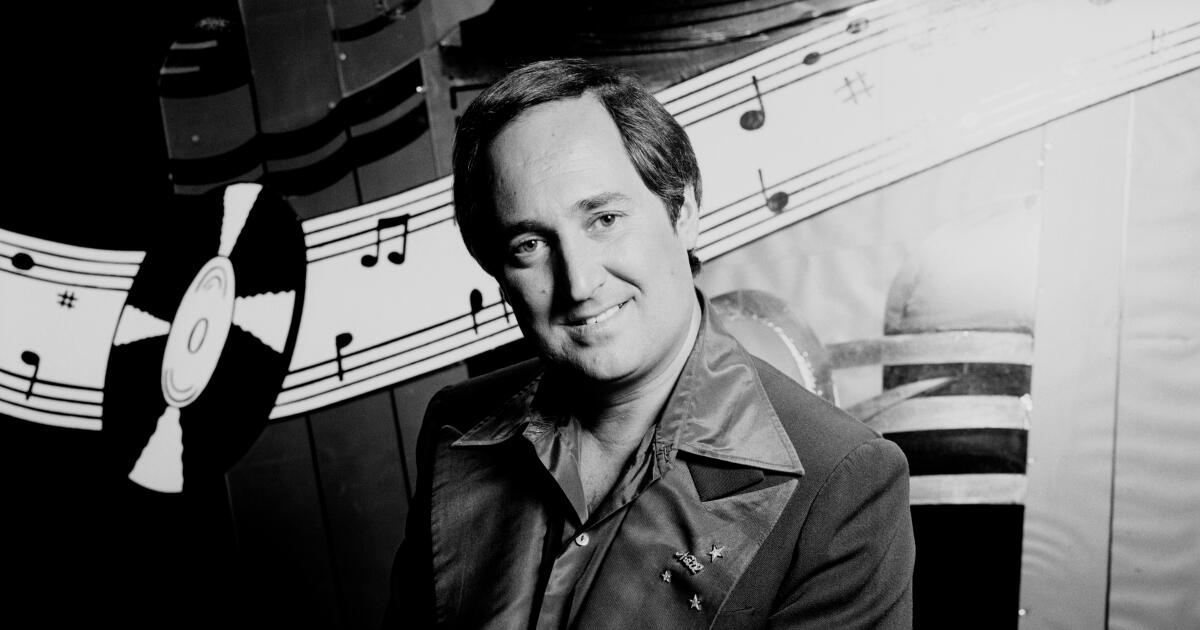
I was really saddened to hear about Neil Sedaka’s passing. He was such a talented songwriter and performer – a true star of the 60s, right in the middle of that amazing Brill Building scene. And then, to see him come back with those easy-listening hits in the 70s was fantastic! He was 86 years old, and while we don’t know the cause of death yet, his music will definitely be missed. He just had a way of writing songs that really stuck with you.
The family of Neil Sedaka released a statement to the Times expressing their deep sadness over his unexpected death. They remember him as a legendary figure in rock and roll who inspired countless people, but above all, a wonderful and deeply loved husband, father, and grandfather who will be greatly missed.
Neil Sedaka was a naturally upbeat songwriter who never hid his fondness for heartfelt melodies. He rose to prominence as the first wave of rock and roll began to fade. Seeing rock as just another popular trend, Sedaka created bright, energetic songs aimed at teenagers. He wrote hits like “Stupid Cupid” and “Where the Boys Are” for pop singer Connie Francis, and later became a star himself with catchy tunes such as “Calendar Girl,” “Happy Birthday, Sweet Sixteen,” and his most famous song, “Breaking Up Is Hard to Do,” which topped the charts in 1962.
As a movie lover, I always find it fascinating how artists navigate changing times, and Neil Sedaka’s story is a great example. By the time the Beatles hit America, his star was already fading. He really struggled with the British Invasion and ended up moving to England after losing his record deal. Unlike Carole King, who reinvented herself as a singer-songwriter – she actually inspired his first big hit, “Oh! Carol”! – Sedaka was more of a showman. He had a real knack for understanding what would sell, and he teamed up with the incredibly talented musicians who later became 10cc to create some really solid soft-rock tracks. Then, Elton John gave him a huge boost by signing him to his new label, Rocket, and suddenly Sedaka was back on top with hits like “Laughter in the Rain” and “Bad Blood.” It was amazing – even Captain & Tennille took one of his songs, “Love Will Keep Us Together” (originally recorded with 10cc), to the number one spot in 1975! It just goes to show you can never count someone out.
Neil Sedaka’s second period of fame didn’t last long—by 1980, he was no longer charting hits—but his successful return in the 1970s established him as a permanent part of the entertainment world. This allowed him to build a lasting career performing on stage and occasionally in film. He’d periodically reappear in the public eye, like when he appeared on “American Idol” in the early 2000s, or when his song “(Is This the Way to) Amarillo?” was updated and used as an anthem for the 2006 World Cup.

Neil Sedaka, born on March 13, 1939, in Brooklyn, New York, comes from a family with Turkish and Ashkenazi Jewish roots. He showed a talent for music from a young age, earning a piano scholarship to the children’s division of Juilliard at age 8. Though he studied classical piano for several years, he was always drawn to pop music. When he was 13, a chance meeting at a Catskills resort led him to Howard Greenfield, an aspiring lyricist. They quickly formed a songwriting partnership, with Greenfield writing the lyrics and Sedaka composing the music.
Neil Sedaka and Howard Greenfield became a successful songwriting team. Early in his career, Sedaka was part of a vocal group called the Linc-Tones, which later became the Tokens, but he left before they had their famous hit, “The Lion Sleeps Tonight.” While still hoping to perform, Sedaka focused on writing songs with Greenfield. They initially tried to get noticed in the music scene around the Brill Building, and Jerry Wexler helped them get some of their songs recorded by Clyde McPhatter and LaVern Baker. Based on a suggestion from Mort Shuman and Doc Pomus, Sedaka and Greenfield moved their efforts to 1650 Broadway, where Al Nevins and Don Kirshner had recently started a new music publishing company called Aldon Music.
Aldon signed Neil Sedaka and Howard Greenfield to a publishing contract. Because Sedaka was still a minor, his mother had to sign for him. Their first major success came in 1958 when Connie Francis’s recording of “Stupid Cupid” reached the Top 20. Soon after, Sedaka began recording as a performer with RCA Records. The song “The Diary,” written after Francis wouldn’t let them read her diary, became Sedaka’s first hit that same year, after the group Little Anthony and the Imperials decided not to record it. When Sedaka struggled to follow up his initial success, he wrote “Oh! Carol” to sound like the popular, romantic songs of 1959. The risk paid off, as “Oh! Carol” became a Top 10 hit and was so popular it inspired a response song. Gerry Goffin, Carole King’s husband, wrote “Oh! Neil” as an answer to Sedaka’s song, but it wasn’t successful.
As early rock and roll stars like Elvis Presley, Chuck Berry, Little Richard, and Jerry Lee Lewis faced difficulties – whether through military service, legal issues, religious conversion, or career setbacks – Neil Sedaka filled the void. He offered clean-cut, upbeat songs that resonated with the experiences of teenagers. Hits like “Stairway to Heaven,” “Calendar Girl,” “Happy Birthday Sweet Sixteen,” “Breaking Up Is Hard to Do,” and “Next Door to an Angel” were all lively and featured polished arrangements that emphasized Sedaka’s optimistic energy.
Even as he enjoyed his own Top 10 success, Sedaka kept writing hit songs for other artists, consistently composing for Francis and also seeing success with Jimmy Clanton. He even contributed as a session musician, playing piano on Bobby Darin’s famous song, “Dream Lover.”
By 1964, when the Beatles and other British bands became hugely popular, Neil Sedaka’s string of hit songs had ended. Worried about his career, he quickly recorded a dramatic pop song called “It Hurts to Be in Love” with his collaborators. He made a radio-ready version at a small studio, but his record label, RCA, wouldn’t release it because they only distributed recordings made in their own facilities. Gene Pitney then recorded the song with his own vocals and it became a Top 10 hit – while Sedaka struggled to even reach the Top 40. Sedaka later said it was devastating, as he believed that song would have been his big comeback hit.
When his contract with RCA ended in 1966, Sedaka began performing at hotels in the Catskills and clubs along the East Coast, but the venues gradually became smaller over time. Despite this, he continued writing songs, collaborating with Carole Bayer to create hits for the Monkees like “The Girl I Left Behind Me” and “When Love Comes Knockin’ at Your Door,” and working with Roger Atkins on a song for the 5th Dimension called “Workin’ on a Groovy Thing.”
As his career in the United States slowed down in the late 1960s, Sedaka started touring England and Australia frequently. By the start of the 1970s, he noticed a shift in the music scene. “The singer-songwriter movement had begun, and I felt like I was falling behind,” he explained. “I really wanted to be a part of it!” He went back to RCA Records with “Emergence,” an album intended to capture the same radio success as Carole King’s “Tapestry,” but it didn’t get the airplay he hoped for. Many still saw him as an artist from the early 1960s.
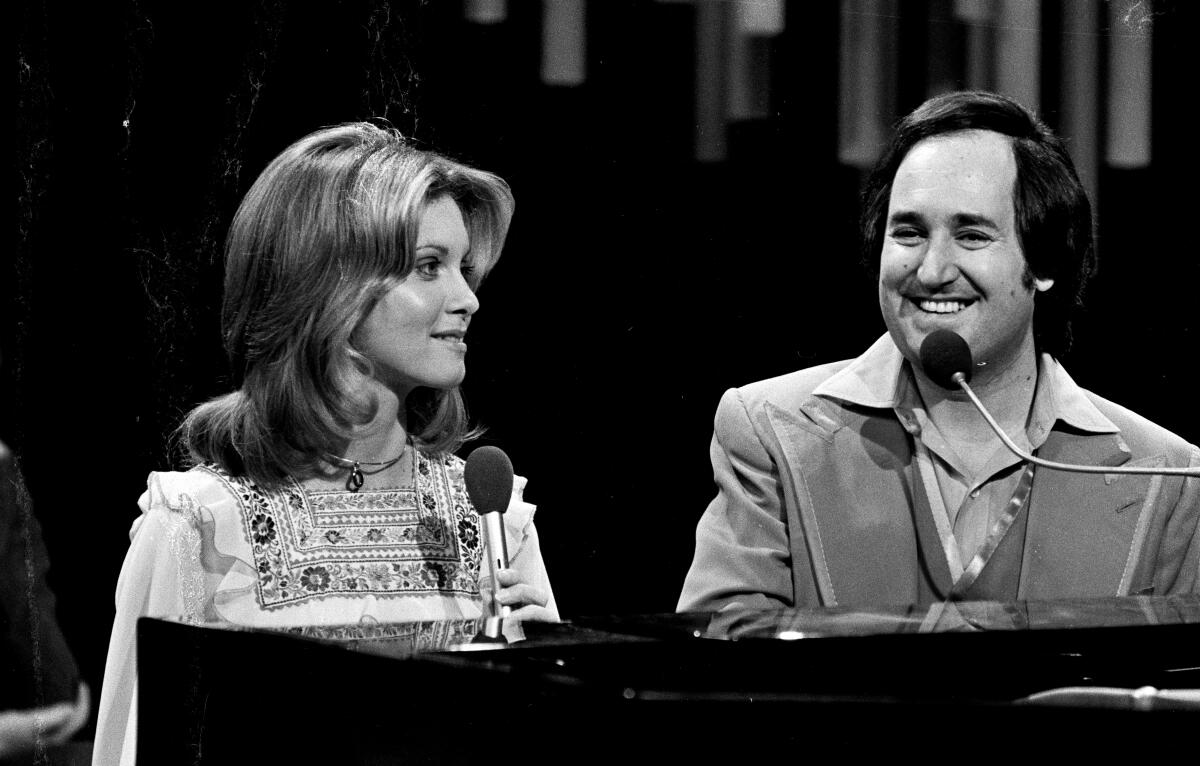
Feeling discouraged by a lack of interest in his previous work, Sedaka moved to the U.K. and performed in clubs until he met Eric Stewart, Graham Gouldman, Lol Creme, and Kevin Godley – experienced British pop musicians who would soon create the band 10cc. They invited him to their Strawberry Studios, where they’d previously recorded quirky bubblegum pop songs under names like Crazy Elephant and Hotlegs, and played on his 1972 album, “Solitaire.” The album’s title track marked his first songwriting partnership with lyricist Phil Cody, and it later became famous when covered by Elvis Presley.
After a long gap, Neil Sedaka returned to the U.K. charts with the song “That’s When the Music Takes Me.” This success led him to collaborate with 10cc again in 1973, resulting in the album “The Tra-La-La Days are Over,” which included the upbeat hit “Love Will Keep Us Together.” However, by 1974, when Sedaka released “Laughter in the Rain,” he had ended his partnership with 10cc and begun working with Elton John instead.
At the peak of his success in the 1970s, John signed Neil Sedaka to his new record label, Rocket Records. Rocket then released a compilation of Sedaka’s older hits, called “Sedaka’s Back,” and included the song “Laughter in the Rain.” This song gradually climbed the charts and reached No. 1 on the Billboard list in 1975. Later that year, “Bad Blood,” a lively duet featuring Elton John (though he wasn’t credited), also topped the charts, following Captain & Tennille’s No. 1 hit, “Love Will Keep Us Together.”

Neil Sedaka’s return to popularity didn’t last long. After briefly charting in the Top 40 a couple of times in 1976, he left Rocket Records and signed with Elektra in 1977. He then released a series of albums where he mixed his smooth, easy-listening style with a more edgy and suggestive tone, as heard in songs like “Sleazy Love,” “One Night Stand,” and “Junkie for Your Love.”
As a lifelong music fan, it’s amazing to look back at Neil Sedaka’s career. His last song to hit the charts was a beautiful duet with his daughter, Dara, called “Should’ve Never Let You Go,” back in 1980. He shared his life story in his memoir, “Laughter in the Rain: My Own Story,” in ’82, and rightfully earned his place in the Songwriters Hall of Fame the following year. By the mid-80s, he was often performing his classic hits on the oldies circuit, and he cleverly reimagined them for the stage. First came the jukebox musical “Breaking Up Is Hard to Do” in 2005, and then a full-blown musical biography, “Laughter in the Rain,” in 2010. But he wasn’t just about pop! He even revisited his classical roots with the 1995 album “Classically Sedaka.” And showing his versatility, he released a collection of Yiddish songs, “Brighton Beach Memories,” in 2003, and even a children’s album, “Waking Up Is Hard to Do,” in 2009. What a career!

Neil Sedaka would sometimes reappear in the public eye with high-profile appearances. For example, in 2003, he was a guest judge on the second season of “American Idol” and playfully described runner-up Clay Aiken as “ear delicious.” Later, in 2006, his upbeat 1971 song “(Is This the Way to) Amarillo?” experienced a revival when it was re-released as a novelty track tied to the World Cup.
In 2007, Lincoln Center celebrated Neil Sedaka’s 50 years in the entertainment industry with a special concert featuring Natalie Cole, David Foster, and Clay Aiken. He remained active for the next twenty years, releasing some new albums while primarily focusing on live performances. When the COVID-19 pandemic began in 2020, he adapted by performing short concerts online through social media.
Sedaka is survived by his wife, Leba, daughter Dara and son Marc, and three grandchildren.
2026-02-28 01:32