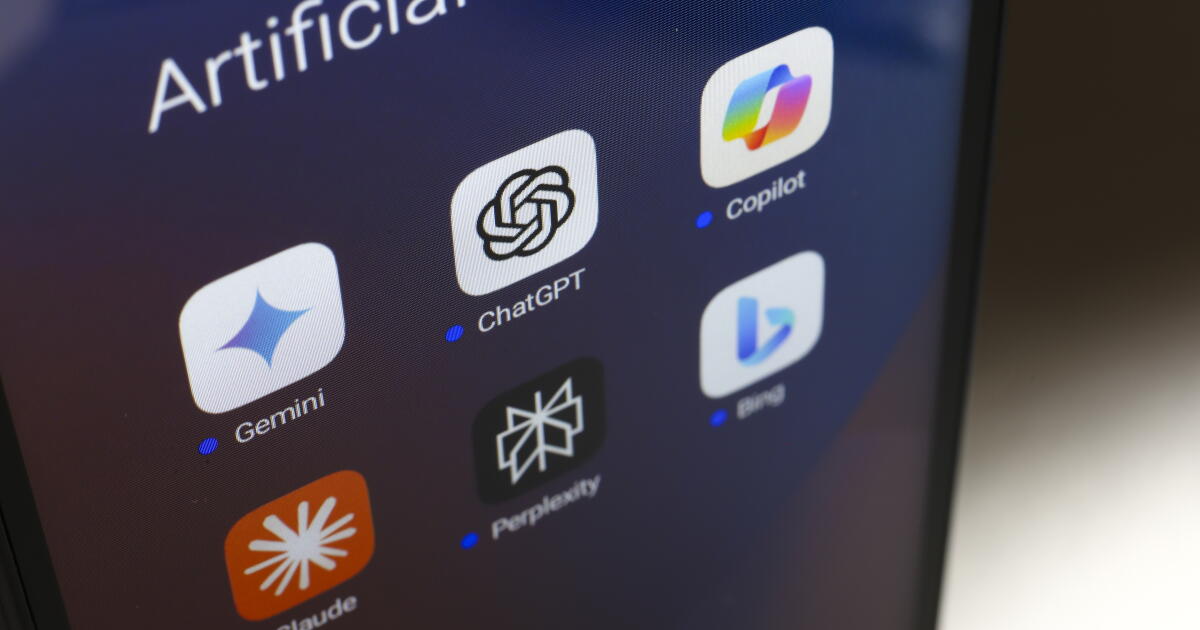
The chatbot wars entered the Super Bowl this year.
During Super Bowl LXI, a rival to ChatGPT spent millions on commercials that poked fun at the leading AI chatbot’s idea to include ads within its conversations.
One advertisement, called “Betrayal,” featured a man trying to improve his communication with his mother. His therapist—who was actually a sponsored chatbot—gave relationship advice, but unexpectedly recommended a dating site for older women as a next step.
Anthropic, the company behind the Claude chatbot, is running ads that highlight a key difference: while other AI platforms may start showing advertisements, Claude will remain ad-free.
AI companies are investing huge sums of money and need to increase their income to continue doing so. While they currently make a lot of money from businesses and power users through subscriptions, those serving everyday consumers will likely have to depend more on advertising and other ways to earn revenue from a large user base.
Ads during the Super Bowl sparked a discussion about a potential future where the chatbots many of us interact with daily begin trying to sell us things.

Business
People strongly criticized McDonald’s recent humorous commercial, finding it offensive and asking why it depicted someone abandoning their family to hide in a McDonald’s restaurant.
OpenAI, with over 800 million users, reportedly made about $20 billion in 2025, as stated by CEO Sam Altman. However, this revenue isn’t sufficient to cover its current debts and future expenses.
OpenAI announced last month that it’s beginning to test showing ads to users of its free service and those who pay for the ChatGPT Go plan in the United States.
According to Justin Inman, a former Google executive and founder of the AI brand visibility startup Emberos, while subscriptions cover a certain number of users, a large number use the service for free.
ChatGPT now includes ads, and the company has shown users what these ads will look like within the chat interface.
We saw two different types of promotions within the chatbot. One was a clear ‘sponsored’ link to buy hot sauce at the end of a response. The other was more subtle: after answering a question about Santa Fe, the chatbot included a link to a local desert cottage.
OpenAI has clarified that advertisements won’t affect the responses you get from ChatGPT, and they will be distinctly marked as ads.

Business
Advertisers are increasingly using artificial intelligence, and in some cases, this is making it difficult to tell the difference between news and advertising.
Altman responded to the Anthropic commercial on X, calling it funny but “dishonest.”
He stated that the way Anthropic portrays their ads is inaccurate and that they would never run ads like that. He explained that they understand their audience and know those types of ads wouldn’t be well-received.
He suggested Anthropic was being elitist.
One source noted that Anthropic focuses on a premium product for wealthier customers, while OpenAI believes it’s important to make AI accessible to a much wider audience, including those who can’t afford to pay for it.
Anthropic, a company started in 2021 by people who used to work at OpenAI, has been competing with OpenAI for a while. However, a recent Super Bowl ad marked one of the first times their rivalry became very public.
ChatGPT aimed its services at general users, but Anthropic has concentrated on providing chatbot solutions for businesses. The company has grown rapidly, reportedly earning $9 billion in revenue in 2025 and is now expected to reach $26 billion this year.

Business
People to ditch their keyboards for microphones.
Demis Hassabis, the head of Google DeepMind and the creator of Gemini, recently expressed surprise at OpenAI’s quick move to show ads within their chatbot. He worries that promoting products during conversations could damage users’ confidence in AI as a reliable and helpful tool.
While Google’s Gemini chatbot itself doesn’t show ads, Google has started placing ads in the AI-powered summaries that appear at the top of regular Google search results. They’re also testing ads within “AI Mode” – the conversational search feature on Google’s homepage – displaying sponsored results below the AI’s responses.
Grok, the AI feature on X (formerly Twitter), informed advertisers last year that it planned to include ads within its chatbot conversations. This is intended to increase revenue and cover the costs of the powerful hardware needed to run the AI.
Increasingly, American shoppers are starting to use AI chatbots. A recent Deloitte study shows that people are growing more confident in this technology. Especially younger shoppers, who are using chatbots to compare prices, discover discounts, get quick summaries of reviews, and even create shopping lists.
Brands are already working to improve how their products show up in AI-powered search results, even without paying for direct ads. A growing number of new businesses and consultants are now offering services – known as Generative Engine Optimization – to help companies achieve this.
According to Amay Aggarwal, co-founder of Anglera, while traditional search engine optimization is a $20-25 billion market, AI-powered commerce offers significantly greater potential. His company assisted Retrospec, an e-bike and outdoor goods retailer based in Los Angeles, in optimizing its product listings. This allows AI chatbots like ChatGPT and Gemini to provide accurate bike recommendations based on individual needs.

Business
AI podcasts are flooding the airways as California companies make thousands to see what sticks
Despite the rise of AI in advertising, leading AI companies still invested heavily in traditional Super Bowl TV commercials. The Super Bowl remains a rare, massive shared viewing experience in the age of online streaming and fragmented audiences, consistently attracting over 100 million viewers. These companies were willing to pay as much as $10 million for just 30 seconds of airtime.
During Super Bowl LX, ads featuring artificial intelligence were everywhere. Companies like OpenAI showcased their coding tool, Codex, while Google’s Gemini highlighted its ability to create images.
Even though many considered Super Bowl week a showcase for AI, none of the leading AI companies – like OpenAI, Google, and Anthropic – ranked among the top 20 brands that excelled in generative AI-powered searches and conversations during that time.
Just because a brand uses AI doesn’t mean AI will recognize it, explains Inman from Emberos. Their company created The AI Influence Index, which analyzed how the seven biggest Super Bowl advertisers appeared in AI searches.
When people searched for chatbots, seven brands came up most often: XFINITY, Bud Light, Squarespace, Ramp, Budweiser, Volkswagen, and Dove.
According to Inman, the challenge for advertising within chatbots won’t be grabbing people’s attention, but ensuring the core message remains understandable even after being processed and relayed by the AI itself.
2026-02-11 14:02