Author: Denis Avetisyan
New research reveals a demand for generative AI tools that empower human collaboration, rather than simply replacing human work.

This study examines freelancers’ co-design visions for generative AI, critiquing current technological rationality and proposing a model of ‘auxiliary AI’ focused on collaborative agency.
While generative AI promises increased productivity, current tools often overlook the unique collaborative needs of freelance workers and risk exacerbating existing precarity. This research, ‘Co-Designing Collaborative Generative AI Tools for Freelancers’, investigates how freelancers envision future AI, revealing a strong preference for ‘auxiliary AI’ systems that support-rather than automate-human-led collaboration. Through co-design sessions, we found freelancers prioritize maintaining creative agency and authentic work identities, resisting technologies solely driven by efficiency. Can design effectively balance the promise of AI assistance with the preservation of collective creative control in the evolving landscape of freelance work?
The Shifting Landscape of Collaborative Work
The nature of freelance work is undergoing a significant transformation, increasingly demanding collaborative efforts to meet the growing complexity of project deliverables. No longer solely reliant on individual skillsets, successful freelancers now frequently participate in dynamic teams, pooling resources and expertise to tackle multifaceted assignments. This shift reflects a broader trend in the modern economy where specialized knowledge, while valuable, often requires integration with complementary skills – a feat rarely achievable in isolation. Consequently, the ability to effectively collaborate, share knowledge, and navigate team dynamics has become as crucial for freelancers as technical proficiency, driving a demand for new platforms and methodologies that facilitate seamless collective action and project execution.
While subcontracting and collaborative bidding have long been staples of project-based work, these established methods often struggle to accommodate the dynamic nature of modern demands. These approaches typically lock freelancers into predefined roles and deliverables early in a project, hindering their ability to pivot quickly when client needs shift or unexpected challenges arise. The rigidity of these systems can lead to delays, increased costs, and diminished quality, as freelancers are forced to adhere to outdated plans rather than leveraging emerging opportunities or innovative solutions. Consequently, a growing need exists for more agile, collaborative structures that prioritize flexibility and allow freelancers to readily adapt to evolving project requirements, fostering both efficiency and client satisfaction.
The modern freelance landscape is witnessing a distinct shift from solitary practice towards collaborative ecosystems. Increasingly, independent professionals recognize the limitations of operating in isolation, particularly when tackling multifaceted projects requiring diverse skillsets. This has spurred a proactive search for novel organizational structures – beyond conventional subcontracting – that facilitate resource pooling and knowledge sharing. Freelancers are experimenting with informal collectives, skill-based co-operatives, and digitally-enabled networks to not only expand their capacity to bid on and deliver larger projects, but also to foster mutual support, reduce operational costs, and collectively navigate the challenges inherent in the gig economy. These emerging models prioritize flexibility and shared ownership, representing a fundamental reimagining of how independent work is organized and sustained.
The accelerating pace of change within the freelance landscape necessitates a continuous commitment to skill development, and peer learning has emerged as a particularly effective mechanism for achieving this. Unlike traditional, formalized education, learning from fellow freelancers offers immediate relevance to current project demands and provides insights into practical, real-world applications of new tools and techniques. This collaborative approach fosters a dynamic exchange of knowledge, allowing individuals to quickly adapt to evolving client needs and industry standards. Furthermore, peer learning cultivates a sense of community amongst those navigating the gig economy, offering mutual support and a platform for addressing shared challenges – ultimately proving more agile and responsive than relying solely on individual upskilling efforts or static training programs.

AI: A Double-Edged Sword for Freelance Autonomy
Generative AI tools, encompassing technologies like large language models and image generators, demonstrably increase freelancer productivity by automating tasks previously requiring significant time investment. These tools facilitate rapid content creation – including text, code, and visual assets – allowing freelancers to complete projects faster and manage a higher volume of work. Specifically, AI assists with tasks such as initial draft generation, content summarization, code debugging, and the creation of variations on existing designs. This automation extends to administrative functions like invoicing and project management, further optimizing workflow and reducing overhead. Consequently, freelancers can focus on higher-level strategic thinking and client interaction, or accept a greater number of assignments within a given timeframe, potentially increasing overall earning capacity.
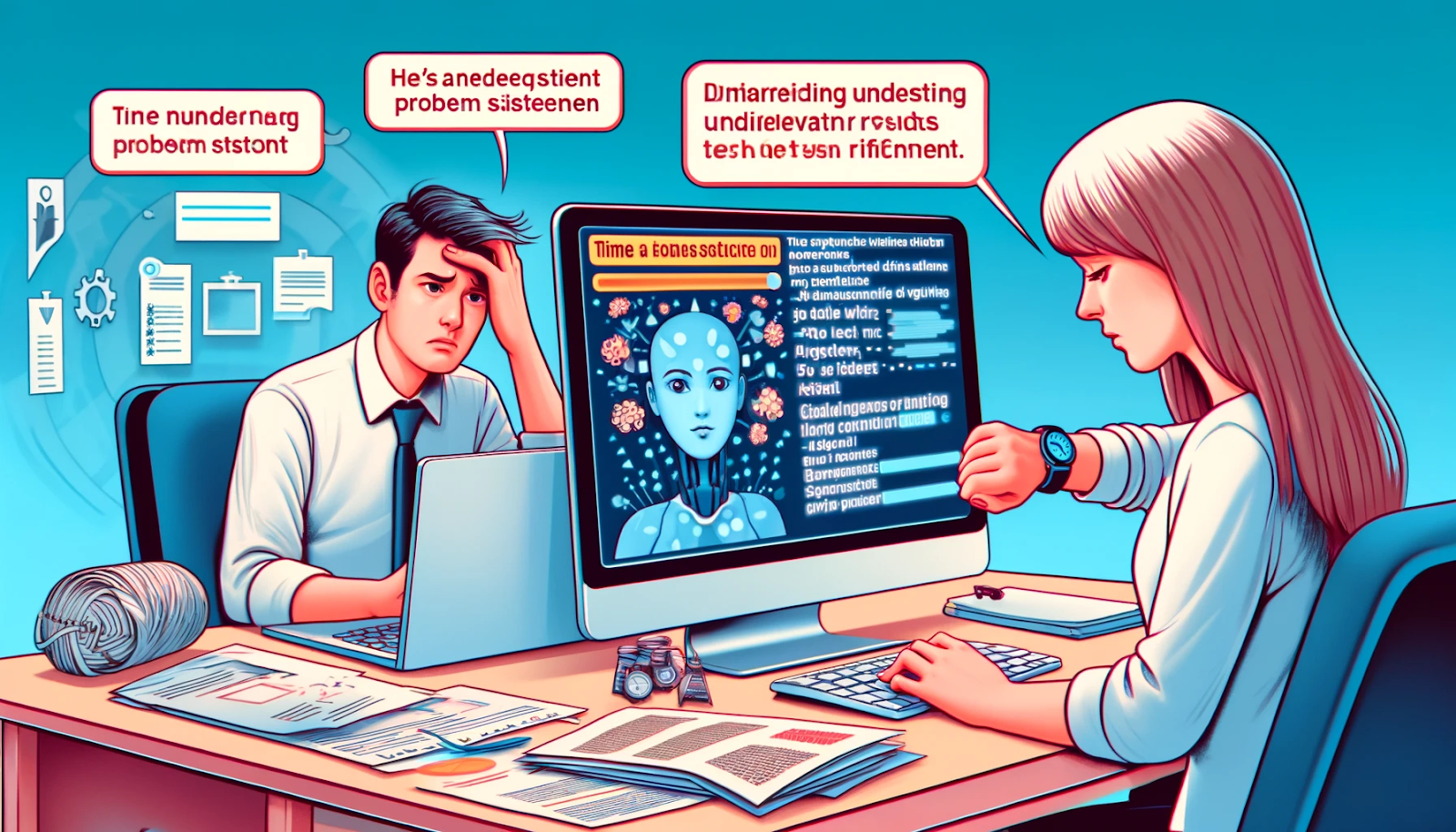
Technological rationality, as applied to AI development and deployment, centers on maximizing output and minimizing input, often framing tasks as problems with single, optimal solutions. This approach prioritizes measurable efficiency gains – speed, cost reduction, and scalability – over qualitative aspects like nuanced collaboration or individual agency. Consequently, AI systems are frequently designed to automate processes by breaking them down into discrete, standardized components, potentially diminishing the role of human judgment, intuition, and the exploration of alternative approaches. This focus on optimization can lead to systems that, while effective at completing defined tasks, lack the flexibility to adapt to unforeseen circumstances or incorporate diverse perspectives, ultimately impacting the autonomy of users who rely on them.
The prioritization of optimization within generative AI systems can inadvertently encourage ‘one-dimensional thinking’ by consistently suggesting solutions aligned with pre-existing datasets and algorithmic patterns. This occurs because AI, focused on maximizing efficiency, tends to favor statistically probable outputs, potentially narrowing the range of considered options and discouraging exploration of novel or unconventional approaches. Consequently, freelancers may become reliant on AI-generated suggestions, limiting their independent thought processes and hindering the development of genuinely imaginative problem-solving skills, as the AI effectively curates the scope of potential solutions based on its training data and optimization goals.
The growing integration of artificial intelligence into freelance workflows demands careful consideration of its effects on professional independence and creative direction. While AI tools offer benefits in task automation and output generation, increased dependence introduces potential limitations on a freelancer’s decision-making processes. Specifically, reliance on AI-driven suggestions or automated content creation can diminish the scope for independent thought and the exercise of professional judgment. This shift raises concerns about the erosion of a freelancer’s ability to fully control the creative process, potentially leading to standardized outputs and a reduction in uniquely authored work. A thorough assessment of these impacts is crucial to mitigating risks to freelancer autonomy and ensuring the preservation of creative control.
Auxiliary AI: Designing for Collaborative Flourishing
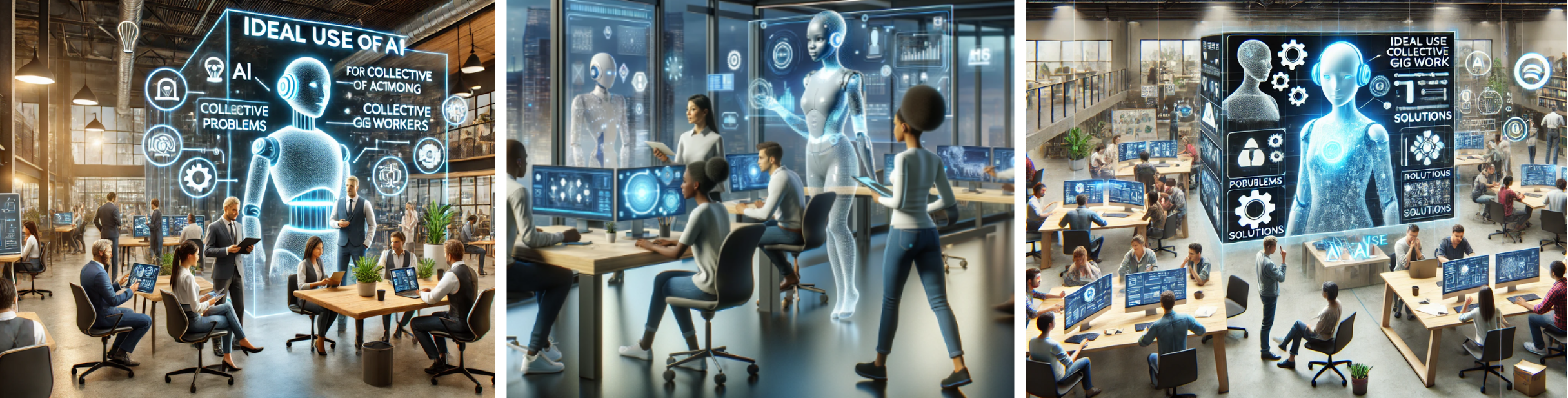
Auxiliary AI represents a design philosophy centered on the development of artificial intelligence tools specifically intended to function as collaborators with human users. This approach prioritizes augmentation of existing human skills and capabilities, rather than complete automation of tasks. The core principle involves creating AI systems that assist throughout a creative or problem-solving process, providing support and options without dictating outcomes or supplanting human agency. Unlike models focused on achieving autonomous functionality, Auxiliary AI tools are designed to be actively directed and refined by human input, fostering a synergistic partnership where both human and artificial intelligence contribute meaningfully to the final result. This collaborative framework necessitates interfaces that facilitate iterative feedback and allow users to maintain control over the creative direction.
Co-design sessions utilizing generative AI tools such as DALL-E are essential for developing user interfaces that facilitate effective human-AI collaboration. These sessions involve direct participation from intended users – designers, artists, or other relevant professionals – who work with the AI to iteratively prototype and evaluate interface designs. The process focuses on identifying how the AI can best support, rather than dictate, the creative workflow, emphasizing features that allow for human oversight, modification, and contribution at each stage. Data gathered during these sessions informs the refinement of prompts, output filtering mechanisms, and user control parameters, ultimately ensuring the interface promotes a balanced and productive partnership between the human and the AI system.
Technological rationality, as traditionally applied in AI development, prioritizes efficiency and automation through optimization of pre-defined goals. This often results in systems designed to replace human tasks. Auxiliary AI intentionally diverges from this model by prioritizing human agency and creative contribution. Instead of aiming for full automation, it emphasizes support and augmentation, structuring AI as a collaborative partner. This shift fosters a more equitable relationship, preventing the concentration of power within the technology itself and enabling a broader distribution of creative control and benefit between human users and machine systems.
Auxiliary AI, when designed to support rather than automate creative workflows, offers freelancers increased agency and opportunities for innovation. This approach prioritizes tools that assist with tasks such as ideation, research, and preliminary design iterations, allowing freelancers to retain control over the core creative direction and final output. By handling repetitive or technically demanding aspects of a project, Auxiliary AI frees up freelancers to focus on higher-level conceptualization, problem-solving, and client communication. This shift enables the exploration of a wider range of creative possibilities and facilitates the development of more nuanced and personalized work, ultimately enhancing both the quality and volume of output a freelancer can deliver.
Beyond Efficiency: Towards a Collaborative Future
The evolving relationship between freelancers and artificial intelligence extends beyond mere tool usage; a new paradigm, termed Auxiliary AI, enables active participation in the very design of these technologies. Rather than passively accepting pre-built functions, practitioners are increasingly positioned to customize and refine AI to suit specific creative workflows and collaborative needs. This shift fosters a dynamic where freelancers don’t just benefit from AI, but contribute to its development, shaping its functionality through feedback, iterative adjustments, and the creation of bespoke AI components. Consequently, Auxiliary AI promotes a more personalized and powerful creative process, unlocking levels of customization previously inaccessible and establishing a feedback loop that continuously enhances the synergy between human ingenuity and artificial intelligence.
When freelancers actively shape the AI tools they employ – through Auxiliary AI – the potential for team collaboration dramatically expands. This isn’t simply about dividing tasks more efficiently; rather, it’s about creating a dynamic where human insight and artificial intelligence iteratively build upon each other’s strengths. Teams find themselves less constrained by the limitations of individual skillsets and more readily able to explore unconventional approaches, fostering an environment where novel ideas emerge and are rapidly prototyped. This collaborative synergy unlocks creativity by allowing team members to focus on higher-level conceptualization and strategic thinking, while AI handles repetitive tasks and provides data-driven insights, ultimately leading to more innovative outcomes and a collective intelligence that surpasses individual capabilities.
The prevailing emphasis on individual productivity gains is giving way to a recognition of the amplified potential inherent in synergistic human-AI collaborations. Rather than simply automating tasks to accelerate individual output, the focus is now directed toward designing workflows where human expertise and artificial intelligence augment each other’s strengths. This paradigm shift acknowledges that the true value lies not in replacing human skills, but in extending them – allowing freelancers to tackle more complex challenges, explore novel creative avenues, and achieve outcomes previously unattainable. By prioritizing this collective potential, the freelance economy moves beyond mere efficiency gains and towards a future defined by innovation, adaptability, and a richer, more collaborative working experience.
A truly sustainable freelance economy hinges not just on individual adaptation to AI, but on collective agency facilitated through dedicated platforms. These platforms, designed with principles of Auxiliary AI at their core, can move beyond simply connecting freelancers with work; they can empower collective bargaining, shared resource pools, and transparent pricing standards. This coordinated action addresses inherent power imbalances, ensuring fairer compensation and greater stability for independent workers. By prioritizing shared ownership and democratic governance, these platforms foster an ecosystem where the benefits of AI-driven productivity are distributed equitably, creating a future where freelance work is not just efficient, but genuinely sustainable and empowering for all involved.
The research highlights a crucial point regarding the design of future technologies. It observes that freelancers prioritize collaborative agency, seeking tools that augment human capabilities rather than replace them. This aligns perfectly with Barbara Liskov’s insight: “It’s one of the most powerful concepts in programming – that you can build abstractions on top of abstractions.” The study demonstrates a desire for ‘auxiliary AI’ – a layered abstraction supporting human-led work. The current trajectory of AI development, as the article suggests, often overlooks this fundamental principle, focusing instead on automating tasks and maximizing efficiency. A truly effective system, however, acknowledges the power of well-designed abstraction, enabling users to build upon existing skills and knowledge, rather than being supplanted by them. The focus should always be on enhancing, not erasing, human agency.
Where to Now?
The preference for ‘auxiliary AI’ – tools augmenting human agency rather than replacing it – reveals a fundamental tension. The drive for technological rationality frequently prioritizes measurable efficiency, a logic that tends toward automation. This research suggests that such optimization, when applied to creative work, introduces a hidden cost: the erosion of collaborative agency. The question isn’t simply whether generative AI can automate a task, but whether doing so diminishes the very qualities freelancers value in their work – nuance, ownership, and the uniquely human aspects of problem-solving.
Future work must address the difficulty of quantifying these qualitative benefits. Current design frameworks often lack the instruments to capture, let alone optimize for, collaborative flourishing. A more rigorous investigation into the preconditions for effective human-AI partnerships is needed – a move beyond usability testing toward a deeper understanding of the ethical dimensions of design. It requires acknowledging that not all efficiencies are created equal, and some, in fact, represent a net loss.
Ultimately, the field must confront the implicit assumption that progress is synonymous with increased automation. The desire for auxiliary tools hints at an alternative trajectory: a future where technology serves not to diminish human skill, but to amplify it. This necessitates a re-evaluation of design principles, shifting the focus from pure optimization towards a more nuanced, and arguably more difficult, goal: the responsible management of complexity.
Original article: https://arxiv.org/pdf/2602.05299.pdf
Contact the author: https://www.linkedin.com/in/avetisyan/
2026-02-07 14:29