Movies often ask us to consider the experiences of others, even those very different from ourselves, helping us build understanding and empathy simply by watching. Director John Wilson’s show, The History of Concrete, playfully challenges how far we can extend that willingness to understand and connect with unfamiliar perspectives.
The documentary appears to be exactly what it promises: a sincere look at the history of concrete, a material essential to modern life but often overlooked. However, like John Wilson’s previous work, the film quickly expands beyond that initial premise. Using concrete as a starting point, Wilson explores bigger themes like dishonest business practices, the challenges of finding stable housing, and the shared experiences—both obvious and hidden—that connect us all.
John Wilson’s fascination with concrete began unexpectedly, sparked by both chance and personal hardship. During the pandemic, he attended a workshop on creating Hallmark movies. He films these moments with the quick, hidden-camera style of an investigative journalist, which is quite different from the cheerful content of those movies. He remembers the instructor saying that even difficult subjects are okay, as long as the story has a happy ending. This made Wilson wonder if he could apply the same storytelling techniques to something much less glamorous: concrete. For him, making a documentary about concrete is a way to stay busy between projects, but also a subtle way to challenge his audience. Viewers who come to The History of Concrete expecting a typical John Wilson film might be surprised by the subject matter, and that’s intentional.
Central Pictures
Wilson’s film is driven by a genuine sense of wonder and exploration. He admits it’s humbling to realize how little we know about something so commonplace, and the film represents his personal journey to understand it better – something many of us have simply overlooked. The documentary thoroughly examines nearly every facet of concrete, but ultimately feels like a charming way for Wilson to highlight the fascinating people he met while making it. Through this approach, the film uniquely celebrates the lives of often-overlooked individuals, much like the concrete beneath our feet.
The documentary follows several fascinating New Yorkers: a man dedicated to removing gum from city sidewalks (a truly endless job!), the lead artist of a band called Nebulas, who becomes a key subject for the filmmaker, and a scene on a movie set involving murder and property. While The History of Concrete occasionally feels a bit lengthy—at 101 minutes, it could arguably be tighter at 90—it also demonstrates that a deep dive into any subject can reveal surprising new details.

Central Pictures
Viewers, especially those in New York City, might notice the widespread cracking of building foundations. A particularly alarming example is the BQE Bridge in Brooklyn, where falling debris poses a real danger to people below. As Wilson points out, the bridge is operating despite a known and serious flaw – essentially, we know there’s a problem but can’t fix it. His film challenges us to think about why we often ignore the deterioration of our surroundings and how that indifference ultimately affects the people around us.
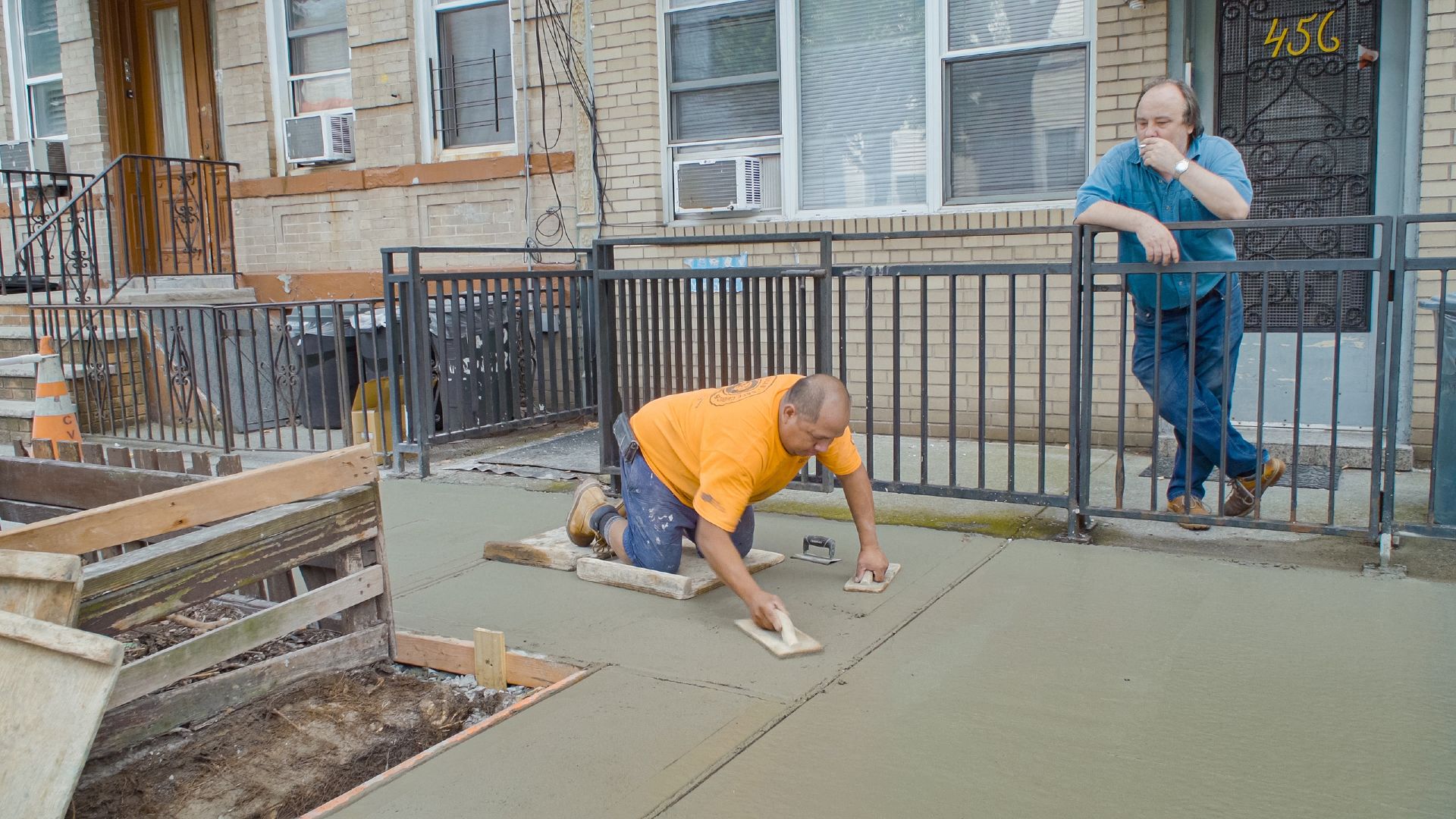
As my time at the Sundance Film Festival came to a close, I was at my favorite restaurant, five5eeds, when I noticed some construction happening right outside. Before seeing Wilson’s documentary, I probably would have just been annoyed by the noise and dust. But after watching the film, I found myself thinking about the concrete itself – how long it had been there, who had walked on it, and the people doing the work. I even wondered about the type of cement used and how long the new concrete would last. This experience illustrates what Wilson’s film does so well: it doesn’t bombard you with information, but instead encourages you to look at everyday things from a fresh perspective, and to consider the stories behind them. It’s a film that invites you to see the world through someone else’s eyes.
Subscribe to the newsletter for curious film & concrete reads
Join the newsletter for thoughtful coverage of films and everyday materials, from documentaries like The History of Concrete to the people and places they illuminate. Reporting, interviews, and context that make overlooked subjects visible.
Even if this doesn’t make you love concrete, hopefully it will inspire you to look at the world with a little more wonder.
This review is based on the first public screening of The History of Concrete, which premiered at the 2026 Sundance Film Festival.
2026-02-05 20:48