
Biopics about musicians have become popular in Hollywood recently, with films about Bob Dylan, Robbie Williams, and Bruce Springsteen all released in the last two years. However, I Can Only Imagine 2 is unusual because it’s a sequel – and it’s rare to see a second film about the life of a musician.
Following the 2018 film I Can Only Imagine, which told the story behind MercyMe’s popular song, I Can Only Imagine 2 picks up where the first left off. It focuses on lead singer Bart Millard as he navigates the challenges of marriage and fatherhood. Director Andrew Erwin explained that while the first film seemed to end with a perfect ending, life didn’t quite work out that way for Bart, and he felt a sequel would complete the story.
John Michael Finley is reprising his role as Millard, and he decided to return to the film because he’s currently experiencing life changes similar to those his character went through. He’s joined by Sophie Skelton, known from Outlander, who plays Bart’s wife, Shannon. Skelton said stepping into the role previously held by Madeline Carroll from I Can Only Imagine was a unique and engaging experience.
The movie I Can Only Imagine 2 showcases not only Millard’s uplifting story, but also the journey of Tim Timmons, played by Milo Ventimiglia from This is Us. Timmons, a musician touring with MercyMe, is privately struggling with his own challenges. Through his friendship with the band, especially Bart’s son Sam (played by Sammy Dell), he ends up co-writing their popular song, ‘Even If’. Ventimiglia shared that meeting the real Tim Timmons gave him the confidence and motivation to take on the role in the film.
You’ll find interviews with the cast and crew of I Can Only Imagine 2 below, including conversations with John Michael Finley, Sammy Dell, Sophie Skelton, Milo Ventimiglia, Arielle Kebbel, Dennis Quaid, director Andrew Erwin, and musicians Bart Millard and Tim Timmons. The movie arrives in theaters on February 20th.
Why MercyMe’s Story Deserved A Sequel
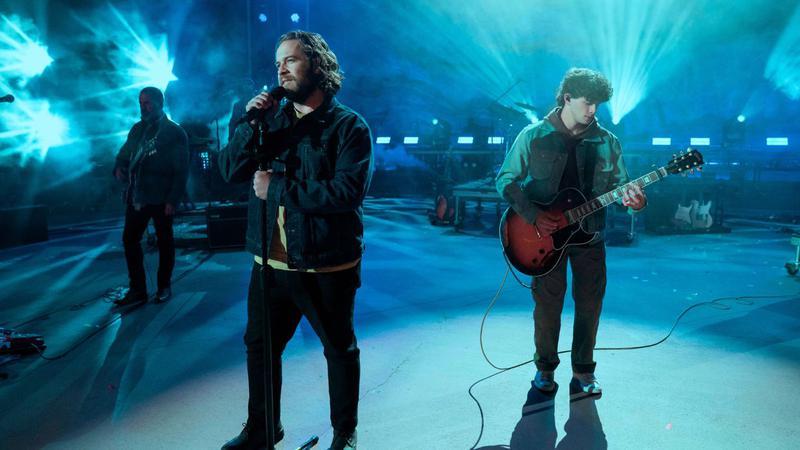
“It Felt Like the Second Half of a Whole…”
- TopMob: “Biopics are quite a popular genre these days, but sequels to biopics are incredibly rare. I was curious to know: how was this sequel born, and at what point did you know that you had more to say about this story in film form?”
I met with Brent McCorkle, one of the writers and directors, and we brainstormed ideas for a while. Eventually, he asked me about the story behind the song ‘Even If.’ When I shared it with him, he was deeply moved and immediately knew that was the story the movie should be about. He then suggested we revisit those characters and create a sequel. I can’t really take credit for the idea – it came from some very talented people, and I was thrilled with how everything turned out.
Andrew Erwin explained that he was hesitant to revisit the story, initially needing convincing. He agreed to return only if there was a compelling continuation of Bart’s life. Brent McCorkle, his co-director, played a key role in persuading him, having already explored the idea that Bart’s seemingly happy ending wasn’t the full story. The film delves into the challenges Bart faced, particularly with fatherhood, and his desire to break the cycle of abuse he experienced. Bart only had a short time with a positive father figure, contrasted with 22 years of abuse, and he wrestled with how to be a better father to his own children.
The story really explores finding hope and purpose even during difficult times, and it surprised me with how much depth it had. I need to be emotionally connected to a story before I can truly share it, and this one, as a sequel, felt like it brought everything together and finished the narrative in a satisfying way.

- TopMob: “What was it about this part of your character’s life story that really excited you about returning to play them?”
John Michael Finley shared that he’s currently experiencing a life stage similar to his character, Bart. He was eager to portray a father and delve into often-unaddressed topics like Type 1 diabetes, cancer, family loss, and questioning one’s faith. He found it rewarding to be open and honest while telling these important, difficult stories.
Dennis Quaid explained that his character, Arthur, represents Bart’s memories, which he found touching. He believes that memories are what remain with us, and that creating them is a form of love. Quaid expressed his enthusiasm for working with Andrew Erwin and how much this film meant to him personally – he really wanted to be involved.
Adding New Voices to the Band
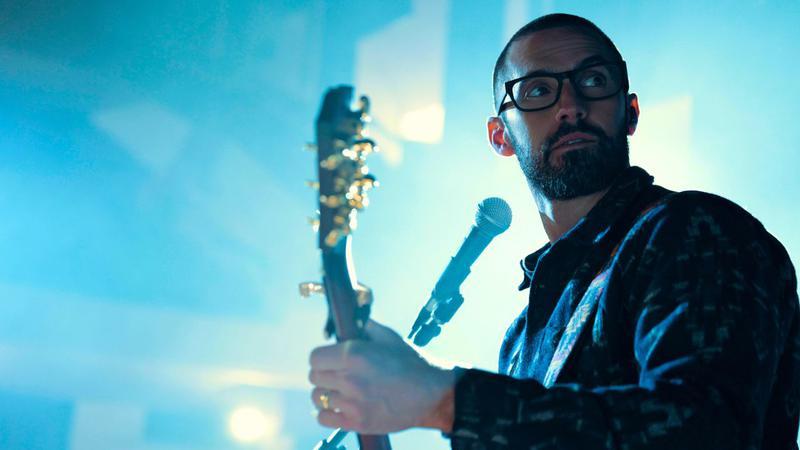
“I’ve Found Compassion for Myself That I Had Hadn’t Had Before…”
- TopMob: “This is a true story, which can be quite daunting for an actor to join, Milo, what is it about Tim’s story that drew you to want to play him on the screen?”
Milo Ventimiglia described receiving a script with a wonderful story and a compelling character. But what really struck him was realizing this character was based on a real person. He found himself wondering how all the positive qualities he read in the script – the goodness, grace, and gratitude – could possibly be embodied by someone in real life.
After getting to know Tim and spending time with him, everything made sense. The warmth and gratitude I felt while reading the script were even more apparent in person. He’s incredibly kind and graceful, and experiencing that firsthand gave me complete confidence that I had to take on the role. I wasn’t afraid at all.
- TopMob: “Tim, you were quite involved in the process. You were on set quite a lot. Can you tell me a bit about your input into the film and your working dynamic with Milo?”
This is my first time being portrayed on screen. I’m very familiar with the music industry, but filmmaking is completely new to me. It was incredibly emotional watching the actor, Milo, depict my experience with cancer – I often cried while watching him. It’s not every day you get to see your life portrayed like that. The process actually helped me develop a new level of self-compassion that I didn’t have before.
- TopMob: “Sammy, if you you’re new to this franchise, did you have a chance to meet or interact with the real life Sam Millard and get advice from him?”
I had a great conversation with Sam where we really discussed his perspective and the themes of the movie. Sam and I have a lot in common, so playing him felt natural, and I feel like I gained a good friend through the process.
- TopMob: “Sophie, you’re taking over the role of Shannon from another actor from the previous film [Madeline Carroll]. I was just curious if that influenced how you approached the character at all?”
Playing a historical figure is always challenging, but this role was especially tricky. I really wanted to honor Shannon Beery’s original performance as Madeline, so it was about finding a balance between her work and creating my own interpretation.
We got lucky with the script. The movie starts shortly after Madeline’s last scene with Shannon, and then jumps forward ten years. This allowed me to blend those two versions of Shannon together – playing a version of the younger Shannon as Madeline remembers her, and then playing the current, older Shannon. That ten-year gap was really helpful, because it felt like I was portraying two distinct characters.
As I watched Shannon, it was fascinating to see how she carried echoes of her mother, Madeline, especially early on – some of the same little habits and ways of speaking. But what really worked for me was seeing her grow into her own as a mom. She definitely matured and became more self-assured, and those subtle connections to Madeline were still there, reminding you who she was, but showing how far she’d come. It felt like a really natural and believable transition.
It was a unique and engaging problem. I hadn’t faced a situation before where I needed to combine those two elements.
I Can Only Imagine 2’s Inspiring Female Characters
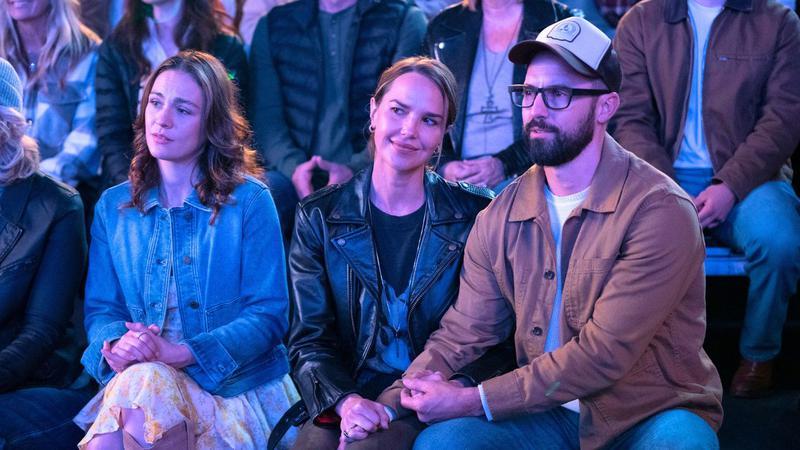
“It Takes a Lot of Courage and Guts These Days To Raise a Family…”
- TopMob: “Both your characters are very supportive wives in the film, but they do have a lot more depth than that. Could you talk a bit about how you feel your characters go beyond that supportive wife stereotype?”
Arielle Kebbel wants to give a lot of credit to people who stay home to raise children and be partners. She feels it’s a misconception to think that role lacks depth – it actually takes a lot of bravery and strength to raise a family, and she believes that deserves to be recognized.
Hillary, who is a nurse, has personal challenges at home that we won’t reveal yet. Becoming a nurse was actually her way of dealing with what happened there, and you’ll understand more when you watch the movie.
You know, she definitely has her own thing going on, but honestly, her deep dive into this all started with a real need to understand what was happening with Tim. It was almost like she threw herself into learning everything medically as a way to cope with her grief – a way to process things by actively seeking knowledge.
Sophie Skelton explained that a major challenge for her character, Shannon, revolves around the dynamic of a couple who’ve intentionally divided responsibilities. Shannon focuses on home and family, while her partner pursues a creative career like music. The difficulty arises when that partner faces a block in their creativity – like writer’s block – because their sense of self is so tied to their work. This leaves Shannon feeling helpless, as she’s taken on the role of maintaining stability and can’t directly fix the situation.
Shannon had a lot on her plate, quietly holding things together at home while Bart was on tour. It took immense strength for her to focus on maintaining stability for her family, hoping Bart would resolve his issues. I hadn’t fully appreciated how strong she was being until recently.
Why I Can Only Imagine 2 Will Strike a Chord With Audiences

“I Think They’re Things That Many People Go Through, and I Think That’s What Makes It Special…”
- TopMob: “The first I Can Only Imagine film came out years ago now. Was there anything that you learned from seeing the reaction to it that changed your approached to this one?”
For me, the most exciting part is the potential impact. I’ve shared these stories with audiences for over 30 years as part of MercyMe, but a movie can reach so many more people – especially after seeing the effect of the first film. If the story is told well, it could really make a difference in people’s lives, and that’s what I feel I’m meant to do – to offer hope. While the world of movies is new to me, I’m amazed by the positive change it could bring.
John Michael Finley believes that audiences respond to authenticity, openness, and truth, even though everyone experiences those things differently. He doesn’t think the people in these stories or their struggles are unique – in fact, he feels that’s what makes them relatable. The first film taught them that as long as they maintain that honesty and vulnerability, people will connect with the story.
2026-02-05 04:44