Author: Denis Avetisyan
New research reveals how AI-driven information influences the complex reasoning processes of clinicians, moving beyond simple automation to understand the nuanced interplay between human and artificial intelligence.

This review introduces ‘intelligent reasoning cues’ and analyzes their role in clinical decision-making, using sepsis treatment as a case study to inform the design of effective AI decision support systems.
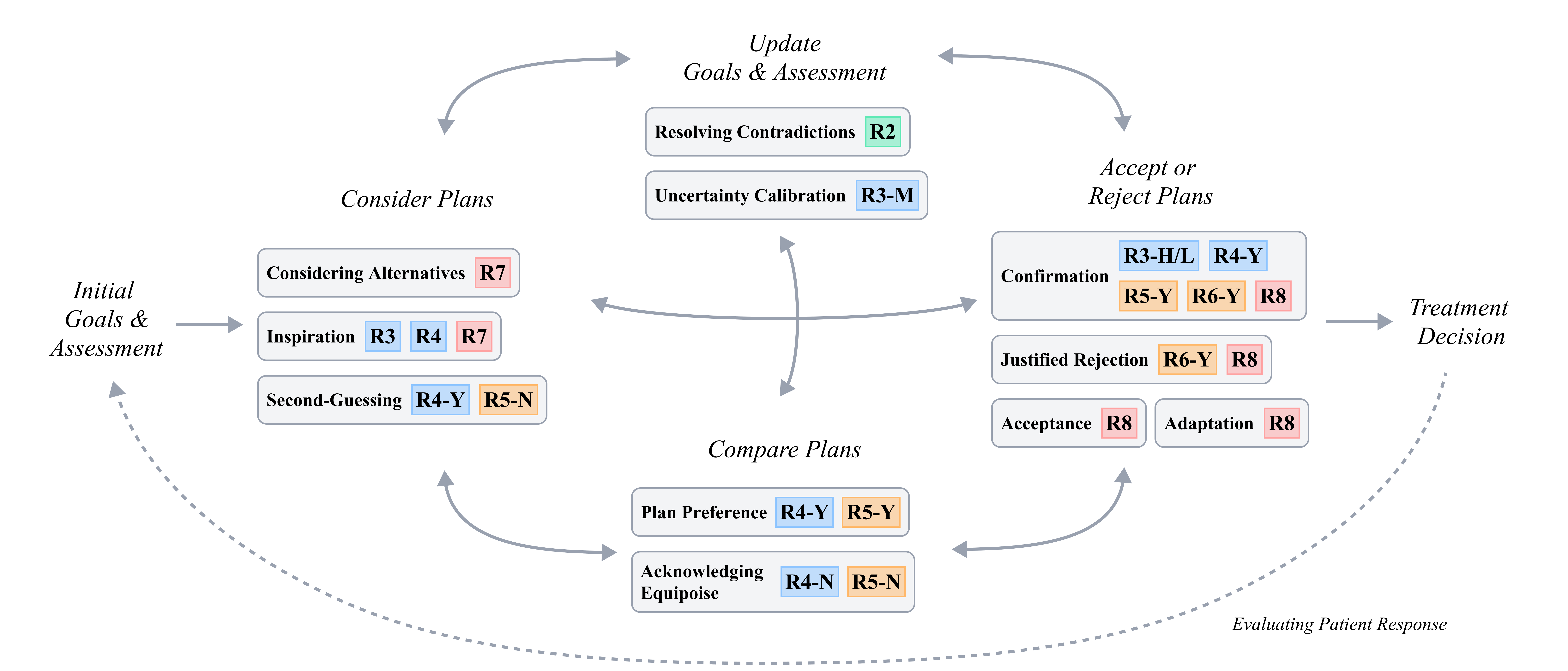
Despite advances in artificial intelligence, decision support systems often fail to meaningfully improve human judgment, prompting a reconsideration of how AI information influences reasoning processes. This research, ‘Intelligent Reasoning Cues: A Framework and Case Study of the Roles of AI Information in Complex Decisions’, introduces the concept of ‘intelligent reasoning cues’-discrete pieces of AI information-to understand their distinct roles in clinical decision-making, specifically in high-stakes sepsis treatment. Through contextual inquiries and a think-aloud study with physicians, we demonstrate that these cues exert varied influence, prioritizing tasks with high variability and complementing human insight. How can we best design AI interfaces to deliver these cues and foster a more synergistic, rather than substitutive, relationship between human and artificial intelligence?
The Algorithmic Challenge of Sepsis Detection
Sepsis, a life-threatening condition arising from the body’s overwhelming response to infection, demands swift and precise medical action; however, accurately diagnosing it remains a substantial hurdle. The insidious nature of sepsis lies in its complex presentation, often mimicking other illnesses, and its progression can be remarkably subtle in the early stages. Traditional diagnostic methods, relying heavily on clinical observation of vital signs and laboratory markers like white blood cell count, frequently prove inadequate in capturing these nuanced changes. This is because the body’s response to infection is highly variable, and indicators can be masked by pre-existing conditions or the patient’s individual physiology. Consequently, delays in diagnosis are common, potentially leading to organ damage, prolonged hospital stays, and increased mortality rates, underscoring the urgent need for more sensitive and reliable detection strategies.
While long considered the cornerstone of initial patient evaluation, traditional clinical assessment for sepsis relies heavily on subjective interpretation of vital signs and clinical presentation. This introduces inherent variability, as indicators like heart rate and respiratory rate can be influenced by factors beyond infection, and subtle changes indicative of early sepsis may be easily overlooked or attributed to other conditions. The delayed recognition of these nuanced deteriorations is particularly problematic, as sepsis progresses rapidly and timely intervention is crucial for improved patient outcomes. Consequently, even experienced clinicians can face challenges in consistently and accurately identifying sepsis in its early stages using conventional methods alone, highlighting the need for supplementary diagnostic tools and refined assessment strategies.
Recognizing the shortcomings of established sepsis detection methods, researchers are actively developing and implementing novel strategies to augment clinical decision-making. These approaches range from sophisticated machine learning algorithms trained on vast datasets of patient information – identifying patterns indicative of early sepsis that might be missed by human observation – to the utilization of continuous, real-time monitoring of vital signs and biomarkers. Point-of-care diagnostics, capable of rapidly assessing infection and organ dysfunction, are also gaining traction, promising to accelerate the diagnostic process. Furthermore, integrated systems that combine multiple data streams – including electronic health records, laboratory results, and physiological monitoring – aim to provide clinicians with a more holistic and timely understanding of a patient’s condition, ultimately facilitating earlier and more effective interventions and improved patient outcomes.
Constructing Logical Bridges: Intelligent Reasoning Cues
Intelligent Reasoning Cues (IRCs) represent a structured approach to incorporating artificial intelligence outputs into clinical practice beyond simple diagnostic or treatment suggestions. This framework focuses on providing clinicians with the underlying rationale and supporting evidence derived from AI analysis, enabling a more nuanced evaluation of potential diagnoses and treatment plans. Rather than presenting a final conclusion, IRCs offer a series of logically connected inferences and relevant data points, fostering a collaborative reasoning process between the AI and the clinician. This facilitates exploration of alternative hypotheses, identification of potential biases in the data, and ultimately, a more informed clinical decision-making process grounded in both AI-derived insights and clinical expertise.
Intelligent reasoning cues support clinical decision-making by actively assisting in the formulation of potential diagnoses and decreasing diagnostic uncertainty. This is achieved by providing clinicians with data-driven suggestions that prompt consideration of alternative explanations for a patient’s symptoms, beyond the initially favored hypothesis. The cues function not as definitive answers, but as stimuli for further investigation and analysis, allowing clinicians to integrate AI-derived insights with their existing knowledge and refine their assessment of the patient’s condition. This process facilitates a more comprehensive evaluation, reducing the risk of premature diagnostic closure and improving the overall accuracy of clinical judgment.
This research introduces the ‘intelligent reasoning cues’ framework to address limitations of ‘black box’ AI systems in clinical settings. Rather than providing opaque recommendations, this approach focuses on presenting the underlying rationale and evidence supporting AI-derived insights. Specifically, the framework identifies and articulates the salient features and relationships within patient data that contributed to the AI’s assessment, enabling clinicians to evaluate the AI’s logic and integrate it with their own clinical reasoning. By explicitly detailing the factors influencing the AI’s conclusions, the framework aims to foster greater transparency, build clinician trust, and facilitate informed decision-making.
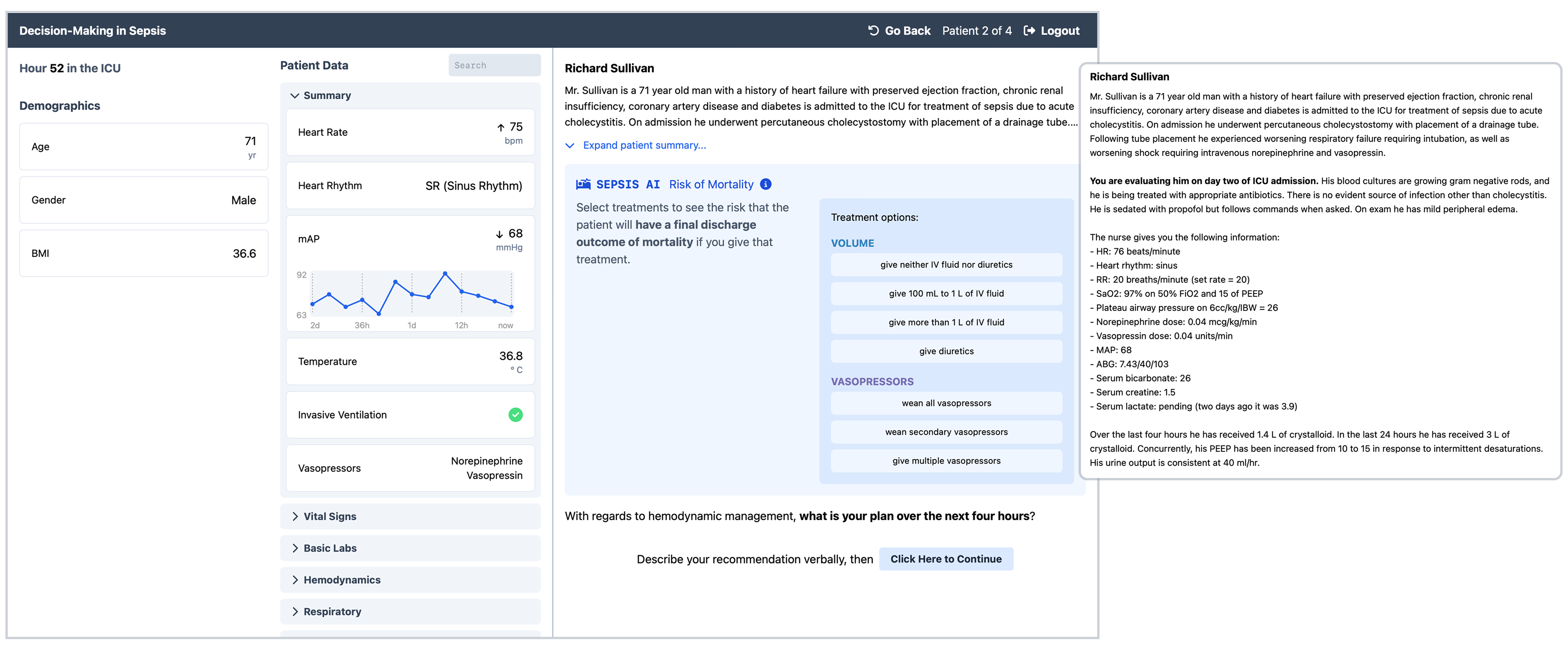
![Our framework represents AI interfaces as collections of distinct reasoning cues [latex]R_1-R_8[/latex] that provide users with discrete insights to inform decision-making, as demonstrated with the Interactive Treatment Risk interface.](https://arxiv.org/html/2602.00259v1/figures/reasoning-cue-preview.png)
Deconstructing Influence: Patterns of AI-Driven Reasoning
AI influence patterns in clinical decision-making represent a spectrum of effects stemming from intelligent reasoning cues. These cues can range from basic alerts – such as flagging a critical lab value or potential drug interaction – to more sophisticated interventions that subtly alter a clinician’s cognitive process. The impact isn’t simply about providing information; it’s about how that information is presented and integrated into the clinician’s reasoning. Lower-level influence involves directing attention to specific data points, while higher-level influence can reshape diagnostic hypotheses or treatment plans by prompting consideration of alternative perspectives or previously overlooked evidence. This can manifest as a shift in confidence levels associated with a diagnosis, or a change in the weighting given to different factors in a complex case, ultimately affecting the final clinical judgment.
Unusual feature highlighting and consensus action displays are techniques employed to enhance information processing in complex clinical scenarios. Unusual feature highlighting involves visually emphasizing data points that deviate significantly from established norms or expectations within a patient’s record, thereby directing clinician attention to potentially critical anomalies. Consensus action displays present aggregated perspectives, such as agreement levels among multiple AI diagnostic tools or the prevalence of a specific diagnosis within a peer group, fostering shared understanding and reducing uncertainty. Both methods function by strategically modulating visual salience, decreasing the cognitive effort required to identify relevant information and facilitating more informed decision-making.
Effective presentation of data-driven insights directly impacts clinician cognitive load. By synthesizing complex patient data into concise, readily interpretable formats – such as prioritized lists, visual summaries, or predictive scores – AI systems can minimize the amount of mental effort required for information processing. This reduction in cognitive load allows clinicians to dedicate more attention to higher-level reasoning tasks, including nuanced judgment, consideration of patient context, and complex problem-solving, ultimately improving diagnostic accuracy and treatment planning. The key is to present only the most clinically relevant data, avoiding information overload and ensuring insights are actionable within the clinical workflow.
Translating Insight into Action: Impact on Sepsis Care
The effective management of sepsis hinges on swift and precise therapeutic interventions, and emerging research indicates intelligent reasoning cues are proving instrumental in guiding these decisions. These cues, derived from patient data and predictive algorithms, directly impact critical treatment choices such as the administration of fluid resuscitation to restore circulatory volume, the use of vasopressors to maintain blood pressure, and the strategic application of diuretics to manage fluid overload. By analyzing complex physiological signals, these cues offer clinicians refined insights, allowing for a more personalized and responsive approach to sepsis care, ultimately shifting treatment paradigms from generalized protocols to data-driven, individualized plans and potentially minimizing the detrimental effects of this life-threatening condition.
The speed and precision of sepsis treatment hinge on effective assessment, and intelligent reasoning cues demonstrably enhance this critical first step. These cues move beyond simple data presentation, offering nuanced interpretations of patient status that allow clinicians to swiftly identify subtle indicators of worsening condition or positive response to therapy. This improved diagnostic clarity directly translates to more efficient plan evaluation; treatment strategies can be more readily adjusted or confirmed, bypassing potentially harmful delays often associated with ambiguous clinical pictures. Consequently, adoption of the right intervention, whether it’s escalating fluid resuscitation, modulating vasopressor support, or initiating diuretic therapy, becomes faster and more targeted, ultimately contributing to better patient outcomes and a reduction in sepsis-related complications.
This investigation details a new framework for comprehending how artificial intelligence can shape clinical decision-making, specifically within the critical context of sepsis treatment. The research establishes a pathway through which AI-driven insights can refine treatment strategies, moving beyond generalized protocols toward personalized interventions. By integrating intelligent reasoning cues, the framework facilitates a more dynamic and responsive approach to sepsis management, ultimately aiming to decrease both the incidence of long-term health complications and the rate of mortality associated with this life-threatening condition. The demonstrated potential lies in optimizing resource allocation and ensuring patients receive the most effective care, precisely when it is needed, thereby significantly improving overall patient outcomes.
“`html
The study of intelligent reasoning cues reveals a fascinating interplay between human cognition and artificial intelligence, demanding a rigorous approach to system design. It underscores that effective AI assistance isn’t simply about providing data, but about shaping the very process of reasoning. This echoes Ken Thompson’s sentiment: “There is no middle ground.” The research demonstrates that AI input either reinforces sound clinical judgment – achieving provable correctness in diagnostic pathways – or introduces potential for error. The framework detailed aims to establish invariants in this interaction, ensuring that AI augments, rather than compromises, the fundamental logic driving critical decisions like sepsis treatment. The goal isn’t merely to achieve a working solution, but a demonstrably correct one, mirroring the mathematical purity at the heart of elegant code.
What’s Next?
The identification of ‘intelligent reasoning cues’ merely formalizes what experienced clinicians instinctively understand: information, regardless of source, alters the cognitive landscape. However, quantifying how that landscape shifts-the precise deformation of Bayesian priors-remains a considerable challenge. Current work relies on observation of decision-making; a more rigorous approach demands predictive models of reasoning, allowing for pre-emptive identification of potentially misleading AI outputs. If an AI suggestion consistently leads to suboptimal choices, the problem isn’t the suggestion itself, but a failure to understand why the human agent succumbed to it.
A persistent limitation stems from the inherent messiness of clinical data. The pursuit of elegant algorithms often necessitates simplification, yet sepsis-and most complex illnesses-rarely conforms to mathematical ideals. Future research must grapple with this discord, embracing methods that explicitly model uncertainty and acknowledge the limitations of any predictive framework. If it feels like magic that an AI ‘solves’ a clinical problem, one hasn’t yet revealed the invariant-the underlying principle governing the observed behavior.
Ultimately, the field needs to move beyond simply demonstrating that AI can assist decision-making, and focus on establishing when and why that assistance is beneficial. A truly intelligent system doesn’t just offer answers; it elucidates the reasoning process, allowing the clinician to evaluate the validity of the suggestion within the context of their own knowledge and experience. The goal isn’t to replace judgment, but to augment it-a subtle, yet critical, distinction.
Original article: https://arxiv.org/pdf/2602.00259.pdf
Contact the author: https://www.linkedin.com/in/avetisyan/
2026-02-04 02:10