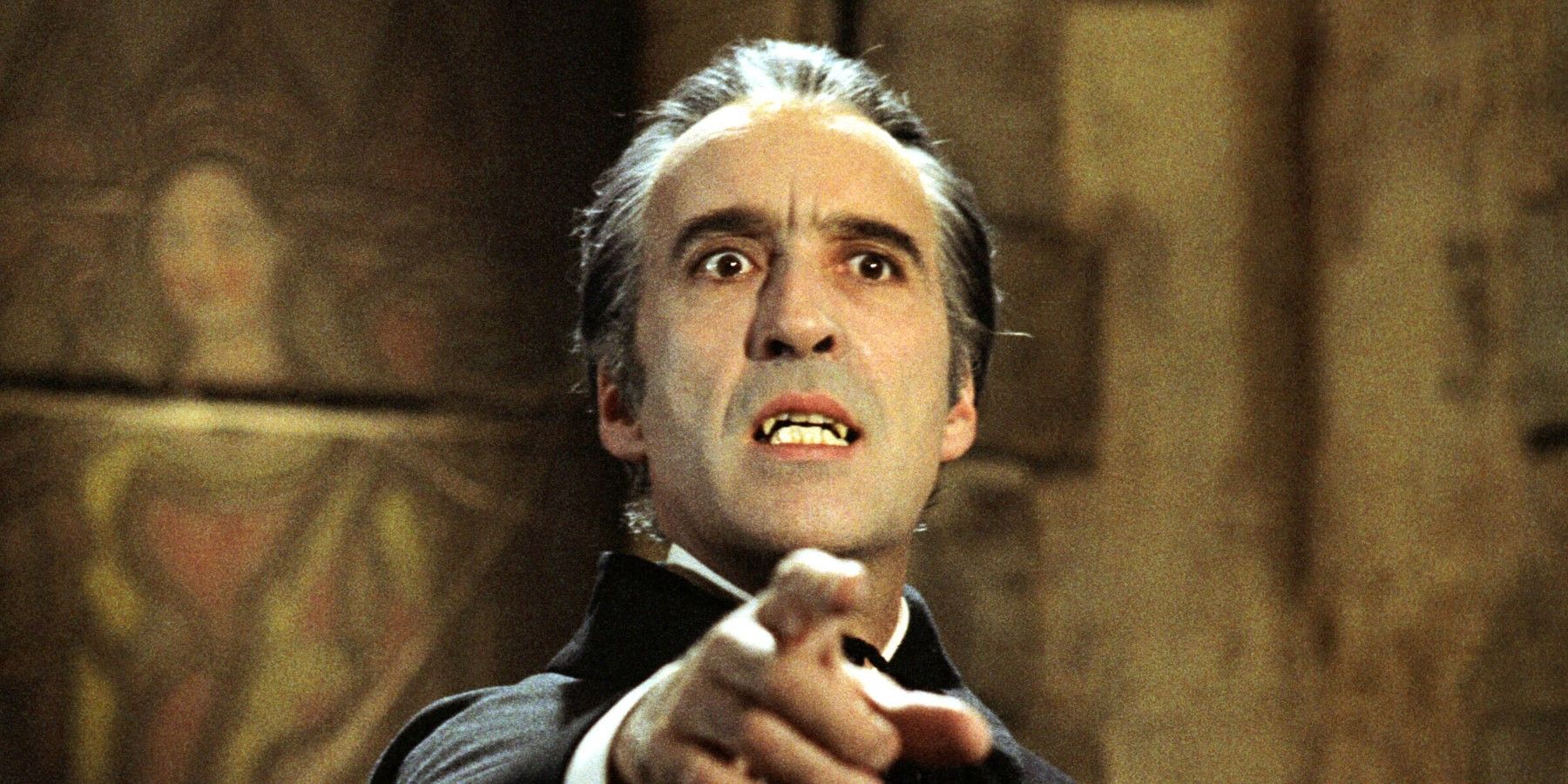
For years, Bela Lugosi was the Dracula, captivating audiences with his dramatic and mysterious performance. But in 1958, Christopher Lee took on the role, changing how Dracula was seen on screen. Lee’s portrayal in Horror of Dracula was much more aggressive and violent than previous versions.
When Christopher Lee became Dracula, the character was already famous. While Universal and Bela Lugosi originally made Dracula popular, that older, dramatic style wasn’t resonating with audiences anymore. Lee reinvented Dracula, portraying him as more like a beast – dangerous and primal. His version of the Count continues to influence how Dracula is depicted in movies and TV today.
Dracula Needed to Sharpen His Fangs by the Late 1950s
Classic horror films greatly influenced the genre and shaped what horror fans love today. But by the late 1940s, the popular monsters of the time were becoming less appealing. After the war, audiences wanted either gritty, realistic stories or lighthearted comedies. The growing popularity of these new types of films essentially ended the reign of Universal’s classic monster movies.
I remember when the studio seemed to realize things were changing with what audiences wanted. That’s when we started seeing those fun, comedic crossovers with the classic monsters. What really worked, though, was that the filmmakers treated the monsters with respect – they weren’t just there to be the butt of the joke. It felt like an acknowledgment that the old style of Universal horror, especially the way Dracula was originally portrayed, just didn’t quite fit anymore. It was like saying, ‘Okay, things have moved on.’
The modern image of Dracula began in the late 1950s with Christopher Lee’s performance in Horror of Dracula. Earlier Dracula films were typically shot in black and white, but director Terence Fisher and Lee brought a new level of vividness to the character with full Technicolor. Audiences were shocked to finally see Dracula’s blood-red fangs in action.
Compared to earlier versions, this Dracula was less focused on dramatic speeches and grand gestures. He only had 16 lines of dialogue in Horror of Dracula. While he initially appears similar to previous portrayals at the beginning of the film, that quickly changes, and he becomes shockingly violent and brutal – a stark contrast to the refined depictions audiences were used to from actors like Bela Lugosi and Christopher Carradine, especially for a 1958 audience.
In the film Horror of Dracula, Christopher Lee wore red contact lenses to emphasize his character’s frightening transformation when overcome by his thirst for blood. The movie also made fangs a standard feature in Dracula films; while other films at the time used them, historians credit Lee’s performance with establishing the look that became the industry standard. Lee was masterful at quickly changing from a charming host into a savage killer.
Christopher Lee’s Dracula Legacy Looms Large Over the Genre
Christopher Lee’s portrayal of Dracula, and the films that followed, both brought the classic character back to life and redefined how Dracula would be depicted in movies for many years. While filmmakers have since gone back to Bram Stoker’s original story for inspiration, their visual approaches still feel influenced by Lee’s iconic performance.
While promoted as a faithful adaptation of the original novel, Gary Oldman’s performance actually connects Bram Stoker’s writing with Christopher Lee’s powerfully physical take on Dracula. The real proof of Lee’s lasting impact is that his performance still dominates the character decades later, with most modern actors bringing the same wild, animalistic quality to the role that he pioneered.
Found an error? Send it so it can be corrected.
2026-02-02 06:36