War movies have consistently provided some of the most exciting and memorable scenes in film history. While many depict the terrible realities of conflict, others focus on soldiers achieving victory against difficult challenges. It’s often these inspiring stories that give us some of cinema’s greatest speeches.
War movies often feature inspiring speeches that can feel like turning points in the fight, sometimes even before any action happens. These powerful moments often create famous quotes that stick with audiences long after the film ends. Lines like “we band of brothers,” “earn this,” “This is Sparta,” “tonight we dine in hell,” and “they may take our lives, but they’ll never take our freedom” have become truly iconic parts of pop culture.
Speeches often become memorable not just for what is said, but how it’s delivered and the images they create. R. Lee Ermey’s powerful, unscripted outburst as a drill instructor and his moving five-minute speech about the flag are prime examples – they’re remembered more for the performance itself than the words in the script.
Kingdom Of Heaven (2005)

Ridley Scott’s Kingdom of Heaven features Orlando Bloom as Balian of Ibelin, a blacksmith who rises to defend Jerusalem against Saladin’s forces. Just before the city is besieged, Balian gives a powerful speech to the defenders—common soldiers he’s recently knighted—much to the dismay of religious leaders. The speech isn’t simply a battle cry; it’s a passionate argument against the war itself.
He argues that the current fighters on both sides have no personal connection to the original conflict – those battling now weren’t involved in the city’s initial loss, and none of Saladin’s soldiers were even alive then. He suggests they are fighting a pointless war over something from the past. However, he urges them to focus instead on protecting each other and the people currently living in the city, rather than trying to reclaim something no one has a rightful claim to anymore. This speech frames the conflict as a human struggle for safety, not a religious crusade.
We Were Soldiers (2002)

Randall Wallace wrote and directed We Were Soldiers, a film starring Mel Gibson as Lt. Col. Hal Moore. The movie is adapted from the book We Were Soldiers Once…and Young, co-authored by Moore and journalist Joseph L. Galloway. In the film, Moore gives a powerful speech to his men in the 7th Cavalry before they deploy to Vietnam for the Battle of Ia Drang – the first large-scale conflict between U.S. and North Vietnamese forces.
Moore highlights the unit’s diverse makeup – soldiers come from places like Ukraine, Puerto Rico, Japan, and China, and represent a wide range of backgrounds including Black, Hispanic, Native American, Jewish, and Gentile communities. He emphasizes that despite their differences, they are all Americans. He concludes with a powerful promise to lead from the front, never leave a soldier behind, and ensure they all return home together. This heartfelt send-off is a key reason why the film is considered one of the most emotionally impactful movies about the Vietnam War.
300 (2006)
300 is a war film inspired by Frank Miller’s graphic novel depicting the Battle of Thermopylae. Zack Snyder directed the movie, using extensive green screen effects. Gerard Butler plays King Leonidas, who rallies his 300 Spartan warriors to fight against the vastly larger Persian army led by Xerxes, even knowing they face impossible odds.
The most memorable line from the speech in the movie comes when Leonidas declares, “Spartans! Prepare your breakfast and eat well… because tonight, we’ll be dining in hell!” He later shouts, “This is Sparta!” showing that the film is just as much about powerful speeches as it is about the Spartans and their battles against their enemies.
Henry V (1989)

Kenneth Branagh stars as King Henry V in the 1989 film Henry V, which he also wrote and directed. The movie is based on Shakespeare’s play of the same name, and features King Henry V’s famous speech taken directly from the original text. This powerful war speech is Shakespeare’s St. Crispin’s Day address, delivered to the English army on the night before the Battle of Agincourt, despite being outnumbered.
In his famous speech, King Henry V inspires his soldiers by painting a picture of the honor and lasting fame that victory will bring, suggesting their small force is actually a source of pride. It includes the iconic line, “We few, we happy few, we band of brothers,” which is where the popular phrase comes from. Kenneth Branagh’s performance of this speech is widely considered a definitive and powerful portrayal of one of history’s most famous battle cries.
Inglourious Basterds (2009)

War movie speeches aren’t always rousing calls before a fight. In Quentin Tarantino’s Inglourious Basterds, Aldo Raine (played by Brad Pitt) gives a speech, but it isn’t about heading into battle—it’s about the satisfaction of killing Nazis. Raine leads a group of Jewish-American soldiers nicknamed ‘The Basterds’ in this alternate take on World War II.
This group isn’t heading into a noble fight; they’re a squad operating in secret within Nazi-occupied France, hunting down and brutally killing Nazis. In a famous speech, their leader, Raine, makes it clear their sole mission is to eliminate Nazis, and he demands each man collect 100 Nazi scalps as proof.
Full Metal Jacket (1987)

Stanley Kubrick’s Full Metal Jacket features a memorable speech that isn’t about combat or heroism. R. Lee Ermey, a former Marine drill instructor, played Gunnery Sergeant Hartman after initially joining the film as a technical advisor. He was encouraged to improvise, and ended up creating around half of his lines on the spot.
For the first half of the film, Sergeant Hartman relentlessly screams at the Marine recruits at Parris Island, intending to tear them down and then build them back up as Marines. Many people believe that R. Lee Ermey’s performance felt so real because he was actually a former drill instructor himself, which is why Hartman is considered one of the most detestable characters in war movie history.
Saving Private Ryan (1998)

Saving Private Ryan is often ranked among the greatest war films of all time, and it’s a standout achievement for director Steven Spielberg. The story centers on a group of soldiers who land at Omaha Beach during D-Day with a crucial mission: locate Private James Ryan and bring him home safely, as he’s the last surviving brother in his family. Unlike many war movies, this film features a powerful speech delivered after a particularly dangerous battle.
Ryan, played by Matt Damon, is reluctant to go back home, but when Captain John H. Miller (Tom Hanks) is fatally wounded while trying to save him, Miller shares a dying message. He urges Ryan to “earn” the sacrifice made by Miller and his men – to live a life that honors their bravery. This speech is deeply moving because it represents the countless soldiers who lost their lives in Normandy.
Glory (1989)

Directed by Edward Zwick, the film Glory tells the story of the 54th Massachusetts Infantry, an early African American regiment in the Union Army, from its creation through their courageous attack on Fort Wagner. The pivotal speech in the movie happens around a campfire the night before the battle, where the soldiers share thoughts, prayers, and songs as they prepare to fight.
In the film, a Civil War soldier named Jupiter Sharts (Jihmi Kennedy) offers a prayer, stating he wants to fight with both a rifle and the Bible. Another soldier then reveals he has no family remaining except for his fellow regiment members. This moment powerfully illustrates the soldiers’ humanity and explains why they are willing to fight in a battle with little chance of survival.
Patton (1970)

I remember being absolutely captivated by the start of the movie Patton. George C. Scott, who plays General Patton, just stands there in front of this huge American flag and delivers this incredible monologue – it’s almost five minutes long! It really sets the stage for everything else, honestly. I later learned it was based on a real speech he gave to his troops during World War II, though the movie version was a little more restrained.
The speech begins with the famous line, “No bastard ever won a war by dying for his country.” While the movie doesn’t include everything Patton said, there’s still plenty of dialogue left to create a five-minute monologue. George C. Scott delivered such a powerful performance that he won an Academy Award for Best Actor, but surprisingly, he refused to accept it.
Braveheart (1995)

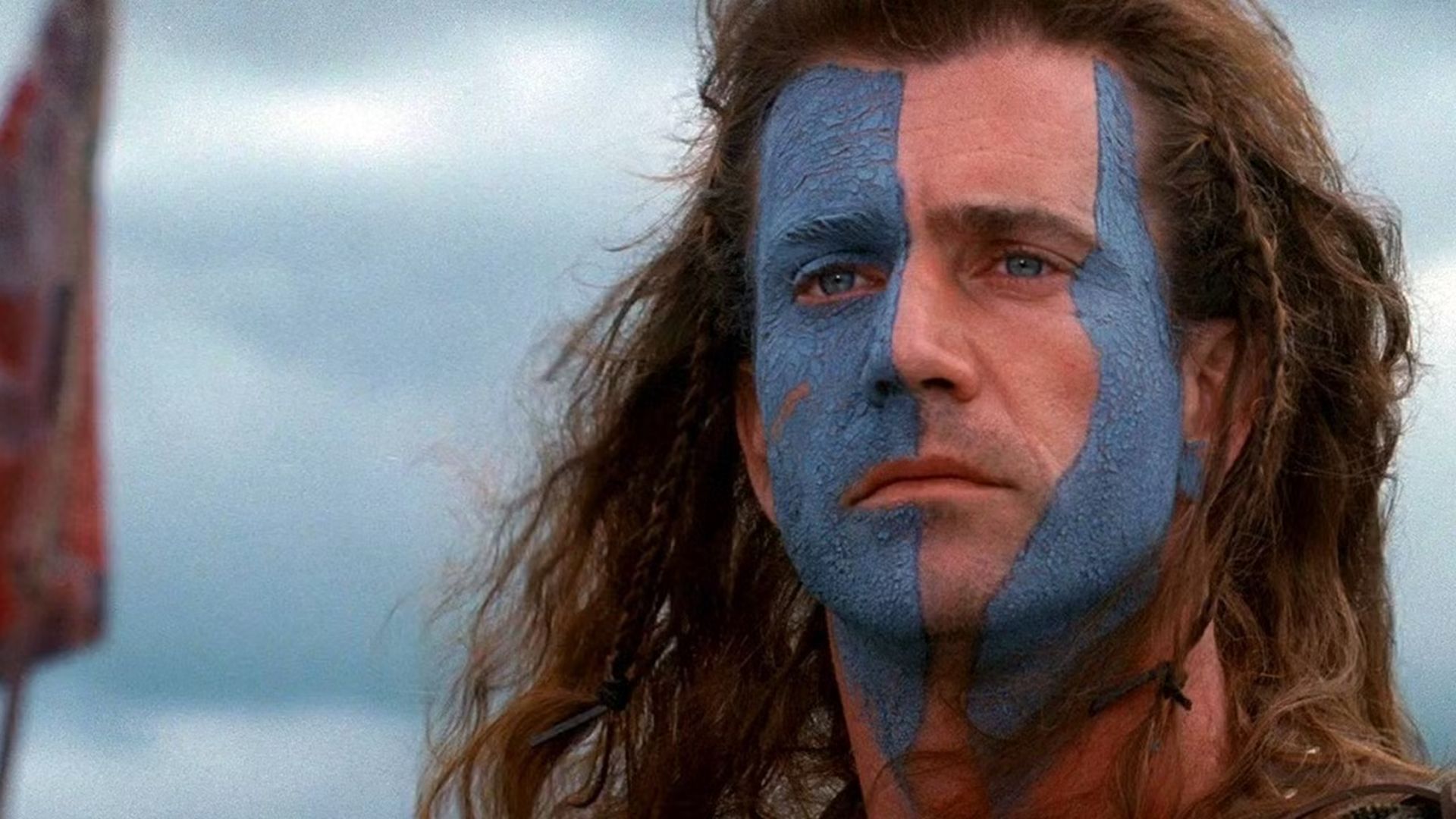
The speech from the movie Braveheart is incredibly well-known – and often imitated, which is a testament to how powerful it is. The film, directed by and starring Mel Gibson, depicts the story of William Wallace, a Scottish leader who fought for independence in the 13th century. In the speech, Wallace motivates his smaller army right before a crucial battle against a much larger English force.
The most memorable line from the movie, powerfully delivered by Wallace, is, “They may take our lives, but they’ll never take our freedom.” Interestingly, while the battle depicted is historically accurate, this inspiring speech was written specifically for the film. In the real Battle of Stirling Bridge (September 11, 1297), Wallace’s smaller army actually defeated the English forces. Braveheart was a critical and commercial success, winning five Academy Awards, including Best Picture and Best Director for Mel Gibson.
2026-07-26 19:09