
Before becoming an artist and moving to Mexico City, queer filmmaker Efraín Mojica grew up between Riverside, California, and the small town of Penjamillo, Mexico. Penjamillo is known for its yearly jaripeo, a traditional Mexican rodeo held every Christmas.
Each year, cowboys gather to prove their toughness, often by drinking a lot of tequila and attempting to ride bucking bulls. These displays of strength always captivated Mojica, who often attended these events with family and, in the process, found a community of others who didn’t conform to traditional Mexican ideas about gender.
The people in this community became the focus of “Jaripeo,” the first documentary film by Mojica and Rebecca Zweig. The film debuted at the Sundance Film Festival in Park City, Utah. Filmed in a realistic, observational style, Mojica acts as both the storyteller and a central figure. Zweig, who originally met Mojica in Seattle’s punk music scene, filmed them as they interviewed members of the LGBTQ+ community in and around the town of Penjamillo.
Zweig recounts that Mojica invited them to spend Christmas with their family in Michoacán in 2018. It was at a rodeo with the family that Zweig first became fascinated by how men express themselves through performance, as they told The Times the day after the film premiered on January 25th.
Mojica recalls Zweig asking if he’d be interested in creating a documentary about rodeos. Mojica responded that he was, but only if it included a focus on gay culture, according to The Times.
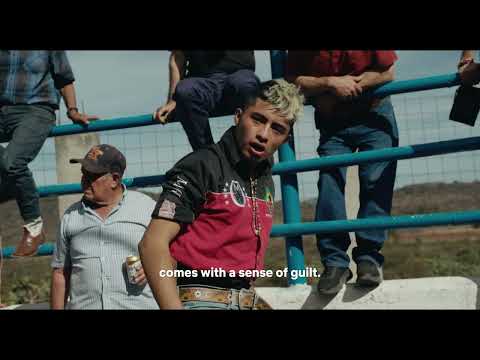 ×
× The documentary, created by Sarah Strunin, opens with a scenic view from a truck driving through the Michoacán grasslands. It blends unexpected elements – like vibrant party lights and techno music – with traditional scenes of rodeos, complete with bands and dancers in cowboy hats. The filmmakers use dramatic lighting, including strobe lights in cornfields, to capture intimate moments between cowboys, subtly connecting these rural scenes to the energy of urban queer nightlife.
I heard from Mojica that Acuitzeramo throws a huge rodeo every New Year’s – seriously, around 10,000 people show up, and they blast the music with some serious bass. It really got me thinking… he pointed out that when you look at it, a rodeo in a small town, a ‘jaripeo’, isn’t all that different from a big city rave. People are just letting loose and having a good time, you know?
Zweig explains they aimed to push boundaries and create unconventional film sequences, questioning how much freedom a traditional film school would allow. They credit public media, specifically an ITVS Open Call Fund grant, for taking a risk on them as new filmmakers. They point to Marlon Riggs’ influential documentary ‘Tongues Untied’ – also an ITVS-funded project – as evidence of public media’s long-standing support for queer cinema and documentary filmmaking in the United States.

With each conversation, Mojica’s recollections of their former village become richer and more detailed, feeling less like distant memories. Mojica visits Arturo Calderón, a rodeo clown nicknamed “La Pirinola,” who also performs in drag, and Calderón allows Mojica to film him applying bright blue eyeshadow.
The group also visited the local church and a disco with Joseph Cerda Bañales, a makeup artist known for his long, pointed nails and who often attends rodeos. Despite the festival organizers’ attempts to get him in, and even a letter from Senator John Curtis of Utah, Cerda wasn’t allowed to enter the U.S. for the Sundance Film Festival premiere.
According to Mojica, Joseph is a central figure in town – he’s the mayor, leads the church, and even directs the local folkloric ballet. It’s not that traditional culture is disappearing, Mojica explains, but rather that people are focused on maintaining community bonds, which means embracing a mix of different beliefs and ideas, even if they seem contradictory.
Mojica also has playful, flirty interactions with Noé Margarito Zaragoza, a handsome and reserved rancher who is secretly gay.
Margarito describes feeling both thrilled and anxious about sharing his story in the film. He’s unsure how some family members will react, as they aren’t aware of this part of his life. However, he’s encouraged by the support of his closest family – his siblings and father – who are happy for him, and that’s giving him the confidence to move forward and be his authentic self.

Mojica explains they never discussed their LGBTQ+ identity with their family, even when some family members traveled to Park City for the premiere of Mojica’s film, “Jaripeo.” Mojica had intended to come out to them during a dinner the night before, but the conversation didn’t happen.
Mojica says he got emotional and couldn’t speak. He’d intended to briefly explain the film’s subject matter, but found himself unable to say anything. He started to cry, so he simply told everyone he’d see them the next day.
Mojica was worried after the movie screening, but his mother quickly reassured him during the question-and-answer session.
Someone asked Mojica how his family liked the film, speaking to him in Spanish. It was a funny moment because, as it turned out, his family was actually watching it with the rest of us in the audience for the very first time! We were all experiencing it together.
Mrs. Mojica Rubio stood up and shared that she was a very proud mother who loves her child without limits.
After a beat, she exclaimed: “It’s the 21st century!”
The audience loudly cheered when Mrs. Mojica Rubio showed her support. Mojica recalls that their mother also went to Margarito and offered him a hug, saying he deserved it, and their voice cracks with emotion as they remember the moment.
With rising prejudice against LGBTQ+ individuals and immigrants in the U.S., this film’s portrayal of a mother’s love and the support shown between different communities feels especially meaningful. It’s a powerful message that goes beyond politics and borders, reminding us what truly matters.
Mojica explains that many people around the world still have outdated and negative beliefs about Mexico, often imagining it as a dangerous place where LGBTQ+ individuals aren’t safe. However, she emphasizes that this couldn’t be further from the truth, as Mexican communities are actually very supportive and caring.
Margarito explained that these problems exist in our communities, but people aren’t readily accepting assistance. He hopes the movie will change that and be well-received.
2026-01-31 00:02