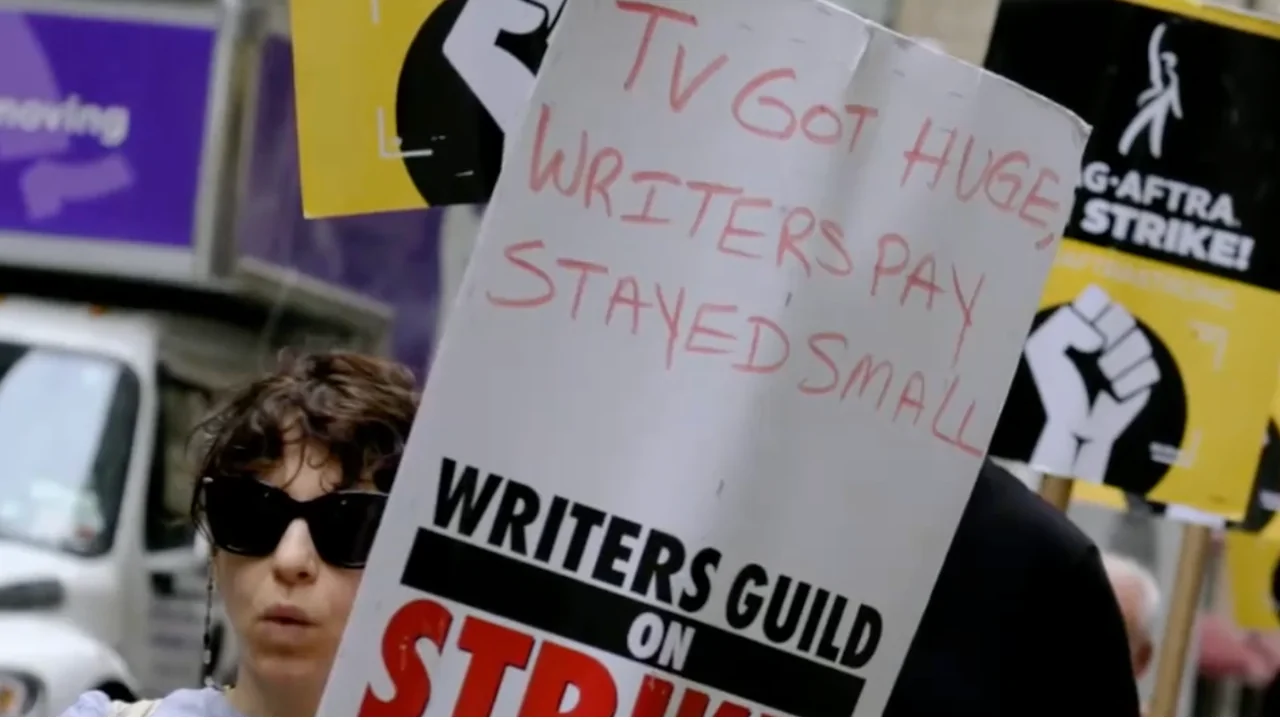
With talk of a possible strike by members of the Writers Guild of America against its leaders gaining momentum, LW Ghost is breaking down how unions like the WGA function.
With contract and negotiation season starting, there’s a lot of news coverage and discussion – some accurate, some not. To help you sort through it all, I’ve been asked to explain how organizations like Guilds and Unions are generally run.
Here goes:
First, there are the MEMBERS – the people who have proven their skills with work that’s earned them a place in the industry and a professional record. They’re the actors, writers, directors, camera operators – everyone who contributes to the work. These members elect leaders – like the Guild President, Vice Presidents, Secretaries, and Council or Board members – who are officially in charge, make decisions about how things operate, and encourage members to vote on contracts and their specific terms.
Secondly, there’s the professional team that handles the behind-the-scenes operations—things like office management, payments, and the general business aspects of running the organization. These staff members are selected by the leaders and typically have titles like ‘Executive Director’.
The team includes a wide range of professionals, from legal counsel and administrative staff to field representatives who ensure compliance with regulations. A large research team analyzes data to advise members during contract negotiations, providing insights into the potential costs or benefits of any proposed changes. They also offer guidance on legal matters, established precedents, and common industry practices.
Anyone who understands the entertainment industry knows how these things work, and entertainment lawyers especially do. So, when we saw a recent post – supposedly from a leading industry publication – claiming that staff were rejecting a proposal from its members, we found it hard to believe. Legally, they wouldn’t have the authority to do that.
They can advise against it, but they’re not in charge, the members are.
On the other side are the studios and production companies – those making TV shows, movies, and streaming content – who hire people under these agreements and work together as an organization. When these employer organizations meet with the unions representing workers, it’s called “Collective Bargaining.” This means the agreements reached are between the groups as a whole, not with individual employees.
Why is THAT important?
These agreements last for three years, but what if one party believes the other isn’t following the rules or isn’t holding up their end of the deal?
When a problem arises during a contract, someone files a “Grievance” – essentially a formal notice that there’s an issue needing resolution before the contract ends. Both sides – the producers and the union – each have a list of around 20 lawyers specializing in entertainment contracts. These lawyers act as a pool of potential arbitrators, and one is selected to resolve the grievance.
I’ve seen how it works – both sides get their say, a neutral party makes a decision, and ideally, everyone accepts it. But it’s not always that simple. We also have to figure out if this decision just applies to this situation, or if it sets a precedent for future ones, and that negotiation can really change things.
I’ve personally been involved in a number of complaints, and even filed one myself regarding a payment issue.

My Guild and I calculated that I was owed around $8500. These kinds of disputes often take about a year to reach a hearing, but usually, both sides discuss a settlement in the week or two beforehand. It’s important to remember that my Guild isn’t negotiating for me personally, they’re focused on upholding the terms of our contract.
About a week before the court date, I received a call offering me $3,500. My reaction, like yours probably was, was that I’d really prefer to get the full $5,000 instead.
You then learn the Guild isn’t working for you specifically, but according to the terms of their contract. The other party offered this as a compromise – they agreed to make this decision binding for everyone in the future, even though they weren’t obligated to do so, even if they’d paid me everything I asked for. That was the agreement, made to benefit the contract as a whole, and I was somewhat relieved knowing that group wouldn’t try to take advantage of our side like that again – they’d have to come up with a different tactic.

Hopefully, this explanation helps you understand the basics. The real world is naturally more complicated, but it’s good to have this foundation when you see all the confusion and debate in the news and online, even from sources that should be reliable.
This should also protect you from overlooking the valuable contributions of our Membership Leaders, or downplaying the important work done by our professional staff. Of course, not all leaders or staff members are the same, but we can discuss that in more detail later.
Them’s the facts, Jack. THAT is why I’m here, and why the entire ProTPP network is, too.
2026-01-30 19:01