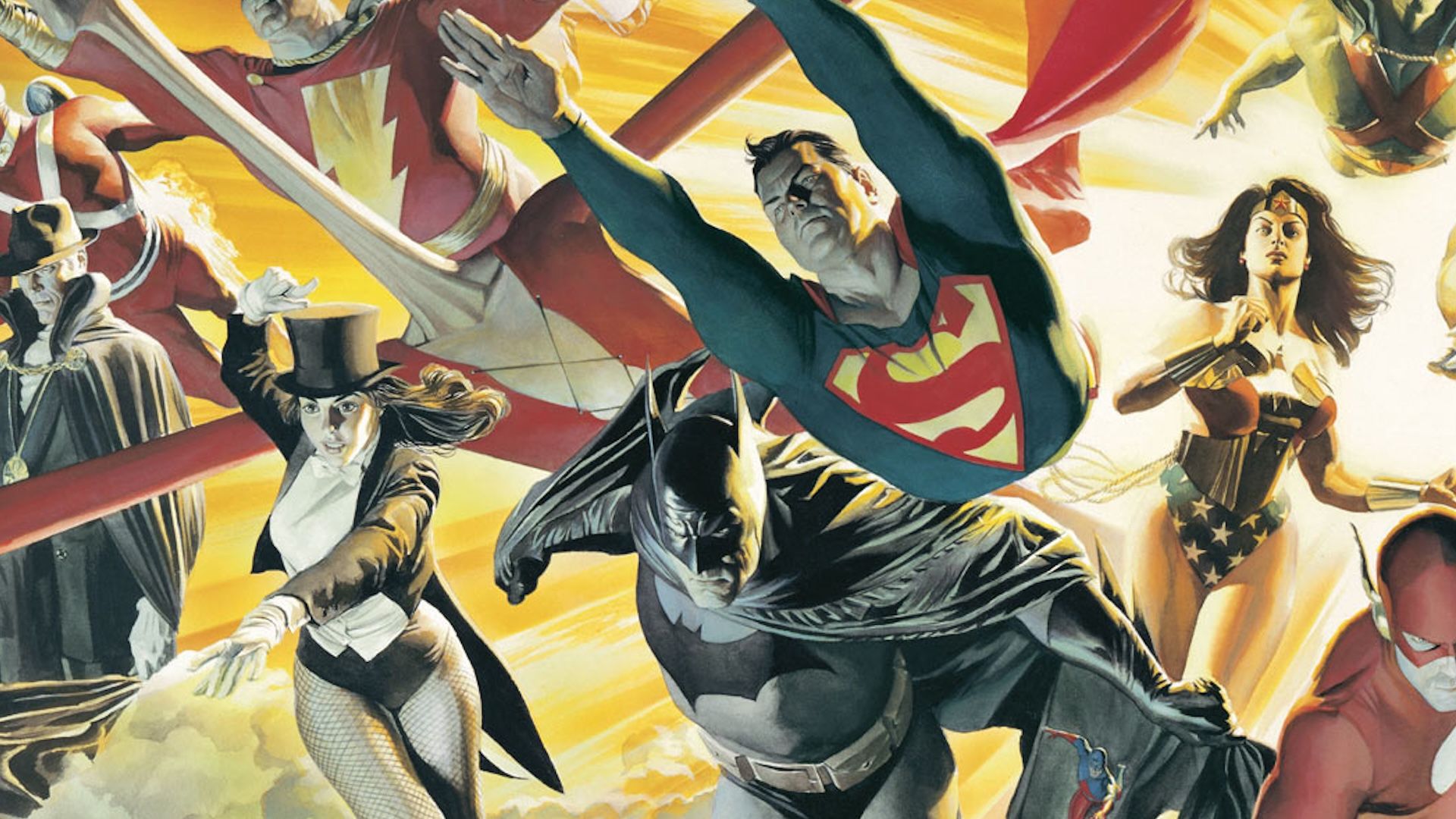
For nearly eighty years, the Justice League America – led by iconic heroes like Superman, Batman, and Wonder Woman – has been the central force protecting the DC universe from countless dangers. They’ve set the standard for all other heroes. But recently, things have started to change.
As the Justice League expanded and faced increasingly dangerous threats, the younger heroes, often called “sidekicks,” frequently had to step up and handle things. This group included Robin, the crime-fighting partner of Batman. When not working alongside Batman, Robin teamed up with other young heroes like Kid Flash, Aqualad, Speedy, and Wonder Girl, and together they began to build a reputation that could eventually match their famous mentors.
Let’s explore the origins of this team and how they’ve grown to challenge, and even exceed, the Justice League as DC’s strongest force.
The Kids are Brave and Bold
The concept of teenage heroes assisting established superheroes originated in the early days of DC Comics. Back then, many popular heroes teamed up with partners who had similar abilities to fight crime. However, it wasn’t until the Silver Age that these teenage sidekicks decided to become heroes in their own right, moving out from under the guidance of their mentors. In issue #54 of The Brave and the Bold, created by Bob Haney and Bruno Premiani, Robin, Kid Flash, and Aqualad took the lead as a team without any adult supervision.
The team didn’t officially become the Teen Titans until Donna Troy, also known as Wonder Girl, joined in The Brave and the Bold #60. This led to the first issue of Teen Titans in 1966, which brought the young heroes into the public eye. Throughout the 1960s, a time when comics were embracing a new, youthful style, the team grew to include more members.
The original four members of the team later invited Roy Harper, Green Arrow’s crime-fighting partner known as Speedy, to join them. Initially, they clashed with Beast Boy, the youngest member of the troubled Doom Patrol, who had the ability to shapeshift. However, they eventually accepted him as one of their own. Beast Boy would later be instrumental in the team’s revival in more recent years, but for now, he took on a role within the .
As the Teen Titans battle increasingly powerful villains – ones that match the strength of the Justice League’s enemies – they start to truly function as a team. These shared challenges deepen their friendships and create a strong family-like bond, setting them apart from the more business-like approach of the Justice League.
As the Teen Titans comic book grew in popularity during the 1970s, the team expanded beyond its original members. They added new heroes like Lilith, who could see the future, Mal (who often went by different names, including The Herald and The Guardian), the technologically skilled Bumblebee, and the often-debated vigilantes Hawk & Dove. The series continued throughout the decade, reflecting the changing times, until the team seemingly disbanded in 1978 with issue #53. However, readers didn’t realize this was setting the stage for a major revival.
The Teen Titans Grew Up Fast
By the fall of 1980, Marvel’s Uncanny X-Men was one of the most popular comic books available. Writer Chris Claremont led the book to incredible success, crafting stories that went beyond typical superhero adventures. The X-Men, as mutants, were portrayed as outsiders and misfits, a theme that connected with many readers who found comfort and escape in the stories of this new generation of gifted students.
Building on a trend of more emotional and relatable stories with complex heroes, the acclaimed team of Marv Wolfman and George Pérez decided it was the right time to reintroduce some familiar young characters. They launched The New Teen Titans with issue #1 in November 1980, first appearing as a preview in the October issue of DC Comics Presents #26.
Marv Wolfman and George Pérez brought back three original Teen Titans – Robin, Kid Flash, and Wonder Girl – and reintroduced Beast Boy as Changeling. They expanded the team with three new members: Starfire, an alien princess; Cyborg, a hero who is part man and part machine; and Raven, a mysterious witch from another dimension. It’s Raven’s unique situation that ultimately brings these heroes together as a team.
Realizing how much they could achieve together, the team officially reforms as the Teen Titans. The comic book series quickly becomes incredibly popular, reaching sales numbers comparable to Marvel’s Uncanny X-Men – and the two groups even cross paths in a major event. Over the next twenty years, the Titans face increasingly dangerous threats, battling everything from terrorist groups and sinister cults to hired guns, spies, and the terrifying demon Trigon.
While the Titans become more well-known, the Justice League of America is dealing with disagreements and problems, leading Batman to leave and create a new team called The Outsiders. The original League falls apart, and veteran members Aquaman and Martian Manhunter gather a group of newer, less experienced heroes – all as the DC universe heads towards a massive, unprecedented challenge!
As the original Teen Titans matured, they naturally changed. Robin became Nightwing, and Wonder Girl took on the name Troia. With the core team members growing out of their teenage years, they rebranded as simply, The Titans. Over time, the team’s lineup shifted with both returning and new heroes joining, but the bonds that united them stayed strong. The Titans continued to function as a family, becoming a vital part of the DC Universe’s heroic legacy.
The Rebirth and Return of The Titans
Throughout DC Comics history, and through numerous major events and crises – like Zero Hour (1994), Identity Crisis (2004), and Infinite Crisis (2005) – the Titans have consistently been central figures. However, recent changes to the official timeline have unfortunately removed them from established history.
After DC Comics made big changes with their “New 52” reboot, some important parts of the company’s history were erased, including how the Teen Titans first formed. By 2016, fans were closely examining DC’s publishing plans, hoping they would attract new readers. A closer look at one of these changes brought back a well-known character.
Okay, so as a comic book fan, let me tell you about Wally West. He wasn’t just the first Kid Flash, but he actually became the Flash after the big ‘Crisis on Infinite Earths’ event. It was a huge deal because he took over from his mentor, Barry Allen, and became the main Flash. What’s really cool is he was the first sidekick to actually take the lead like that! Then things got weird with ‘Flashpoint,’ and he was kinda erased from existence, but thankfully, he came back during the ‘Rebirth’ storyline. It’s been a rollercoaster for this character, honestly!
In “The Return of Wally West” (detailed in Titans Vol. 1, 2017, by Dan Abnett and Brett Booth), the original Teen Titans – now adults – come back together to face a past foe, which ultimately re-establishes their importance. They realize they work best as a team and rediscover that their strength comes from being like a family.
The Titans Remain on Top
The Justice League is known as the main team protecting Earth and the galaxy from their Watchtower base. However, the Titans have often stepped in when the League was unavailable. Most recently, when everyone thought the Justice League was killed, sparking the ‘Dark Crisis on Infinite Earths,’ the Titans—led by Nightwing—took charge and motivated a new group of heroes.
As a gamer, I’ve always been impressed by the Titans. They just have this incredible way of coming together when things get tough – it’s like they operate on a different level. Sure, their powers might not always be the flashiest, but those core Titans? They consistently prove they can hang with anyone. Through every reboot and storyline, they’re always there, a solid, grounded team that feels like a direct extension of the Justice League. Honestly, their history of heroism is still a huge inspiration, even in-game!
Read More
- Total Football free codes and how to redeem them (March 2026)
- Last Furry: Survival redeem codes and how to use them (April 2026)
- Pixel Brave: Idle RPG redeem codes and how to use them (May 2026)
- Clash of Clans May 2026: List of Weekly Events, Challenges, and Rewards
- Top 5 Best New Mobile Games to play in May 2026
- Light and Night brings its beloved otome romance experience to SEA region with a closed beta test starting May 20, 2026
- Skip Bayless and Stephen A. Smith to reunite on ESPN’s ‘First Take’ for one day only
- Gear Defenders redeem codes and how to use them (April 2026)
- Winnita Casino Guida per vincere in grande nel gioco d’azzardo online
- FC Mobile 26 TOTS (Team of the Season) event Guide and Tips
2026-05-15 17:09