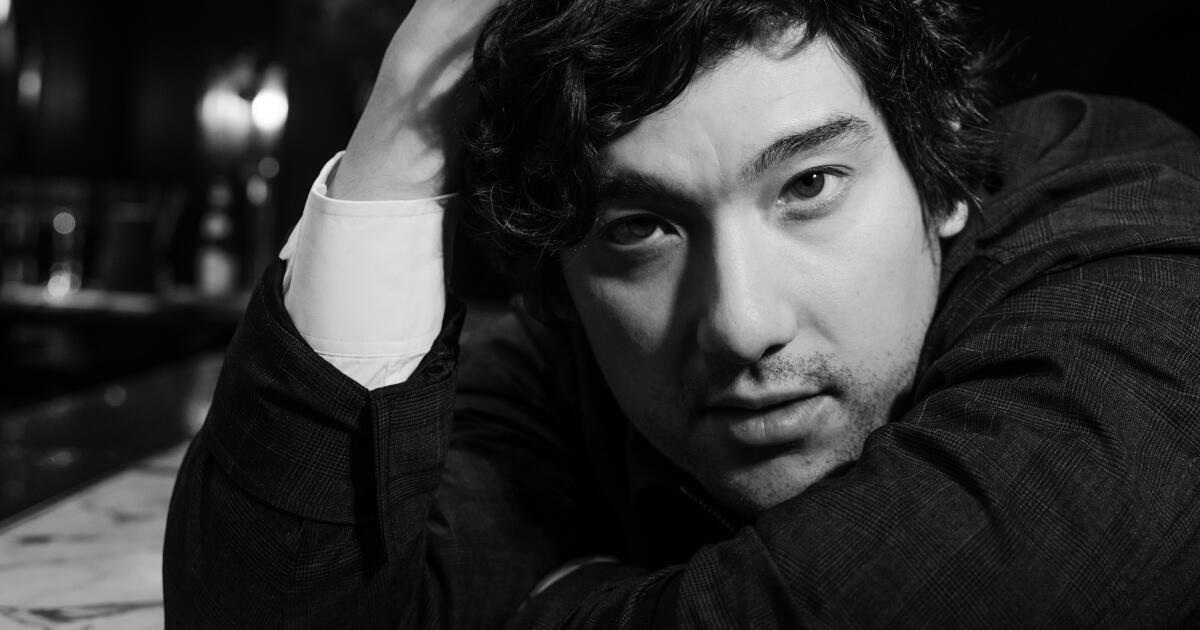
I recently saw “Amadeus,” and Will Sharpe’s performance truly struck me. He mentioned not feeling intimidated by the weight of playing Mozart, which I found fascinating. Instead of focusing on the legend, he seemed genuinely interested in exploring the person behind the historical figure – digging into who Mozart actually was, rather than just who we think he was. It’s a subtle but powerful approach that really shines through in his portrayal.
I’ve always been fascinated by the idea – it’s probably just a legend – that Mozart’s music seemed to just come to him, fully formed. I was chatting with actor Daniel Sharpe recently, near the Barbican in London, and he brought it up. He’s incredibly busy right now, editing a new Apple TV series called ‘Prodigies’ – which he wrote, directed, and stars in, with Ayo Edebiri – so getting a few minutes with him felt special. It was actually quite perfect that he’d pause his own creative work to talk about someone like Mozart.
He found himself wondering what the person was actually like, what daily life would have been like for them, and what their home life was like. He was curious about them as a person, beyond just their public image.
The new limited series “Amadeus,” from writer Joe Barton (known for “Black Doves”), tells the story of the rivalry between composers Mozart and Antonio Salieri (played by Paul Bettany). This version is based on Peter Shaffer’s 1979 play, which itself was inspired by Alexander Pushkin’s 1830 work about the two musicians. Many know the story from Miloš Forman’s acclaimed 1984 film, also called “Amadeus,” but this five-episode series delves deeper into Mozart’s life, including the viewpoint of his wife, Constanze (Gabrielle Creevy). It’s currently airing on Starz in the U.S.

Sharpe explains that the portrayal isn’t about the historical Mozart, but a made-up version. He focused on capturing the spirit of who Mozart might have been, particularly his journey from a hopeful and innocent young man to the more troubled figure he became later in life.
Sharpe and Barton previously worked together on the 2019 crime drama “Giri/Haji.” Sharpe hadn’t met Bettany before, but Bettany was excited to collaborate with him. Both actors were tasked with exploring the motivations behind the music of each man, and why one composer’s work has endured longer than the other’s. The story starts in Vienna, where Salieri is the composer for the court and Mozart quickly wows the emperor (played by Rory Kinnear) with his exceptional talent.
Bettany describes Salieri’s situation as terrible. He explains that Salieri struggles to understand why so much admiration is directed towards someone he views as unworthy. Bettany found Salieri’s awareness of being near greatness, but ultimately falling short, particularly moving. While initially considering Salieri the villain while preparing for the role and studying the script, he didn’t play the character that way in the actual scenes.

‘Amadeus’ honors play and film while adding more shenanigans
This five-episode miniseries, based on Peter Shaffer’s play and featuring Will Sharpe and Paul Bettany, occasionally feels repetitive, but it remains enjoyable overall.
He said with a smile, “Will was an ideal choice for the part. It’s really hard to portray someone truly great. How do you act like a genius? I think you need an actor who is a genius, and Will definitely fits that bill.”
Dustin Sharpe was hired to work on the series six months before filming began in Budapest in the summer of 2024, allowing him ample time for preparation. He spent this time taking piano lessons, learning how to conduct an orchestra, and immersing himself in the music of Mozart.
Sharpe explained that the material was really useful in understanding the many sides to the artist’s personality. He noted a striking contrast – at times playful and immature, but at others, deeply complex and dramatic. This duality extended to his music, which ranged from upbeat and carefree to powerfully intense. The goal was to portray all these contrasting elements as belonging to a single, complete person.

Sharpe had musical experience with bands and could play around on the guitar, but learning classical piano was much more demanding. He played the piano himself whenever possible during filming, sometimes needing to quickly learn new pieces if the music changed unexpectedly. To make things even harder, he had to play on a historically accurate fortepiano on set.
He noticed the keys were smaller and the touch was very light, making the playing surprisingly challenging. However, he found this difficulty enjoyable. Along with listening to music, it helped him focus and get lost in the process, almost like meditation, without overthinking.
He explained that Mozart’s music was a unique and important influence. It wasn’t just something he learned, but a genuine reflection of his personality and inner self.
The conducting style in the movie “Amadeus” isn’t truly representative of the 1700s. The filmmakers prioritized emotional impact over historical accuracy in the large performance scenes. Rather than mirroring the precise, somewhat rigid techniques of the era, the conductors, Sharpe and Bettany, adopted a more contemporary approach.
Bettany observed that the conductor’s style was very rigid and focused on precise timing, unlike today’s conducting which emphasizes conveying emotion and communicating desired feelings to the orchestra. He noted that older styles lacked this expressiveness, making them less engaging to watch, but eventually a balance was struck, achieving a middle ground with some emotional delivery.
When filming Mozart conducting an orchestra, the director, Sharpe, aimed to reveal the composer’s inner life. Sharpe explains that Mozart was socially awkward and didn’t understand how to interact with people, so he expressed himself through his music. The director focused on the underlying meaning of each scene, wanting to show more than just Mozart performing his opera; he wanted to convey the emotional core of the moment.


In the series, Paul Bettany portrays Antonio Salieri, a composer at court who becomes increasingly jealous of Mozart’s talent. (Adrienn Szabo / Starz)
A particularly important scene in the series happens after Mozart’s son dies. Both Mozart and his wife, Constanze, are deeply saddened, and Mozart composes a piece called “Kyrie.” Constanze sings it in a way that feels like a release for them both. The filmmakers shot this scene at the stunning St. Stephen’s Basilica in Budapest. The actor playing Mozart actually conducted a live orchestra while they played along to a pre-recorded track. Interestingly, the actor, Bettany, deliberately avoided listening to the “Kyrie” music while filming the scene.
According to Bettany, this is the moment Salieri truly grasps the situation. Mozart has composed a piece of music so profoundly beautiful it allows Mozart’s wife to seemingly connect with their deceased child. Meanwhile, Salieri experiences a devastating realization: he understands God is communicating through Mozart, and this will ultimately lead to his downfall.
According to Sharpe, Paul and he viewed the characters as brothers connected by their shared faith in God, both feeling unfairly treated. Salieri believes Mozart receives all the praise and blessings, and feels overlooked despite his own devotion. They both grapple with the idea that Mozart is a conduit for divine music, but question the cost of that gift.
The actors each had unique ways of playing their roles. Sharpe’s portrayal of Mozart swings wildly between joyful celebration and intense emotional pain. Bettany played Salieri as spiteful and scheming, and surprisingly found it came naturally. This contrast in their acting styles created a more exciting and compelling relationship on stage.
Bettany explains that Will Smith is more spontaneous and improvisational than he is, which he feels is fitting for the roles they played. While Bettany’s character, Salieri, was a planner – and Bettany himself prepared extensively – Smith had a strong grasp of the overall story but could be more carefree and playful in each scene.

Sharpe explains that preparing for this role required more work than any other he’s done. He adds that the character is unique, possessing a distinct outlook that challenges conventional expectations.
Sharpe had a very busy period leading up to his role in “Amadeus.” He received an Emmy nomination for his supporting role in season two of “The White Lotus,” and had recently written and directed the film “The Electrical Life of Louis Wain” as well as the miniseries “Landscapers.” In 2023, he directed Jesse Eisenberg’s “A Real Pain,” filmed in Poland, and before starting “Amadeus” in early 2024, he appeared in Lena Dunham’s comedy series “Too Much,” playing a musician.
Sharpe emphasizes that the creative choices weren’t deliberate, like setting out to work with specific musicians. However, creating the album ‘Too Much’ was a genuinely positive experience. He particularly enjoyed collaborating with Lena, finding her inspiring and supportive. He felt similarly about working with Jesse on ‘A Real Pain,’ both Lena and Jesse being naturally curious and open to collaboration. These experiences showed Sharpe that he could successfully repeat that kind of collaborative process.
The novel “Prodigies” originated from an idea Sharpe conceived ten years prior: a story about a long-married couple, both of whom were once child prodigies but now lead ordinary lives.
He began to explore the idea of a story focused on relationships, one that showed what happens after two people get together – not just the beginning. This led him to consider questions about destiny and what we’re capable of becoming. He wondered if we should actively try to reach our full potential, and suddenly, the story came together, allowing him to write it quickly.
It’s been a while since Will Sharpe both starred in and created a project. His last was the series “Flowers,” which ran for two seasons and featured Olivia Colman and his wife, Sophia Di Martino. Sharpe recently finished filming “Prodigies” in London and is aiming for a release later this year.

He admits he’s still very caught up in the work and hasn’t had a chance to step back and look at things objectively. He feels incredibly lucky to have the opportunity to do what he does, and constantly reminds himself of that, even when things are tough – like when he’s stressed, tired, or facing unexpected changes. He sees even the challenges as a gift.
Besides his work on “Prodigies,” Sharpe has several future projects in mind, like an animated movie he’s currently creating. However, he also recognizes the importance of taking time for himself. He and his wife, Di Martino, have two young children, ages 4 and 6, and finding a balance between family and work helps him stay centered.
He explains that figuring out your next step requires both a clear goal and personal fulfillment. It’s important to experience life fully, and taking breaks from creative work can actually be beneficial.
Sharpe is driven by a desire to push his own boundaries. He consistently looks for new and challenging experiences – whether he’s acting, writing, or directing – believing that’s where he’ll find the greatest fulfillment.
For me, the best feeling after a film is knowing I absolutely emptied the tank. I need to feel like I gave it everything – that I made a real sacrifice for the project. It’s a tricky balance, because you can definitely burn yourself out trying to do that. You learn with experience how to manage that intensity. But honestly, if I don’t push myself to the limit, I always wonder if I could have done something more, something better. That’s especially true with a role like Amadeus – the story demanded that kind of complete commitment.
Read More
- Total Football free codes and how to redeem them (March 2026)
- Last Furry: Survival redeem codes and how to use them (April 2026)
- Pixel Brave: Idle RPG redeem codes and how to use them (May 2026)
- Clash of Clans May 2026: List of Weekly Events, Challenges, and Rewards
- Light and Night brings its beloved otome romance experience to SEA region with a closed beta test starting May 20, 2026
- Top 5 Best New Mobile Games to play in May 2026
- Gear Defenders redeem codes and how to use them (April 2026)
- Skip Bayless and Stephen A. Smith to reunite on ESPN’s ‘First Take’ for one day only
- Winnita Casino Guida per vincere in grande nel gioco d’azzardo online
- Painful truth about Alexa Demie after she vanished… then emerged with drastic new look: Insiders spill on Sydney Sweeney feud and Euphoria star’s plan for revenge
2026-05-15 13:33