As a movie reviewer, I’ve always believed film can be a powerful tool for processing tough emotions, and few are tougher than grief. It’s such a personal experience, showing up in countless ways, which makes it hard to portray authentically. But when a movie nails it, it’s incredibly moving. These films don’t just reflect grief; they can offer real comfort or even a fresh way of looking at a painful time. They remind us we’re not alone in our feelings.
Watching characters grieve on screen can be surprisingly healing. Films allow us to explore difficult emotions, like facing trauma, imagining the worst outcomes of our pain, or even what life might be like without finding peace after a loss. No matter where you are in your own grieving process, there’s something relatable to connect with in these stories.
Manchester by the Sea Leaves is a Heartbreaking Story of Loss
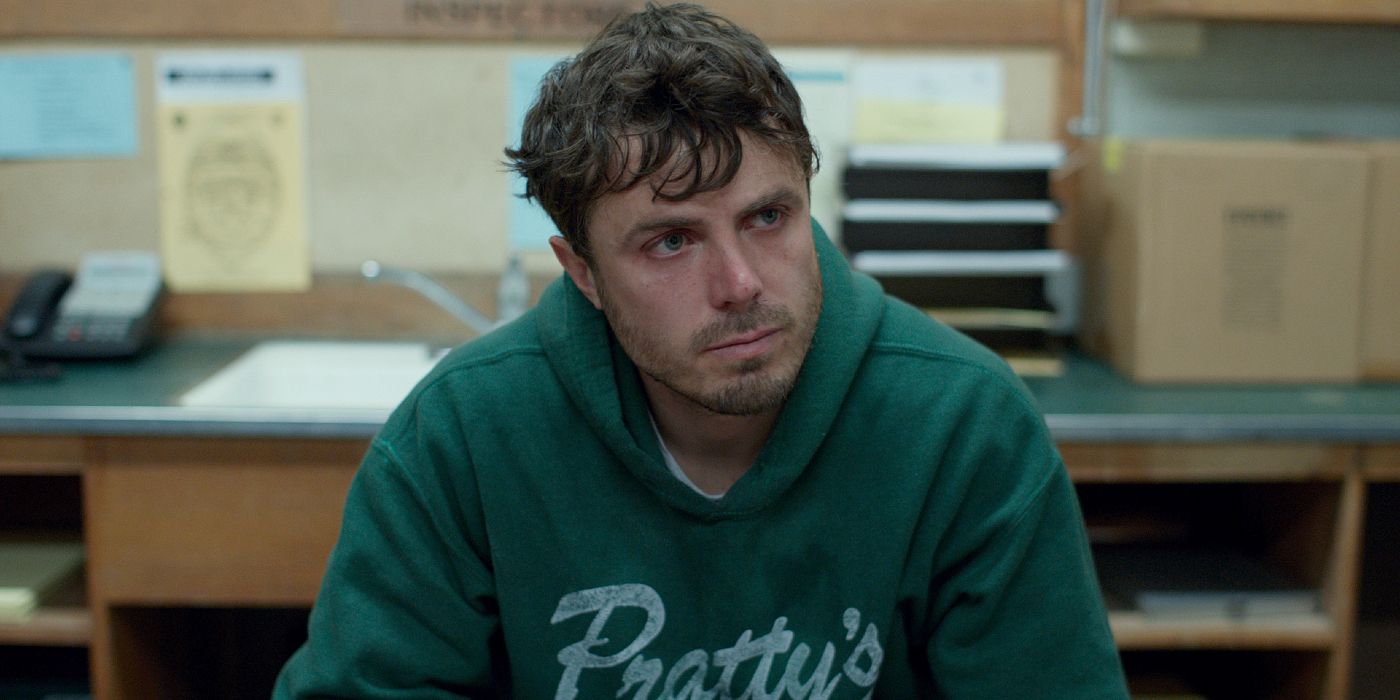
Casey Affleck’s incredibly moving performance as Lee Chandler in the 2016 film Manchester by the Sea earned him an Academy Award and contributed to the movie’s impressive 96% rating on Rotten Tomatoes. The film offers a realistic and unflinching portrayal of grief, exploring themes of tragic loss, overwhelming guilt, and complicated family relationships.
The film features strong performances from Lucas Hedges, Kyle Chandler, C.J. Wilson, Tate Donovan, and a particularly moving portrayal of Lee’s former wife, Randi, by Michelle Williams. It went on to receive numerous award nominations. Be warned: the scene where Lee and Randi reunite after their shared loss is incredibly emotional and likely to bring tears to your eyes.
Kenneth Lonergan, the writer and director, powerfully portrays grief by simply letting it exist. He doesn’t offer easy resolutions or a fully healed protagonist. Instead, his character, Lee, finds solace in small, everyday moments of normalcy – and that’s profoundly meaningful.
Three Colours: Blue Leaves You With a Hopeful End Note
Imagine experiencing the immense grief of losing your spouse and child in a car accident, only to then discover your partner was secretly involved with someone else and had another child on the way. The 1993 film Three Colours: Blue, starring Juliette Binoche, powerfully portrays this story of profound sorrow and isolation after a life-altering tragedy befalls Julie de Courcy.
It’s common to want to isolate yourself when you’re grieving. The film Three Colours: Blue beautifully portrays a person’s journey to rediscover connection and joy after experiencing profound loss.
I was completely captivated by Three Colours: Blue, the first film in a stunning trilogy by Krzysztof Kieślowski. It really digs into big feelings – loss, love, and what it means to be alive. And honestly, it’s not just a movie you watch; it’s one you feel – the emotions just resonate with you on a really deep level. It’s no surprise it’s been so well-received, with a 96% rating on Rotten Tomatoes!
Ordinary People Handle Grief Differently
This film explores how grief affects different family members, touching on difficult themes like emotionally distant mothers, the loss of a sibling, and declining mental health. With a 90% audience score on Rotten Tomatoes, it clearly resonates with viewers because of its realistic portrayal of how people cope with trauma in their own ways.
Ordinary People tells the story of the Jarrett family – Calvin and Beth, and their sons. They are devastated when one son dies in a boating accident. The film focuses on how they cope with the loss, particularly their surviving son, Conrad, who struggles with guilt and grief over his brother’s death.
The film Ordinary People, written by Alvin Sargent and based on Judith Guest’s novel, shows that grieving isn’t a straightforward process. It highlights how setbacks are common, and how each member of a family copes with trauma in their own unique way.
Up Is a Hard-Hitting Animated Classic
The 2009 film Up is surprisingly poignant. Beneath its colorful adventure, it’s a touching story about dealing with loss – the loss of a baby, the death of a spouse, and the loneliness that follows. Ultimately, Up is a beautiful and hopeful story about finding the strength to keep living and embracing life’s journey.
Written by Pete Docter and Bob Peterson, who also directed, this film offers a touching and hopeful look at grief. It’s beautifully done, earning a remarkable 98% rating on Rotten Tomatoes, and ultimately leaves you feeling optimistic, reminding us that even after one chapter closes, new beginnings are possible.
The film features a talented voice cast, including Ed Asner, Christopher Plummer, and Bob Peterson, who bring to life the grumpy Carl Fredricksen, the eccentric Charles Muntz, and the lovable dog, Dug. Though the story and its themes are geared more towards adults, Dug provides plenty of fun for younger viewers.
Rabbit Hole Takes Fans Deep into the Theme of Grief
Featuring a strong cast including Nicole Kidman, Aaron Eckhart, and Dianne Wiest, the film Rabbit Hole powerfully portrays a couple’s journey through the heartbreaking loss of their young child. Based on David Lindsay-Abaire’s play and directed by John Cameron Mitchell, the drama explores how each person copes with grief in very different ways. The film received widespread recognition, earning nearly two dozen award nominations and currently holding an 86% rating on Rotten Tomatoes.
The fear of losing a child is universal, and the film Rabbit Hole powerfully portrays the different ways parents cope with such a tragedy. Becca, played by Nicole Kidman, desperately tries to forget the pain, while her husband, Howie (Aaron Eckhart), clings to every memory and feels the need to do more to honor their child.
A particularly effective idea in the film is how the character played by Teller explores parallel worlds. This concept can be helpful for people dealing with trauma, allowing them to imagine different versions of themselves at various points in their healing process. Importantly, the film handles this sensitive topic without becoming overly emotional or manipulative – which is exactly what you want when a movie aims to evoke genuine empathy.
The Sweet Hereafter Brings a Traumatized Community Together
Most films about loss center on individuals or families dealing with tragedy. However, The Sweet Hereafter portrays an entire town grappling with collective grief. Based on the novel by Russell Banks, the indie drama was written and directed by Atom Egoyan and still boasts a remarkable 98% rating on Rotten Tomatoes. The story is made even more poignant by the fact that it was inspired by a real-life 1989 bus crash in Texas that tragically took the lives of 21 students.
The town featured in the film The Sweet Hereafter is grappling with the aftermath of a tragedy, and the story explores how this heartbreak either unites or divides its residents. Beyond the central event of the bus accident, the town is also facing other complicated issues that make healing even harder.
The film features powerful performances from actors like Ian Holm, Maury Chaykin, Peter Donaldson, Bruce Greenwood, David Hemblen, Brooke Johnson, and Sarah Polley. It captures feelings of sadness and pain with a raw honesty that’s often a hallmark of independent films.
Hereditary Uses Horror to Tackle Family Trauma
You might not expect a horror movie to deal with grief and family issues, but Hereditary does just that. The film explores the anxieties parents have about passing down traits – or trauma – to their children, bringing those fears to life on screen.
This horror movie features strong performances from Toni Collette, Alex Wolff, Milly Shapiro, Ann Dowd, and Gabriel Byrne, and tells the story of a family falling apart after the mother dies.
Grief and trauma are difficult subjects that people often avoid discussing. The film Hereditary bravely addresses these issues, using supernatural elements like possession to represent how children inherit their parents’ emotional burdens and pain. While it might be unsettling rather than heartwarming, Hereditary encourages viewers to consider the impact of their actions on others and how choices can contribute to suffering.
Still Walking Puts One Family’s Suffering in the Spotlight
Stories that focus on genuine, heartfelt emotions within families are often the most powerful. The 2008 film Still Walking beautifully portrays the Yokoyama family as they cope with the loss of their son and brother, Junpei, over the course of a year. It remains a standout film about grief, and if you’re looking for one movie on this topic, this is an excellent choice.
Hirokazu Kore-eda wrote and directed this film, which stars Hiroshi Abe, Yui Natsukawa, Yukiko Yahara, Shohei Tanaka, and Kazuya Takahashi. It subtly portrays the pain within a family, showing that old wounds don’t always fade with time, as demonstrated by the Yokoyama family’s story.
In Still Walking, the conversations between characters are central to the story. While the film ends on a more hopeful note, it doesn’t tie up every loose end between the siblings and their parents – which feels realistic. The movie’s slow pace adds to its authenticity, allowing it to explore grief in a way that many other films don’t, and this is a key reason why it’s been so well-received by critics.
The Quiet Moments In the Bedroom Scream at You
As a movie fan, I’ve always been fascinated by films that explore the darker side of grief. In the Bedroom, a crime thriller from 2001, really gets under your skin. It asks a tough question: how much can sorrow consume you? It shows how grief can twist into anger and resentment, and how those intrusive thoughts can actually drive your decisions. It’s a powerful look at how pain can take over and lead you down a dangerous path.
Todd Field adapted Andre Dubus’s short story “Killings” into a screenplay, and also directed the resulting drama, In the Bedroom. The film, which has a 93% rating on Rotten Tomatoes, explores the idea of “an eye for an eye” and whether seeking revenge truly brings resolution.
Starring Sissy Spacek and Tim Wilkinson as a couple grieving the loss of their son (played by Nick Stahl), In the Bedroom features a powerfully emotional cast including William Mapother, Celia Weston, Karen Allen, and Marisa Tomei. The film uses a cramped space within a lobster trap – a makeshift ‘bedroom’ – to symbolize how people cope with trauma. It explores the difficult choice between supporting each other or withdrawing, and portrays this struggle with heartbreaking realism.
Don’t Look Now Is a Great Way to Avoid Grief
Grieving the loss of a child makes people especially vulnerable, and that’s what happens to John and Laura Baxter in the 1973 horror film, Don’t Look Now. After their daughter, Christine, dies, they’re approached by two sisters who claim they can communicate with her. The couple, overwhelmed by grief, become susceptible to the sisters’ influence and drawn into their mysterious world.
Directed by Nicolas Roeg and written by Allan Scott and Chris Bryant, the film Don’t Look Now is based on a short story by Daphne du Maurier and explores the intense grief of losing a child. Critics loved it – it currently has a 93% rating on Rotten Tomatoes – and it realistically portrays the confusion and struggle to find meaning after such a devastating loss.
A striking aspect of Don’t Look Now is its use of the color red, which powerfully highlights John’s grief over the loss of his daughter. The film is visually innovative and a true masterpiece, with symbolism that stays with you long after the initial emotional impact.
Read More
- Total Football free codes and how to redeem them (March 2026)
- Clash of Clans May 2026: List of Weekly Events, Challenges, and Rewards
- Farming Simulator 26 arrives May 19, 2026 with immersive farming and new challenges on mobile and Switch
- Last Furry: Survival redeem codes and how to use them (April 2026)
- Pixel Brave: Idle RPG redeem codes and how to use them (May 2026)
- Gold Rate Forecast
- Honor of Kings x Attack on Titan Collab Skins: All Skins, Price, and Availability
- Top 5 Best New Mobile Games to play in May 2026
- Nekopara Sekai Connect Neko Tier List
- Top 15 Mobile Games for April 2026
2026-05-13 05:15