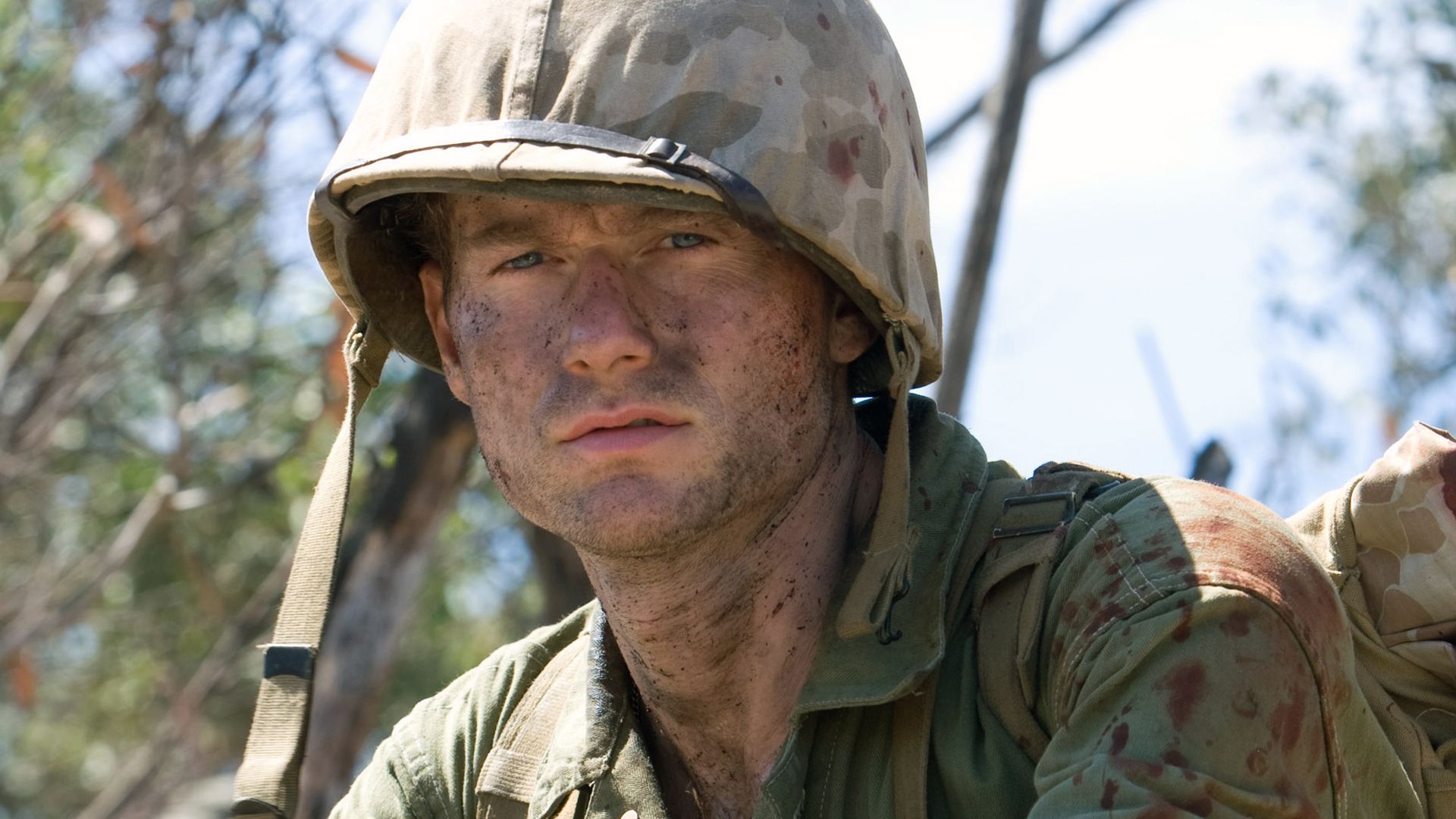
When HBO premiered The Pacific in 2010, it immediately stood out as a remarkable television achievement. Viewers were captivated by the realistic and intense battle scenes from the World War II Pacific theater, which had a production quality rivaling many major films. Beyond the action, the series also powerfully depicted the psychological impact of war and the brutal realities of violence, earning it a well-deserved Emmy Award for Outstanding Miniseries.
Although The Pacific is a truly exceptional war story, several other shows are arguably just as good, or even better. These shows explore war in many ways – from classic tales of bravery and sacrifice, to darker, more humorous takes on conflict, and even the long-term psychological effects it has on individuals. They all present a strong challenge to The Pacific as the best of its kind.
The Pacific Has Always Lived in the Shadow of Band of Brothers
While The Pacific is a significant TV achievement, it’s often compared to and overshadowed by Band of Brothers. The earlier series, created by Steven Spielberg and Tom Hanks, is considered a classic and helped launch the current era of high-quality television. Ultimately, being second to such a groundbreaking show isn’t a bad position to be in.
Ultimately, The Pacific relies heavily on Band of Brothers; it wouldn’t have been made without it. Many of the filmmaking choices and story ideas were first explored in the original 2001 miniseries, which honored the real soldiers who fought in World War II. It continues the incredibly realistic style Steven Spielberg pioneered in Saving Private Ryan (1998) and showcases a talented young cast that would become major stars in Hollywood over the next twenty years.
The movie boasts an incredible cast, including stars like Michael Fassbender, James McAvoy, Tom Hardy, and Simon Pegg. Many of the actors involved are on their way to becoming household names, and their performances are truly outstanding.
The Good Lord Bird is a Visceral, Poignant, and Hilarious Pre-Civil War Story
Everyone jumps to The Pacific or Band of Brothers when thinking about great war shows, but there are so many other ways to tackle the subject. I recently watched a series that really surprised me – it takes on the story of John Brown, the famous abolitionist, and his attempt to end slavery in the late 1850s. Honestly, it feels a bit like a Tarantino film – gritty, full of swearing, and incredibly energetic. It’s a Western at heart, but one that doesn’t shy away from the brutality of the era, mixing in a dark sense of humor and plenty of explosive gunfights.
Despite its mix of different styles, the show is a resounding success, largely due to Ethan Hawke’s powerful and captivating performance. But how does it fit into the war genre? It’s essentially a story before the war, and that feels significant. The series leads up to John Brown’s raid on the Federal Armory at Harpers Ferry, Virginia in 1859 – a well-known attack against slavery that ultimately failed. The raid ended tragically, with the mayor of Harpers Ferry killed during negotiations and Brown’s son, Oliver, dying in his arms.
The failed rebel was quickly put on trial and sentenced to death by hanging. Though his attempt to start a slave uprising didn’t succeed as he’d hoped, a narration explains that his raid played a key role in starting the American Civil War. This war ultimately led to the end of slavery in 1865, but only after years of brutal fighting.
Rogue Heroes is an Old-Fashioned Blast From the Creator of Peaky Blinders
Many stories about war focus on its devastating effects and pointlessness, and it’s crucial that these stories continue to be told. However, Steven Knight’s Rogue Heroes (also known as SAS: Rogue Heroes in the UK) offers a different perspective. It blends classic Hollywood-style entertainment with the spirit of adventure that motivated many soldiers during World War II.
“Rogue Heroes” is a throwback to classic adventure serials, packed with heroic characters, glamorous women, and plenty of witty British humor. Expect over-the-top action – Nazis getting shot and explosions galore – because historical accuracy isn’t a priority. The show stands out even further with its unexpected soundtrack of modern rock music. While it’s mostly a fun ride, the series isn’t afraid to deliver genuinely impactful and emotional moments when the story calls for it.
The show is commendable in how it treats its characters, drawing inspiration from the real soldiers who created the British Army’s famous Special Air Service. It’s the type of series that evokes nostalgia – the kind your father would say they just don’t make anymore – making it ideal for a relaxed binge-watching session with family on a Sunday.
The Narrow Road to the Deep North is Harrowing, Romantic, and Haunting All at Once
Jacob Elordi has quickly become a major Hollywood star, gaining recognition for his roles in popular shows like Euphoria and Saltburn, as well as the new Netflix film Frankenstein. However, one of his strongest performances might have been overshadowed by these projects: a powerful and moving Australian drama directed by Justin Kurzel (The Order). The film follows Dorrigo Evans, a veteran of World War II, and explores his life across multiple timelines.
The novel follows Evans through three distinct periods of his life: as a medical student caught in a love affair before heading off to war, as a prisoner of war held in a Japanese camp, and later as a successful surgeon haunted by his wartime experiences. Ultimately, The Narrow Road to the Deep North unfolds as a heartbreaking love story and the portrait of a man profoundly shaped by war, even if he doesn’t fully acknowledge it.
However, the film’s most powerful moments come from the disturbing scenes of soldiers suffering and being mistreated in the prisoner of war camp, where a gaunt Jacob Elordi delivers a compelling performance. Director Justin Kurzel doesn’t avoid the harsh realities of war, instead showing its brutality honestly, and it leaves a lasting impact.
Das Boot is a Thought-Provoking Exploration of War From the German Perspective
Wolfgang Petersen’s 1981 film, Das Boot, was a huge success with both critics and audiences. It stood out by portraying the German sailors on a U-boat as ordinary men simply following orders during World War II, showing the mix of boredom, action, and terror they experienced. The 2018 television series built on this realistic approach, adding even more depth to the characters and their situation.
By its second season, the show asked viewers to understand the perspectives of complex characters, including a troubled Gestapo officer and his lover – a young woman who was initially drawn in by the Nazi Party’s promises. These types of characters aren’t typically central to American or British war stories, but Das Boot handles their stories with skill. The show emphasizes that experiences of war varied greatly, and that many Germans serving their country during World War II didn’t believe they were fighting for a lost cause.
It’s interesting that despite the show’s popularity and four-season run, critics in its home country were initially hesitant to praise it. According to screenwriter Colin Teevan, who spoke to The Times in 2020, this was surprisingly due to the show’s attempt to present a complex and nuanced view. He explained that German critics particularly resisted acknowledging any possibility that Germany wasn’t entirely at fault.
M*A*S*H is the Gold Standard For War Shows on TV
Few war-themed TV shows have been as memorable as MASH, a remarkable series that skillfully blended humor and heartfelt drama. Originally based on Robert Altman’s 1970 film, MASH – short for Mobile Army Surgical Hospital – truly became a classic over its 11 seasons. The show, set during the Korean War, followed a team of doctors, surgeons, and staff working to save wounded soldiers under difficult circumstances. They relied on humor to cope, making MASH* a uniquely relatable portrayal of wartime experiences.
While few people have experienced the horrors of war, most can relate to using humor to cope with stressful situations, like at work. What truly set MASH* apart was its knack for balancing deeply emotional and often heartbreaking stories with the lightheartedness of a sitcom. It pioneered the blend of drama and comedy that’s common in many TV shows today, giving equal weight to both heartfelt moments and laughs.
MASH felt more realistic than many other war shows, possibly because its star, Alan Alda, was a veteran of the Korean War. Viewers noticed this authenticity, which contributed to the show’s massive popularity. The series finale remains a record-breaker, attracting an incredible 120 million viewers on CBS on February 28, 1983 – the most-watched finale in television history.
Read More
- Clash Royale Best Boss Bandit Champion decks
- Vampire’s Fall 2 redeem codes and how to use them (June 2025)
- World Eternal Online promo codes and how to use them (September 2025)
- Best Arena 9 Decks in Clast Royale
- Country star who vanished from the spotlight 25 years ago resurfaces with viral Jessie James Decker duet
- M7 Pass Event Guide: All you need to know
- Mobile Legends January 2026 Leaks: Upcoming new skins, heroes, events and more
- Solo Leveling Season 3 release date and details: “It may continue or it may not. Personally, I really hope that it does.”
- Kingdoms of Desire turns the Three Kingdoms era into an idle RPG power fantasy, now globally available
- JJK’s Worst Character Already Created 2026’s Most Viral Anime Moment, & McDonald’s Is Cashing In
2026-01-18 20:39