Author: Denis Avetisyan
A new AI-powered tutoring system is showing promise in improving student understanding and scores in introductory physics.
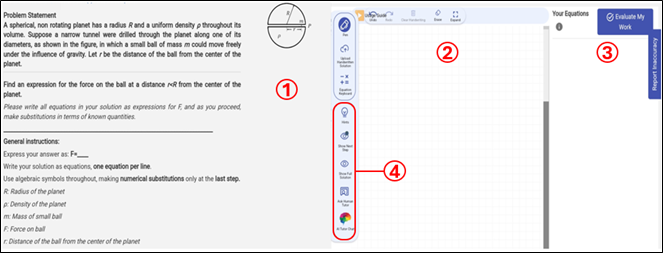
This study details the development and evaluation of aiPlato, an intelligent tutoring system leveraging large language models to provide personalized, step-wise feedback on physics homework.
Despite persistent challenges in scaling personalized learning, recent advances in artificial intelligence offer promising new avenues for educational support. This study investigates the classroom implementation of aiPlato: A Novel AI Tutoring and Step-wise Feedback System for Physics Homework, an AI-enabled platform designed to provide iterative guidance on open-ended physics problems. Findings reveal a strong correlation between student engagement with aiPlato’s feedback tools and improved final exam performance, with high-engagement students demonstrating notably higher scores. Could AI-mediated, step-wise feedback systems like aiPlato fundamentally reshape how students learn and instructors support complex problem-solving skills?
The Fragility of Rote Learning
Conventional physics education frequently emphasizes the rote memorization of equations, a practice that inadvertently overshadows the development of genuine conceptual understanding. While students may successfully manipulate formulas to arrive at numerical answers, research indicates this approach often fails to foster lasting knowledge. This focus on procedure, rather than principle, results in fragile understanding-information easily forgotten or misapplied when confronted with unfamiliar problem-solving scenarios. The consequence is a diminished ability to transfer learned concepts to novel situations, hindering the development of true scientific literacy and a functional grasp of physical laws beyond the immediate context of coursework. Ultimately, prioritizing equations over concepts creates a superficial understanding that impedes long-term retention and limits a student’s capacity for critical thinking within the field of physics.
A persistent challenge in physics education lies in the disparity between a student’s ability to solve standardized problems and their capacity to tackle free-response questions demanding conceptual application. Research consistently demonstrates that while students can often correctly apply memorized formulas and procedures to routine exercises, they frequently falter when confronted with novel scenarios requiring them to identify relevant principles and construct a solution path independently. This suggests that instruction often prioritizes procedural knowledge – knowing how to solve a specific type of problem – over genuine conceptual understanding – grasping why those procedures work and when they are appropriately applied. The inability to transfer knowledge to unfamiliar contexts indicates a lack of deep learning, hindering a student’s ability to think critically and creatively within the realm of physics, and ultimately limiting their capacity to engage with real-world phenomena through a physics lens.
Emergent Guidance: The Promise of AI-Powered Tutoring
Intelligent Tutoring Systems (ITS) represent a significant development in personalized learning by adapting to individual student needs and providing customized instruction. While traditional educational approaches often deliver a uniform curriculum, ITS utilize algorithms to assess student understanding and dynamically adjust the difficulty and content of lessons. However, current ITS frequently struggle to replicate the subtle diagnostic capabilities and flexible responsiveness of human tutors. These systems may excel at identifying correct or incorrect answers, but often lack the capacity to interpret the reasoning behind student errors, provide targeted hints addressing specific misconceptions, or offer encouragement and motivational feedback in a manner comparable to a human educator. This limitation restricts their ability to fully support complex problem-solving skills and promote deep conceptual understanding.
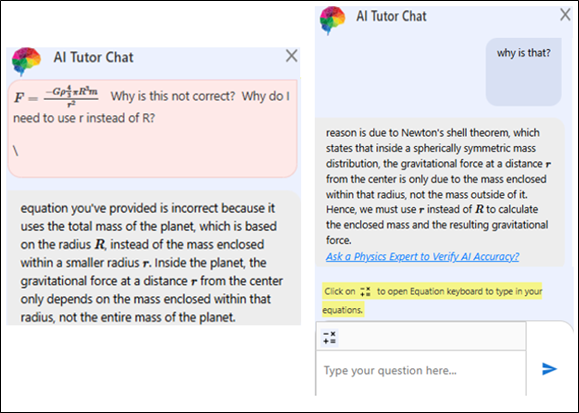
AIPlato utilizes Large Language Models (LLMs) to provide granular, step-by-step feedback on student responses to free-response physics problems. This functionality moves beyond simple correctness checks by analyzing each step of a student’s solution and identifying specific errors in reasoning or calculation. The LLM is trained on a dataset of correct physics solutions and associated error patterns, enabling it to pinpoint the exact location of mistakes and offer targeted guidance. This approach allows AIPlato to emulate the diagnostic capabilities of a human tutor, providing individualized support that addresses the student’s specific difficulties and promotes deeper understanding of the underlying physics principles. The system’s feedback is not limited to identifying incorrect answers; it explains why an answer is incorrect and guides the student towards the correct approach.
AIPlato incorporates handwriting recognition technology to facilitate the digital assessment of student work submitted in handwritten format. This functionality employs optical character recognition (OCR) algorithms to convert images of handwritten solutions into machine-readable text. The system then analyzes this text to provide immediate, step-by-step feedback on free-response physics problems, eliminating the need for manual grading of handwritten assignments and enabling real-time personalized learning experiences. The handwriting recognition component supports a range of handwriting styles and legibility levels to maximize accuracy and accessibility for diverse student populations.
Evidence of Learning: Observed Shifts in Student Performance
Initial studies indicate that AIPlato’s feedback mechanism positively impacts student problem-solving abilities. The system provides detailed, step-by-step guidance, allowing students to identify and correct errors in their approach. This granular feedback differs from traditional methods that often only indicate a correct or incorrect answer, offering instead a pathway to understanding the underlying principles and processes. Observed improvements in problem-solving skills are evidenced by increased accuracy and efficiency in completing physics problems, suggesting that AIPlato facilitates a deeper understanding of the material beyond rote memorization.
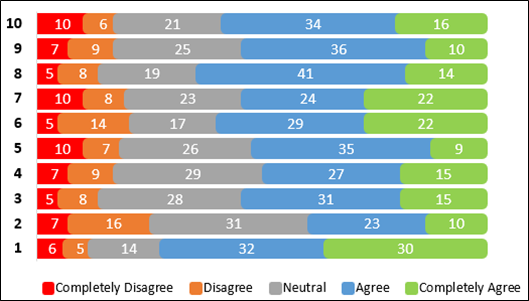
Data collected from student interactions with AIPlato indicates a positive correlation between the extent of student engagement and their demonstrated conceptual understanding of physics principles. Specifically, increased interaction with the platform-measured by problem attempts, feedback requests, and time spent utilizing AIPlato’s features-aligned with improved performance on assessments designed to evaluate foundational physics concepts. This suggests that AIPlato’s interactive approach facilitates deeper comprehension, and that students who actively utilize the platform’s resources are better equipped to grasp complex physical principles. Further analysis is ongoing to quantify the strength of this correlation and identify specific engagement patterns that yield the greatest learning gains.
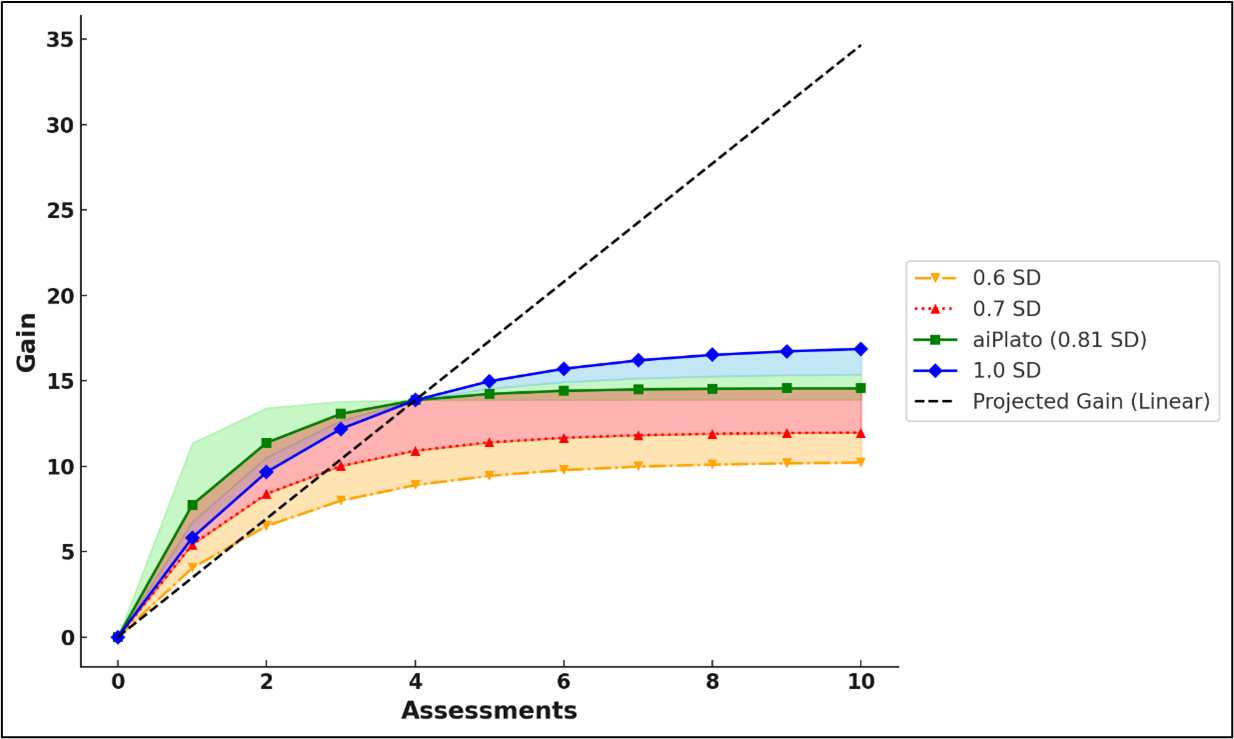
Data analysis reveals a statistically significant positive correlation between student engagement with AIPlato and final exam performance. Students demonstrating higher engagement achieved final exam scores averaging 13.7 points greater than those with lower engagement. This effect size is quantified by a Cohen’s d of 0.81, indicating a strong and substantial difference between groups. Notably, students in the highest engagement cohort completed 100% of the available practice problems, suggesting a relationship between consistent effort and improved outcomes.
Statistical analysis of final exam scores revealed a significant difference between student groups based on their level of engagement with AIPlato (p < 0.05). This indicates that the observed difference in scores is unlikely to be due to random chance. Specifically, the p-value represents the probability of obtaining the observed results (or more extreme results) if there were no actual effect of AIPlato engagement on exam performance. A p-value below the conventional threshold of 0.05 is generally accepted as evidence of a statistically significant effect, supporting the conclusion that increased engagement with AIPlato is associated with higher final exam scores.
Beyond the Classroom: Towards a Future of Distributed Expertise
The effectiveness of any tutoring system hinges on the quality of feedback provided, and AIPlato distinguishes itself through a Large Language Model (LLM)-driven approach to individualized guidance. Unlike traditional systems offering pre-defined responses, AIPlato analyzes student submissions with a level of nuance previously unattainable, identifying not just what is incorrect, but why. This allows the system to generate tailored explanations addressing specific misconceptions and offering targeted support. The LLM’s capacity for understanding the underlying physics principles enables it to provide feedback that goes beyond simple error correction, fostering deeper conceptual understanding and promoting more effective learning strategies for each student’s unique needs and learning style. This granular level of analysis and personalized response promises a significant advancement in the field of automated educational tools.
The advent of AI-driven tutoring systems like AIPlato holds significant promise for reshaping educational equity. Historically, access to personalized, high-quality tutoring has been limited by socioeconomic factors and geographical location, creating disparities in learning outcomes. This technology bypasses those limitations by providing customized learning experiences to anyone with an internet connection. AIPlato’s ability to adapt to individual student needs, recognizing diverse learning styles and paces, ensures that students who may not thrive in a traditional classroom setting receive focused support. This democratization of education extends beyond simply providing access; it fosters a more inclusive learning environment where students from all backgrounds can reach their full potential, regardless of their prior academic opportunities or learning differences.
Development of AIPlato isn’t concluding with its initial successes; researchers are actively broadening its scope to encompass a significantly wider array of physics concepts, moving beyond introductory mechanics to areas like electromagnetism, thermodynamics, and quantum mechanics. Crucially, this expansion isn’t happening in isolation; a core focus is on achieving seamless integration with established learning management systems and widely used educational software. This deliberate approach ensures AIPlato can function not as a standalone tool, but as a readily accessible, adaptable component within existing pedagogical frameworks, maximizing its impact and ease of adoption for both educators and students. The ultimate goal is to create a universally available, AI-powered physics tutor that complements traditional instruction and personalizes the learning experience at scale.
The aiPlato system, as demonstrated in this study, embodies a fascinating principle of emergent order. Rather than imposing a rigid, pre-defined path to understanding physics, the platform facilitates a series of localized interactions – providing step-wise feedback tailored to individual student needs. This approach mirrors the idea that complex systems thrive not through central control, but through the interplay of numerous, adaptive connections. As James Maxwell observed, “The true voyage of discovery… never ends.” This rings true for learning as well; aiPlato doesn’t deliver knowledge, but rather ignites a continuous process of exploration and refinement, fostering a deeper, more enduring grasp of physical concepts. The system functions as a living organism where every local connection – each piece of feedback, each student response – matters, ultimately contributing to a holistic understanding.
Where Do We Go From Here?
The demonstrated efficacy of aiPlato, while encouraging, does not suggest a coming era of automated pedagogy. Rather, it highlights a predictable pattern: global regularities emerge from simple rules. The system functions not by teaching physics, but by structuring opportunity for students to encounter, and resolve, conceptual friction. The improvements observed are likely less about the AI’s ‘intelligence’ and more about the consistent, individualized feedback loop-a feature easily disrupted by attempts at overly prescriptive ‘control’ of the learning process.
Future work should focus less on perfecting the ‘tutor’ and more on mapping the conditions under which this kind of AI-mediated scaffolding is most effective. What types of students benefit most? Which concepts are most amenable to this approach? And, crucially, how does this system interact with existing instructional methods-can it amplify good teaching, or does it simply offer a parallel, and potentially isolating, experience?
The true challenge isn’t building a better AI tutor; it’s understanding the emergent properties of learning itself. Attempts at directive management often disrupt this process. The long-term value of systems like aiPlato may lie not in replacing instructors, but in providing a richer dataset for understanding how knowledge actually takes root-a dataset far more nuanced than any pre-programmed curriculum could provide.
Original article: https://arxiv.org/pdf/2601.09965.pdf
Contact the author: https://www.linkedin.com/in/avetisyan/
See also:
- Clash Royale Best Boss Bandit Champion decks
- Vampire’s Fall 2 redeem codes and how to use them (June 2025)
- World Eternal Online promo codes and how to use them (September 2025)
- Best Arena 9 Decks in Clast Royale
- Country star who vanished from the spotlight 25 years ago resurfaces with viral Jessie James Decker duet
- Mobile Legends January 2026 Leaks: Upcoming new skins, heroes, events and more
- How to find the Roaming Oak Tree in Heartopia
- Solo Leveling Season 3 release date and details: “It may continue or it may not. Personally, I really hope that it does.”
- M7 Pass Event Guide: All you need to know
- Kingdoms of Desire turns the Three Kingdoms era into an idle RPG power fantasy, now globally available
2026-01-17 22:05