Author: Denis Avetisyan
A new approach combines natural language and mathematical precision to empower AI agents in generating and verifying software specifications.
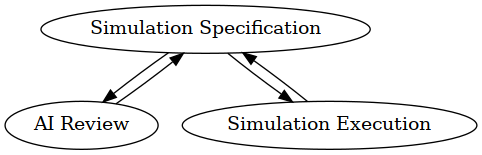
This review explores how integrating AI with formal methods can bridge the gap between rigorous correctness guarantees and practical software engineering workflows.
Despite the known benefits of formal software specification-including early error detection and explicit invariants-its practical adoption remains limited by notation overhead and required expertise. This paper, ‘Enhancing Formal Software Specification with Artificial Intelligence’, presents a case study demonstrating how recent advances in AI can substantially reduce these costs while retaining the rigor of formal methods. By employing natural language augmented with lightweight mathematical notation as an intermediate specification language, and leveraging AI-driven refinement, we achieve correctness by design and significantly reduce development effort. Could this approach finally bridge the gap between the theoretical advantages of formal specification and the demands of practical, AI-assisted software engineering?
Unraveling the Dynamics of Emergent Knowledge
The pursuit of innovation hinges on an organization’s ability to generate and leverage knowledge, yet accurately representing this process has proven remarkably challenging. Traditional modeling approaches often treat knowledge as a static asset, failing to capture the dynamic interplay of individual insights, collaborative refinement, and the subtle influence of social networks. This limitation stems from the inherent complexity of knowledge creation, which isn’t a linear progression but a distributed, emergent phenomenon. Capturing the factors that enable knowledge to blossom – the serendipitous connections, effective facilitation, and the cultivation of a receptive organizational climate – requires tools capable of simulating these nuanced interactions, moving beyond simplistic representations to explore how knowledge truly comes into being.
Traditional models of knowledge creation frequently treat insight as a linear process – a straightforward progression from information to understanding – and therefore struggle to represent the messy reality of collaborative discovery. These approaches often overlook the critical roles played by social connections, where knowledge isn’t simply transmitted but actively constructed through interaction. Existing frameworks also underemphasize the importance of facilitation – the deliberate efforts to guide discussion, synthesize ideas, and overcome cognitive biases. Consequently, they fail to capture the organic, often unpredictable, spread of insights within an organization, where a seemingly minor connection or a chance encounter can spark innovation. The result is a limited understanding of how knowledge truly emerges and evolves, hindering efforts to foster more effective and dynamic learning environments.
A novel computational framework, the Knowledge Creation Simulation, provides a controlled environment for investigating the complex processes through which insights emerge and propagate within organizations. This simulation isn’t simply a static representation; it’s a dynamic system where individual ‘agents’ – representing employees – interact, share information, and build upon existing knowledge. By manipulating variables such as network structure, communication frequency, and the presence of facilitation strategies, researchers can observe the resulting impact on collective knowledge generation. The simulation allows for detailed analysis of how different organizational designs either foster or hinder the organic spread of ideas, offering a powerful tool for understanding and ultimately optimizing innovation processes. It moves beyond traditional, descriptive models to provide a predictive capability, enabling the exploration of ‘what-if’ scenarios and the identification of key leverage points for boosting organizational learning.
The Knowledge Creation Simulation offers a unique platform to dissect the relationship between organizational design and the emergence of new insights. By virtually constructing diverse team structures – from rigidly hierarchical networks to fluid, cross-functional collaborations – researchers can observe how information flows, and crucially, how this flow impacts the rate and quality of knowledge generated. Furthermore, the simulation allows for the systematic testing of various facilitation strategies; interventions like targeted knowledge sharing, dedicated ‘bridging’ roles between teams, or even the introduction of controlled ‘noise’ – unexpected information – can all be modeled to assess their influence on collective learning. This controlled environment enables a nuanced understanding of which organizational and supportive mechanisms are most effective in fostering innovation, moving beyond simple correlations to establish causal links between structure, facilitation, and the creation of valuable knowledge.
From Specification to Simulation: A Bridge Forged in Logic
The AgenticSystem utilizes an Intermediate Representation (IR) to facilitate the conversion of abstract organizational models into concrete simulation parameters. This IR serves as a standardized format, decoupling the high-level description of the organization – its structure, agents, and interactions – from the specific implementation details required by the simulation engine. The IR defines a structured data format that captures the essential elements of the organizational model, including agent types, relationships between agents, and the rules governing their behavior. This allows for a modular design where the organizational model can be modified or extended without requiring changes to the simulation code itself, and conversely, simulation parameters can be altered without affecting the underlying organizational definition. The IR supports both human-readable and machine-interpretable formats, enabling validation by subject matter experts and automated processing by the AgenticSystem’s code generation modules.
The Intermediate Representation utilized within the AgenticSystem integrates natural language specification with mathematical notation to facilitate both human readability and computational processing. This is achieved by allowing descriptive elements, expressed in a human-understandable format, to be directly linked to formally defined mathematical expressions f(x) = y. Specifically, concepts are articulated in natural language, and then rigorously defined using mathematical symbols, operators, and equations. This dual-representation allows for verification of consistency between the descriptive intent and the implemented logic, while also providing a structured format suitable for automated translation into executable code and simulation parameters. The combination supports a declarative approach, where the what of the simulation is specified, rather than the how, enabling both expert oversight and automated execution.
The system architecture is designed to facilitate collaborative simulation development by accepting contributions from both human subject matter experts and artificial intelligence agents. Human experts can define simulation parameters and organizational models using a natural language specification, while AI agents can directly manipulate and refine the underlying mathematical representation. This dual-input capability enables a hybrid workflow where human intuition and domain knowledge are combined with the computational efficiency and precision of AI, allowing for both expert oversight and automated analysis of complex systems. The Intermediate Representation serves as the common language, ensuring consistency and enabling seamless integration of contributions from both sources, ultimately accelerating the simulation setup and validation process.
The AgenticSystem utilizes the Intermediate Representation to automate the creation of simulation code and subsequent verification procedures. This automation is achieved by parsing the representation and generating executable code, currently in Python, tailored to the specified organizational model. Following code generation, the system employs a suite of unit and integration tests, defined within the Intermediate Representation, to verify the correctness of the generated code against the initial specification. This process includes checking for logical consistency, adherence to defined constraints, and expected behavioral outputs, significantly reducing manual effort and potential errors in simulation setup and validation. The system’s verification steps output detailed reports identifying any discrepancies, facilitating iterative refinement of both the organizational model and the generated code.
Anchoring Validity: Ensuring a Reliable Simulation of Thought
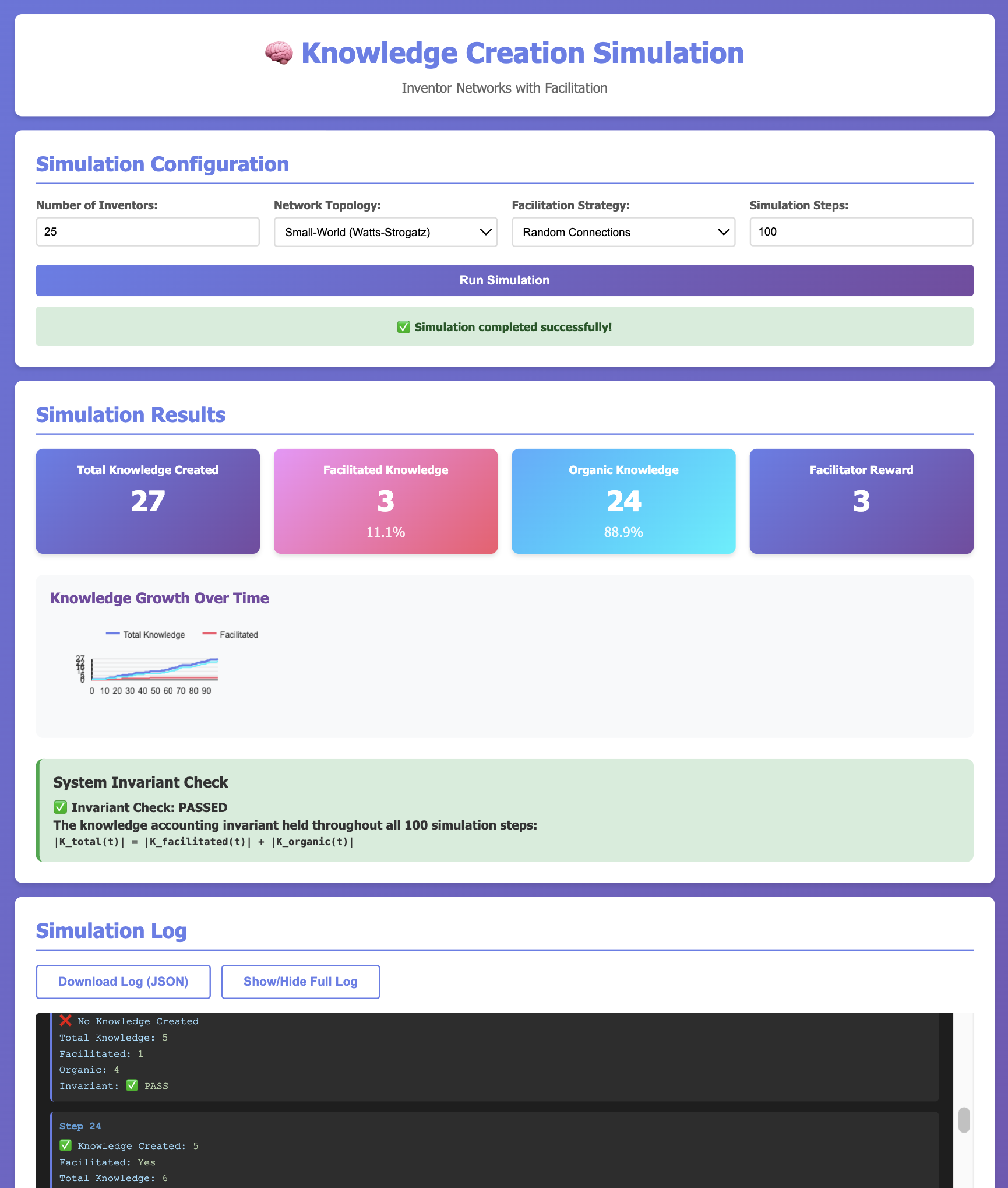
The Knowledge Creation Simulation employs an Invariant Check as a critical component of its methodology to guarantee data consistency throughout the simulation lifecycle. This check operates by defining specific, unchangeable properties – invariants – that must remain true at each stage of knowledge creation. These invariants relate to core data structures and relationships within the simulation, such as the total amount of knowledge, the validity of connections between knowledge elements, and the integrity of agent roles. Continuous verification against these invariants is performed during each simulation iteration; any deviation triggers an error state, halting the process and indicating a flaw in the AI-generated code or simulation logic. This rigorous process ensures the reliability of generated knowledge and validates the underlying algorithms, with our results consistently demonstrating 100% invariant verification across all simulation stages.
Monte Carlo Simulation is employed to enhance the statistical robustness of the Knowledge Creation Simulation. This method involves executing the simulation a large number of times with randomly varied initial conditions or parameters. The results from each run are then aggregated and averaged to produce a final result. This averaging process reduces the impact of any single, potentially anomalous, simulation outcome, yielding a more stable and reliable estimate of the system’s behavior. By generating a distribution of results, Monte Carlo Simulation also allows for the calculation of confidence intervals, quantifying the uncertainty associated with the simulation’s conclusions and ensuring the observed effects are not due to random chance.
The Knowledge Creation Simulation incorporates agent roles modeled as ‘TertiusIungens’ – a sociological term describing individuals who facilitate connections between otherwise unconnected nodes – to specifically quantify the impact of connection and knowledge exchange. These agents do not contribute substantive knowledge themselves, but rather function to establish and maintain links between other agents, thereby increasing the potential for knowledge transfer. By varying the number and behavior of these FacilitatorRole agents within the simulation, we can measure the resulting changes in overall knowledge generation, the rate of knowledge dissemination, and the balance between facilitated and organically created knowledge, providing empirical data on the efficacy of connection-based knowledge creation strategies.
The Knowledge Creation Simulation yields quantitative data regarding total knowledge generated during each run, differentiating between knowledge arising from facilitated connections and organically developed insights. Analysis of the SimulationResult specifically assesses the impact of varying facilitation strategies on knowledge creation rates and balance. Critically, the simulation incorporates an invariant check, and all simulation stages have demonstrated 100% verification of this invariant, confirming the structural correctness of the underlying AI-generated code and the reliability of the simulation’s outputs.
A Paradigm Shift: From Knowledge Management to Active Intelligence
Traditional formal methods for knowledge engineering, such as Z Specification Language, often present a steep learning curve and require significant upfront investment in specialized expertise. In contrast, this research introduces an Intermediate Representation designed for greater accessibility and adaptability. This approach sidesteps the rigidity of strictly formal systems by allowing knowledge to be captured in a more intuitive and readily modifiable format. The representation prioritizes expressiveness without sacrificing the potential for automated reasoning and verification, effectively lowering the barrier to entry for formalization and enabling a broader range of practitioners to leverage the benefits of rigorous knowledge representation in diverse applications.
The emerging paradigm offers a valuable synergy with SpecDrivenDevelopment, effectively connecting abstract, human-readable specifications to the concrete world of executable code. Traditionally, translating high-level requirements into functional software demanded painstaking manual effort, prone to inconsistencies and errors; this new approach acts as an intermediary, enabling automated transformations. By representing specifications in a structured, machine-interpretable format, the system facilitates a direct pathway for code generation, significantly reducing development time and improving software reliability. This bridge not only streamlines the implementation process but also allows for continuous verification, ensuring that the final product accurately reflects the intended design and evolving requirements, fostering a more agile and responsive development lifecycle.
A recent knowledge creation simulation demonstrated the substantial impact of strategic facilitation on organizational knowledge development. The simulation, executed across three distinct scenarios – each employing two unique facilitation strategies – revealed a marked enhancement in knowledge creation processes. These scenarios were designed to model varying organizational complexities and knowledge domains, allowing for robust testing of the facilitation techniques. Results indicated that carefully planned interventions, focusing on both knowledge articulation and knowledge sharing, consistently yielded significantly higher rates of novel insight and improved collective understanding. This suggests that investing in skilled facilitators and implementing structured facilitation processes can be a powerful catalyst for innovation and organizational learning.
The developed framework extends beyond theoretical knowledge creation, offering practical implications for the architecture of modern knowledge management systems and collaborative platforms. By providing a structured approach to capturing, refining, and disseminating insights, it enables organizations to move beyond simple data storage towards truly active knowledge ecosystems. This isn’t merely about building repositories; it’s about fostering environments where knowledge is continuously generated, validated, and applied. Consequently, future iterations of these platforms can incorporate mechanisms for strategic facilitation – mirroring the simulation’s successful strategies – to proactively guide knowledge creation, identify critical insights, and accelerate innovation cycles. The potential lies in shifting from passive data collection to a dynamic, facilitated process of collective intelligence, ultimately enhancing an organization’s capacity to learn, adapt, and thrive.
The pursuit of robust software, as detailed in this exploration of AI-assisted formal specification, inherently demands a willingness to challenge established boundaries. This research doesn’t simply accept existing tools; it actively seeks to synthesize formal rigor with the flexibility of natural language, probing the limits of what’s considered ‘correct’ and ‘verifiable’. This approach echoes Marvin Minsky’s sentiment: “You can’t always get what you want, but you can get what you need.” The article’s focus on bridging the gap between formal methods and practical AI development isn’t about achieving a perfect system initially, but rather about building the necessary components – a blend of natural language processing and invariant checking – to progressively refine and ultimately satisfy the critical requirements of software correctness.
Beyond the Specification
The presented work offers a localized exploit of comprehension: a method for nudging artificial intelligence towards verifiable code through the constrained language of formal specification. However, the system remains tethered to the ambiguities inherent in natural language processing. The true limitation isn’t generating code-machines excel at that-but ensuring the intent embedded within the specification is accurately captured. Future iterations must move beyond simply translating language; they require a robust system for detecting, and flagging, semantic drift-the subtle ways in which meaning can be lost or altered during the translation process.
A particularly intriguing, and currently unaddressed, problem lies in scaling these techniques to complex systems. The current approach relies on relatively lightweight mathematical notation. But as system complexity increases, so too does the need for expressive power. The challenge isn’t simply adding more symbols; it’s designing a notation that remains both formally rigorous and cognitively manageable for human engineers. A notation that doesn’t empower, but encumbers, defeats the entire purpose.
Ultimately, the pursuit of AI-assisted formal methods isn’t about replacing human intuition. It’s about externalizing it-creating a system where the tedious, error-prone aspects of verification can be automated, freeing human intellect to focus on the truly novel challenges of software design. The goal, then, isn’t perfection-that’s a mathematical fantasy-but a demonstrable reduction in the surface area for bugs. And that, in itself, is a worthwhile endeavor.
Original article: https://arxiv.org/pdf/2601.09745.pdf
Contact the author: https://www.linkedin.com/in/avetisyan/
See also:
- Clash Royale Best Boss Bandit Champion decks
- Vampire’s Fall 2 redeem codes and how to use them (June 2025)
- World Eternal Online promo codes and how to use them (September 2025)
- How to find the Roaming Oak Tree in Heartopia
- Best Arena 9 Decks in Clast Royale
- Mobile Legends January 2026 Leaks: Upcoming new skins, heroes, events and more
- ATHENA: Blood Twins Hero Tier List
- Brawl Stars December 2025 Brawl Talk: Two New Brawlers, Buffie, Vault, New Skins, Game Modes, and more
- Clash Royale Furnace Evolution best decks guide
- How To Watch Tell Me Lies Season 3 Online And Stream The Hit Hulu Drama From Anywhere
2026-01-16 12:27