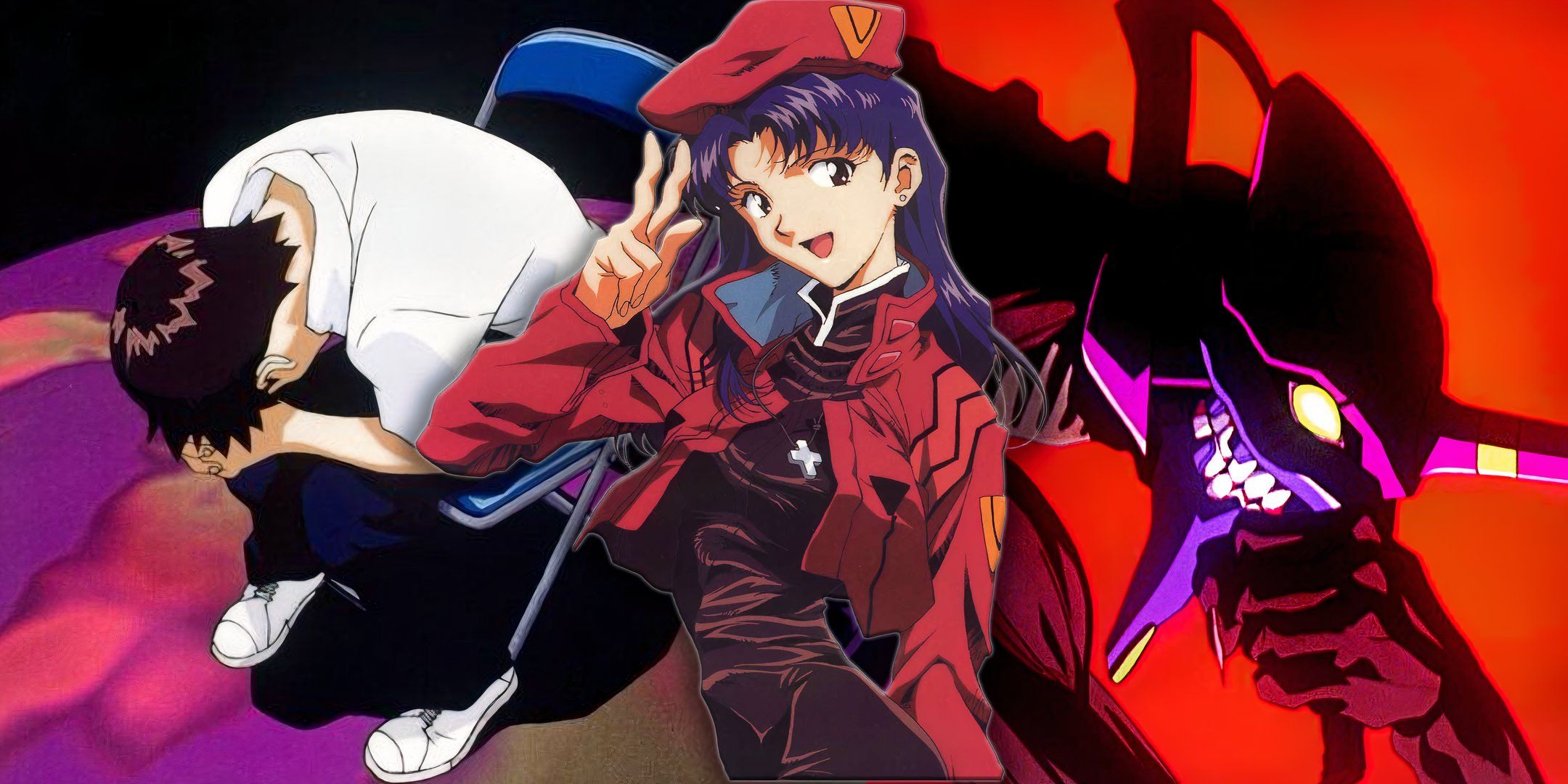
The show first aired in 1995 and concluded with a remarkably unusual finale. Rather than resolving all its mysteries, the final episodes presented more questions and fragmented scenes. While still featuring large monsters and threats to the world, the ending delved into the troubled mind of a frightened teenager. This choice left some viewers feeling puzzled or unsatisfied, while others found it surprisingly comforting. Looking back, thirty-one years later, that unconventional ending now seems strangely prescient.
I’ve been thinking a lot about how overwhelming modern life is – all the screens, the constant feeling of being judged, and the pressure to always be ‘on.’ It’s ironic, but so many of us feel incredibly lonely despite being constantly connected. You hear about burnout and self-doubt everywhere. That’s why the ending of Evangelion really resonates with me. It’s not about some grand victory; it’s about learning to live with the pain, understanding your limits, and choosing genuine connection while still staying true to yourself. Even now, with everything going on in the world, Evangelion‘s ending still asks those really important, but tough, questions we all need to consider.
Neon Genesis Evangelion‘s Final Battle Was Also a Mental Breakdown
Many science fiction stories build to a clear resolution, but the ending of this one is different. Instead of a typical action-packed climax, the story slows down and becomes intensely personal, focusing on the inner turmoil of the main character, Shinji Ikari. We see his fear, shame, and anger through repeating images and a shift to simpler animation. It’s like being placed directly inside a troubled mind. This was an unusual approach for television in 1995, and it remains striking today because the story treats emotional pain as a serious and powerful force, not just a minor element.
Shinji’s greatest struggle isn’t with external threats, but with his own internal beliefs. He believes love is only given to those who follow the rules, and fears that any mistake makes him unworthy. These feelings are relatable today, as we’re constantly comparing ourselves to others and seeking approval. The story illustrates how easily our own minds can trap us. Shinji constantly worries about what others think, but can never find reassurance. The harder he tries to please everyone, the more unfulfilled he becomes.
The repetitive nature of the series mirrors the cycle of modern anxiety – constantly worrying, questioning everything, and fearing what others think. Evangelion suggests that saving the world isn’t meaningful if you lose yourself in the process. This message resonates strongly today, as more people openly discuss mental health despite the lingering shame and silence. Evangelion bravely brings that silence to the forefront and gives it a voice.
The Human Instrumentality Predicted the Hunger for Connection at Any Cost
I’ve always been struck by the core idea in Evangelion – the Human Instrumentality Project. It basically suggests that all our pain comes from feeling separate from others, and a lot of our fear stems from feeling misunderstood. The project offers a pretty radical solution: to merge all individual minds into one collective consciousness. The idea is that if we’re all connected, no one can feel alone or rejected. It’s a far-out concept, but it really resonates with something I see a lot today: people crave deep connection, but truly getting close to others can be incredibly hard.
Building strong friendships takes effort, family relationships can be complicated, and love can sometimes lead to heartbreak. While the internet offers quick connections, those often don’t work out well. The idea of total openness – sharing everything – raises important questions about personal boundaries. If we share every thought, we lose our privacy. If we merge every feeling with another, we lose our sense of self. Though it might sound idyllic, this constant sharing can actually be damaging. It takes away our ability to make choices, our need for solitude, and our right to disagree or set limits.
The ending of the story resonates because it reflects our current world. Today, we’re constantly encouraged to share information – our phones track where we are, and apps reward us for oversharing. A single mistake can quickly lead to public criticism. In this environment, the story’s central concept – Instrumentality – feels like a reflection of a life where being alone is frightening. Evangelion proposes that true connection is only possible when people are free to separate; a relationship that can’t be broken isn’t genuine love.
Neon Genesis Evangelion’s Ending Exposed Broken Social Systems
Evangelion features many adults talking about responsibility, staying alive, and fate, but underneath that tough exterior, they’re really just hurting children longing for simple comfort. This heavy weight falls on the shoulders of teenagers who never wanted the burden in the first place, making the story’s ending particularly bleak. The core conflict isn’t just about external threats like aliens or robots; it’s a deeply personal story about a father who sees his son as an object, and leaders who unfairly blame a child for their own failures.
The story focuses on a work environment – and increasingly, life in general – where achieving goals is prioritized over the well-being of the people involved. We see this pressure everywhere: students are constantly pushed to compete, young professionals are expected to be dedicated even when facing low wages and high stress, and the burden of major global issues like war and climate change falls disproportionately on younger generations, while those in power often make decisions behind closed doors.
The ending of Evangelion illustrates the consequences of focusing solely on survival, without learning how to truly live. Shinji only receives approval when he’s fighting, turning his sense of self into something to be controlled rather than a life to be enjoyed. What’s unsettling is how relatable this pattern feels. Evangelion demonstrates that a flawed system can appear impressive from a distance, but reveals itself to be a vulnerable individual lost in isolation when viewed closely.
The End of Evangelion’s Ending Isn’t a Final Answer
Most science fiction stories wrap up by explaining how the world works. But Evangelion focuses on how people cope with suffering. The original TV series ends with a quiet sense of acceptance, while the follow-up film, The End of Evangelion, portrays the same struggle with intense and frightening imagery. This unwillingness to offer easy answers is a key reason why the ending remains so impactful. It resonates because life today often feels like it’s filled with unresolved issues.
The constant news and online debates create a need for quick answers, forcing people to take sides and simplify their feelings. However, Evangelion challenges this. It acknowledges that feeling confused is normal, and that recovery isn’t always easy or direct. The ending specifically highlights the importance of consent – while joining together might seem appealing, it shouldn’t come at the cost of individual choice. The story shows that even though being hurt by others is painful, it’s still possible – and important – to choose to reconnect with the world.
The ending of Evangelion accurately reflects how memory functions. Traumatic experiences can cause the same moments to repeat endlessly, and people can get stuck in internal debates. The finale doesn’t shy away from these complicated, looping patterns. Even after 31 years, its unusual conclusion offers a powerful message: we create our own meaning, it isn’t simply given to us. This idea feels especially important today, when so many different perspectives are competing to define what’s real.
Neon Genesis Evangelion
Specifications
- Release Date
- 1995-10-04
- Finale Year
- 1996-03-27
- Rating
- TV-MA
- Genres
- Animation (Genre), Action (Genre), Drama (Genre), Sci-Fi (Genre)
- Cast
- Megumi Ogata (Person), Megumi Hayashibara (Person), Kotono Mitsuishi (Person), Spike Spencer (Person), Allison Keith-Shipp (Person), Sue Ulu (Person), Amanda Winn Lee (Person), Tristan MacAvery (Person)
- Creator(s)
- Hideaki Anno (Person)
Affiliate Links
- Netflix
- Netflix
- Netflix
- Netflix
- Netflix
- Amazon
- VUDU
- AppleTV
- AppleTV
- AppleTV
5 Stream / Option Links
Read More
- Clash Royale Best Boss Bandit Champion decks
- Vampire’s Fall 2 redeem codes and how to use them (June 2025)
- Mobile Legends January 2026 Leaks: Upcoming new skins, heroes, events and more
- How to find the Roaming Oak Tree in Heartopia
- World Eternal Online promo codes and how to use them (September 2025)
- Best Arena 9 Decks in Clast Royale
- Clash Royale Season 79 “Fire and Ice” January 2026 Update and Balance Changes
- Clash Royale Furnace Evolution best decks guide
- Clash Royale Witch Evolution best decks guide
- Best Hero Card Decks in Clash Royale
2026-01-13 20:42