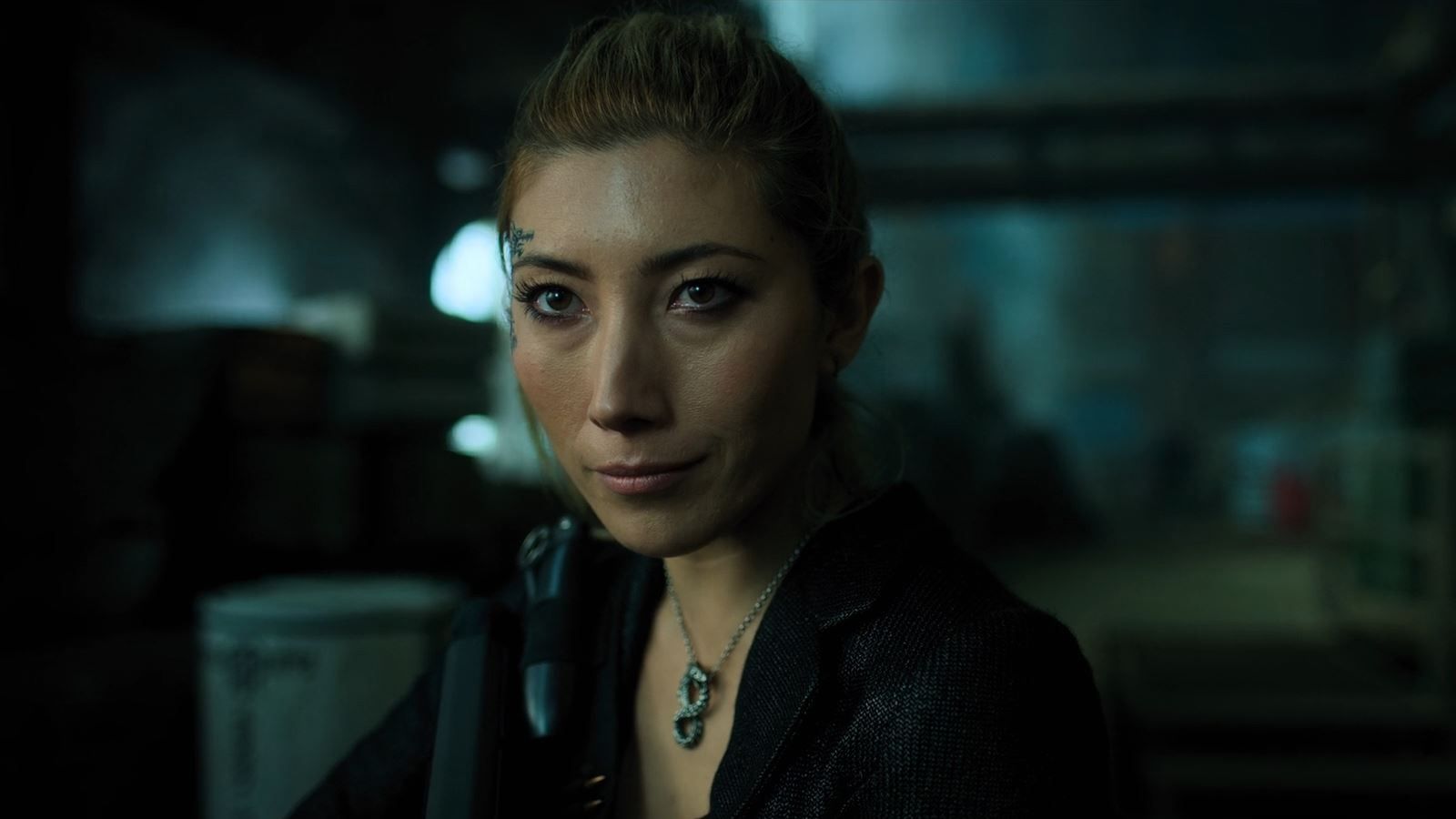
I was absolutely blown away when Netflix released the first season of Altered Carbon back in 2018. It’s honestly the darkest, most fully realized cyberpunk series I’ve ever seen. Based on Richard Morgan’s award-winning novel, it captures everything I love about the genre – a gritty, futuristic world with incredible technology. It felt like a story made to be adapted, and Netflix really nailed it with that first season. It’s just fantastic!
The show’s second season, though it didn’t receive as much hype beforehand, still holds a strong 81% rating on Rotten Tomatoes. While some fans and critics were worried about Anthony Mackie taking over the lead role from Joel Kinnaman, Altered Carbon continues to effectively explore the themes of dehumanization that define compelling cyberpunk stories.
Netflix Delivers a Dystopian Future Corrupted By Its Own Technology
A key strength of dystopian fiction is its ability to connect current social problems with a futuristic, technologically advanced world. This often leads to a questioning of what it truly means to be human. In these worlds, people frequently enhance themselves with technology, blurring the lines between human and machine, and sometimes even erasing them altogether. This creates a new reality where the definition of humanity is increasingly unclear.
Three hundred and sixty years from now, humans have learned to copy minds and memories using alien technology. This information is stored on devices called cortical stacks, which are implanted in the spine. Essentially, this offers a form of immortality to those wealthy enough to afford it – they can transfer their consciousness into new, cloned bodies to live indefinitely.
While the wealthy pursue endless life, most people struggle and die unnoticed. This creates a grim situation where even criminals can be resurrected to answer for their actions. Takeshi Kovacs, a former revolutionary and the last of a group called the Envoys, finds himself in this position. Instead of facing punishment, he’s given a new chance at life – if he agrees to solve a murder for a very wealthy and long-lived man.
Altered Carbon Weaves Multiple Complicated Backstories Effortlessly
The sci-fi series Altered Carbon is complex and might be a bit confusing for viewers new to cyberpunk. The central idea is that the main character, Takeshi Kovacs, has been frozen for hundreds of years. He’s revived and placed into a new body – referred to as a ‘sleeve’ – belonging to Officer Elias Ryker. This highlights a key theme: identity isn’t tied to the physical body, but to a person’s consciousness and memories.
Now inhabiting Ryker’s body, Kovacs is haunted by disturbing memories of his own past – the violent things he did before being captured. He also has to deal with the fallout from Ryker’s life, especially the attention of Ryker’s ex-partner and lover, Lieutenant Kristin Ortega.
Laurens Bancroft, a remarkably wealthy and incredibly old man who’s lived for 300 years thanks to advanced technology, resurrects Kovacs. Bancroft offers Kovacs his freedom in exchange for help solving a murder – and the victim is Bancroft himself.
Kovacs is juggling more than just a murder investigation. He’s adjusting to a new world, confronting his personal struggles, and fending off attackers constantly drawn to Ryker’s pursuit of justice. All this puts him right in the middle of a massive conspiracy. He’ll need help – a former agent seeking revenge, a determined detective, and a surprisingly complex AI named Edgar Poe – and a lot of firepower to survive.
Honestly, things get really intense for Kovacs when he finds out his sister, Reileen, isn’t who he thought she was. I always believed she died during the Envoy conflict, so seeing her back just throws everything into question. It turns out she’s capable of things I never imagined! Their confrontations are two of the wildest, most unforgettable fights I’ve ever seen on TV – seriously, they’ll stay with you long after the credits roll.
Altered Carbon’s Netflix Adaptation Took Liberties That Make It Work for TV
While the basic storyline remains similar between the original story and the Netflix series, there are some key changes that actually enhance the drama. The show significantly alters Takeshi Kovacs’ backstory, introducing Reileen Kawahara as his sister and a fellow survivor of a difficult and abusive upbringing. In the book, Reileen was simply a criminal from his past, not a family member.
The original story depicted Takeshi’s father as an abusive, alcoholic man who abandoned his family after years of fighting with his mother. The Netflix adaptation changed this, showing the father killing the mother, which triggered a violent outburst from Takeshi, leading him to kill his father. This event resulted in Takeshi being separated from his sister; he was offered a choice between going to prison or working as an operative to avoid incarceration.
Okay, let’s talk about the Envoys. The show really took them in a different direction than the books did. In the novels, they were basically elite UN soldiers, but in the Netflix series, they’re reimagined as this resistance movement led by Quellcrest Falconer, the brilliant mind behind the stacks. And, interestingly, a romantic relationship develops between Kovacs and Quellcrest in the show – something that didn’t exist in the source material, as she predates him by a significant amount of time. While these changes are pretty substantial, I think they actually work. They open up a lot more possibilities for twists and turns, especially regarding Kovacs’ history, and ultimately, allow the series to forge its own identity separate from the original novels. It’s a different beast, and I think that’s a good thing.
A significant change in the Netflix series is the character of Edgar Poe, the hotel’s AI owner. Inspired by Jimi Hendrix in the original novel, the series gave Poe the gloomy and eccentric personality of author Edgar Allan Poe. This addition brought another dimension of both humor and emotional depth to the show. With so much action and intensity, Poe’s comedic presence provided a welcome break for viewers.
Altered Carbon’s Second Season Didn’t Hit the Same Cyberpunk Highs
The first season of Altered Carbon was ambitious and generally enjoyed by viewers, even those deeply into science fiction. However, the second season didn’t resonate with audiences as well, despite getting positive reviews from critics. Many fans of the first season’s cyberpunk style found the second season felt like a completely different show.
The new season isn’t terrible, but it loses much of what made Joel Kinnaman so convincing as Takeshi Kovacs. While the show’s premise involves characters switching bodies, Anthony Mackie doesn’t quite capture the same essence of Kovacs, and the core of Takeshi’s unique personality feels missing.
When combined with major alterations to the original sequel storylines, the show’s first season gets overshadowed. It starts to resemble a typical action story instead of the somber reflection on an antihero that the source material intended, which doesn’t do justice to Takeshi Kovacs’s complex character. Adding to these issues, budget cuts led to a decline in production quality and a noticeably slower pace, ultimately failing to deliver the gritty, uncompromising look that cyberpunk fans expect.
Season 1 of Altered Carbon is arguably the most gritty and intense cyberpunk series Netflix has ever produced. With its original, compelling story and well-developed characters, it’s a must-watch for any science fiction fan.
Read More
- Clash Royale Best Boss Bandit Champion decks
- Vampire’s Fall 2 redeem codes and how to use them (June 2025)
- Mobile Legends January 2026 Leaks: Upcoming new skins, heroes, events and more
- Clash Royale Season 79 “Fire and Ice” January 2026 Update and Balance Changes
- World Eternal Online promo codes and how to use them (September 2025)
- M7 Pass Event Guide: All you need to know
- Clash Royale Furnace Evolution best decks guide
- Best Arena 9 Decks in Clast Royale
- Best Hero Card Decks in Clash Royale
- Clash of Clans January 2026: List of Weekly Events, Challenges, and Rewards
2026-01-08 07:11