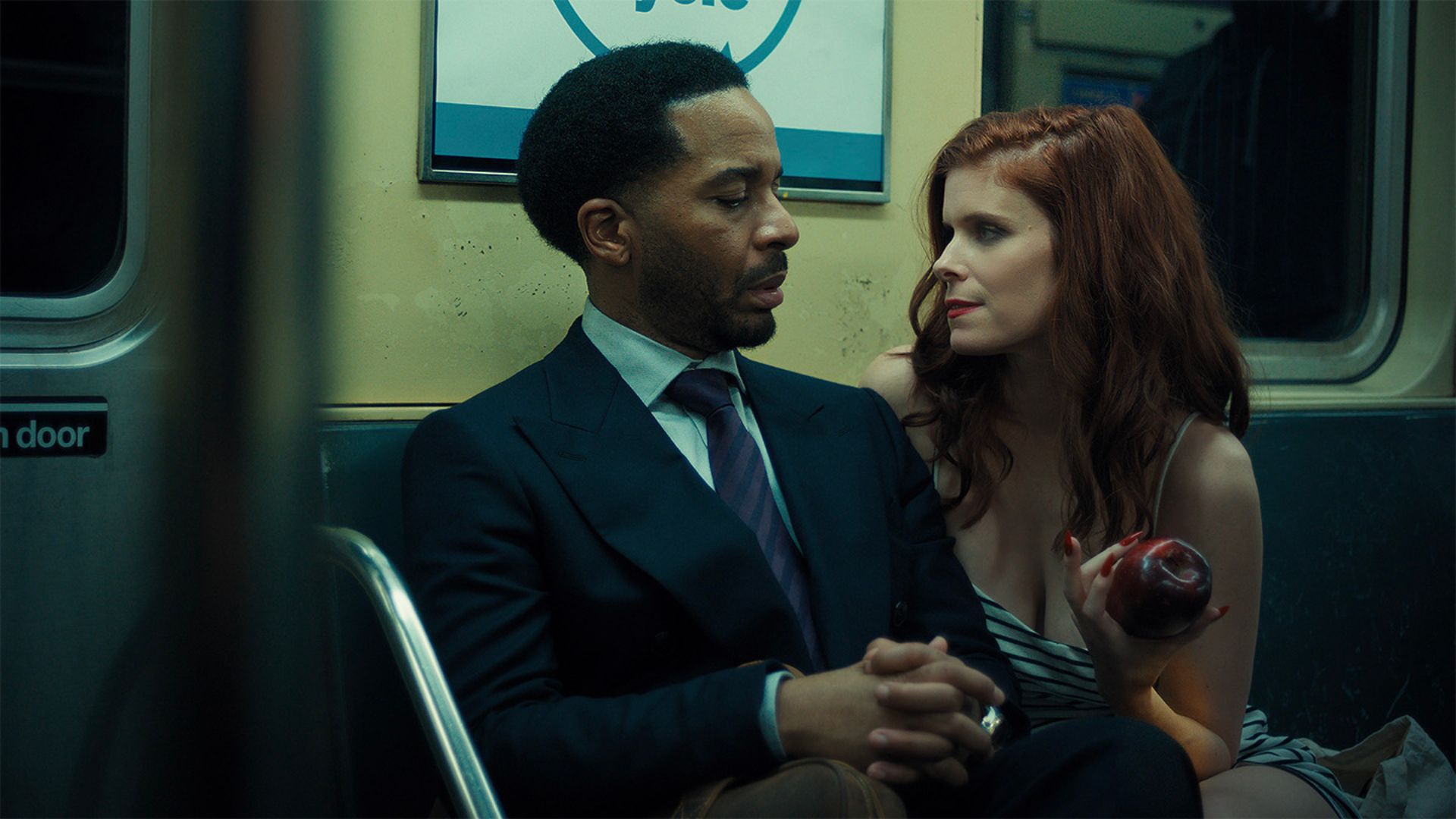
The film reimagines Amiri Baraka’s play The Dutchman with a Black professional struggling with his wife’s affair, and introduces a white woman into a surreal, dreamlike world. While intending to explore complex issues of race, masculinity, and Black identity in America today, the movie’s approach feels forced and lacks nuance. Despite compelling performances by André Holland and Kate Mara, the story loses its impact, especially in a confusing final act filled with self-aware references that don’t quite land.
The film The Dutchman opens with Clay (Holland) and his wife, Kaya (Zazie Beetz), in a tense therapy session. Clay feels Dr. Amiri (Stephen McKinley Henderson) consistently favors Kaya, especially since she was unfaithful. Clay struggles to understand why his feelings aren’t being validated. Kaya acknowledges her mistake but points out that Clay didn’t communicate his concerns when they first arose. This leads Dr. Amiri to identify the core of Clay’s conflict: Clay feels he’s not considered truly accepted by white society because of his race, despite his successes, and simultaneously feels disconnected from his Black heritage and the hardships of his ancestors.
Clay is upset by this comment and immediately ends the meeting. He and Kaya have a crucial fundraising event that evening in Harlem to support their friend, Councilman Warren Enright (Aldis Hodge). As they part ways, Amiri gives Clay a copy of the play The Dutchman along with a strange warning, which Clay dismisses.
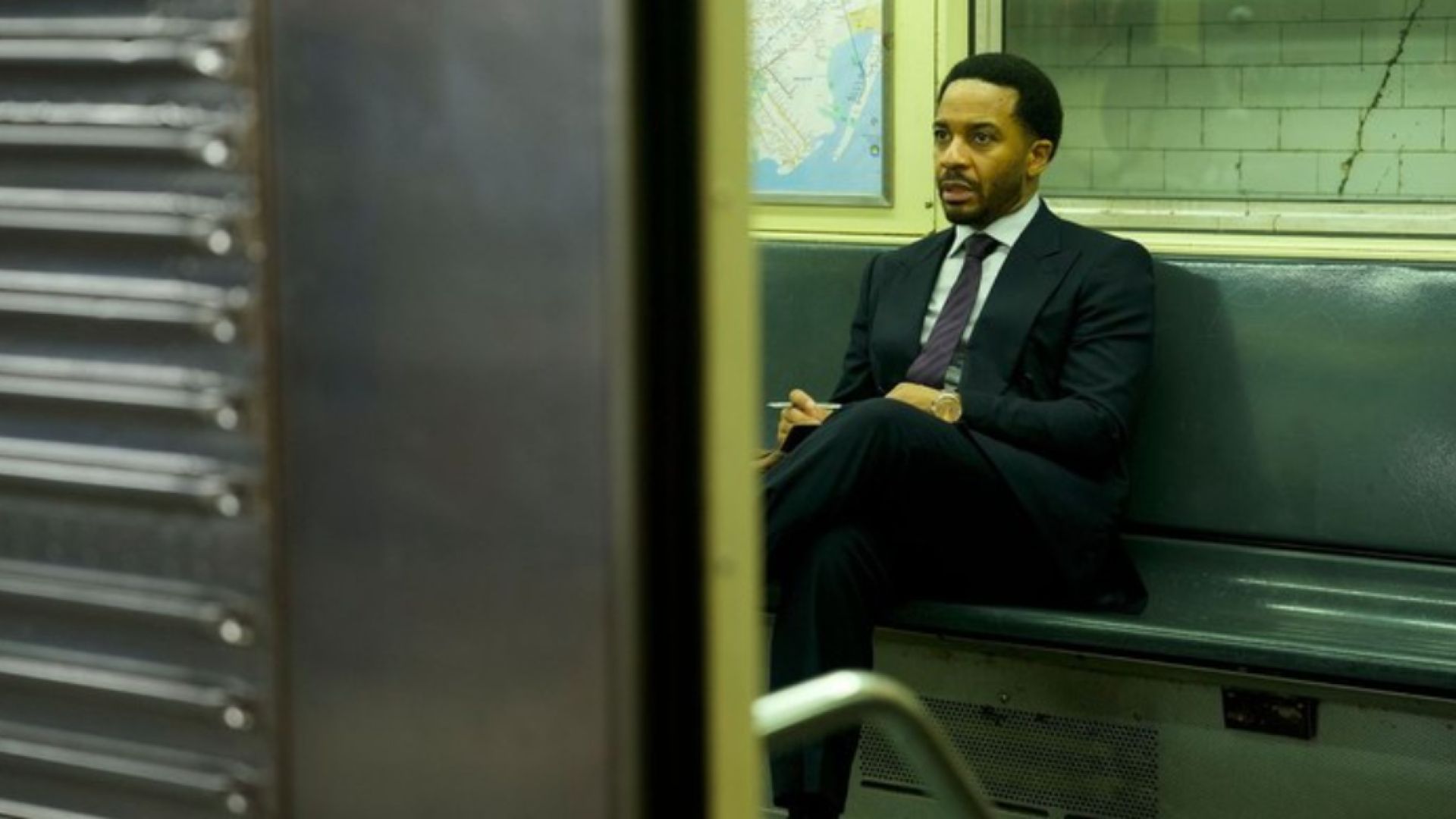
Clay walked into a subway station and was immediately searched by police officers. Angry and upset, he sat down on the train, but then he noticed a striking woman with high heels and a revealing dress watching him. She sat next to him and began to eat a red apple in a way that seemed designed to attract his attention. Clay tried to move away, but she persistently followed him. Her playful questions about his life and job made him uncomfortable. He initially wanted to escape her attention, but the thought of his girlfriend’s betrayal made him reconsider.
The film doesn’t immediately present Lula as the central figure, and the appearance of the character Amiri, who gives Clay a script, quickly moves the story away from realism. Director Andre Gaines intentionally introduces fantastical elements early on, revealing that Clay is experiencing something supernatural. This diminishes the impact of Lula’s manipulative behavior, as there seem to be no real consequences for her actions. This opening act presents a choice for the viewer: either embrace Gaines’ overall artistic vision and focus on the film’s message, or wait for the story to become more grounded. However, focusing on what might happen ultimately undermines the film’s depth.
Rogue Pictures / Inaugural Entertainment
What happens after the train ride is captivating. The entire play unfolds within a subway car, with the conversations mainly revealing the complex relationships and attractions between the characters. Clay’s decision to leave with Lula, even though he suspects it could be risky, feels understandable. While giving in to temptation often leads to trouble, it’s sometimes impossible to resist in the moment. Strong desires, both physical and emotional, along with a need for revenge after being hurt by Kaya, drive Clay’s actions. It’s hard to blame him for being drawn into a dangerous situation, as this carefully constructed trap is designed to work.
Mara delivers a captivating performance as Lula, fully embracing the character’s manipulative and wicked nature. The way Lula controls Clay feels disturbingly authentic, and it’s arguably the most realistic part of the film. Her loud, demanding behavior when Clay doesn’t comply is harsh but believable. Unfortunately, Clay is immediately seen as a criminal simply for being associated with her. The film raises the question of what he’s actually done, suggesting she might be the one who needs help, yet there’s no consideration that he could be innocent and a victim of her schemes.

Rogue Pictures / Inaugural Entertainment
The story begins to fall apart once Lula and Amiri reveal their true motives. Clay struggles with the complex racial issues surrounding him, realizing he needs to resolve them to fully understand his identity as a Black man. Lula’s harsh criticism, labeling him an “Uncle Tom” and imposing her own definition of what it means to be Black, feels like a deliberately prejudiced attack. It’s sensational and unfair, ignoring Clay’s clear achievements. He’s already proven himself successful, so the idea that he needs to justify his worth – especially to white people – is absurd.
Subscribe for sharper film analysis on race and craft
Discover why subscribing to our newsletter matters: get focused, contextual film criticism that breaks down performances, themes of race and identity, and directorial choices to deepen your reading of provocative cinema.
I thought Holland was fantastic in this – he really showed Clay’s inner struggle. Honestly, his performance wasn’t the problem at all. It’s just… the film really seemed to miss the point that Black people are allowed to be angry and demand respect without being labeled as difficult. That’s what Clay was finally realizing, and it’s the whole message of the story, but it just didn’t quite land right, you know? It felt a bit heavy-handed.
The movie The Dutchman was created by Federal Films, Cinemation Studios, and Washington Square Films. It will be shown in select theaters starting January 2nd, distributed by Rogue Pictures and Inaugural Entertainment.
Read More
- Clash Royale Best Boss Bandit Champion decks
- Vampire’s Fall 2 redeem codes and how to use them (June 2025)
- Clash Royale Furnace Evolution best decks guide
- Best Hero Card Decks in Clash Royale
- Mobile Legends January 2026 Leaks: Upcoming new skins, heroes, events and more
- Mobile Legends: Bang Bang (MLBB) Sora Guide: Best Build, Emblem and Gameplay Tips
- Best Arena 9 Decks in Clast Royale
- Dawn Watch: Survival gift codes and how to use them (October 2025)
- Clash Royale Witch Evolution best decks guide
- Brawl Stars December 2025 Brawl Talk: Two New Brawlers, Buffie, Vault, New Skins, Game Modes, and more
2026-01-01 00:35