
This article contains spoilers from Season 5, Vol. 2, of “Stranger Things.”
It’s terrifying to face a monstrous, vine-covered enemy and destroy a creepy, nightmarish world. But perhaps equally daunting is crafting a great ending for a hugely successful TV show based on that very concept.
The creators of Netflix’s “Stranger Things,” brothers Ross and Matt Duffer, are eagerly awaiting fan reactions to the show’s final season. With the first part now released, they’re preparing for how viewers will respond when the second part comes out.
Matt recalls being incredibly anxious on the day Volume 1 was released. He spent the whole day simply waiting to see how people would react and what the reviews would be like, because you can never predict how an audience will respond. He notes that while the show’s growing popularity has benefits, it also means intense scrutiny. He admits it’s always nerve-wracking and something he doesn’t think anyone ever truly gets used to.
But the self-doubt keeps them sharp, he says. “It forces you to not get lazy.”
It’s a real emotional rollercoaster – one minute you feel incredibly sure of your work, and the next you’re filled with doubt, and it’s difficult to stay grounded,” Ross explains. “We re-watched each episode countless times. What’s unusual about this show is that only a tiny group of people saw them initially, but then it was immediately released to millions.
The two are relaxing on a couch in their Los Angeles office, which is decorated with posters for films like “E.T.,” “Alien,” and “Batman Returns.” They enjoyed the positive fan response to the first volume for a few days, but now they’re back to work, putting the finishing touches on the series finale – finalizing the sound, color, and visual effects.
Matt joked that the visual effects were really dull. He said he was getting tired of seeing so many shots of spores and fog, and needed something different.

The latest episodes (5-7) of the season are now available to stream, continuing the rollout around the holidays. These episodes feature some of the season’s most impactful moments, including a surprisingly positive breakup between teenage characters, a restored friendship, and a character embracing their true identity. The creators, the Duffer brothers, shared more details in a recent interview.

‘Stranger Things’ returns for its final season, and our misfits are poised for battle
After being off the air for over three years, the final season of the popular Netflix series is starting, bringing the story of its beloved group of quirky kids to a close. The show has become a significant part of popular culture.
The last ten minutes of Episode 7 are really powerful. Will Byers shares something deeply personal that he’s kept hidden for a long time. He understands that overcoming Vecna requires him to embrace who he is, without fear. Can you talk about the decision to reveal Will’s sexuality in that moment?
We’d been planning this storyline for a while – originally for Season 4, but it didn’t feel right at the time. We even wrote a scene with him in the van, talking to Jonathan, but we decided to wait. We wanted Will’s journey to feel earned, and we felt like he needed to build up to this moment. He has a big breakthrough in Episode 4, but this is the final piece he needs to truly come into his own. Throughout the show, we really wanted to connect his emotional development with the growth of his powers.
We decided to place that storyline in the second-to-last episode because we wanted our characters to feel secure in themselves before the final showdown. Will’s journey is a big part of that, but it’s also true for Dustin, Steve, Nancy, and Jonathan. We needed them to face and overcome their personal fears and insecurities before going into the ultimate battle.
You know, thinking about Vecna, it really struck me that he preys on your own inner demons. It’s not just about physical power with him; it’s about exploiting your self-doubt, your insecurities, all that stuff you hate about yourself. That’s his weapon. And it made so much sense when Will finally confronted and let go of all that baggage – that’s when he really started to fight back, and honestly, it felt like anything was possible for him after that. That’s the idea, anyway – that facing your inner struggles is the key to defeating him.
1

2

Noah Schnapp plays Will Byers, a key character in the series. Throughout the show, and particularly in the second volume of Season 5, Will shares his truth with his mother, Joyce (Winona Ryder), and his friends. According to the show’s creator, Matt Duffer, this storyline was carefully planned for a long time. (Netflix)
What did you want that moment to be? What didn’t you want it to be?
We were anxious about how the story would be received, especially since Noah had recently come out publicly himself. Getting his approval meant a lot to us and made us feel confident. The writing really came together when we started focusing on Will’s specific fears about the future. The show is at its best when we can blend the fantastical elements with genuine emotion. In this case, Vecna is using Will’s fears against him, so having Will open up to the group about them – instead of keeping them hidden – made the scene feel truly impactful.
We initially intended for him to come out to Joyce, but it didn’t feel right. For his character to truly face his fears, he needed to confide in his friends too. Once we included the group and had him share his vision of the future, the scene became a coming-out moment that felt special and specific to our show.

Television
Jamie Campbell Bower, known for playing Vecna in ‘Stranger Things,’ explains how he brought the frightening villain to life. He details everything from building the character to the special effects used on screen.
This season, we dedicated the most time to a particular scene because we really wanted to get it right – it was the most crucial one. The actors had a huge impact on their characters; their personal journeys heavily influenced our writing. We aimed to capture Noah’s experiences and growth, which we’ve witnessed firsthand as he’s developed as a person. Remarkably, much of the final scene is taken directly from the very first take, the first close-up of Noah. It was incredible to watch; he wasn’t acting, and his words felt genuinely real and emotional. It felt very truthful to him, and we hope that authenticity comes across to viewers, especially young ones. With scenes like this, you feel a real responsibility to handle them with care.
As a fan, I always love seeing the ‘shipping’ moments – that connection between characters! There’s this really sweet scene where Will hints at a crush, and while he doesn’t say it’s Mike, everyone – Mike included – totally gets it. It’s just…how do you even describe their relationship? It’s so subtle and meaningful!
This season has a lot of relationship drama, especially with Will, Jonathan, and Nancy. But for us actors and the writers, the focus isn’t on who ends up with who. We’re more interested in how our characters develop as individuals. Usually, that means they find inner strength, rather than relying on others. When we discussed Will’s story, we kept asking how to help him become more confident and self-assured. Ultimately, that meant having him face his fears and be open with everyone, including Mike.
Growing up, fans didn’t really ship characters like they do now, and it can get pretty intense. While I appreciate how passionate people are about the show and I’m fine with different interpretations, Ross and I had a specific intention with Will’s storyline. As Ross explained, particularly in Episode 4 when Will discovers his powers, the source wasn’t his love for Mike. It was actually Will reconnecting with self-love and remembering how he felt as a child – that’s what truly unlocked his potential.
I think it’s really important to tell younger viewers that their worth isn’t tied to whether or not a crush likes them back. Looking back at my own experiences growing up, I’d rather send the message that you’re okay even if things don’t work out with someone you like, even if that’s not what everyone wants to hear. It’s a more valuable lesson to share.
I’ve never had a successful crush, and I think that pain is real – unrequited feelings can feel really personal, like a rejection. Our show really focuses on two things: our shared love for the spooky movies we enjoyed as kids, and honestly dealing with all the emotions we experienced growing up. The most rewarding part for me is when younger fans tell us the show helped them through tough times. Moments like Robin encouraging Will to come out make all the effort worthwhile.
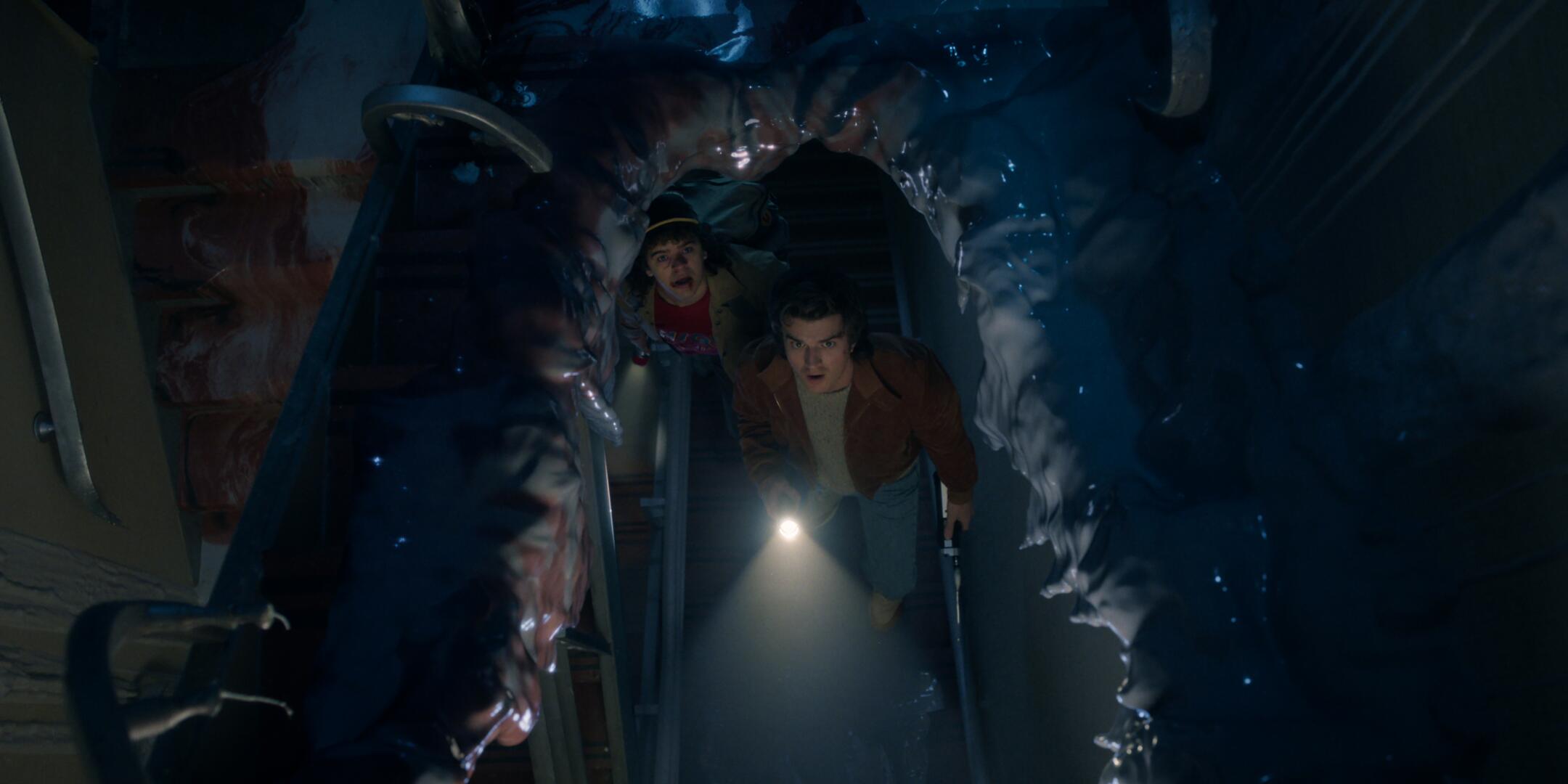
Let’s talk about Dustin and Steve. Their relationship faces a lot of challenges in these episodes, but they eventually work things out. That scene with them on the falling staircase is particularly powerful —
It was a brief but very powerful scene. Gaten and Joe’s performance really resonated with us. They tapped into their close, genuine friendship easily – it’s very similar to the bond their characters share on screen. My biggest frustration with releasing the season in two parts is that Volume 1 felt incomplete – like only half a season. I’m really looking forward to viewers seeing Volume 2, especially to see how the storyline between Steve and Dustin wraps up.
It was difficult to write scenes where Rachel and Ross were separated. While it felt right for their characters at the time, it was a huge relief to finally write them reconnecting and becoming friends again. We, as writers, really missed seeing them together, and we hope the viewers did too.
I really enjoy seeing Steve have his breakthrough, figuring out a plan that could finally resolve everything.
It’s amusing how Steve’s constant confusion is actually really useful for us as writers. Dustin calls him out on it in Episode 5, and it felt great to have Steve be the one to come up with the key part of the final plan. It was exciting to finally give Steve that moment, since usually Dustin is the one who comes up with the big ideas.
Nancy and Jonathan share a deeply emotional moment, believing they might die. They confess things to each other and discuss difficult truths. The goal was to acknowledge their shared trauma and hint at a potential, but unstated, romantic connection.
The dynamic between these characters is similar to the one between Mike and Will. It’s a story about two people who care deeply for each other, but are questioning what that means for their future. With Jonathan and Nancy, we wanted to show that they feel a strong connection because of their shared experiences, and they believe it would be difficult to find that with anyone else. But the question remains: are they truly meant to be together in the long run? We tried to capture that uncertainty as authentically as possible.
That storyline was really complex to develop. We’d been working towards it, but it’s hard to explain everything that’s happening in just a few minutes. It’s more than just a simple love triangle. I’ve personally been through similar situations – when you’re with someone for a long time, you build a deep connection and share so much, it can feel like no one else could possibly understand. But then you start to wonder if that closeness is actually holding you back from growing as an individual. When we were discussing Nancy and Jonathan, we realized that for Nancy to truly develop, it wasn’t about choosing between Steve or Jonathan, but about her needing space to figure things out on her own.
Matt explained that both Jonathan and the other character felt the same way, but struggled to communicate it, which is common when you’re young. They created a high-stakes, life-or-death scenario to force them to confess their feelings. He drew inspiration from a scene in “Almost Famous” where characters share everything when they believe a plane is crashing, except in their scene, the confession actually happens.

The characters are grappling with what life will be like once this is all finished—assuming it ever does end. Is a joyful or victorious conclusion even possible? Or do they even consider things in terms of ‘happy endings’ at all?
It’s funny, we only realized after finishing the writing process how much the show reflected our own experiences. We all had a tough year emotionally, dealing with the fact that a project we’d poured ten years into was ending. Ultimately, the show is about growing up, childhood, and the transition to a new phase of life. It’s not about whether things end happily or sadly, but about honestly portraying what it feels like to move forward. It’s a bittersweet experience, but I think it’s something everyone can relate to.
Even when you win, things aren’t always simple and celebratory. It’s more complex than that. I was reminded of the end of ‘The Lord of the Rings’ – when the characters return to the Shire, there’s a sense of, ‘How do you process something like this, and how do you move forward?’ As a kid, I was disappointed that there wasn’t just a big celebration, but now, watching it as an adult, that quiet moment feels much more meaningful. That’s why we’ve spent so much of this season exploring what life will look like for everyone, even if we manage to defeat Vecna. Vecna and the Upside Down brought all these people together, and dealing with the aftermath of that is a big question.
It’s tough thinking about the show ending – it’s a really mixed bag of feelings. Everyone’s sad it’s over, but also knows it’s time to move forward. We really wanted to show that complicated feeling in the finale.

Television
It’s been three years since new episodes of ‘Stranger Things’ were released. Before the final season arrives, here’s a quick recap of everything important you should remember about the series.
Could you explain how a show with a lot of detailed story, science, and ‘nerdy’ elements is made? Specifically, what steps are taken to ensure accuracy and avoid mistakes?
The biggest challenge, especially with the increasingly complex backstory and myths, is making sure it doesn’t overshadow the characters and their stories. That’s the most important thing. This season, we’ve really focused on connecting the complex lore to the characters’ development and journeys.
With the scene involving Jonathan and Nancy, we didn’t start with the idea of a melting lab. We knew we wanted them to have this conversation first. Then we asked ourselves how to create a situation that would bring them together, and that’s how we came up with the idea of the lab becoming unstable due to the dark matter. Usually, we focus on what the characters need to do and say, and then we adjust the story’s overall mythology to support those moments.
You know, one thing I really loved about the whole process was the idea of a lab actually melting – it just felt so visually interesting! And everyone involved, from Netflix to our incredibly talented production designer, was genuinely excited about bringing that to life. It was contagious!
Ross: Everyone was okay with the idea of traveling through wormholes to other dimensions. But when I said the lab was going to be destroyed, people were confused. No one had a plan for that.
Matt: We had to fight for that melting lab, from a production and cost standpoint.
I thought we were going to have a “Titanic” situation.
Ross: Oh, “Titanic” was a reference. But we wanted them both on the table.
1

2

The photo shows Max Mayfield (played by Sadie Sink) with Holly Wheeler (Nell Fisher). Another image features Jamie Campbell Bower in his role as Vecna, as seen on Netflix.
It’s easy to get lost in all the predictions and analysis – sometimes I feel like I’m missing details when I watch. But I really enjoy seeing different people’s perspectives and how they understand things.
With dedicated fans, even the smallest details get noticed. It’s enjoyable for them because they often rewatch episodes multiple times, so they tend to find meaning in everything, even if we didn’t intend it that way. We do sometimes include intentional clues and Easter eggs, but most of the time, the writers are just focused on developing the characters and the current storyline. Ideally, that’s how viewers will experience the show, because it can be a lot to follow all the online speculation. Ultimately, it’s great that people are so engaged with a long-running story, and that makes us happy.
Matt pointed out that everyone interprets the show in their own way. Sometimes, viewers seem to be watching a completely different show than the one they created, while others perfectly understand their vision. This is especially clear when people discuss Season 3 – some consider it the best, while others think it’s the worst. Because of this wide range of opinions, Matt and Ross don’t try to write specifically for fans; it would be impossible to please everyone. Instead, they focus on creating what they and their writing team find compelling.

Hollywood Inc.
When Netflix began creating its own shows, “Stranger Things” was a breakthrough hit that quickly became a cultural phenomenon.
There’s a lot of speculation about how the show will end. Has anyone predicted the ending correctly, or even come close?
I recall that back in Season 4, someone guessed the connection between Henry, Vecna, and One very early on, even before the season came out – that was really amazing. But this season, nobody seems to have figured out the ending yet, which is a good sign, I think.
Matt: I think it’s good. We’ll find out. I like that the ending is not obvious to people.
I believe you’ve been envisioning the series’ final scene for around seven years. Did the actual outcome match your original vision?
Matt said the show evolved quite a bit over its seven seasons, and some things definitely changed. However, he believes the core idea and overall setting stayed true to their original vision.
We had a major idea for Season 5 that wasn’t part of the original plan seven years ago. We did make one significant change, but overall, the season turned out as we’d always envisioned. We’ll share the details of that change after the finale airs.
Matt: It didn’t change the scene, it just added something that I think was really important.
You mentioned sharing your work with a group of people. How do you determine if you’re making good progress or heading in the right direction?
It’s a really tight-knit writers’ room. What I appreciate most is that everyone, including Matt and me, feels comfortable pointing out when an idea isn’t working. We usually build on each other’s thoughts, and eventually, someone combines those ideas and presents them to the group. When that happens, there’s this shared sense of relief and excitement – and that’s when we know we’ve landed on the right idea.
We usually refine our work through several revisions until Ross and I are completely satisfied with it. We always aim to deliver polished content to Netflix, never anything unfinished. However, the final episode was unusual. Surprisingly, we received no feedback from Netflix or the producers. We submitted the very first draft we wrote, even though we’d worked on multiple versions before sending it in – once we submitted it, that was the end of our revisions.
Were you on time with that draft?
As you can probably see from the long waits between seasons, we consistently struggle with deadlines. Ross and I aren’t quick workers. We actually wrote a lot of the show while filming, which wasn’t ideal. But, strangely, we do our best work under pressure – when we’re really up against it.
We never fully plan out the season finales of the show in advance. We prefer writing them while we’re actually making the season. This lets us see what’s working, how the actors are doing, and what the overall feel of the season is. Because of this, our finales often end up being some of our strongest episodes – the stories naturally build to a climax, and we’ve had time to figure out what really resonates with the audience and the actors.
It was a bit strange working on this project, especially since we were falling behind schedule – something that hadn’t happened before. The biggest challenge was the scenes with Holly that took place in the summer. We were so eager to film them that we actually started shooting scenes in the woods with her before the script was even finished! It felt odd giving the actors pages and scenes while the episode was still being written, but surprisingly, it all came together really well.
I’m not sure if it’s just us, but Netflix now waits until all the scripts are finished before they even begin filming a season. I think this is a mistake, because it eliminates the exciting feeling of letting the story develop naturally as we go. That’s what worries me about making a movie – we won’t have that same flexibility to let things evolve.
What was the reaction at the table read for the series finale that stood out to you?
We were really anxious about how the audience would respond, but honestly, it didn’t compare to how worried we were about the actors’ reactions. They’ve been with this project from the start and are deeply connected to their characters. It was very emotional – Noah was the first to start crying, and then everyone else joined in.
How do you feel you’ve changed since starting the show?
It’s tough to say how much we’ve changed. You have to think back to where we were ten years ago – we were pretty inexperienced. We’d only directed one movie, and we had no experience with television. Hopefully, we’ve grown into better leaders, become more confident, and improved our communication skills. Ross and I always communicated well with each other, being twins, but we weren’t as good at communicating with others. I think we’ve definitely gotten better at collaborating with larger teams, and overall, we’ve evolved as filmmakers.
Making the first season was really stressful. We were worried that if it didn’t succeed—especially since our first movie hadn’t done well—we might not get another chance to tell our stories. We also lacked experience, and the production process was incredibly difficult and even traumatic. Now, we’ve learned a lot. We still challenge ourselves by aiming for bigger and more complex productions, but we’re much more comfortable on set. We’re also more open to ideas from actors, allowing us to be more flexible and explore different creative directions.

Recent reports surfaced alleging that Millie Bobby Brown experienced bullying and harassment from David Harbour. As new showrunners, how did you navigate the challenge of working with young actors while ensuring their safety and well-being on set?
Ross and I really enjoy working with kids, and it was great to get back to that this season by introducing a new group. We always try to treat them with respect and value their opinions, because we find they do better work that way. We’ve developed close relationships with them since they were young. It feels more like a big brother dynamic than a parent-child one, and we strive to create a relaxed environment where they feel comfortable around us – which they definitely are. The biggest challenge, especially for the kids who’ve grown up now, has been the show’s increasing popularity and the impact of social media. Honestly, I think social media has been the most harmful aspect. I’ve seen it affect Jake Connelly, who plays Derek this year, firsthand.
It’s especially tough seeing Nell, who plays Holly, go through this. It feels more helpless. Thankfully, Jake and Nell are getting support from kids who’ve been through similar experiences – Millie and Finn have been really helpful.
You know, what really strikes me about this whole situation is how these actors have supported each other. I think that’s been crucial to them staying so down-to-earth, honestly. I’ve been with them throughout the press tour, and I’m constantly amazed by how level-headed and genuinely humble they are, especially considering everything they’ve gone through. It’s been amazing to see Jake really turn things around, but it definitely doesn’t make what happened before okay – it was awful. Honestly, I wish all of this had unfolded without the added pressure of social media.

Hollywood Inc.
“Stranger Things” finale will be coming to select theaters on Dec. 31 and Jan. 1.
There’s a lot of buzz in Hollywood right now about Warner Bros. Discovery, with Paramount and Netflix both competing to acquire it. Given your connections with both companies, what are your thoughts on this situation and how do you see things unfolding?
It’s tough to predict what the future holds right now. Ross and I really want to ensure people can still enjoy movies in theaters. Throughout history, stories have usually been shared with groups, and there’s something special about that shared experience – I don’t want people to feel isolated. As long as films continue to be shown in theaters, I’m hopeful things will be alright. I’m trying to stay positive.
We’re focused on two main concerns. First, we want to support movie theaters, which are struggling. Shortening the time movies are shown exclusively in theaters discourages people from going, and we don’t want that. That’s why our next project is a film designed for the big screen – we believe in it and want to help theaters thrive. Second, it’s important to have competition among creators. That’s what allowed a show like “Stranger Things” to be made in the first place. Too much consolidation in the industry could make unique shows like ours disappear.
Was it an easy sell, getting Netflix on board with releasing the series finale in theaters?
I definitely agree that happens online. Things start as rumors and quickly become accepted as truth. With this project, Ross and I initially suggested the idea to Netflix’s marketing team, and then, just five days later, Bela Bajaria – their Chief Content Officer – called us and said they were on board. We really appreciate their support, and I’m so excited to secretly go to a theater and watch it with an audience!
Ross: We’re definitely gonna go.
Read More
- Mobile Legends: Bang Bang (MLBB) Sora Guide: Best Build, Emblem and Gameplay Tips
- Clash Royale Best Boss Bandit Champion decks
- Best Hero Card Decks in Clash Royale
- All Brawl Stars Brawliday Rewards For 2025
- Best Arena 9 Decks in Clast Royale
- Clash Royale Witch Evolution best decks guide
- Vampire’s Fall 2 redeem codes and how to use them (June 2025)
- Brawl Stars December 2025 Brawl Talk: Two New Brawlers, Buffie, Vault, New Skins, Game Modes, and more
- Call of Duty Mobile: DMZ Recon Guide: Overview, How to Play, Progression, and more
- Clash Royale Furnace Evolution best decks guide
2025-12-26 07:34