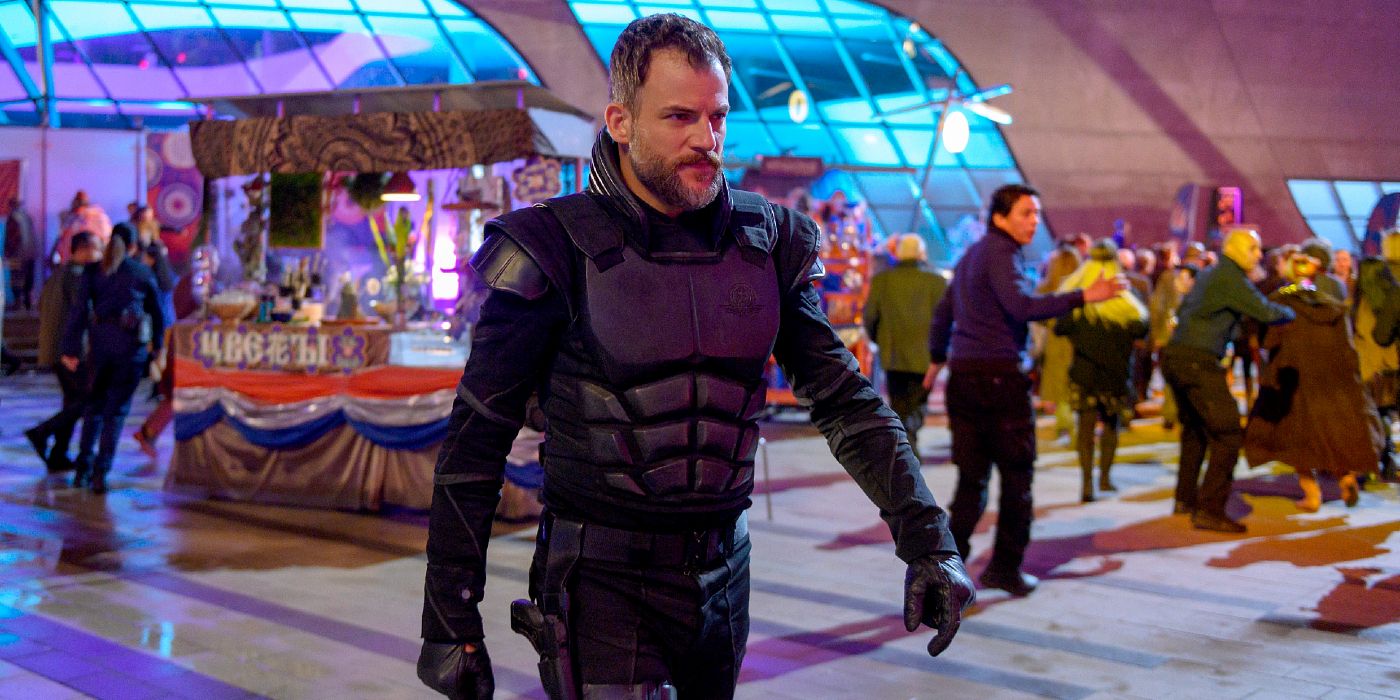
When Netflix started creating its own shows, many in the television industry were surprised by how much money the company was investing in series like House of Cards, The Crown, and Sense8. Netflix understood it needed to compete with expensive shows such as Game of Thrones, which delivered high-quality, cinematic experiences to viewers each week. In 2018, this investment—totaling $5 billion in original content—culminated in its most costly production yet: a large-scale sci-fi action-mystery that reportedly cost more than the first three seasons of HBO’s Game of Thrones.
Netflix deserves praise for taking a big risk on this show, which was based on a cyberpunk novel by Richard Morgan. While it premiered only seven years ago, it felt remarkably original at a time when most TV shows focused on adapting well-known stories or creating spin-offs. The show was a massive investment – hundreds of millions of dollars went into building a completely new sci-fi world with a complicated plot, rich backstory, and mature themes, all without relying on an existing mega-franchise. Sadly, despite its groundbreaking start, the show didn’t last as long as fans wanted. However, it remains a truly unique and influential sci-fi story.
Netflix Took a Chance on Altered Carbon After Other Studios Turned It Down
For fifteen years, Laeta Kalogridis, the showrunner, attempted to adapt Morgan’s novel into a movie, but studios consistently rejected it. Executives were hesitant about the very elements that made the story compelling – a complex sci-fi world featuring mature themes like sex, violence, and thought-provoking explorations of humanity, gender, the dangers of technology, and artificial intelligence. They simply weren’t willing to take the risk on such a challenging project.
Morgan’s work feels surprisingly relevant today, in 2025, as it tackles issues that are more important than ever. However, it’s also possible he was building on the ideas of earlier science fiction authors like William Gibson and Philip K. Dick, who explored similar themes.
Kalogridis felt relieved when Netflix decided to adapt the book as a series rather than a movie. This meant she wouldn’t have to drastically shorten the complex story of Takeshi Kovacs to fit into a two-hour film. With ten episodes and a sufficient budget, she’d have the space and resources to faithfully portray Morgan’s original ideas. Plus, she was excited to collaborate with a team that genuinely understood and embraced the innovative nature of the project.
When the show’s first trailer was released, creator Beau Kalogridis told Entertainment Weekly that it’s unlike anything else currently available. They aimed to create a believable vision of Earth’s future, imagining a world that was both globally connected and technologically advanced, but still felt deeply human.
Kalogridis is right to point out the story’s connections to other science fiction and cyberpunk works. However, its real strength lies in how it openly embraced those influences while still creating something unique. It felt like a seamless continuation of classics like Neuromancer, Blade Runner, Westworld, and The Matrix, rather than simply copying them.
When it was at its peak, Altered Carbon seemed like a natural extension of classic science fiction, helping to keep the genre fresh and appealing to a new audience.
Altered Carbon Synthesized Its Influences Into Something That Felt New
Right from the beginning, Kalogridis’ show fully embraced its unique artistic direction and didn’t simplify things for the audience. Instead, it cleverly used familiar references – like Ridley Scott’s 1982 film – to establish a base understanding before diving into the complex and fascinating details of its newly created world.
Let’s be honest, a complex sci-fi show like Altered Carbon – packed with big ideas, detailed world-building, and social commentary – could have easily lost viewers in the details. But what surprised me was how its use of familiar tropes and nods to other stories actually helped it connect with audiences, especially as streaming TV was really starting to take off. It wasn’t trying to reinvent the wheel, and that worked in its favor.
At first, many viewers struggled to understand how John Kovacs’ history as a legendary interstellar rebel – an Envoy – connected to his current life 250 years later. The concept of storing human minds on a digital ‘stack’ and transferring them into new bodies (‘sleeves’), essentially granting immortality, was also confusing. This was made even more complex by the fact that the show used two different actors to portray Kovacs in different time periods.
Despite its flaws, most people easily follow the basic story of a classic noir film. This familiar structure gave viewers a sense of comfort and something to connect with.
The way the first season of Altered Carbon presented itself as a murder mystery, with a main character discovering this new world with the viewers, was a brilliant storytelling choice. Having Kovacs suddenly reappear in 2384 – 250 years after being killed – and realizing his mind had been transferred to a new body, was a truly captivating way to begin the series.
The story then follows the protagonist as he discovers the ‘Meths’ – a wealthy upper class who live above the clouds and can achieve immortality by transferring their consciousness into new bodies. He also explores Bay City, a vibrant, futuristic city filled with unique places, like a Victorian hotel managed by an AI.
Season Two and a Spin-Off Anime Were Also Full of Brilliant Ideas
The show’s first season was generally well-received, despite some criticism focusing on its graphic violence instead of its deeper themes. However, it was widely praised for being boldly ambitious, and viewers eagerly anticipated a successful follow-up season.
The show’s second season, which had only eight episodes instead of the original ten, launched in February 2020 to positive reviews. Critics generally thought it was better than the first season. However, viewership didn’t match the critical praise, and some fans were disappointed by the shift from a cyberpunk style to a more typical science fiction setting.
Despite some issues, the second season continued to surprise viewers with its unpredictable storytelling. This time, the show used its core idea of ‘cortical stacks’ – essentially transferring consciousness – to reimagine the character of Kovacs. Instead of Joel Kinnaman, who played the determined antihero in the first season, the role was now taken on by Anthony Mackie. But before Mackie appeared, the season started with a twist: Kovacs was initially presented in a female body, portrayed by singer Jihae.
Within just two seasons, viewers saw Kovacs’ mind inhabit bodies of different races and genders – including his original Asian body, as well as those of a woman, a white man, and a Black man. While the show didn’t fully delve into what this meant, it was a bit of a letdown. However, the idea that Kovacs could transfer his consciousness into anyone, regardless of their background, did create some memorable moments.
The show featured a compelling scene of Mackie’s Kovacs battling, and then joining forces with, a unique version of himself – ‘Kovacs Prime’. This ‘Prime’ version was essentially a backup of his original consciousness, and was portrayed by the actor who originally played Kovacs, Will Yun Lee.
Just under a month after the second season aired, an animated film called Altered Carbon: Resleeved was released. The film is set on Kovacs’ home planet, Latimer, and takes place 253 years before the events of the first season. While many viewers loved its visually impressive animation, which resembled a video game, others found the style to be overly polished and unnatural.
The most frustrating part was that the new story didn’t measure up to either of the live-action seasons. Instead of launching an expanded Altered Carbon universe, it ended up being a minor addition to the show’s overall story.
In August 2020, the show was canceled, as viewership wasn’t high enough to support its very high production costs. While disappointing, this highlighted the financial challenges of television. Fortunately, Altered Carbon gave us two seasons that viewers will likely continue to enjoy in the future. Those who discover it later on will probably be impressed by its forward-thinking stories, exciting action, and incredible world, and may question why it didn’t reach a wider audience.
Read More
- Mobile Legends: Bang Bang (MLBB) Sora Guide: Best Build, Emblem and Gameplay Tips
- Brawl Stars December 2025 Brawl Talk: Two New Brawlers, Buffie, Vault, New Skins, Game Modes, and more
- Clash Royale Best Boss Bandit Champion decks
- Best Hero Card Decks in Clash Royale
- Best Arena 9 Decks in Clast Royale
- Call of Duty Mobile: DMZ Recon Guide: Overview, How to Play, Progression, and more
- Clash Royale December 2025: Events, Challenges, Tournaments, and Rewards
- Clash Royale Best Arena 14 Decks
- All Brawl Stars Brawliday Rewards For 2025
- Clash Royale Witch Evolution best decks guide
2025-12-21 00:09