
Warning: SPOILERS ahead Dave Chappele’s latest surprise Netflix special!
Just before the Jake Paul versus Anthony Joshua boxing match on Netflix, Dave Chappelle unexpectedly took the stage to reveal he has a new comedy special coming to the streaming service that very night.
The special, officially called Dave Chappelle: The Unstoppable…, though presented under a different name during the live performance, begins with a look back to fall 2019. It shows Chappelle accepting the Mark Twain Prize for American Humor at the Kennedy Center.
I remember being a really scared kid, and my mom used to tell me this one thing… it always stuck with me. She’d say…
The video ends there, but in the complete speech, Chappelle explains he’s not intimidated by anyone when it comes to a verbal exchange. He says he’s happy to talk with anyone, just to be himself.
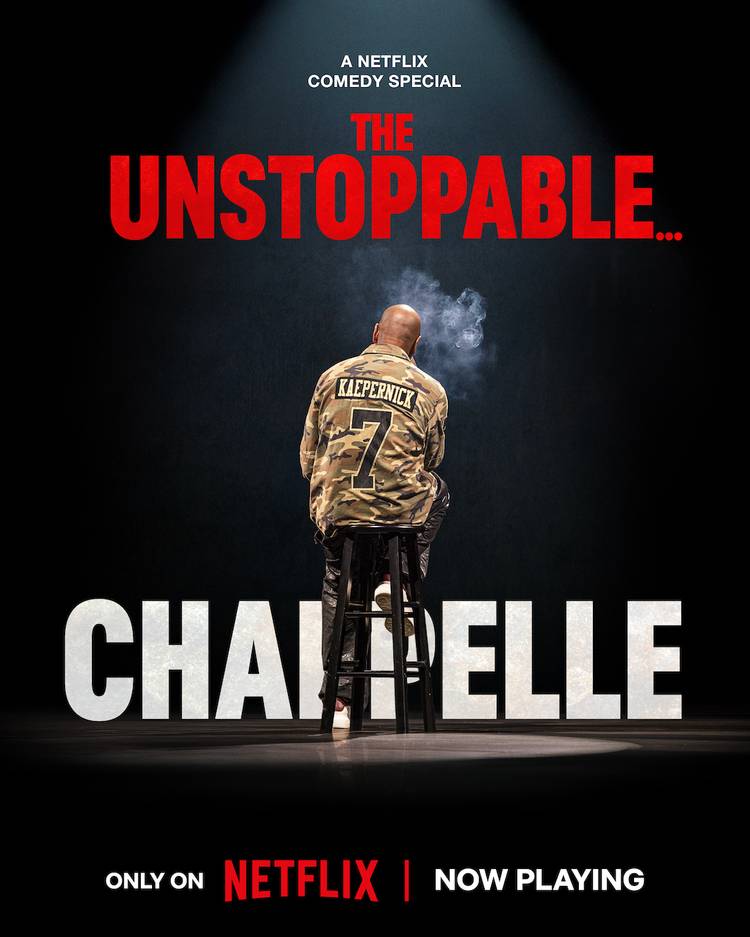
The show then transitioned to highlights from the main performance, which was filmed in Washington, D.C. in October. Dave Chappelle appeared on stage wearing a unique camouflage jacket. It had Colin Kaepernick’s name and number 7 on the back, and Chappelle’s name was stitched over a pocket.
He starts by recounting how he purchased a significant portion of his hometown in Ohio, even transforming an old fire station into a space for comedy shows and music. This leads him into a discussion of politics, as he explains the connections between his hometown, where he lives now, and his reasons for performing in Washington D.C.
Dave Chappelle’s recent show covered a wide range of topics, including Elon Musk and Donald Trump’s involvement with DOGE, job cuts, and the deployment of the National Guard in cities like Washington, D.C., his birthplace. He specifically chose to hold the show in D.C. because Ohio, where he currently lives, sent its National Guard there. Chappelle also shared that he’s personally donated $2 million to help combat homelessness in the city.
Chappelle then discussed the criticism he received for performing at a comedy festival in Riyadh, Saudi Arabia, alongside other comedians.
He insists he has no regrets, repeatedly stating he doesn’t worry about what critics say. When questioned about claims he’s compromising his values due to the Saudi government’s involvement in the death of journalist Jamal Khashoggi, Chappelle responds:
It’s deeply upsetting to remember Jamal Khashoggi and the horrific way he died. However, considering the recent deaths of over 240 journalists in Israel, it seems the focus has shifted. It’s a tragic situation all around, but the scale of recent losses deserves attention.
The joke got a big reaction from the audience. Chappelle then talked about how he’s found it easier to perform in Saudi Arabia than in the United States. He explained that jokes that caused controversy in the U.S., specifically those about transgender people, were much better received by audiences overseas.
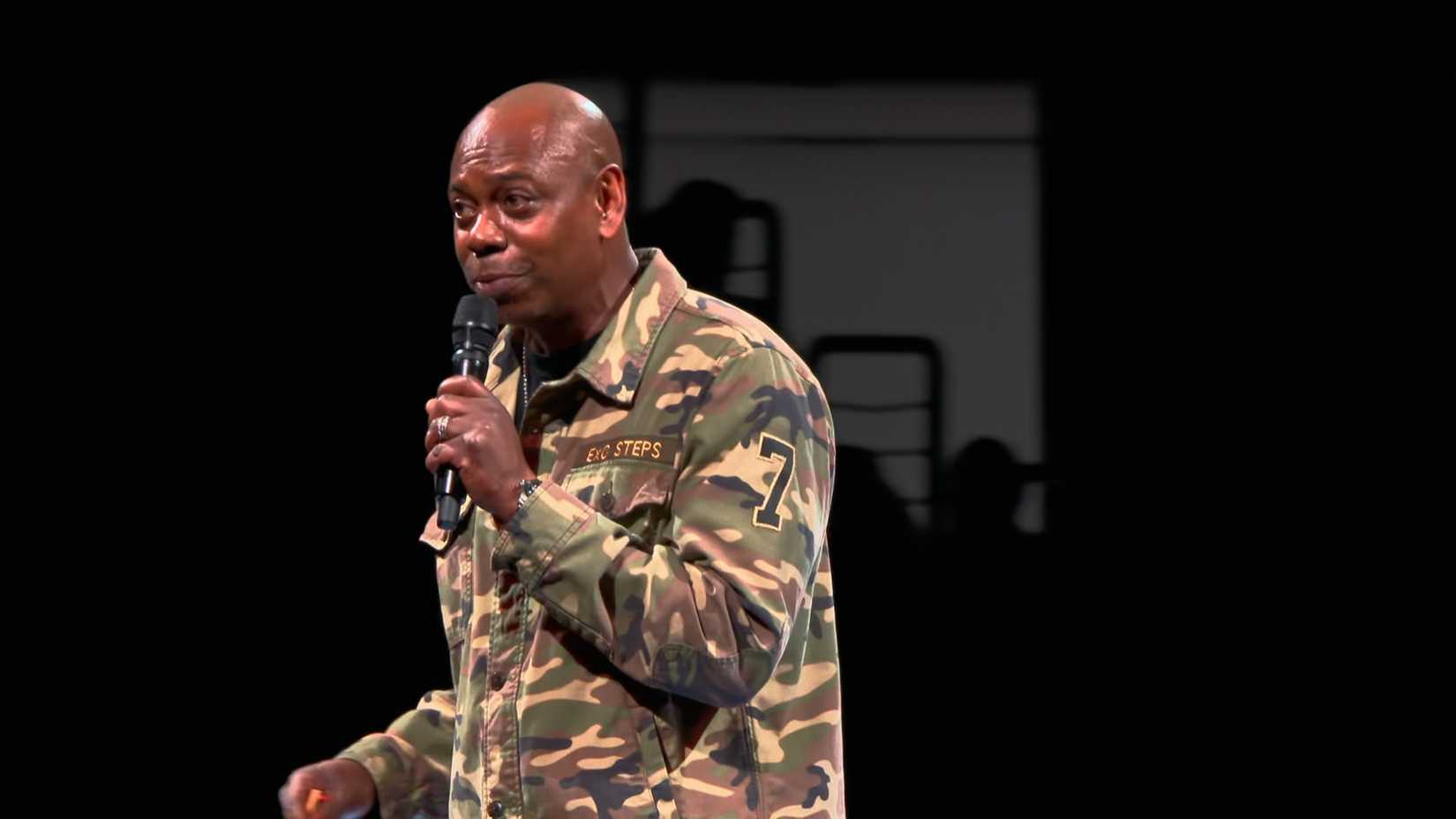
He also mentioned earning more than any other comedian at the festival, playfully suggesting he’s happy to be the event’s public face and doesn’t even need a deal with Netflix.
“You know what my new job is?” he says. “I sit by the phone and wait for them Arabs to call me.”
Following a joke about transgender people, Chappelle’s special shifts to discuss Jimmy Kimmel facing backlash, the topic of free speech, government overreach, and ultimately, Sean “Puffy” Combs – a subject he acknowledges he’s hesitant to address, but discusses at length.
Years ago, when someone attacked Dave Chappelle onstage, Puff Daddy physically intervened, tackling the attacker. This incident is why Chappelle publicly expressed hope that Combs would avoid conviction on his charges, and it eventually sparked jokes about baby oil.
He admits having a thousand bottles of baby oil is strange, but clarifies that it isn’t actually against the law. “It’s gross, but not illegal,” he explained.
Honestly, I was really taken aback by what Dave Chappelle shared. He talked about visiting Diddy’s house and everything seemed fine at the time, but now, knowing what we do, that question Diddy asked – what I was into – feels totally different. And then hearing about the alleged settlement with Cassie? He said it was over $35 million, which is way more than the $20 million that was originally reported. It’s just… a lot to process.
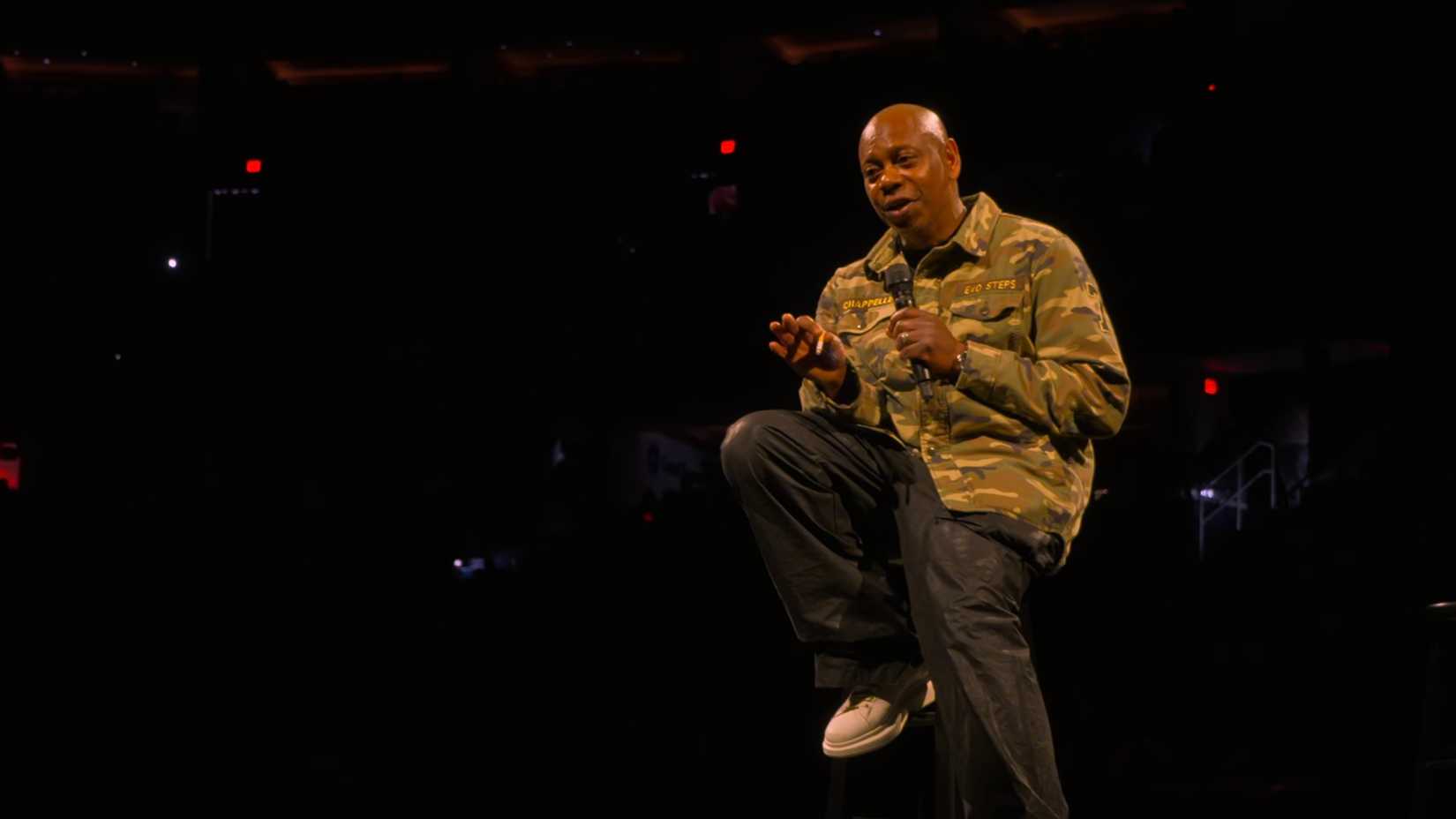
Chappelle announced he had a challenging ending prepared for the show, calling it the longest of his career. He asked the audience for their full attention, explaining he’d perform two different closing sets: one tailored for the Washington, D.C. crowd, and another he’d previously done in Saudi Arabia.
Okay, so the lights went down, and Dave Chappelle asked us to give him some space to focus. He said what he was about to do was actually really tough, and honestly, he just wanted to maybe bring a little peace to someone in the crowd. It was a really cool moment.
Chappelle starts his closing remarks by acknowledging how difficult things are right now. He admits that many people feel uneasy and it’s perfectly normal to not have all the answers.
“Somehow this country went wrong… in 1910,” he says. “I’ve narrowed it down to a specific dude.”
This segues into a detailed look at Jack Johnson, who was the first African American to become a world heavyweight boxing champion. Chappelle discusses Johnson’s significant influence on culture, the story behind the term “The Great White Hope,” his relationship with a white woman, and how this led to him being unfairly targeted by the Mann Act. Ultimately, his arrest and conviction forced him to retire from boxing.
Chappelle describes Johnson as “an American puzzle we need to figure out,” acknowledging the bravery it took for him to assert rights he wasn’t fully guaranteed, even when he acted in his own self-interest.
Chappelle then talked about August 31, 2018, the day of Aretha Franklin’s funeral. He explained that instead of going to the funeral, he visited the U.S. Capitol to pay his respects to Senator John McCain, as Stevie Wonder had asked him to do.
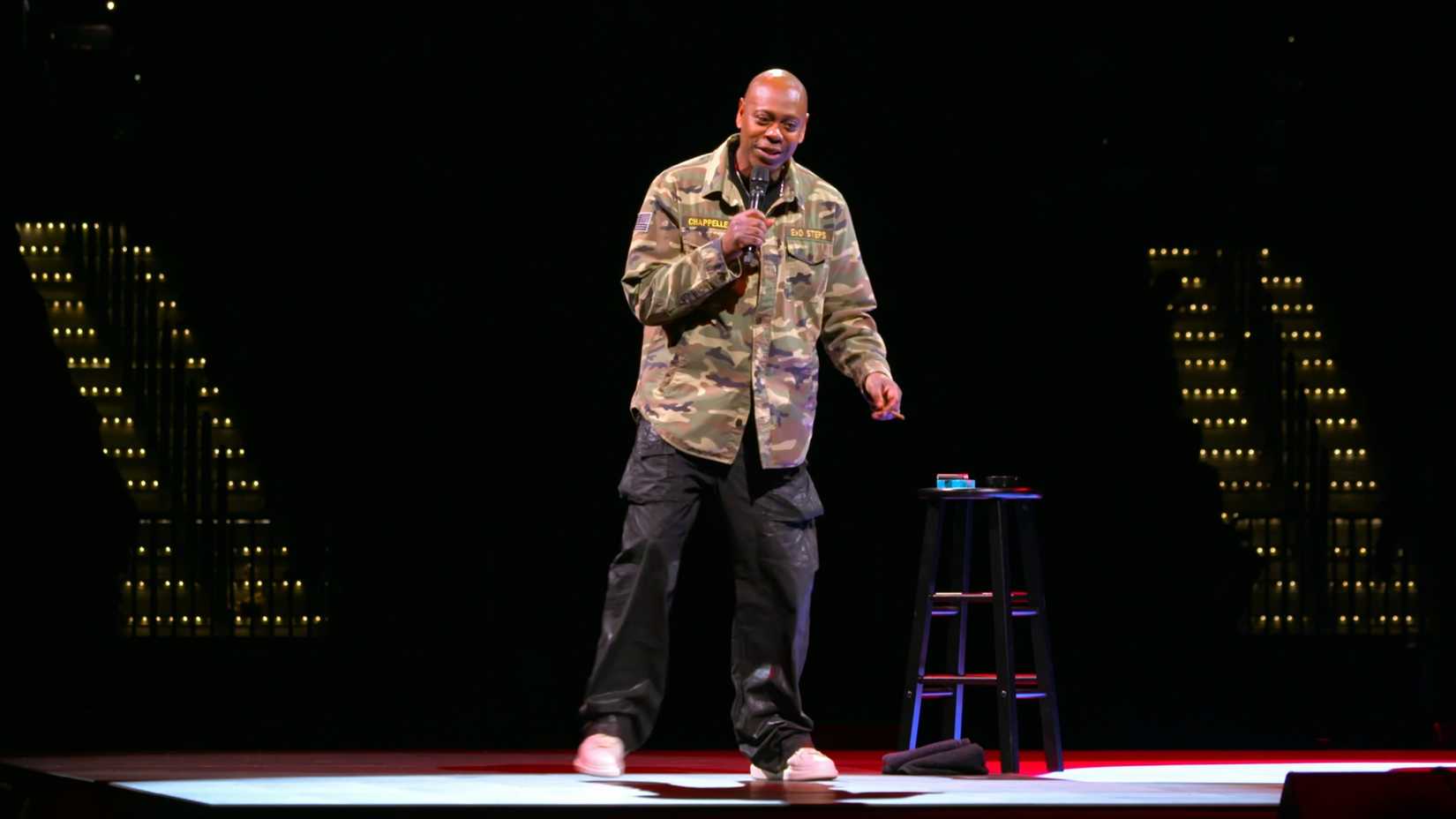
Dave Chappelle points out that Martin Luther King Jr.’s legacy wasn’t automatically secure, suggesting that MLK Day came about largely due to the efforts of the King family and Stevie Wonder, who persistently campaigned for it.
“People forget,” he says.
Subscribe for deeper takes on comedy and culture
Subscribe for deeper takes on comedy and culture
By subscribing, you agree to receive newsletter and marketing emails, and accept Valnet’s Terms of Use and Privacy Policy. You can unsubscribe anytime.
He points out that almost every senator – 99 out of 100 – supported making Martin Luther King Jr. Day a national holiday. The only senator who voted against it was John McCain, the same man Stevie Wonder had asked Dave Chappelle to recognize. Chappelle then commends Wonder, suggesting the nation could take a lesson from him.
The story concludes with Chappelle revealing that Senator McCain later supported a bill to officially forgive Jack Johnson’s conviction under the Mann Act. Interestingly, Sean “Puffy” Combs was also convicted under the same law.
Chappelle brings the special to a satisfying conclusion by revisiting his sense that things aren’t quite right. He checks in with the audience, playfully asking if they’re enjoying themselves, and adopts a more relaxed, current approach compared to some of his past performances.
He describes moving to New York in the 1990s, a time when the police kept a close watch on the hip-hop community, initially targeting Puff Daddy. He remembers going to clubs and being aware when something felt off – like the lights were dimmed – and receiving warnings from friends that they were being watched. Chappelle questions how Combs could have been under surveillance for so long, yet only be arrested recently.
Let me tell you, this story really stuck with me. He recounts T.I. showing Dave Chappelle the authentic Atlanta, and that’s where Dave first met Nipsey Hussle. Fast forward a bit, and he’s at Nipsey’s Grammy nomination party – a huge deal, obviously. But here’s the thing: he kept getting this unsettling feeling like someone was watching him. It reminded him of those early days performing in New York, where the atmosphere just felt…off, almost like the lighting was deliberately strange. It created a really creepy vibe, and he couldn’t shake it.
I found the film really resonated when it connected a personal feeling to the news of Nipsey Hussle’s tragic death in 2019. It brilliantly wove that moment into a larger discussion about power dynamics, how we’re watched, and the way online conspiracy theories take hold. The filmmaker even draws a compelling parallel to the circumstances surrounding Charlie Kirk‘s murder, which I hadn’t considered before and really added another layer to the argument.
I won’t spoil the joke, but Chappelle ultimately connects everything back to satirize online conspiracy theories. He urges the audience to look out for one another and stay rational, finishing by suggesting everyone simply needs to be patient and wait for President Trump’s term to end.
The final mic drop moment is another callback that’ll have people talking.
Read More
- Mobile Legends: Bang Bang (MLBB) Sora Guide: Best Build, Emblem and Gameplay Tips
- Brawl Stars December 2025 Brawl Talk: Two New Brawlers, Buffie, Vault, New Skins, Game Modes, and more
- Clash Royale Best Boss Bandit Champion decks
- Best Hero Card Decks in Clash Royale
- Best Arena 9 Decks in Clast Royale
- Call of Duty Mobile: DMZ Recon Guide: Overview, How to Play, Progression, and more
- Clash Royale December 2025: Events, Challenges, Tournaments, and Rewards
- Clash Royale Best Arena 14 Decks
- Clash Royale Witch Evolution best decks guide
- All Brawl Stars Brawliday Rewards For 2025
2025-12-20 13:11