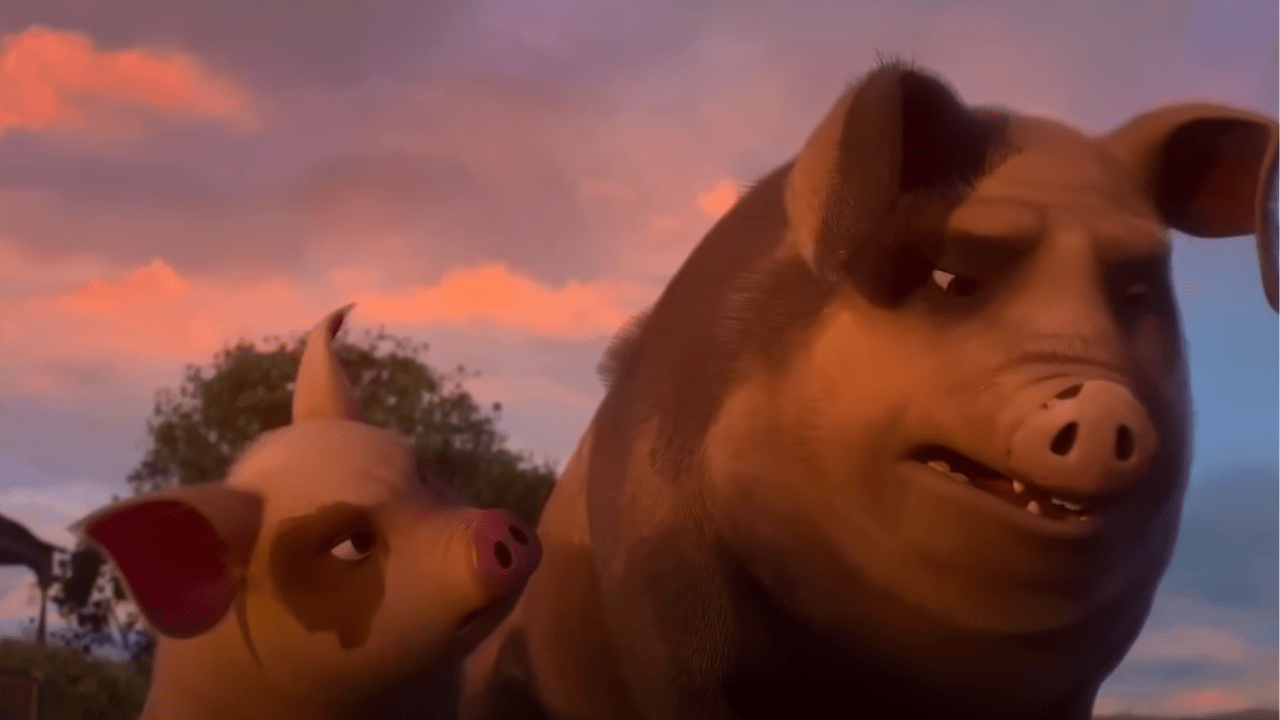
A recent animated movie version of George Orwell’s Animal Farm is facing strong criticism because it appears to change the story’s main point. Instead of being a warning about communism, as the book originally intended, the film seems to be criticizing capitalism. This has sparked a larger discussion about Hollywood’s tendency to update classic stories to reflect current beliefs, rather than staying true to the author’s original message.
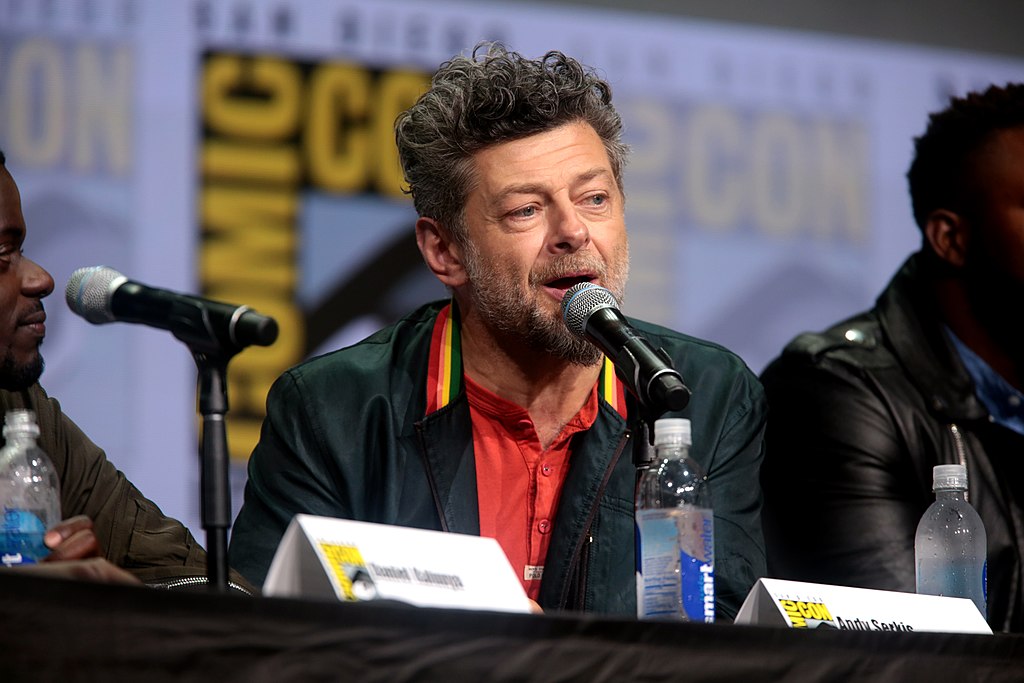
Andy Serkis’s film adaptation of Animal Farm transforms Orwell’s dark and cautionary tale into an animated movie suitable for families, adding humor and futuristic details. Most notably, the film offers a hopeful conclusion, which many book readers and fans believe misses the entire point of Orwell’s original warning about power and corruption.
Orwell’s Original Message Was Never Subtle
Published in 1945, Animal Farm is a critical story that uses animals to represent the Russian Revolution and the dangerous rise of a controlling government in the Soviet Union. The animals on a farm revolt against their farmer, hoping to create a fairer society, but the pigs quickly become just as tyrannical – or even worse – than the humans they overthrew.
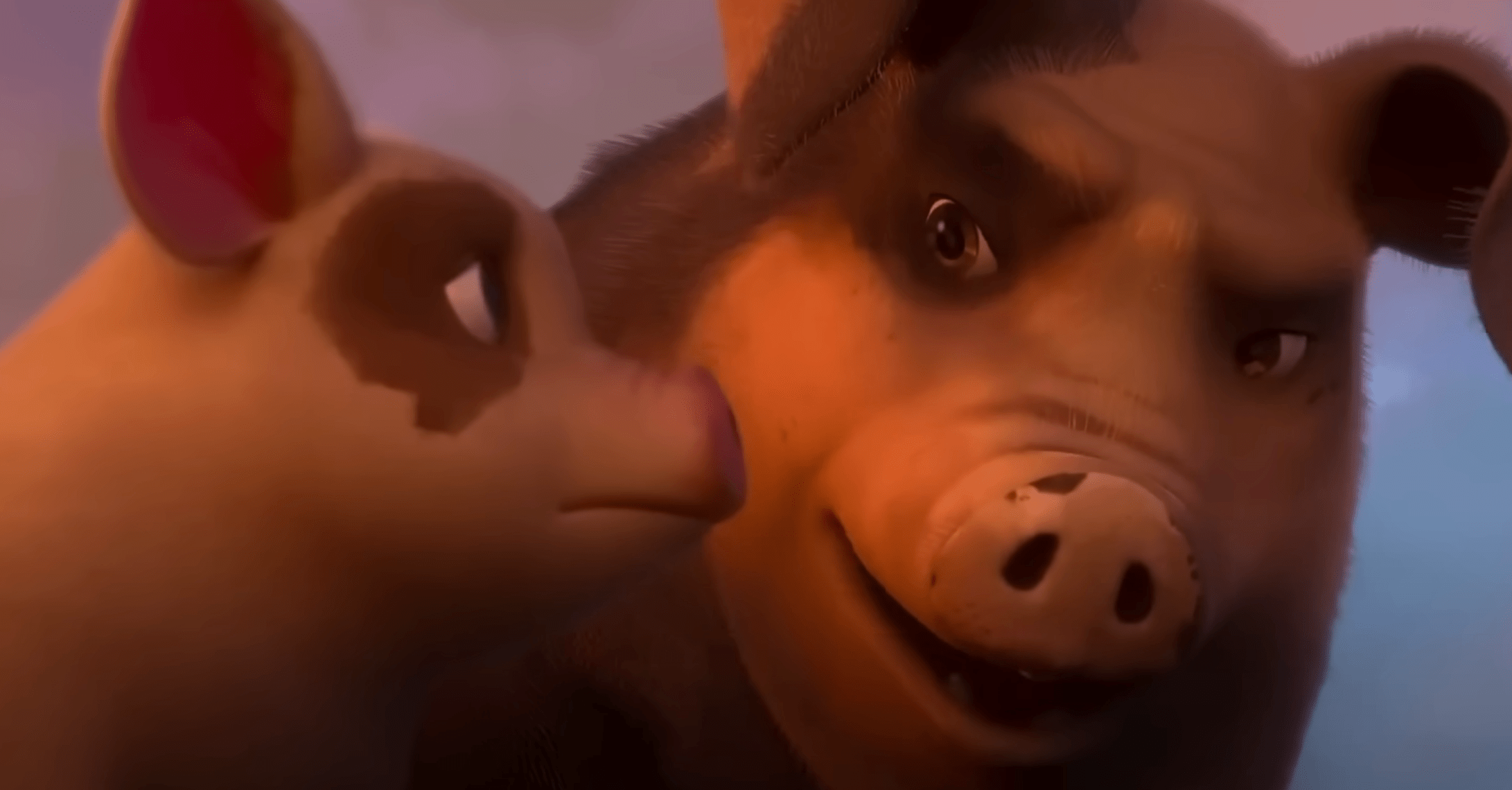
The story wasn’t meant to be confusing. Orwell was showing how revolutions based on shared ownership and control almost always lead to dishonesty, manipulation, and oppressive rule. The pigs weren’t meant to be seen as good guys; they were central to the story’s message.
That clarity is precisely what critics argue has been lost in this new adaptation.
Turning Capitalism Into the Villain
Instead of showing the pigs simply becoming corrupt, the new movie changes the main struggle to be about capitalism. The animals are now shown fighting to protect their farm from being taken advantage of by a large corporation, and a new human character, Freda, represents that threat.
Freda is a ruthless businesswoman determined to take over the farm to make money. Voiced by Glenn Close, she’s clearly established as the main villain of the story, a shift from the original book which centered on a different kind of oppressive force.
I’ve been seeing a lot of chatter online about the new trailer, and a clear pattern is emerging. People are noticing the story seems to imply that communism could actually work – that is, until capitalism messes things up. It’s a pretty big twist, because it feels like a complete reversal of Orwell’s original message, which was a warning against that very idea. It’s definitely got people talking, and not necessarily in a way the filmmakers might have intended.
A “Happy Ending” That Undercuts the Warning
The film’s hopeful ending also sparks debate. Unlike the book, where the animal rebellion ultimately fails and the pigs become just as corrupt as the humans, the film doesn’t show this tragic outcome of repeating the same power struggles and betrayals.
However, this new version of the story concludes with the animals successfully rebelling against the pigs and looking forward to a more hopeful future as a group.
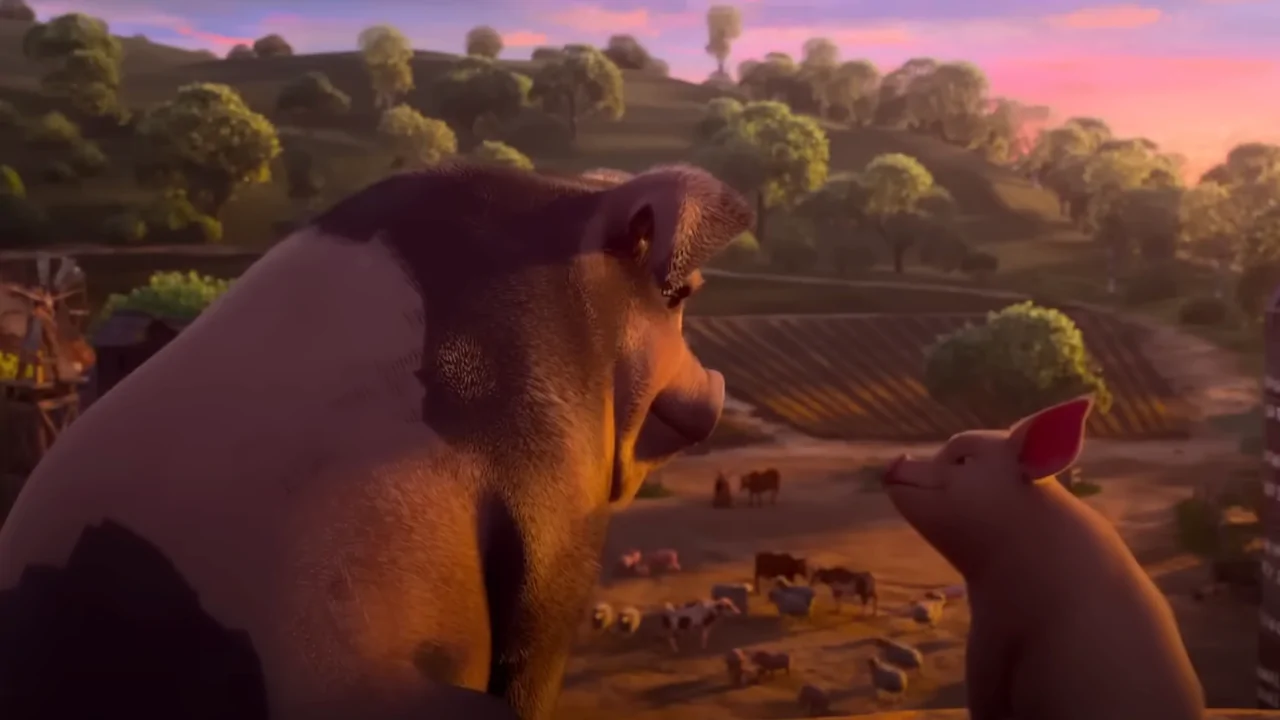
Andy Serkis explained at the Annecy International Animation Film Festival that the change was made to offer a more hopeful outlook.
Serkis also pointed out how relevant Animal Farm is today, explaining that with increasing concerns about power, misinformation, and unfairness, Orwell’s story serves as an important warning.
Some critics believe the movie weakens the book’s main point by offering a hopeful ending. Orwell intended to show that those in power almost never give it up willingly, and the film’s optimism undermines that message.
Hollywood’s Familiar Pattern With Classic Works
The recent criticism of how Animal Farm relates to capitalism is part of a larger trend in Hollywood. Over the last ten years, filmmakers have frequently updated classic stories, but often by turning their nuanced political messages into simpler, more easily digestible moral lessons that appeal to a wider audience.
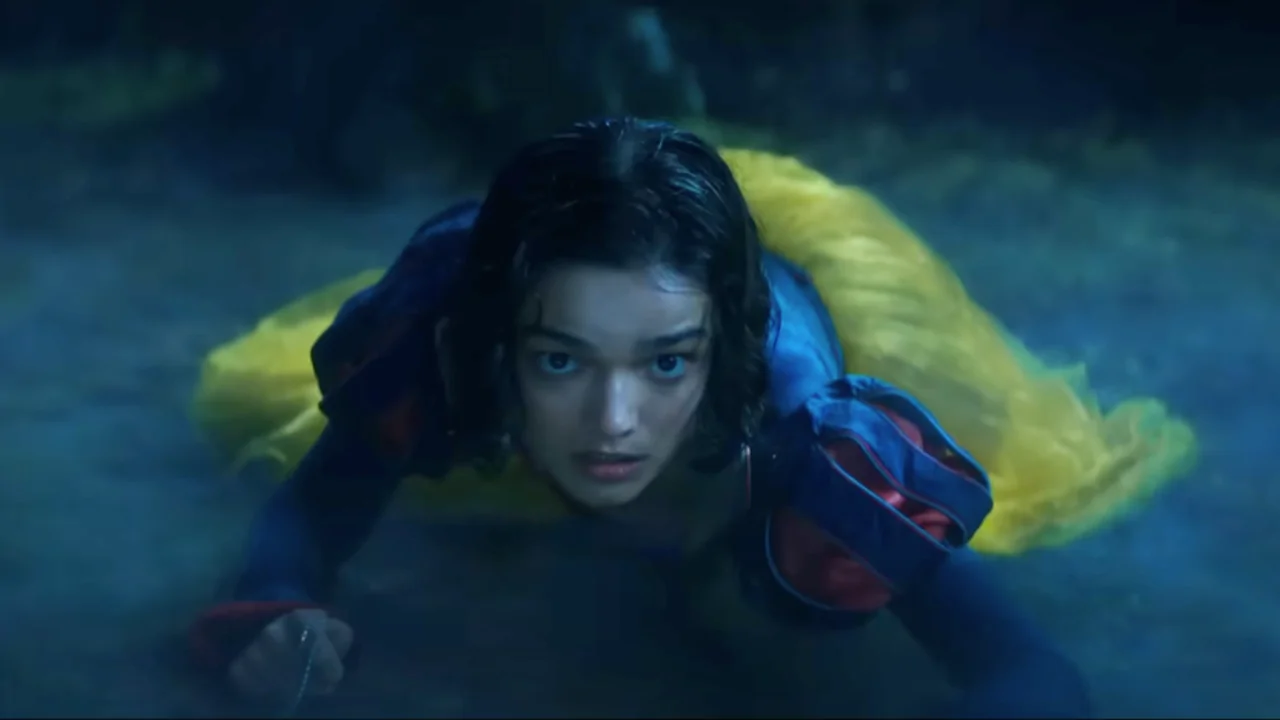
Okay, so this movie is funny. Like, really leaning into the comedy with lots of jokes, physical gags, and a super slick, futuristic vibe – think drones and fancy cars everywhere. But honestly, as someone who loves Orwell’s original work, it doesn’t feel like a true adaptation. It feels… watered down, you know? They took a really sharp, biting story and softened it a lot.
An online reviewer sharply criticized the film, calling it a silly children’s movie despite being based on a story dealing with serious themes like oppression, manipulation, and a tragic historical event.
Why the Reaction Matters
People aren’t upset simply because the adaptation isn’t faithful to the original. Orwell’s writing remains relevant because it challenges us to think critically about power, beliefs, and what it means to be human. Some critics worry that by focusing on capitalism as the problem and downplaying the severity of the story’s themes, the new version could actually teach the wrong lessons.
For many viewers, Animal Farm is not meant to reassure. It’s meant to disturb.
The new animated movie is planned to come out in theaters in May 2026. It’s still uncertain whether people will like this new take on the story or not.
This adaptation of Animal Farm isn’t just a cartoon version of the story—it’s about control over the interpretation of classic literature.
Read More
- Brawl Stars December 2025 Brawl Talk: Two New Brawlers, Buffie, Vault, New Skins, Game Modes, and more
- Clash Royale Best Boss Bandit Champion decks
- Best Hero Card Decks in Clash Royale
- Call of Duty Mobile: DMZ Recon Guide: Overview, How to Play, Progression, and more
- Clash Royale December 2025: Events, Challenges, Tournaments, and Rewards
- Best Arena 9 Decks in Clast Royale
- Clash Royale Witch Evolution best decks guide
- Clash Royale Best Arena 14 Decks
- Decoding Judicial Reasoning: A New Dataset for Studying Legal Formalism
- Brawl Stars December 2025 Brawl Talk: Two New Brawlers, Buffie, Vault, New Skins, Game Modes, and more
2025-12-16 21:58