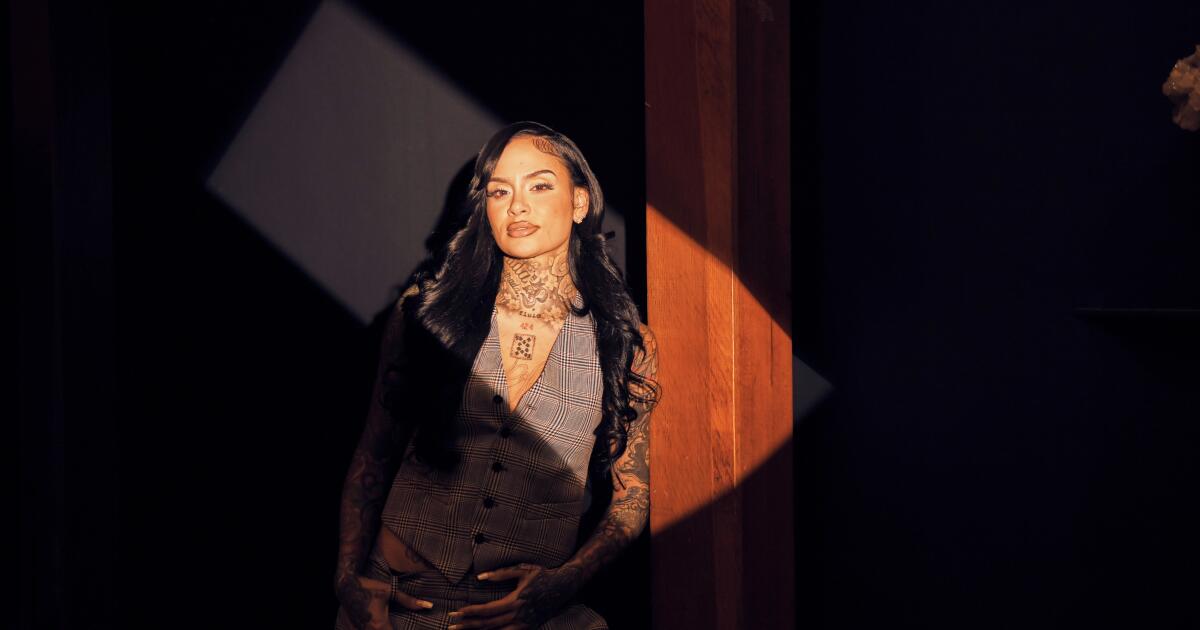
Kehlani has always been told she’s “one song away” from truly making it big.
The R&B singer, originally from Oakland, quickly gained attention in the early 2010s with her honest and freely shared mixtapes, “Cloud 19” and “You Should Be Here.” People were captivated by her open lyrics and impressive voice. However, after the initial excitement of being a rising star faded, she noticed she was being judged more harshly than her peers as she established herself as a professional musician.
You know, talking to Kehlani, she really laid it bare – at a certain point, making music stopped being about the art itself. It shifted to all this external stuff – chart positions, awards, magazine covers. She admitted it can mess with your head as a creative, creeping into every thought you have. But there’s a silver lining – she realized she can just create what she wants, and that freedom is powerful.
After over ten years as a singer, Kehlani Parrish, now 30, may have finally achieved the breakthrough success many predicted with her song “Folded.” Released in June, the song—a thoughtful and emotional ballad about heartbreak—features beautiful string arrangements and relatable lyrics. It’s her most popular song to date, reaching No. 7 on the Billboard Hot 100 and earning her two Grammy nominations for best R&B song and performance.
At Henson Recording Studios in Hollywood, the singer remains calm and relaxed despite her recent success and the fast-approaching deadline for her new album. She shared that she’d been working late the previous night with the Underdogs, the production team known for their work with artists like Chris Brown and Azealia Banks. She followed that with an early morning dance rehearsal and planned to return to the studio later that same day. She describes it as a very busy and demanding period.
Kehlani shared that she thrives when working under either extreme conditions: complete freedom and inspiration, or intense last-minute pressure. ‘I love working until the last moment,’ she explained, relaxing with a blanket on a rainy November day. ‘It’s either when there’s no pressure at all and things flow easily, or the most exciting results come from a rush at the very end.’
The singer’s current project is proving challenging, but it actually started with a spontaneous burst of creativity. She and some producers were in Miami working on a collaboration that didn’t pan out. Rather than let the trip be a waste, they decided to use their studio time anyway. After relaxing a bit, the very first beat they created – a mix of melancholic guitars and rich drums – became the song “Folded.”
Kehlani explained that it wasn’t until the next day, while listening back, that they fully understood how powerful the song was. ‘We were just in the moment when we created it,’ they said, ‘and it all felt very natural – we didn’t overthink it, it just flowed.’

Honestly, the singer says that at this stage in her life, almost any song would have resonated with her, as long as it had the qualities she was looking for – that special something that really connected with her.
Kehlani, dressed in a sharp plaid suit, explained that the success of her song felt more about divine timing than the song itself. She felt God recognized her personal growth over the past two years and the hard work she’d put in. She believes she was finally prepared to handle the pressures of mainstream success, something she wouldn’t have been able to manage at another point in her life, given her vulnerability to mental health challenges.
She explains she’s not trying to downplay what happened, but believes something bigger is influencing her life right now.
I’ve been following Kehlani’s career for a while now, and I recently spoke with Khris Riddick-Tynes, a longtime friend and executive producer on her new album. He’s worked with her since her early days online, and he doesn’t see this record as a ‘restart’ for her, but rather as a proper unveiling of the artist she’s become. It’s less about reintroducing herself and more about finally showing us who she is now.
Riddick-Tynes explained over the phone that they felt she was prepared to shine. They believed this was the perfect moment for her, noting how much she’d developed as both a person and a creative artist. She had finally realized and embraced her readiness to advance to the next stage of her career.
The song became popular on TikTok almost immediately, inspiring many viral dances and challenges. Its lyrics, which explore the messy feelings of wanting a former partner back and include clever, suggestive references to laundry, led to a lot of online debate about the song’s true meaning.
Many listeners initially interpreted the song as being about intense desire or a longing for an ex, even suggesting it stemmed from unhealthy feelings. However, Kehlani has clarified that the song is actually about owning up to one’s own mistakes and taking responsibility for their actions.

Kehlani shared that it’s naive to think of things as simply finished once they’re over. She used to either quickly cut ties or hold on for too long, lacking a balanced understanding of her relationships. Now, she’s realizing that relationships aren’t easily discarded, and ending things isn’t always permanent. She’s found that even when you try to move on completely, you can still find yourself thinking about it for a long time afterward.
Kehlani has dealt with feeling misunderstood since becoming famous. After gaining initial recognition on America’s Got Talent in 2011 as part of PopLyfe, she recently shared that she was diagnosed with bipolar disorder. This has helped her understand why she’s so affected by how others perceive her. She describes intense anxiety when people focus on past events, like public breakups and her recent, difficult custody battle over her daughter – which she recently won full custody of.
Kehlani described a strong feeling to explain themselves, not necessarily to defend against criticism, but to simply have a dialogue. However, they acknowledged that as an artist, it’s important to accept that most of the time, that kind of conversation won’t happen. Even if you do get the chance to talk with someone, you have to be prepared for them to still disagree with you and maintain their original, potentially incorrect, impression.
Before learning what was wrong, Kehlani used to try and avoid dealing with her problems. She experimented with things like surfing, meditation, and frequent tarot readings, hoping they would help. However, after getting a diagnosis, she started therapy, found medication that worked for her, and learned to navigate difficult but necessary conversations with honesty and responsibility.
Kehlani explained that a big part of her recent efforts has been about becoming the person she admired at 21 – someone who feels fully in control of their life. She wanted to reach a point where she could confidently say she’d turned things around, and that’s what she’s been working towards. She also stressed the importance of self-care, like getting enough sleep and exercising, for her mental well-being. She envisions a future where she can look back on this challenging period with ease, but acknowledges it’s a difficult, yet fulfilling, process right now.
She received a diagnosis following a manic episode she had while working on her 2024 album, “Crash” – which she described as reflecting the chaotic experience. For this album, she moved away from her usual R&B style, experimenting with a blend of rock influences. She attributes the episode to the devastating events happening in the Gaza Strip, calling it “one of the craziest tragedies of our time.”
Kehlani described a severe emotional breakdown, explaining they went from angrily confronting people online to becoming intensely paranoid and fearing for their safety at home. They said, “I completely broke. My brain snapped in half…thinking everybody was coming to get me.”
Following her diagnosis, she launched into a world tour, during which she found it hard to concentrate and often fell asleep even during conversations as she adjusted to her medication. After the tour ended, she retreated home, embraced time alone, and started working on a new album – the one that would eventually become “Folded.” She realized her songwriting process had shifted; it wasn’t driven by immediate emotions anymore. Instead, she was able to thoughtfully consider her work, bringing a new level of maturity to her music.

Kehlani doesn’t dwell on painful memories of that difficult period in their life. Instead, they feel grateful to have gotten through it, and even thankful that it inspired some of their art. There were times when things felt genuinely frightening, and the outcome could have been much worse. Kehlani isn’t embarrassed to admit that because they’re in a much better place now, believing that the struggles were necessary for their current growth and success – the breakdown paved the way for a rebuild.
Achieving greater success brings more attention and increased scrutiny. So, when several of her concerts were canceled over the past year because of her political views, she said she wasn’t shocked. The cancellations began in April when Cornell University canceled her performance at their year-end celebration, citing “antisemitic, anti-Israel sentiments.” This stemmed from her music video “Next 2 U,” which includes a poem by Palestinian American writer Hala Alyan, features her singing in front of a Palestinian flag, and contains the phrase “Long live the intifada.” This phrase is considered controversial; while many pro-Palestine supporters see it as a call for resistance or liberation, others interpret it as a call for violence against Jewish people.
She posted on social media, stating she opposes antisemitism but is against the violence in Gaza and critical of the Israeli government’s actions.
After that, her performance at the Pride event in New York with Kehlani was canceled, and she was removed from the lineup at San Francisco’s Pride celebration. Only San Diego’s Pride event still included her. However, that event nearly had to be canceled too, because the organization received a serious and detailed death threat.
Kehlani explained they felt trapped: either endure the anxiety and perform, or cancel the show and risk constantly being bullied into canceling future performances. While they made it through the frightening experience of preparing to go on stage, they felt targeted. They believed someone was trying to make a statement by canceling their shows, especially now that their career was reaching a new high point.
Now at a high point in her career, Kehlani is prioritizing her well-being above everything else. She recognizes she’s been close to this level of success before, but past mental health struggles prevented her from fully achieving it.
Kehlani described feeling overwhelmed with excitement, saying it was hard to put into words how incredible it felt to finally have something she’d been working towards. She demonstrated holding her hands tightly, as if containing something precious, and needing to stay focused. ‘I’m where I need to be right now,’ she explained, ‘I just have to keep my head clear and stay on track.’
Read More
- Brawl Stars December 2025 Brawl Talk: Two New Brawlers, Buffie, Vault, New Skins, Game Modes, and more
- Clash Royale Best Boss Bandit Champion decks
- Best Hero Card Decks in Clash Royale
- Call of Duty Mobile: DMZ Recon Guide: Overview, How to Play, Progression, and more
- Clash Royale December 2025: Events, Challenges, Tournaments, and Rewards
- Best Arena 9 Decks in Clast Royale
- Clash Royale Best Arena 14 Decks
- Clash Royale Witch Evolution best decks guide
- Brawl Stars December 2025 Brawl Talk: Two New Brawlers, Buffie, Vault, New Skins, Game Modes, and more
- Decoding Judicial Reasoning: A New Dataset for Studying Legal Formalism
2025-12-15 14:02