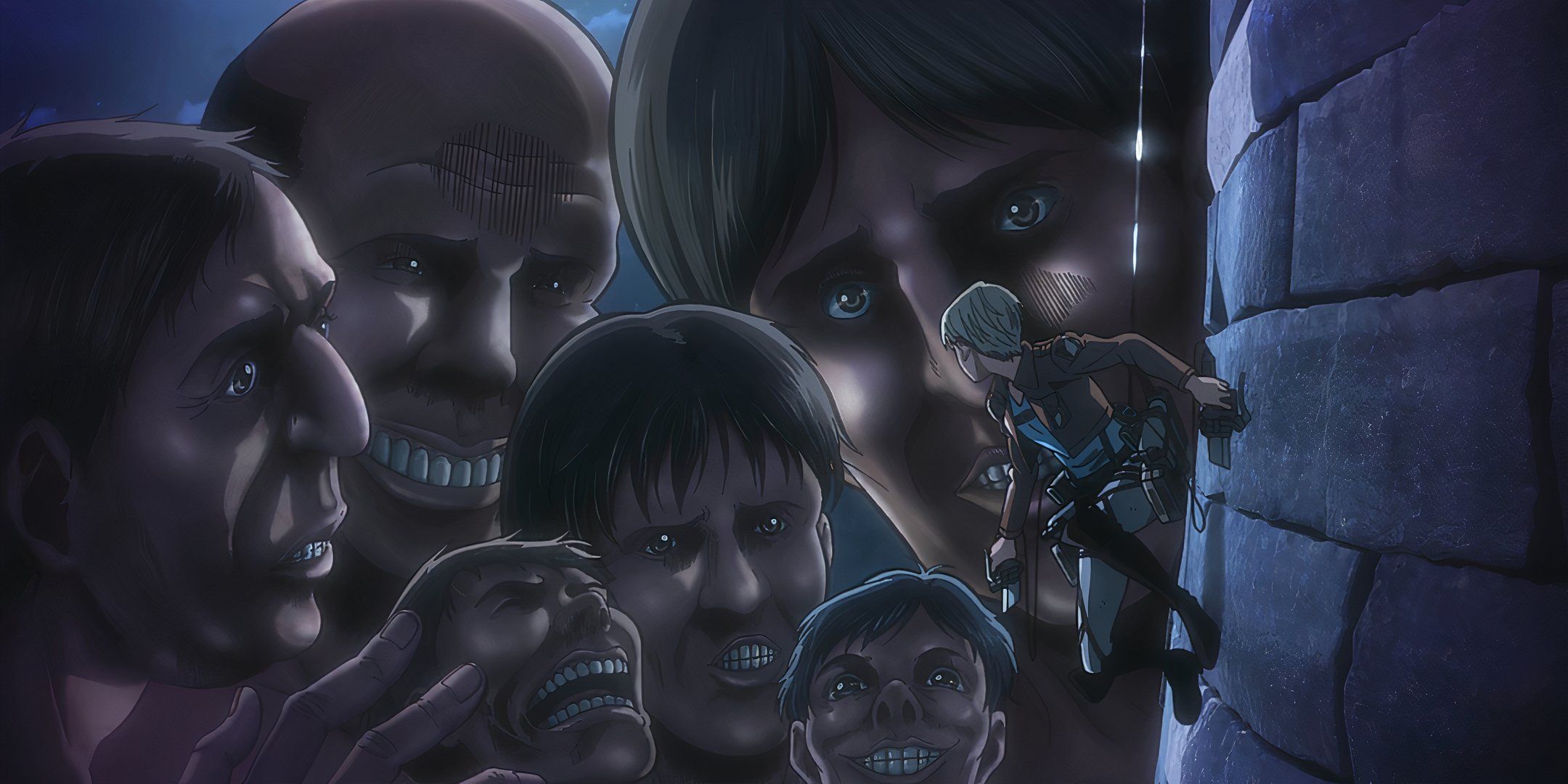
While many anime series are memorable, few reach the international success of Attack on Titan. Even years after its debut, the show’s powerful themes and complex story continue to resonate with audiences, though it isn’t perfect.
I have to say, Attack on Titan is a really intense show. It doesn’t shy away from difficult themes or graphic violence – it can be tough to watch at times. Luckily, there are other anime that create a similar feeling of suspense and grand scale, but without quite as much bloodshed and harshness.
Legend Of The Galactic Heroes Tells a Tasteful Sci-Fi War Story
I’ve been following Legend of the Galactic Heroes for a while now, and it’s a really expansive science fiction story – it exists as a series of novels, an anime, and even video games. What’s fascinating is that it tells the story of two main characters, Reinhard von Lohengramm and Yang Wen-Ii, who are on opposite sides of a massive galactic war. It follows both of their journeys as they lead their respective factions – the Free Planets Alliance and the Galactic Empire – through the conflict.
Though seemingly different – one a giant-monster action series and the other a grand space opera – both Attack on Titan and Legend of the Galactic Heroes offer powerful and unsettling looks at the realities of war, genocide, and how governments and militaries control people. Both shows challenge viewers to question who the true heroes really are, and the character development of Armin in Attack on Titan shares surprising similarities with Julian’s journey in Legend of the Galactic Heroes.
Though this sci-fi story doesn’t involve characters turning into monsters, it still manages to portray certain groups as villains. While Legend of the Galactic Heroes includes deaths, it handles them with a sense of detachment, unlike Attack on Titan, which some viewers find focuses too much on the violence.
Muv-Luv Alternative Inspired Attack on Titan’s Story
Hajime Isayama, the creator of Attack on Titan, has openly acknowledged that his popular series drew significant inspiration from Muv-Luv Alternative. Muv-Luv began as a series of three visual novel games, which were then adapted into a manga and a two-season anime called Muv-Luv Alternative.
The story of Muv-Luv starts as a lighthearted high school romance, but quickly changes when the main character, Takeru, finds himself in a desperate alternate world fighting for humanity’s survival. This intense conflict was a major inspiration for Hajime Isayama and ultimately led to the creation of Attack on Titan.
I was really struck by how Muv-Luv Alternative, the last part of the series, dealt with some seriously tough choices. The characters constantly had to face the results of their actions and question if they’d made the right calls. The way the story wrapped up, especially with one character’s divisive but ultimately unifying actions as a bigger threat emerged, reminded me a lot of the controversial ending to Attack on Titan. It felt similar in how it forced you to consider the bigger picture and the sacrifices made along the way.
Vivy: Fluorite Eye’s Song Puts Humanity’s Fate in an AI Andriod’s Hands
Released in 2021, Diva is a compelling story that packs more emotional impact than many anime series three times its length. It follows the journey of the world’s first self-governing AI android, who uses her music to try and improve the world, despite facing significant challenges along the way.
Diva’s life takes a dramatic turn when Matsumoto, an AI from the future, reveals she’s the key to preventing a devastating AI war. Together, they must work to stop critical events over the next century to avoid a grim future.
While Vivy: Fluorite Eye’s Song shares some similarities with Terminator, the heavy responsibility faced by the character Vivy and how even small choices can drastically alter the future are reminiscent of the struggles seen in Attack on Titan. Vivy hints at devastating losses, but doesn’t fully explore the bleakness that Attack on Titan does.
Knights of Sidonia Showcases a Fight to Protect the Last of Human History
When Knights of Sidonia first appeared on Netflix in 2014, it generated a lot of excitement. Now, over a decade later, it’s become a beloved favorite among a dedicated fanbase. The series is a solid example of its genre, with a persistent alien danger looming on the horizon.
Nagate Tanikaze, the protagonist of Knights of Sidonia, lives in a very different universe than the characters in Attack on Titan. However, both he and they share similar motivations and experiences with being marginalized. Despite facing discrimination as someone born in the lower levels of the Sidonia ship, Nagate desperately wants to become a pilot and protect the ship from the dangerous Gauna aliens.
Both Knights of Sidonia and Attack on Titan start as tales of humanity fighting to protect their last safe places, but they grow into much larger stories. Knights of Sidonia is generally more optimistic than Attack on Titan, and it’s the enemy, the Gauna, who suffer the most significant losses.
Lelouch Takes After Eren Yeager as the Code Geass Protagonist
I’ve noticed a lot of anime fans comparing Code Geass and Attack on Titan. It seems like many are focusing on how similar the main characters, Lelouch and Eren, are – especially the difficult moral choices they face. Both Lelouch and Eren are given extraordinary abilities that actually allow them to try and make a real difference in the world.
Both Lelouch’s rebellion in Code Geass and the conflicts in Attack on Titan demonstrate how noble goals, combined with immense power, can easily lead to corruption and a loss of sight of the original purpose. These anime beautifully illustrate the dangers of good intentions gone awry.
Both stories cleverly leave viewers questioning whether the characters they’ve been rooting for were actually the bad guys all along. Attack on Titan is a prime example of how effectively uniting people against a shared enemy can drive a narrative.
Kaiju No. 8 Blurs The Lines Between Man & Monster
Kaiju No. 8 has quickly become a popular shonen manga, blending exciting monster battles with the classic story of an unlikely hero. The story takes place in a world frequently attacked by giant creatures called kaiju, and follows Kafka Hibino, a thirty-year-old who works a low-level job dealing with these threats.
Kafka unexpectedly gains incredible power after an encounter with a giant monster, transforming him into something new. He then assists the Japan Defense Force in fighting these massive creatures, but must keep his transformation – and his part-monster nature – a secret.
The hidden nature of Kafka’s power, combined with his wish to use it for good, echoes the struggles of the Titan Shifters in Attack on Titan, who must conceal their identities to avoid being hunted. While Kaiju No. 8 presents tough choices and the risk of losing what makes us human, it avoids dwelling on excessive death and gore, even with its brutal depictions of kaiju attacks, keeping the most graphic violence somewhat distant.
86: Eighty-Six’s Dehumanizing War Overlaps With Attack on Titan
A key strength of Attack on Titan is its exploration of difficult topics like war, national identity, the cost of conflict, and how trauma impacts people across generations. The sci-fi series 86: Eighty-Six similarly tackles these weighty ideas, focusing on the justification of actions taken during wartime.
The anime 86 tells the story of a group of young people who have always faced discrimination, now forced to fight for a nation that doesn’t see them as equals. They’re battling a dangerous enemy, and while it’s not as graphically violent as Attack on Titan, the constant risk of death looms over them.
Both anime series suggest that human life isn’t valued, leading their characters into difficult and emotionally challenging situations. While other characters face hardship, none experience the same level of devastating circumstances as Eren. It’s interesting to imagine how Eren would handle the extreme conditions of the 86th zone.
Kabaneri Of The Iron Fortress is a Terrifying Anime Zombie Story
It’s easy to see the similarities between Kabaneri of the Iron Fortress and Attack on Titan. Both are post-apocalyptic stories created by Wit Studio, and they share many of the same creators who worked on the first three seasons of Attack on Titan.
In a world overrun by undead creatures called “Kabane,” humanity is on the run. These Kabane are incredibly difficult to kill – they can only be destroyed by piercing their armored, golden hearts. Ikoma, a talented engineer, finds himself partially infected, transforming him into a unique hybrid known as a “Kabaneri” – a being with traits of both humans and Kabane, but still retaining his human mind.
Ikoma joins forces with fellow survivors, all searching for safety, a glimmer of hope, and a way to defeat the Kabane. The storyline closely resembles the final arc of Attack on Titan, and the weapons used against the Kabane in Kabaneri of the Iron Fortress are reminiscent of Attack on Titan‘s ODM gear and the thrilling aerial battles it features.
Black Bullet Resigns Stops Short of Attack on Titan’s Emotional Devastation
Both Attack on Titan and Black Bullet have a lot of similarities. They both tell stories of people struggling to survive within the walls of a city, trying to protect themselves from dangerous monsters. In Black Bullet, this threat comes in the form of humans transformed by a parasitic virus.
Children born with the Gastrea virus, called Cursed Children, might hold the key to defeating Gastrea, but they’re also widely feared. This creates a lot of stress for these children and impacts how everyone else sees them.
Like Attack on Titan, Black Bullet creates a tense and anxious atmosphere driven by prejudice and a lack of trust. However, Black Bullet isn’t quite as bleak or emotionally impactful as Attack on Titan, and doesn’t leave viewers feeling as hopeless about the future of humanity.
Shadows House Captures Fans With a Sinister Slow-Burn Story
The anime Shadows House ran for two seasons and stands out for its original and surprisingly complex story. It takes place in a mansion inhabited by shadowy figures who lack faces. These shadows are paired with Living Dolls, whose job is to mimic their masters’ behaviors, hoping to eventually become fully connected with them.
Emilico is a lifelike doll cared for by Kate, a powerful magic user. Their bond leads to thoughtful stories and raises questions about the world beyond their home. However, their relationship hints at a darker, more troubling secret.
While Shadows House isn’t filled with battles or exciting action, its complex mysteries and the way its characters are deliberately kept uninformed strongly resemble the intriguing, slow-burn storytelling style of Attack on Titan.
Read More
- Clash Royale Best Boss Bandit Champion decks
- Brawl Stars December 2025 Brawl Talk: Two New Brawlers, Buffie, Vault, New Skins, Game Modes, and more
- Best Hero Card Decks in Clash Royale
- Clash Royale December 2025: Events, Challenges, Tournaments, and Rewards
- Call of Duty Mobile: DMZ Recon Guide: Overview, How to Play, Progression, and more
- Best Arena 9 Decks in Clast Royale
- Clash Royale Witch Evolution best decks guide
- Clash Royale Best Arena 14 Decks
- Brawl Stars December 2025 Brawl Talk: Two New Brawlers, Buffie, Vault, New Skins, Game Modes, and more
- All Boss Weaknesses in Elden Ring Nightreign
2025-12-14 06:18