
Augmented reality (AR) and virtual reality (VR) are no longer just futuristic ideas – they’re becoming essential parts of how we interact with technology. AR adds digital elements to the real world, letting you experience both at the same time, while VR creates completely simulated environments. These technologies are now impacting many fields, including gaming, education, healthcare, and entertainment. As more industries adopt these immersive experiences, it’s becoming important to figure out which one will become more popular. To understand this, we need to look at how each technology works, how it’s being used, where the market is heading, and how easy it is for people to access them.
The core differences between AR and VR
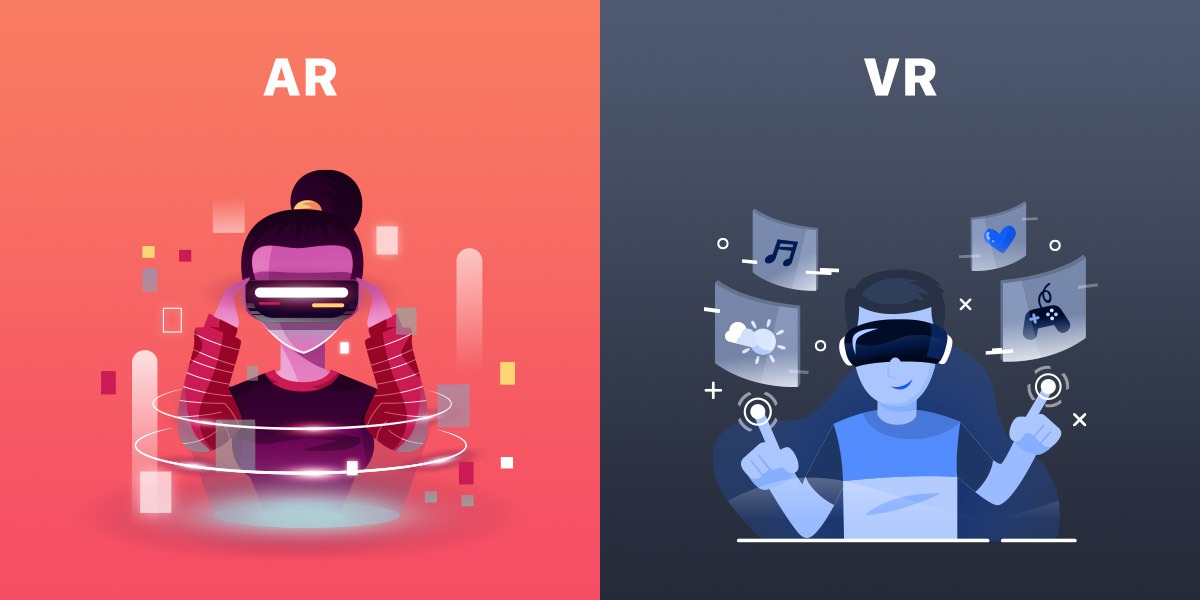
Augmented reality brings digital information to life by superimposing things like images, 3D objects, and animations onto the real world around you. This lets you stay aware of your surroundings while getting extra information – which is why AR is so useful in everyday situations. It’s mostly powered by devices you likely already have, like smartphones and tablets, and increasingly through lightweight glasses, making it a very accessible technology.
Virtual reality completely replaces your surroundings. When you use VR, you wear a headset that blocks out the real world and puts you inside a digital world that can look incredibly realistic or completely fantastical. It relies on making you feel fully immersed through sight and motion, and it needs powerful computers to create these experiences. Because of these differences, VR and augmented reality are used in different ways by people and businesses, and will likely be adopted at different rates worldwide.
The benefits of augmented and virtual reality are especially noticeable in competitive gaming and esports. Pro teams, like those in CS2, are increasingly using advanced tools and platforms – such as those found on egamersworld – to practice and improve. These immersive simulations help players develop quick reflexes, refine strategies, and better understand positioning and map control. Essentially, AR and VR are changing how esports athletes prepare for competition, going beyond simple practice to build both physical skill and mental visualization.
Augmented reality (AR) and virtual reality (VR) are starting to work together more seamlessly as developers improve how we interact with these technologies. However, they still operate on different principles: AR adds digital elements to the real world around us, while VR creates a completely immersive, digital environment. This fundamental difference explains why AR and VR are developing in different ways.
AR’s growing influence in everyday life
Augmented reality is powerful because it enhances our everyday lives without pulling us away from the real world. It helps with things like finding your way indoors, translating languages instantly, working with others remotely, and tackling complicated tasks that need visual instructions. Imagine a mechanic seeing step-by-step repair guides overlaid on the engine they’re working on – that reduces mistakes and makes things faster. Or students learning with interactive 3D models that are much easier to understand than traditional textbooks.
Augmented reality (AR) is becoming popular with shoppers thanks to apps that let you virtually place furniture in your home, preview products in real-time, and enjoy more interactive shopping. Stores are using AR features like virtual try-on to help customers feel more confident about their purchases and reduce the number of returns. Brands are also using AR in their advertising to create engaging and immersive experiences. Because AR works on smartphones and tablets that most people already have, it’s becoming widely adopted much faster than virtual reality (VR).
Augmented reality is becoming increasingly important in healthcare. Surgeons are using it to plan complicated operations, see structures inside the body more clearly, and work with greater precision. Paramedics and other emergency personnel can use AR to quickly access vital information and follow the correct procedures in critical situations. Because it’s accurate, easy to use, and can be expanded as needed, AR is a valuable asset for businesses looking to improve how they work.
Augmented reality becomes even more powerful when combined with artificial intelligence. AI-powered AR can understand what’s around you, identify objects, and provide helpful, relevant information. This combination creates new possibilities in areas like smart factories, self-driving cars, innovative learning experiences, and better remote teamwork. With AR devices becoming lighter and cheaper, it’s poised to change how we interact with digital technology every day.
VR’s dominance in immersive entertainment

Virtual reality still offers the most immersive experience available. By completely blocking out the real world and transporting users into detailed digital environments, it’s become essential for things like gaming, training, design, and interactive stories. VR lets you feel like you’re actually inside the game, movie, or simulation.
As a gamer, I’m seriously impressed with where VR is going. They’re constantly making it better with sharper graphics, controllers that let you feel things, and even tracking your whole body! Plus, they’re ditching the wires and making the headsets lighter and more comfortable, which is huge because nobody wants motion sickness or feeling stuck in a tiny space. But the best part? VR lets you do things that are just impossible in real life – like fighting with crazy powers, exploring space, or teaming up with friends on epic adventures in worlds you could only dream of.
Virtual reality isn’t just for fun – it’s a crucial training tool in many professions where errors can be expensive or even life-threatening. Pilots, firefighters, surgeons, and those in the military use VR to safely practice handling difficult and stressful situations. It’s also used in industries to train workers on potential hazards, letting them experience risks without actually being in danger.
Esports teams are looking into virtual reality to create new ways to compete, study how players perform, and practice in realistic, simulated settings. As VR technology improves and becomes more comfortable and easier to use, we can expect entirely new types of competitive games to appear.
Market trends shaping the future of AR and VR
Both augmented reality (AR) and virtual reality (VR) are growing quickly, but they’re developing at different speeds. AR is likely to become much more widespread, potentially reaching billions of users worldwide because it works well with smartphones and can be easily used in daily life. VR, on the other hand, is expected to become the leader in specialized areas where a fully immersive experience is crucial, like gaming, professional training, simulations, and complex design work.
Big investments from tech giants are rapidly expanding the augmented and virtual reality market. Companies like Apple, Google, Meta, and Microsoft, along with many new startups, are developing cutting-edge AR glasses, VR headsets, and platforms for businesses. They’re creating the immersive experiences of the future, designed for both entertainment and work.
Mixed reality (MR) is quickly becoming a key part of creating truly immersive digital experiences. It combines the best aspects of both augmented reality (AR) and virtual reality (VR), letting users interact with virtual objects that appear in their real-world surroundings. This offers more versatility than either AR or VR could on its own. As more people start using MR, the lines between AR and VR will likely blur, leading to adaptable, all-in-one immersive systems.
What ultimately decides if augmented reality (AR) or virtual reality (VR) becomes more popular won’t just be about which technology is better. It will depend on things like how affordable the equipment is, how comfortable it is to use, what people want, whether businesses start using it, how much content is available, and how easily people around the world can access it. Currently, AR is better at reaching a large audience, while VR offers a more deeply immersive experience. The key to long-term success might be which technology fits more naturally into people’s everyday lives.
Conclusion
Augmented reality (AR) and virtual reality (VR) are both shaping the future of how we interact with technology, but in different ways. AR is likely to become more common in daily life because it’s easy to use, practical, and works well with smartphones and other devices we already have. It improves our existing world, making it useful for things like learning, getting directions, shopping, healthcare, and working with others. VR will continue to excel in situations where you need to be completely transported to another place – think gaming, esports training, realistic simulations, and immersive entertainment.
The future likely won’t have one clear winner between AR and VR. Instead, these technologies could develop alongside each other, each playing a unique part in a larger, more immersive digital world. As mixed reality improves, users might move easily between augmented reality features and completely virtual environments. Ultimately, success will depend on how well each technology fits into our everyday lives, supports content creators, and provides engaging experiences that change how we interact with digital content.
Read More
- Clash Royale Best Boss Bandit Champion decks
- Vampire’s Fall 2 redeem codes and how to use them (June 2025)
- World Eternal Online promo codes and how to use them (September 2025)
- How to find the Roaming Oak Tree in Heartopia
- Best Arena 9 Decks in Clast Royale
- Mobile Legends January 2026 Leaks: Upcoming new skins, heroes, events and more
- ATHENA: Blood Twins Hero Tier List
- Clash Royale Furnace Evolution best decks guide
- Brawl Stars December 2025 Brawl Talk: Two New Brawlers, Buffie, Vault, New Skins, Game Modes, and more
- Kingdoms of Desire turns the Three Kingdoms era into an idle RPG power fantasy, now globally available
2025-12-02 12:36