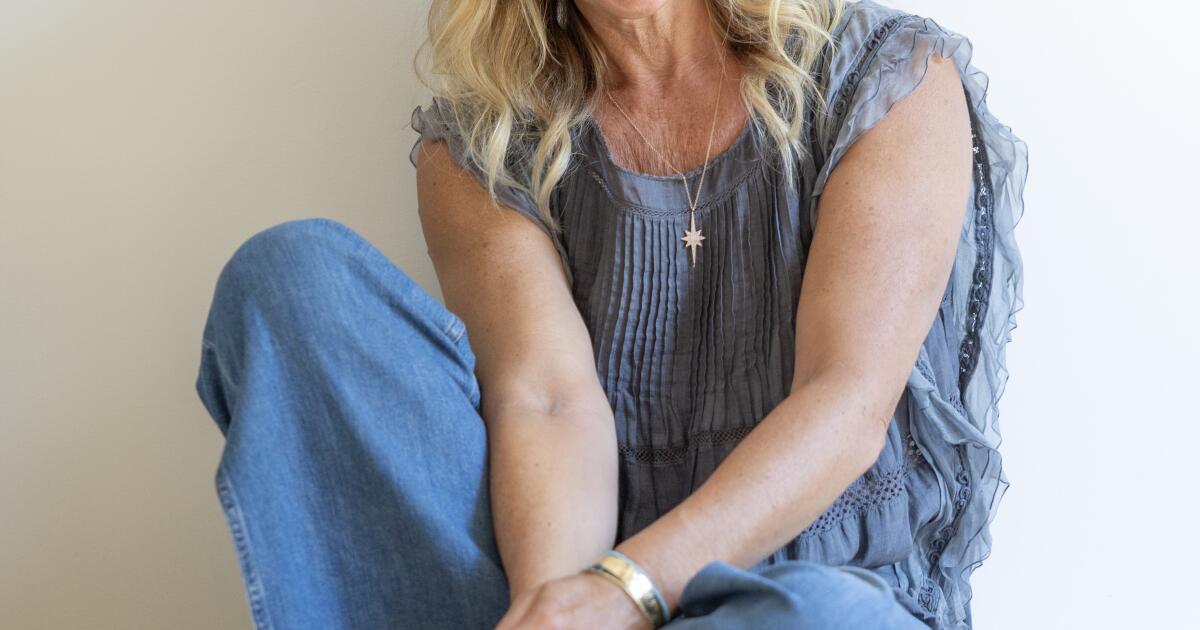
Sarah McLachlan’s singing voice is one of the wonders of the pop music world.
Her voice is incredibly versatile, ranging from powerful belts to soft whispers, as demonstrated in her popular songs like “Adia” and “Building a Mystery.” She’s also known for her deeply moving rendition of Randy Newman’s “When She Loved Me” from “Toy Story 2,” considered one of the most impactful Disney songs ever. She’s a remarkably skilled singer, effortlessly hitting high and low notes, adding delicate embellishments, and even incorporating smooth yodels. She can sound delicate and airy, or powerfully intense, and she often creates rich harmonies by layering multiple vocal tracks, essentially becoming a one-person choir.
It was truly frightening when McLachlan nearly lost her voice last November. A viral infection left her unable to speak while she was getting ready for the Canadian part of her “Fumbling Towards Ecstasy” anniversary tour. Fortunately, she had already finished recording the vocals for her new album, “Better Broken,” which comes out this Friday, and she was particularly pleased with how they turned out.
McLachlan, 57, recalls a worrying thought she had last winter: ‘I love this song so much, but I wasn’t sure if I’d ever be able to sing it again.’
“Better Broken” marks Sarah McLachlan’s first new album in eleven years. For the past decade, she’s been focused on family life in West Vancouver, raising her daughters, India (23) and Taja (18). “I was a very involved mom,” she explains. “My youngest daughter is a passionate dancer, and I was completely dedicated to supporting her.”
The singer, a seasoned performer, was relaxing in her Century City office, having just sent her youngest child off to college the day before. She admits she’s holding up well for now, though she anticipates being very emotional when she returns home. (“I’m still okay,” she says. “I know I’ll be upset when I have to fly back, but I’m doing alright at the moment.”)
You know, working with these two singers was incredible. They’re total opposites – seriously, night and day! We even recorded a really powerful feminist anthem together, ‘One in a Long Line,’ for the new album. Both of them are just stunningly strong and fierce, each in their own way, and honestly, I’m still blown away by how well we all clicked. It made me think a lot about my own mom, actually. I always tried so hard *not* to be like her, but looking back, I realized I ended up being a lot more like her than I thought.
Sarah McLachlan has also dedicated a lot of time to supporting the Sarah McLachlan School of Music, a free after-school program with three locations across Canada, and was its main fundraiser until recently. She started the foundation behind the school in 2002, using some of the money she earned from Lilith Fair – the popular all-female music festival she created – to continue its legacy.
Having already given a large portion of the Lilith Fair profits to charities supporting women, McLachlan wanted to continue that positive impact. She aimed to build a similar environment where everyone felt safe, respected, and empowered to express themselves and contribute creatively.
A new Hulu documentary called “Lilith Fair: Building a Mystery” will debut on September 21st. The film features interviews with Sarah McLachlan, Sheryl Crow, Jewel, Natalie Merchant, and other artists who participated in or were influenced by the Lilith Fair movement of the late 1990s. While the festival faced criticism in the early 2000s with the rise of highly produced, image-focused pop music, it now seems to have foreshadowed today’s popular music landscape, which is defined by honest and personal songwriting from female artists.

McLachlan openly loves Taylor Swift (she especially enjoys the albums “Folklore” and “Evermore”), and it’s clear that she’s inspired artists like Swift, Brandi Carlile, Olivia Rodrigo, and Billie Eilish. In a 2023 interview with Eilish about her song “What Was I Made For,” I pointed out that her delicate vocals brought McLachlan to mind.
“I love, love, love Sarah McLachlan,” Eilish said, beaming. “I always have.”
It was great to see so many talented filmmakers step up while McLachlan was taking a break, and honestly, it felt natural for me to take a step back too. She actually admits she never really enjoyed the fame that came with it, which I totally get – it’s about the films, not the celebrity!
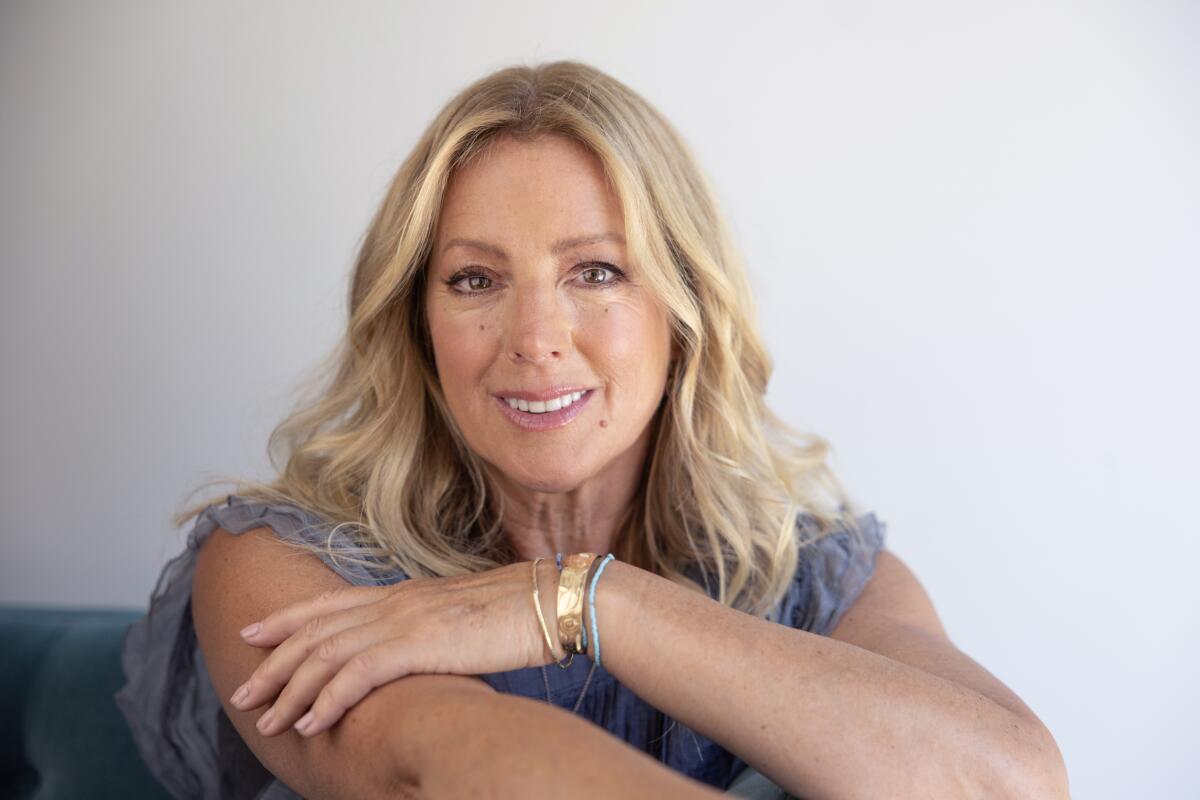
Born and raised in Nova Scotia as one of three adopted children in a difficult home life, Sarah McLachlan discovered her strength and self-assurance through music. Her mother often expressed negativity, and McLachlan describes a largely independent childhood, feeling like she had to fend for herself from a young age. She learned to cope with difficult emotions and relied heavily on music for comfort, viewing it as a maternal figure in her life.
She grew up taking formal piano and guitar lessons, and she also trained classically in singing. However, she admits she wasn’t always serious about the vocal training – she was a skilled mimic and could imitate operatic singing. While she didn’t enjoy classical music itself, her beautiful voice landed her a record deal at 19, sending her to Vancouver. During those first recording sessions, while she was also learning to write songs, she struggled with vocal control and often strained her voice.
I was so fascinated to learn about how Sarah McLachlan developed her incredible voice! Apparently, when she started working with a vocal coach, the very first thing the coach had her do was *run* – a full lap around the block! Can you imagine? Then, completely out of breath, she was told to lie down and just focus on her breathing. The coach explained that the feeling of her diaphragm working was key, and she asked Sarah to sing while keeping that sensation in mind. It’s such a unique and brilliant approach – really connecting the physical act of breathing with the emotion of singing.
Early in her career, McLachlan’s singing was influenced by artists like Kate Bush and Peter Gabriel, a fact often noted in reviews of her first album, “Touch” (1988). However, with her second album, “Solace,” she deliberately changed her approach. As she explains, she wanted to discover her own unique sound and figure out what *she* truly sounded like.
She credits her longtime Canadian producer, Pierre Marchand, for helping her find her signature sound. When they started working on her second album, he encouraged her to move away from elaborate vocal runs and focus on a more natural, lower register. He pushed her to sing in a range she hadn’t explored before, and that’s ultimately where her true voice emerged.
Working with producer Marchand helped Sarah McLachlan become a major pop star in the 1990s. Her songs “Aida” and “Angel” were consistently in the top 10, and her albums *Surfacing* (1997) and *Afterglow* (2003) both achieved platinum sales.
I absolutely loved Kate Bush’s album, “Afterglow,” especially tracks like “World on Fire” and “Train Wreck.” It’s amazing because she was right at the start of becoming a mom while making it. She really pushed to get as much recorded as possible while she was pregnant, knowing her life was about to change completely. Then, about nine months after giving birth – when she was finally starting to feel like herself again – she went back to a studio in Los Feliz to finish it. She was even renting Dan Aykroyd’s house at the time! It was a bit chaotic, though, because she’d be in the middle of recording and suddenly have to run home to breastfeed – a truly relatable moment for any new mom, I think!
“Better Broken” feels like a fitting conclusion to that period in her life, released as her children are becoming independent. Like its predecessor, it was created in Los Angeles, but this time without the collaboration of Marchand.
 ×
× She explains she was looking for a fresh challenge and wanted to step outside of her established routines. While her previous collaboration with Pierre was successful, they’d fallen into comfortable patterns, and she felt the need to try something different. She jokingly compares the experience to starting a new relationship, admitting she felt a bit guilty, but Pierre fully supported her decision.
She reached out to Tony Berg and Will Maclellan, California-based producers known for their work on albums by artists like Taylor Swift, Phoebe Bridgers, and the group boygenius.

Honestly, I was really nervous going into this. It wasn’t about doubting myself, exactly, but it had been so long since I’d put out an album, I was just thinking, ‘I *hope* these songs still hold up!’ It was a lot of uncertainty about whether what I’d created would actually connect with people after all this time.
“Three days in, I’m like: Oh, this is going to be great.”
And she has discovered new parts of herself.
After years away from music and facing life’s ups and downs, Sarah McLachlan’s voice has matured beautifully. Her new songs are deeply personal, exploring a difficult breakup (“Wilderness”), the challenges of raising a rebellious teenage daughter (“Gravity”), and finding peace in the face of uncertainty (“If This is the End…”). The music itself is warm and textured, blending a vintage sound with a modern feel – like discovering a classic record from the future.
The album’s title track began as a song McLachlan started writing thirteen years prior, and features a melody that immediately stays with you. The chorus – “Let it be / all it is / small and still…” – builds beautifully, and then unexpectedly shifts on the line “and better left alone,” like a graceful spin.
She explains that she discovers her songs by simply experimenting at the piano and improvising with her voice. Because she has a flexible vocal range, she tries different sounds and sees what happens. Usually, a melody emerges alongside a few chords, and that’s how the process begins. The melody always comes before the lyrics – she often hums or sings nonsense words, focusing on how they feel and sound when spoken.
She explains she simply doesn’t know how to express herself differently. She enjoys exploring the full range of her voice, testing its limits, and deliberately making it rough or even unpleasant – all while still aiming for something captivating and interesting. She’s fascinated by how far she can push it and still maintain a sense of artistry.
After stepping away from public life, experiencing heartbreak, and finding love again, Sarah McLachlan nearly lost her voice. But she persevered, and the result is a voice richer and more powerful than ever – a voice that was well worth waiting for.
Read More
- Mobile Legends: Bang Bang (MLBB) Sora Guide: Best Build, Emblem and Gameplay Tips
- Clash Royale Best Boss Bandit Champion decks
- Brawl Stars December 2025 Brawl Talk: Two New Brawlers, Buffie, Vault, New Skins, Game Modes, and more
- Best Hero Card Decks in Clash Royale
- All Brawl Stars Brawliday Rewards For 2025
- Best Arena 9 Decks in Clast Royale
- Clash Royale December 2025: Events, Challenges, Tournaments, and Rewards
- Call of Duty Mobile: DMZ Recon Guide: Overview, How to Play, Progression, and more
- Clash Royale Witch Evolution best decks guide
- Clash Royale Best Arena 14 Decks
2025-09-18 13:34