
Greg Saunier, leader of the renowned Bay Area band Deerhoof, had good reasons to be cautious about Spotify. He was well aware of the platform’s minimal payments to artists and songwriters, typically around $3 for every thousand streams. His concerns were heightened by Spotify’s sudden moves into AI and podcasting, where controversial figures like Joe Rogan, known for spreading right-wing conspiracies, received million-dollar contracts, while many working musicians faced hardship.
However, Saunier reached his limit in June, following Daniel Ek’s announcement about investing nearly $700 million, primarily from his personal investment firm, Prima Materia, into the European defense company Helsing. Now serving as its chairman, Ek’s company is renowned for its AI software, which it integrates into military aircraft such as the HX-2 AI Strike Drone. In a statement regarding this funding round, Ek expressed that Helsing, due to its leadership in AI, is exceptionally suited to provide these essential capabilities for innovation in all-domain defense.

In response, the band Deerhoof removed their music from Spotify. The lead singer, Saunier, stated during an interview with The Times, “Every time someone listens to our music on Spotify, it feels like another dollar is being taken away to make the tragic events in Gaza happen more frequently and profitably.” After a brief discussion, Deerhoof decided as a band that if Spotify’s CEO, Daniel Ek, was investing heavily in AI warfare, they should also leave the platform. This decision wasn’t a significant sacrifice for them.
several prominent artists have since decided to depart from the platform, criticizing Ek for personally investing in an AI weapons company.
Spotify did not return request for comment about Ek’s Helsing investments.

Entertainment & Arts
In response to broad-based criticism from the music fraternity, I’ve chosen to retract the new policy regarding “hate content and hateful behavior,” as announced by Spotify last Friday. This change comes after a thorough review of our guidelines.
This minor departure isn’t expected to affect Ek or shake up Spotify’s control over the music industry. However, it could deepen the resentment of Spotify among younger music enthusiasts, as they are angered by conflicts in places like Gaza and other regions.
In simpler terms, Saunier stated that there are likely hundreds of bands as prominent as ours who might be considering disbandment. He felt it would have been unwise for us to stay put, while the risk lay in remaining static. He questioned how one could cultivate positive fan relationships when musical success is closely linked to artificial intelligence causing harm globally by killing people.
Entrepreneur Daniel Ek, valued at approximately $9 billion, might appear an unexpected entrant into the international defense sector. However, his involvement with Helsing dates back to 2021, when he injected about $115 million from Prima Materia and took a seat on the company’s board. [Helsing, a German-based firm, was established with the aim of safeguarding democratic values and open societies and places ethics at the heart of its defense technology innovation.]
Through his investment, Ek aligned himself with tech pioneers Jeff Bezos and Palmer Luckey, shifting their focus from more academic interests such as online bookstores and virtual reality towards defense technologies. The Union of Musicians and Allied Workers criticized Ek at the time, stating that his actions demonstrated yet again that he considers Spotify and the artist profits he has amassed merely as tools to boost his own personal wealth.
Music
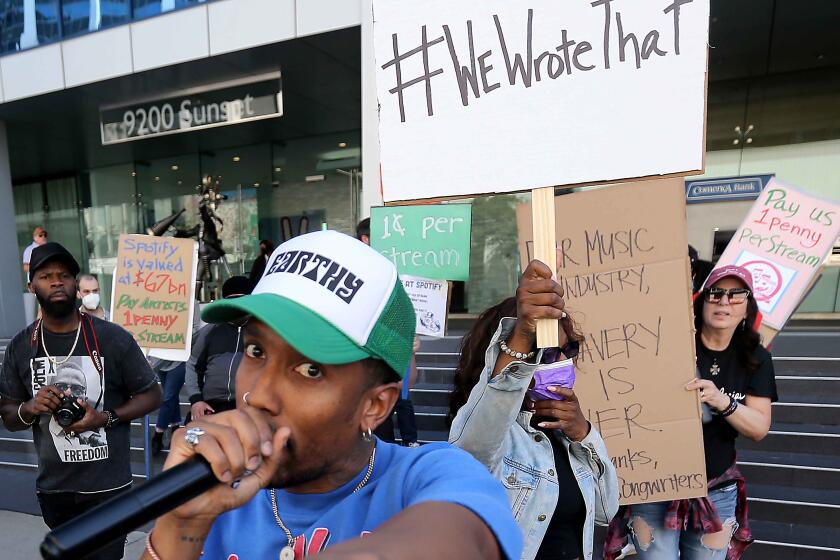
Approximately 100 artists came together on the pavements of West Hollywood to voice their discontent over Spotify’s perceived low compensation towards songwriters, which they view as stingy.
Subsequently, various demonstrations against Spotify ensued, including a songwriters’ rally in West Hollywood in 2022 and a refusal to attend Spotify’s Grammy party in 2025. These actions were taken following Spotify reducing songwriter royalties by $150 million. Notably, Neil Young and Joni Mitchell withdrew their catalogues due to Joe Rogan disseminating false information about COVID-19.
Ultimately, both parties gave in. In a concise message in 2022, Young stated, “Amazon and Apple have begun to offer the same misinformation podcasts that I had previously disagreed with on Spotify. I hope all of you millions of Spotify users appreciate my music! My songs will now be available for your listening pleasure on both platforms, except for the full sound we originally crafted.
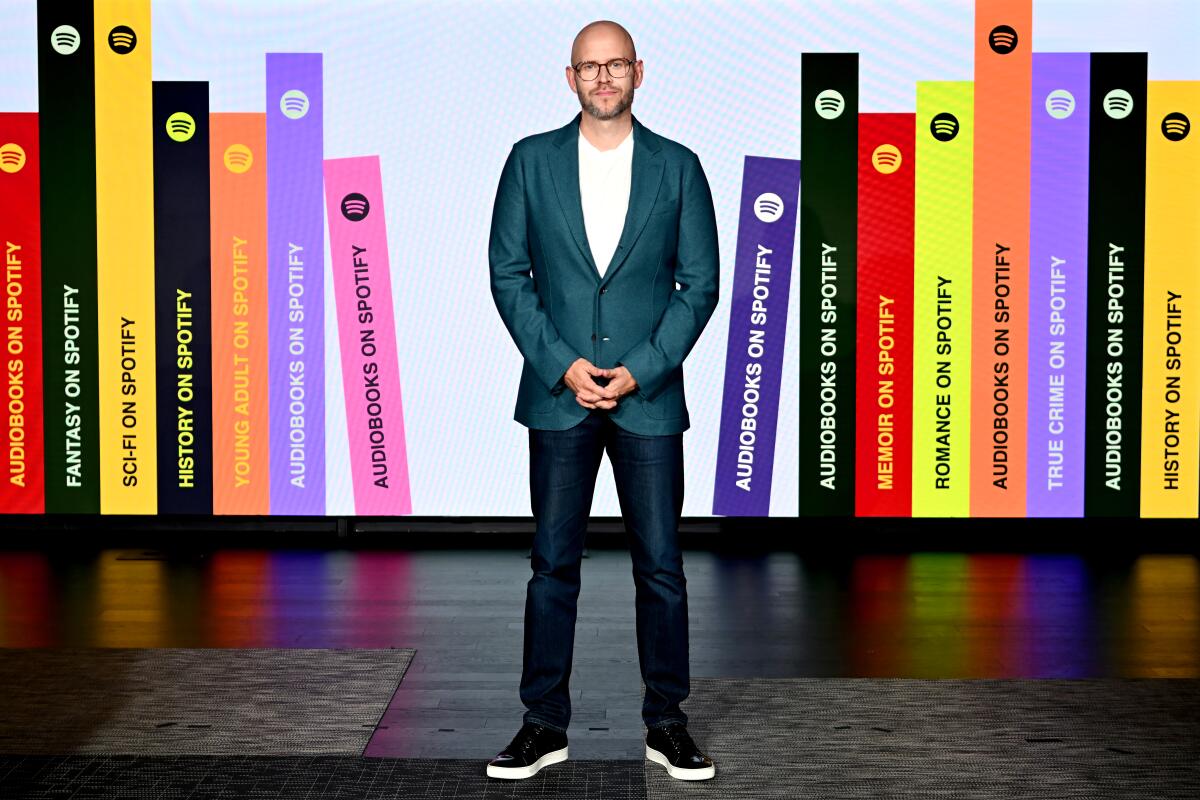
Ek’s recent investment appears to have provoked some strong reactions, particularly among musicians who were hit hard when Spotify significantly reduced their earnings, leaving them with little incentive to stay on the platform.
Following Deerhoof’s declaration, the progressive avant-garde group Xiu Xiu made a similar announcement. They expressed that they are actively working towards removing all their music from the streaming platform Spotify dubbed “violent armageddon portal”. Their message to fans was straightforward: “It’s time to cancel your subscription.
Music
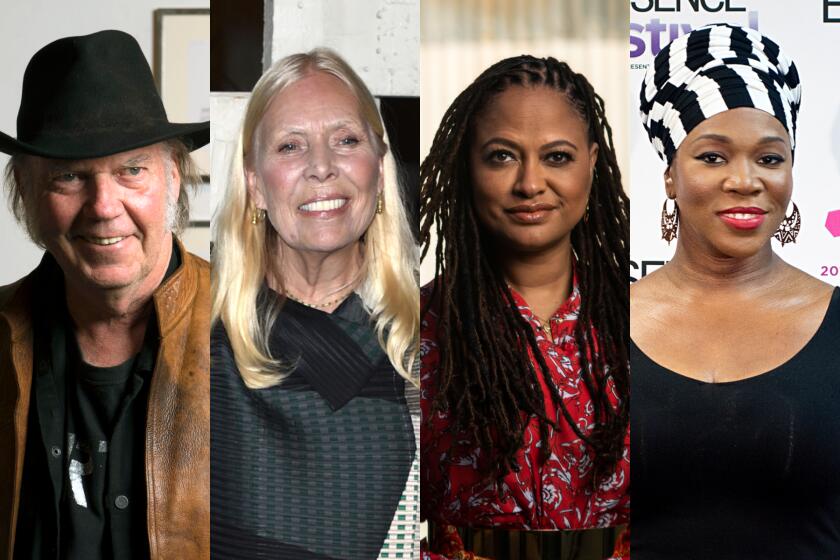
In response to Neil Young’s protest against Spotify, Ava DuVernay, Joni Mitchell, and India Arie have decided to stop using the streaming platform as well as Joe Rogan’s podcast.
Kalahari Oyster Cult, an electronic record label based in Amsterdam, stated that they do not wish their music to support or gain from a platform controlled by someone who promotes weapons, surveillance, and violence.
Notably, the acclaimed Australian rock band King Gizzard & the Lizard Wizard, which is known for its massive popularity and will be headlining at the Hollywood Bowl on Aug. 10, announced last week that it would withdraw all of its numerous albums from Spotify. The band expressed its concerns in a post, stating, “A friendly reminder to those unaware: Spotify CEO Daniel Ek invests millions in AI military drone technology.” They further explained their decision by saying, “We have removed our music from the platform. Can we exert pressure on these tech magnates, who seem like modern-day Dr. Evils, to act responsibly?
As a passionate film aficionado, I’ve been vocal about my disapproval of Spotify for quite some time now. Among my musical peers, it’s a common sentiment that echoes due to solid reasons we all understand well. In an interview, our band’s frontman Stu Mackenzie put it succinctly, stating, “I may not be an activist, but this decision feels like standing firm with who we are. We’ve observed other bands we respect making the same move, and we too came to the realization that we don’t want our music on their platform at present.
Ek’s actions alongside Prima Materia are not unexpected to Glenn McDonald, a former data analyst at Spotify who gained recognition for uncovering listener tendencies. After being let go in 2023, McDonald holds a blend of emotions towards the company’s focus today. It serves as both a ruler of the music industry and an unpredictable tech titan that finally turned a profit last year while generating immense wealth for Ek.
McDonald stated, “Spotify’s focus on music was due to an open market opportunity, as he noted. It doesn’t shock me when billionaires engage in billionaire-like activities. If Google, Apple, or Amazon were to invest in a military technology company, I wouldn’t be surprised either. The subscribers of Spotify might feel disappointed by this development, but they shouldn’t shoulder the responsibility because all major streaming platforms are comparable in terms of corporate morality.
Hollywood Inc.
Plus: Alec Baldwin speaks about ‘Rust’ amid a criminal investigation.
McDonald expressed that Spotify’s emphasis on Discovery Mode, a system where artists accept lower royalties in exchange for enhanced algorithmic visibility, can give off an impression of being hostile towards artists’ principles. More recently, Spotify has faced criticism from progressives due to its sponsorship of a Washington D.C. brunch with Joe Rogan and Ben Shapiro, celebrating Donald Trump’s return to the White House, as well as its donation of $150,000 for Trump’s inauguration. Similarly, Apple and Amazon also contributed funds for the inauguration.
It’s worth noting that even though Ek’s funds for investing in Helsing aren’t specifically linked to Spotify, they originate from the financial success he gained by owning shares in Spotify. Given this fact, it’s understandable why fans might draw a moral connection between the two, as pointed out by McDonald.
As someone who appreciates Spotify’s dedication to music, I understand Daniel Ek’s public role in representing the platform. Investing in an AI drone company may not align with that representation, in my opinion. While he has every right to use his personal wealth as he sees fit, given his position at the helm of a culturally significant and sometimes contentious company like Spotify, it’s natural for people to expect a certain level of accountability from him.
As an artist considering my departure from Spotify, I’ve found that the process can differ for each case. For instance, bands like King Gizzard, who manage their own record labels, found it straightforward to remove their content promptly. However, artists such as Deerhoof and Xiu Xiu had a more complex journey, needing time to secure permissions from multiple labels and former band members who are entitled to royalties before making the move.
By operating as an independent group, Saunier was able to make decisions aligned with his principles, sometimes sacrificing a portion of potential earnings. He recognized the risk that cutting ties with Spotify might cause Deerhoof’s music to become less accessible for some fans.
He said that everyone he knows dislikes Spotify, yet we’ve been made to think there’s no alternative. However, independent music scenes are teeming with instances of small-scale entrepreneurship. I don’t aspire to rule the world or be like Taylor Swift to be considered successful. I don’t need a global audience; I simply want to live comfortably.
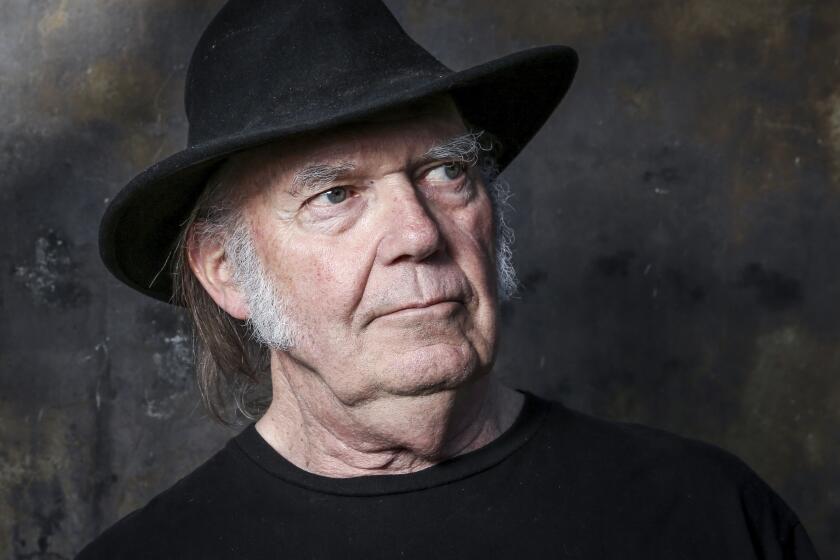
Letters to the Editor: Neil Young put his money where his mouth is. Spotify did not
In essence, Neil Young took the correct stance regarding COVID-19 misinformation, while Spotify failed to do so effectively.
However, only artists with a worldwide influence comparable to Taylor Swift could potentially impact Ek’s investments significantly. Notably, she withdrew her entire catalog from Spotify in 2014, following the release of her mega-hit album “1989.
She pointed out that music, being a form of art, is significant and hard to find. Things that are scarce and meaningful tend to hold value. Therefore, they deserve compensation. After this reflection, she re-subscribed to Spotify in 2017.
It’s challenging to envision contemporary pop stars, or those of a similar caliber, making the same bold stance as she did back then, given the close ties between major record labels and Spotify profits. In 2024, Spotify reported a staggering $10 billion payout to rights holders, representing approximately a quarter of the entire global recorded music industry. Over the past year, its stock has skyrocketed by 120%, but in Q2 2025, the company fell short of earnings expectations and experienced an 11% dip this week – its steepest decline in two years. During an earnings call, Ek expressed dissatisfaction with the current state but remained optimistic about the future goals he set for the business.
Lately, this minor departure of people seems unlikely to have any significant impact on the situation. However, it could subtly reinforce the notion among young music enthusiasts that Spotify may not be the most ethically sound platform for enjoying favorite tunes.
In simpler terms, Saunier believes that Spotify is similar to MySpace in that it’s a temporary fad destined to fade away. He thinks it’s just a quick way for people to get rich, but its popularity will wane, and it may already be on the decline. Additionally, he suggests that their email to him was an attempt to save face, indicating they might be in a more precarious situation than we perceive.
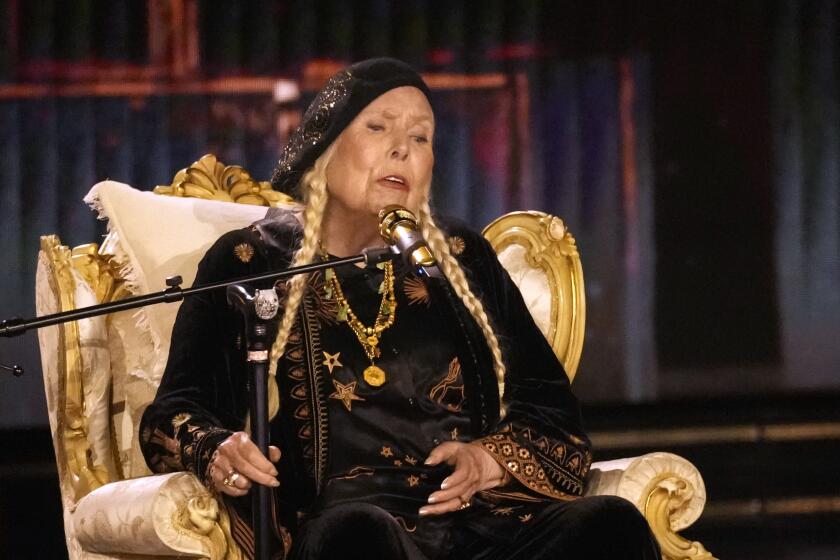
Music
Last week, Joni Mitchell’s music made its way back onto Spotify, marking a return that had been absent for over two years. This was following her decision to withdraw from the streaming service due to their continued support of ‘The Joe Rogan Experience.’
Artists such as Kneecap, Bob Vylan, and others have been vocal about the conflict in Gaza, potentially jeopardizing their careers – a testament to how passionately young fans feel about these matters. On the other hand, Ek’s stance that Helsing is assisting Ukraine and Europe in self-defense might be met with skepticism by some.
As a passionate cinema-goer, I find myself in a peculiar position when it comes to Daniel Ek’s role. While it might seem unreasonable to anticipate him as a beacon of cultural or moral guidance, I fervently hope that this perception is not misguided. I believe that fans and artists can uphold moral standards while remaining within the confines of Spotify, but what truly excites me is the prospect of us collectively striving towards a more ethically sound music industry in the future.
He pointed out that it’s unclear what ‘staying and fighting’ means, but if everyone abandons the effort, nothing will improve. In order for the music business to get better, somebody must start from scratch without major labels, gradually building a strong enough position to alter the balance of power.
Mackenzie of King Gizzard expresses eagerness to discover how things might unfold without Spotify. “I doubt Daniel Ek will take notice of us, but it’d be great if he did,” Mackenzie shared. “We’ve ventured into a lot of musical experiments and have been putting out records. Our audience has learned to trust and follow along with us on this journey. I’m thankful for that trust, and this feels like another experiment to me. Let’s see what happens if we step away from Spotify.
Read More
- Mobile Legends: Bang Bang (MLBB) Sora Guide: Best Build, Emblem and Gameplay Tips
- Clash Royale Best Boss Bandit Champion decks
- Brawl Stars December 2025 Brawl Talk: Two New Brawlers, Buffie, Vault, New Skins, Game Modes, and more
- Best Hero Card Decks in Clash Royale
- All Brawl Stars Brawliday Rewards For 2025
- Best Arena 9 Decks in Clast Royale
- Clash Royale December 2025: Events, Challenges, Tournaments, and Rewards
- Call of Duty Mobile: DMZ Recon Guide: Overview, How to Play, Progression, and more
- Clash Royale Witch Evolution best decks guide
- Clash Royale Best Arena 14 Decks
2025-08-01 16:45