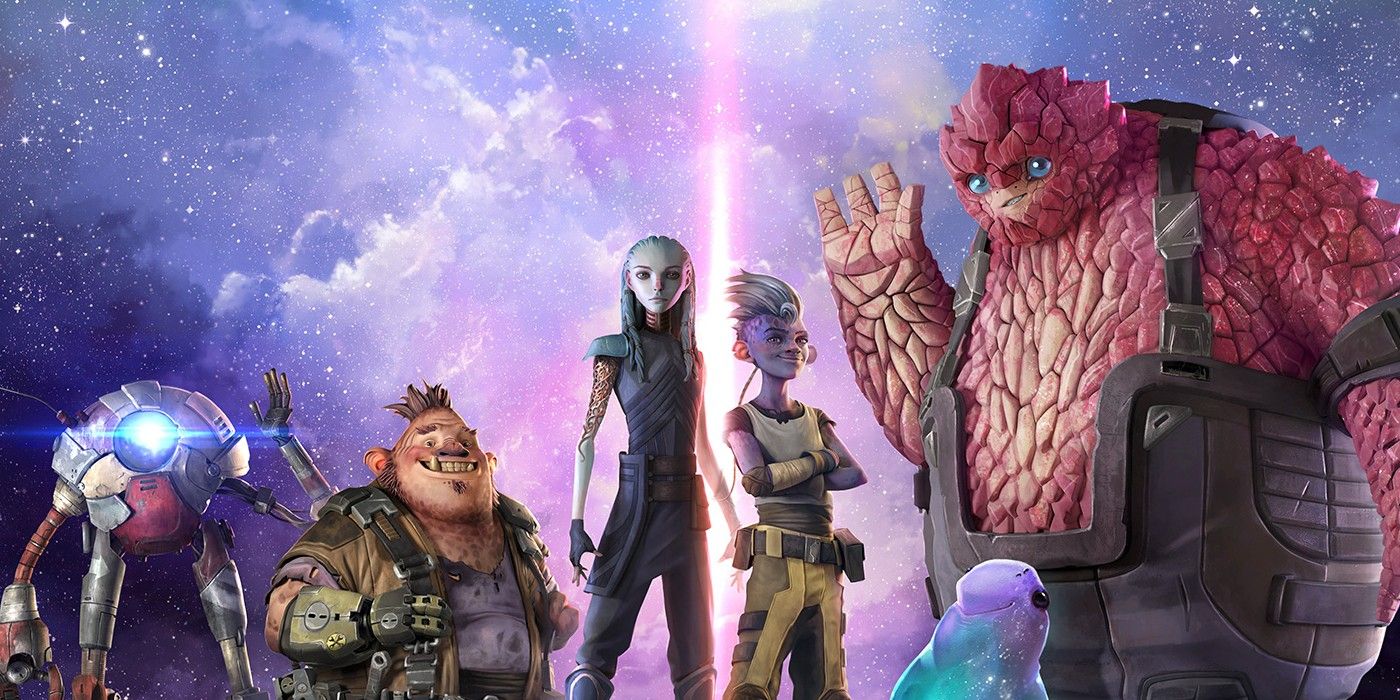
Debuting during a time when many sci-fi stories were told through collections of short episodes, Star Trek changed the genre with its unique format. Each episode presented a fresh sci-fi idea, explored a moral issue, and developed its characters, creating standalone stories that kept audiences hooked. Unfortunately, many newer Star Trek series haven’t maintained this approach. is a standout exception, offering fans the closest experience to the original Star Trek they’ve seen in years.
The animated series, which aired for two seasons starting in 2021, brought Star Trek back to its traditional storytelling style. Each episode was around 20 minutes long and explored classic Star Trek ideas, appealing to both longtime fans and new viewers. With a 97% rating on Rotten Tomatoes and the recent cancellation of the serialized Starfleet Academy, it’s clear that Star Trek should take note and return to the successful, episode-by-episode format that this animated series demonstrated works well.
Star Trek: Prodigy Returned to the Franchise’s Episodic Roots
As a total sci-fi fan, I was hooked by this premise! It centers around a group of misfit teens who unexpectedly find an abandoned Starfleet ship, the U.S.S. Protostar. They manage to get it working and, as they journey from the distant Delta Quadrant back to our familiar Alpha Quadrant, they’re guided by a holographic version of Captain Janeway – and Kate Mulgrew is back to voice her! It’s really about watching them learn to work as a team while navigating this incredible adventure.
The series delivers everything fans want – a crazy villain, exciting action, a world-ending plot, and a massive final battle. What sets it apart from many recent shows is the animation, which successfully pulls it all together by weaving self-contained stories into the larger narrative.
Similar to the original Star Trek, each new story presents a unique adventure and teaches a valuable lesson, all while continuing the larger mission within the Alpha Quadrant. It explores exciting new ideas like Chimerium cloaking technology and acoustic terraforming, and revisits familiar species and planets in unexpected ways, helping the characters grow in their understanding of Starfleet and their purpose.
Strong character development is a key part of what makes this franchise successful, but recent shows haven’t done a great job with it. Series like Discovery and Picard have focused too much on one big, ongoing story. When that central plot isn’t compelling, the characters get stuck and their growth feels drawn out over many episodes. Instead of letting characters develop naturally through smaller, self-contained stories, the season relies on a single, lengthy arc that eventually loses steam and, as a result, the characters suffer too.
This character is reminiscent of Spock from the original Star Trek and Data from The Next Generation. Both Spock and Data grew and changed throughout their respective series, with each season featuring stories that explored their development. Data’s journey in The Next Generation centered around learning emotions, understanding social nuances, and forming connections with others as he strived to become more human, even learning to cope with failure along the way. Likewise, Spock showed increasing empathy throughout the original Star Trek, as seen in episodes like “The Enterprise Incident” and “Amok Time,” which gradually revealed his emotional depth.
Like Prodigy, characters grow and change with each new experience. Throughout the first season, the crew learns about important rules like the Prime Directive and faces challenges from species like the Borg. We also see individual growth, such as Rok-Tahk becoming more confident while facing isolation. By the end of season two, these characters are noticeably different from who they were at the beginning. Similar to characters like Spock and Data in other series, their development happens through individual adventures, which allows for more freedom than shows that rely on ongoing, complex storylines.
Prodigy is a loving homage to Star Trek. Throughout the series, from The Original Series to Voyager, Star Trek has always been strongest when it focused on standalone episodes. The show’s format of visiting new worlds and encountering different alien races each week was ideal for this, offering viewers exciting new Starfleet adventures. Even as television began to favor ongoing storylines, Prodigy kept that spirit alive with individual stories that introduced the franchise to a new generation of fans.
Star Trek’s Future Depends on This Episodic Format
While previous Star Trek series like Deep Space Nine and Enterprise had explored ongoing storylines, Discovery was the first to fully embrace them. It promised more complex character development and extended narratives, moving away from the typical self-contained episodes where things always reset to normal.
Look, as a lifelong Star Trek fan, I really wanted Discovery to hit the mark, but it just didn’t. What bothered me most was how the characters felt so underdeveloped, and it seemed to forget that Star Trek is usually about exploring big ideas and teaching us something. Instead of telling self-contained stories, they stretched things out – what could’ve been a couple of episodes became entire seasons of drawn-out mysteries. And honestly, the season finales felt more interested in big explosions and shocking twists than actually resolving anything. It was disappointing, to say the least.
The same problems reappeared in the next live-action series. While bringing back the iconic captain—drawn back into service after dealing with Romulan refugees—the show struggled with developing its characters, maintaining consistency, and exploring the thought-provoking science fiction ideas that fans expect from the franchise.
As a long-time cinema fan, I have to say both of these series really disappointed audiences – they only scored 34% and 57% on Rotten Tomatoes, respectively. While there were likely other factors, I think the way they shifted from standalone stories to multi-season arcs really hurt them. They used to deliver thought-provoking, self-contained episodes, but these new versions felt like they were trying too hard to be sprawling, ongoing dramas and action shows – just like everything else out there. They lost what made them special.
The new series Starfleet Academy is continuing a disappointing pattern and will end after its second season. Like other recent additions to the franchise, Starfleet Academy received negative reviews, earning only a 53% audience score. Fans and critics alike disliked the show’s low-budget feel, simplistic political themes, the portrayal of Chancellor Ake (Holly Hunter) as overly stern, and its weak humor. The first season is considered one of the worst in the series’ history.
All of these shows had the potential to succeed within the Star Trek universe, particularly with returning actors. However, Discovery‘s focus on action over meaningful themes, and the uneven way Picard‘s character evolved, ultimately left most fans disappointed. These series might have fared better as independent stories, not tied to the existing Star Trek timeline. Longtime viewers were hoping for compelling reasons to continue following the franchise, and unfortunately, these shows didn’t quite deliver.
While continuing storylines can be effective, Star Trek thrives as a show with self-contained episodes. This format perfectly fits the show’s core idea of exploring new worlds and cultures. Given Star Trek‘s motto of venturing into the unknown, it’s more fitting for each episode to introduce a fresh mystery rather than drawing one out over a whole season.
The positive reception to Star Trek: Prodigy – with 87% of viewers on Rotten Tomatoes giving it a thumbs up – shows that fans enjoy this type of storytelling. The show’s continuation of Star Trek’s traditional week-by-week format, which also received a strong 70% audience score, reinforces this idea. Star Trek has always been about exploring the unknown, offering a fresh adventure and discovery each episode, something rarely seen in science fiction.
Now that Starfleet Academy has been cancelled, putting the future of Star Trek in doubt, the show’s creators need to learn from recent mistakes and focus on what viewers enjoy. Bringing Star Trek back to its roots – telling self-contained stories that emphasize exploration and discovery – could help revive the franchise after its recent struggles.
Found an error? Send it so it can be corrected.
Read More
- The Division Resurgence Best Weapon Guide: Tier List, Gear Breakdown, and Farming Guide
- Kagurabachi Chapter 118 Release Date, Time & Where to Read Manga
- Last Furry: Survival redeem codes and how to use them (April 2026)
- Clash of Clans Sound of Clash Event for April 2026: Details, How to Progress, Rewards and more
- Gold Rate Forecast
- Guild of Monster Girls redeem codes and how to use them (April 2026)
- ‘Project Hail Mary’s Soundtrack: Every Song & When It Plays
- Top 5 Best New Mobile Games to play in April 2026
- All Mobile Games (Android and iOS) releasing in April 2026
- eFootball 2026 Master League leaks: A detailed look at the new mode, and why it feels disappointing
2026-04-11 21:40