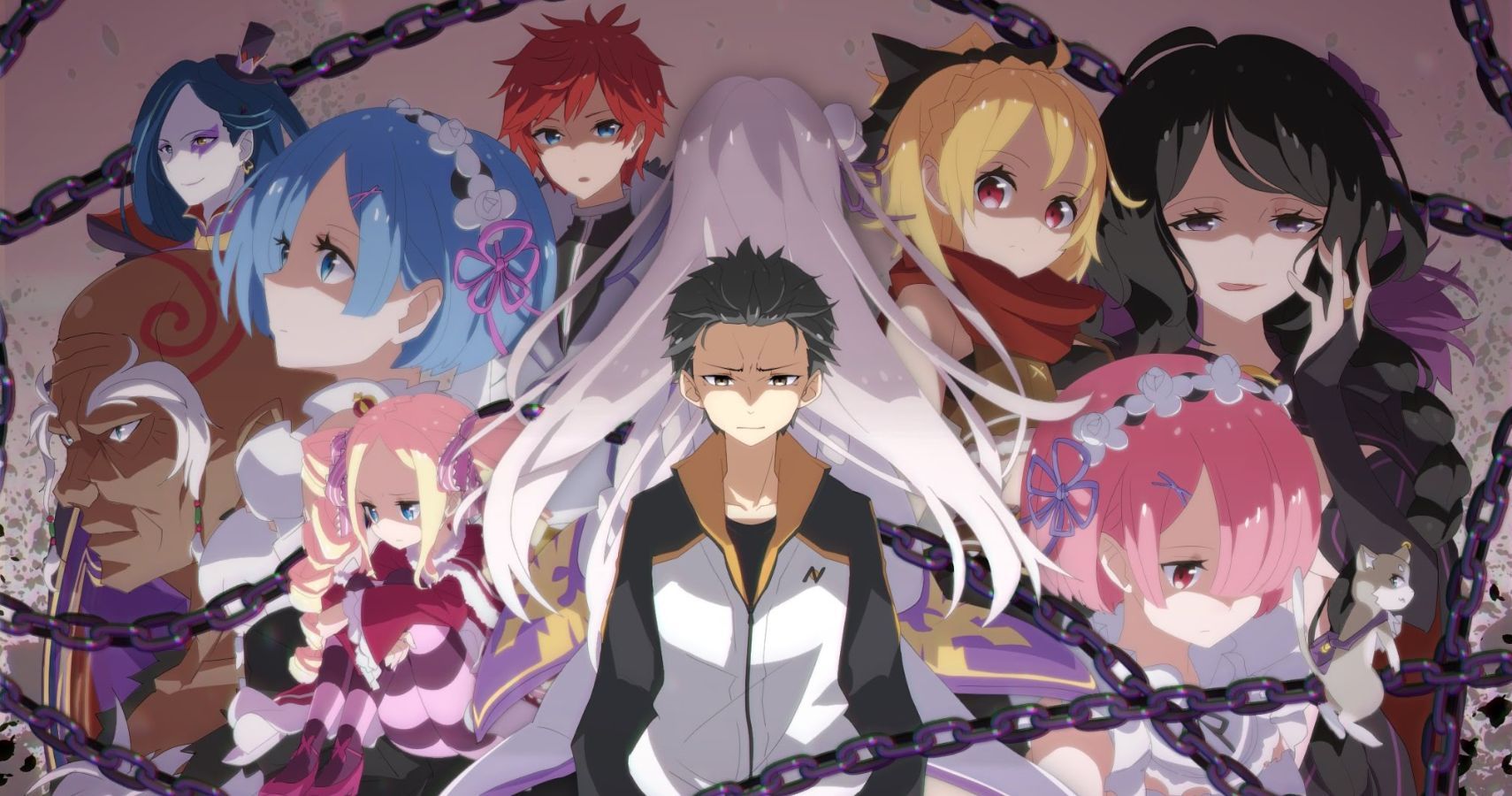
Anime such as That Time I Got Reincarnated as a Slime often portray being transported to another world as a dream come true – a fresh start for a hero who’s destined to succeed. But the genre also has a more realistic, though rarer, idea: someone suddenly thrown into a completely foreign world, with no friends, no understanding of the rules, and no way home.
Shows like Corpse Party: Tortured Souls, Re:Zero, and Alice in Borderland stand out from typical isekai stories because they portray being transported to another world as a truly terrifying experience. Studios such as Silver Link create worlds that are less about adventure and more about punishment, danger, or being actively trapped, where simply surviving is a constant struggle.
Re:Creators Weaponizes Isekai Tropes to Develop Genuine Existential Threats
Unlike many isekai stories, Re:Creators flips the script by bringing the fantastical elements into the real world, making our world the setting for the horror. This, combined with Altair’s actions, creates a sense of truly high stakes – the destruction feels more impactful because it threatens things we recognize. The animation studio MAPPA effectively portrays even fictional violence as genuinely frightening.
Sota Mizushino’s inability to fight isn’t just a character flaw – it’s central to the horror of the story. He’s forced to watch destruction happen around him without being able to stop it, a common trope in horror where the main character has no control. Altair’s drive – fueled by sadness and a desire for revenge after the death of his creator, Setsuna Shimazaki – gives Re:Creators a horror element rooted in grief and loss.
I’m Standing on a Million Lives Makes Death Feel Routine
Unlike many isekai stories that lessen the impact of death with revivals or by keeping the audience at a distance, I’m Standing on a Million Lives presents death directly and without softening it. The show uses Yusuke Yotsuya’s cold, calculating personality as its main source of horror. He views lives as expendable, which makes each death feel harsh and realistic, a stark contrast to the usual compassionate heroes found in this genre. The creator, Naoki Yamakawa, deliberately avoids portraying Yusuke’s actions as heroic, ensuring the disturbing consequences of his choices remain fully apparent.
In I’m Standing on a Million Lives, the way quests are given takes away the characters’ ability to make meaningful choices, turning potential adventures into unpredictable and scary situations where hard work doesn’t guarantee survival. Deaths in the show feel unavoidable, not impactful – the constant sense of loss is actually more frightening than the monsters themselves.
Overlord Forces The Audience to Watch Through the Villain’s Eyes
The horror in Overlord isn’t about the challenges Ainz Ooal Gown faces, but rather his actions. The series cleverly portrays every major battle from the perspective of those fighting against him, turning each encounter into a terrifying monster movie where you see things from the victim’s side. Nazarick, Ainz’s base, is designed like a horror setting, filled with incredibly powerful and cruel beings who could easily defeat the heroes you’d find in typical isekai stories.
As a huge fan of Overlord, what really gets to me is how the sheer cruelty of Demiurge, combined with the unwavering devotion of the Floor Guardians, just bleeds horror outwards from Nazarick. It’s not just about the scale of the massacres Ainz orchestrates; Madhouse brilliantly portrays them as displays of overwhelming power. It’s unsettling because you don’t find yourself rooting for the ‘good guys’—you’re just left feeling a chilling sense of dread and, honestly, a little complicit in Ainz’s dominance. It’s less about cheering against the bad guy and more about being terrified by him.
The Rising of the Shield Hero Makes Human Cruelty More Terrifying Than Any Monster
Unlike many other isekai stories, The Rising of the Shield Hero creates suspense not through monsters, but by portraying the kingdom that summoned the hero as the true source of danger. The series is carefully constructed to show how every authority Naofumi Iwatani meets after being falsely accused by Princess Malty reinforces his helplessness and inability to clear his name.
Unlike many fantasy stories of its kind, ‘The Rising of the Shield Hero’ builds its tension slowly through a series of betrayals, creating a constant sense of dread. The hero, Naofumi Iwatani, is forced to fight for a kingdom that wrongly accuses him of crimes, putting him in a difficult position: if he succeeds, he saves the very people who hate him, but if he fails, it confirms their negative opinions of him.
Arifureta Reframes the Isekai Dungeon as a Body Horror Survival Chamber
In Arifureta: From Commonplace to World’s Strongest, the story’s dungeon isn’t just a challenge—it’s designed like a horror setting. The Great Orcus Labyrinth is completely dark and filled with monsters that are too powerful for most fighters. Hajime Nagumo’s descent into the Labyrinth, triggered by a classmate’s betrayal, leaves him trapped with no clear way out.
What makes the light novel Arifureta particularly unsettling is how it portrays Hajime Nagumo’s survival. He gains power by consuming monsters, but it’s depicted as a gruesome, almost cannibalistic act, not a simple power boost. The story consistently focuses on the mental toll this takes on Hajime, emphasizing how each new ability further distances him from his former self, rather than celebrating his increasing strength.
Full Dive Proves That Isekai Doesn’t Need Monsters to Be Scary
The RPG Full Dive: This Ultimate Next-Gen Full Dive RPG Is Even Shittier Than Real Life! creates horror by focusing on a truly disturbing idea: a virtual world where everything you do has real, lasting consequences. Unlike typical fantasy games, there’s no safety net. Kiwame Quest simulates not just physical pain, but also the memories of characters you interact with and the sting of social embarrassment. This means that when Hiroshi Yuki fails, the consequences feel less like part of a game and more like a genuine, terrifying experience.
In ENGI, the characters react to every error Hiroshi Yuuki makes, creating a tense and unsettling social experience that keeps getting worse. The game uses dark humor to explore serious themes of accountability and repercussions, and surprisingly, the comedy actually increases the horror by constantly preventing Hiroshi from finding relief or redemption.
Hells Builds Its Horror From the Ground Up
Unlike many isekai stories that send their heroes to worlds focused on personal growth, Hell immediately throws Rinne Amagane into, well, Hell. This makes Hell itself the source of the horror, not just a place to conquer. The 2008 Madhouse film, adapted from Shiro Amano’s manga, portrays Hell as a twisted isekai world that Rinne can understand and use to his advantage.
The unsettling creature designs in Madhouse’s series create a consistently frightening atmosphere within the demon school—horror isn’t limited to jump scares, but permeates every location, constantly challenging Rinne Amagane. This pervasive threat means Rinne’s quest to return to life never feels secure, maintaining a constant sense of dread throughout the series.
Re:Zero Uses Its Fantasy World as a Psychological Torture Device
The horror in Re:Zero − Starting Life in Another World works because the show uses Subaru’s repeated deaths and returns not as a way for him to become powerful, but as a source of ongoing psychological pain. Each time he dies and restarts, he remembers everything, which feels less like a helpful ability and more like a cruel cycle of trauma.
In the world of Re:Zero, Elsa Granhiert acts as a terrifying killer, the Witch Cult is a dangerous group obsessed with death, and Satella has a powerful, unsettling effect on Subaru. The animation studio, White Fox, skillfully builds on past traumas and deaths, making each new challenge even more frightening and impactful than the last, rather than treating them as separate events.
Alice in Borderland Applies Slasher Film Rules to an Isekai Premise
The series Alice in Borderland combines the suspense of slasher films with the ‘transported to another world’ concept. In this world, the games are brutally unforgiving – everyone who plays dies, without any hints about who might survive based on the story or how much screen time they get. This is established right away in the 2014 animated short; Ryohei Arisu and his friends are always at risk, and aren’t automatically safe just because they’re the main characters.
The ruined city of the Borderland, a post-apocalyptic version of Tokyo devoid of people, immediately creates a sense of fear and sets the stage for the dangerous games. The animation studio, Brain’s Base, emphasizes the isolation by showing a completely abandoned city, and Alice in Borderland reinforces this feeling by making the environment just as frightening as the challenges the characters face.
Corpse Party Tortured Souls Blends Isekai With Pure Survival Horror
Corpse Party: Tortured Souls functions like a thriller where characters are transported to another world because Heavenly Host Elementary is a classic horror setting – a terrifying place the characters can’t escape or survive using normal methods. The 4-episode OVA adaptation of Asread changes the meaning of the ‘Sachiko Ever After’ charm, turning it from a symbol of friendship into a sign of impending violence.
Corpse Party: Tortured Souls doesn’t hold back on horror. Major characters die in gruesome scenes, the vengeful spirit Sachiko relentlessly hunts those caught in the curse, and simply surviving isn’t assured. What sets it apart from typical gore is the tragic backstory – the suffering of murdered children fuels the horror, giving the violence a deeper meaning that stays with you long after you’ve finished playing.
Found an error? Send it so it can be corrected.
Read More
- ‘Project Hail Mary’s Unexpected Post-Credits Scene Is Worth Sticking Around
- Beyond Accuracy: Gauging Trust in Human-AI Teams
- Gold Rate Forecast
- Clash Royale Balance Changes March 2026 — All Buffs, Nerfs & Reworks
- The most surprising Hannah Montana cameos: From John Cena to Dwayne Johnson and even a Coronation Street soap star as show celebrates its 20th anniversary
- eFootball 2026 is bringing the v5.3.1 update: What to expect and what’s coming
- EMEA Masters Winter 2026 introduces official Qualifier for Esports World Cup
- Genshin Impact Version 6.5 Leaks: List of Upcoming banners, Maps, Endgame updates and more
- Total Football free codes and how to redeem them (March 2026)
- Limbus Company 2026 Roadmap Revealed
2026-04-02 20:43