
As a mother of a child on the autism spectrum, I find this news absolutely heartwarming and groundbreaking! The creation of “Carl,” an animated character voiced by an autistic actor, Kai Barham, is a significant step forward in representation.
On Thursday, PBS launches its fresh kids’ show titled “Carl the Collector.” Similar to numerous TV programs designed for children under 10, “Carl” presents charming animated creatures collaborating to tackle challenges and learn important life lessons. The protagonist, Carl – a considerate raccoon who cherishes collecting items – inhabits an imaginary town named Fuzzytown alongside his pals such as twin rabbits, a resourceful beaver, a contemplative fox, and an energetic squirrel.
Just like typical offerings from PBS kids’ shows, this series is amusing, heartwarming, informative, and touching. However, what sets “Carl the Collector” apart is that its protagonist, Carl, is autistic – a first for PBS to center a show around a neurodiverse character. The brainchild of children’s author Zachariah OHora, he drew inspiration from observing his own kids and their friendships with peers.
He points out that every child, no matter their unique requirements, receives equal opportunities for teacher interaction, classroom socialization, and individual support, as he shares his experience with an inclusive school where his children are enrolled. He observes that his kids fail to distinguish among their peers, emphasizing a significant realization for him: “This is how it should be.” Exposure to the entire range of human diversity becomes crucial in this perspective.

Sara DeWitt, as senior vice president and general manager of PBS Kids, explains that the public broadcaster strives to make its shows reflective and informative for different audiences. For autistic children, the character Carl might serve as a reflection (a mirror), allowing them to identify with him. For neurotypical kids, he can function as a means to gain insight into their peers (a window).
To maintain authenticity, the production company included neurodiverse individuals across all roles in the series – from actors and writers to advisors. For instance, Stephen Shore, a professor at Adelphi University who is autistic like the character Carl, was amazed by how similar he felt to Carl, even sharing a fondness for argyle sweater vests.
Zach wasn’t aware of my existence when he began writing ‘Carl the Collector,’ he notes. This suggests, in my opinion, that Zach took care to accurately portray an autistic character by conducting thorough research.
In the series, Shore draws upon both his own life as an autistic individual and his professional work with others on the spectrum. This fusion is evident in scenes such as Carl’s repetitive hand movements (finger wiggling or arm flapping), as well as the precise nature of his dialogue.
For director Lisa Whittick, whose son is autistic, the show is deeply personal.
She expresses, “I’ve spent two decades in the animation field, and I never imagined I’d find myself working on a project cherished by my community for such an extended period. If we had hints earlier, we could have identified our son with autism much sooner; he was 12 when diagnosed. At that point, I knew little about autism, and it was a tense and anxious time for us, as well as for him. This production will significantly reduce the anxiety surrounding this condition.

In this series, the character Carl is voiced by Kai Barham, who has autism and is making his acting debut. The producers wanted the role to be played by an autistic individual, so Whittick reached out to a support group at Grandview Children’s Center in Ontario, Canada, where she is involved, and announced open auditions. Similar to his animated counterpart, Barham enjoys collecting items such as Squishmallows and rocks; he has a raccoon Squishmallow when speaking with The Times, and Whittick always brings him a special rock during recording sessions. “I think anyone who is autistic will be pleased to see themselves represented,” says Barham.
In my perspective, I felt it necessary for the viewers and Carl’s friends to know that he is autistic, just as he is. This idea stemmed from numerous discussions we had, and I believed it was crucial to create an episode where the audience could understand some of the unique reasons behind Carl’s behavior. As writer Ava Xiao-Lin Rigelhaupt puts it, “I thought there should be a moment when viewers realize that perhaps Carl might behave differently than characters they’ve grown accustomed to from their favorite kids’ shows or even their own circle of friends.
As a devoted fan, I’m excited to share that my personal experience has led to the creation of “The Fall,” which will be available digitally on Thursday and air on PBS on November 21. In this episode, my friend Nico experiences a fall that leaves me in a predicament similar to what I felt as a child when my mom fell unexpectedly. This incident inspired the storyline, where I recall being frozen with fear at the kitchen table, just like Carl in the show. I remember the feeling of confusion and helplessness, much like having a social skills rule book everyone else seems to have read except for me, yet still expected to pass the test. At that moment, I was utterly at a loss.
 ×
× Carl and his mother are brainstorming a thoughtful approach for him to reveal his autism to Nico in a manner that serves as an education, enabling Nico to grasp the concept better. According to Shore, simply stating “I’m autistic” isn’t enough; there should be more depth to the disclosure.
The creators of the show believed it was crucial to depict that autism appears distinctly in every individual. One character, Lotta, a female fox, demonstrates sensitivity to sound and prefers not to disclose her autism diagnosis to her friends. As Ohora points out, “Because autism can manifest uniquely in females, they often employ camouflage strategies to avoid being diagnosed.” Consequently, Lotta’s experience with autism is unlike Carl’s.
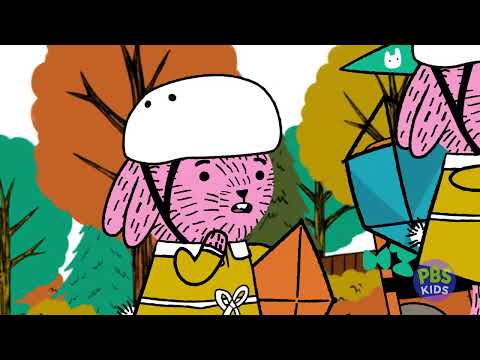
The uncomplicated design of the show’s animation and its muted color scheme are key aspects as well. According to Shore, this simplicity makes the animation easier for processing, which is one reason why it appeals to people with autism. In live-action shows, there can be numerous subtle details that might overwhelm an individual with autism.
As a devoted fan, I must admit that being involved in a revolutionary series can sometimes feel like a weighty responsibility. Yet, the essence of our work lies in providing an engaging and entertaining experience for the youthful audience we strive to captivate.
DeWitt emphasizes the significance of representation, stating, ‘It’s one of the unique aspects that make this production stand out.’ However, some might presume it to be a heavy or solemn series. On the contrary, it’s filled with humor.
According to Ohora, the ultimate aim is to create an environment where learning is enjoyable and as cozy as a warm blanket.
Read More
- Clash Royale Best Boss Bandit Champion decks
- Brawl Stars December 2025 Brawl Talk: Two New Brawlers, Buffie, Vault, New Skins, Game Modes, and more
- Best Hero Card Decks in Clash Royale
- Clash Royale December 2025: Events, Challenges, Tournaments, and Rewards
- Call of Duty Mobile: DMZ Recon Guide: Overview, How to Play, Progression, and more
- Best Arena 9 Decks in Clast Royale
- Clash Royale Witch Evolution best decks guide
- Clash Royale Best Arena 14 Decks
- Brawl Stars December 2025 Brawl Talk: Two New Brawlers, Buffie, Vault, New Skins, Game Modes, and more
- All Boss Weaknesses in Elden Ring Nightreign
2024-11-14 14:34