
Speaking from his home in West London in early March, Nick Lowe joked about preparing for his tour. He admitted he tends to forget what touring is like, and quickly falls into the routine of everyday life – doing laundry and running errands – rather than being a performer. He believes, though, that making an effort with his appearance helps him get back into the mindset of an entertainer.
I’ve always been struck by Nick Lowe’s style – he just always looked so sharp! But beyond that, what really makes him a legend, for me, is his incredible songwriting. He wrote some truly special songs, like the classic “(What’s So Funny ‘Bout) Peace, Love, and Understanding” – which Elvis Costello later made famous – and his own big hit, “Cruel to Be Kind.” Then there are all those other fantastic tracks, like “I Knew The Bride (When She Used To Rock ‘N’ Roll).” And let’s not forget his work with Dave Edmunds in Rockpile – that 1980 album is a gem! He was also a hugely influential producer, especially during his time with Stiff Records, helping launch albums by bands like The Damned, Elvis Costello, and The Pretenders. He really had a knack for finding and nurturing great talent.
Nick Lowe, who recently turned 78, has released 15 solo albums, including his latest, “Indoor Safari,” recorded in 2024 with his band Los Straitjackets. They toured the US in 2025. Lowe first came to the States in 1978, touring with Elvis Costello and Mink Deville, and played a show at the Santa Monica Civic Auditorium on May 30th. He remembers being robbed twice during a 1975 visit to Los Angeles, but doesn’t hold any negative feelings about the city. He jokes that the story earned him many free drinks over the years and that no real harm came from it.
What are your memories of the first time you came to Los Angeles?
Nick Lowe recalls a very different era, expressing his excitement to be interviewed by the L.A. Times. He remembers that, back then, it was a significant event for a British performer to come to Los Angeles. His first trip wasn’t as a solo act; he traveled with the band Dr. Feelgood. Their tour manager, Jake Riviera, later became his manager and eventually founded Stiff Records.
I remember being driven from the airport and being amazed by the oil wells – those distinctive nodding pumps near La Cienega. We also excitedly learned we were staying at the famous Hyatt House, which everyone called “Riot House.”
The first thing that struck me was a British band who weren’t known for their looks, and their crew were even less attractive – frankly, they were a downgrade from the musicians themselves. But then we saw the crew in the hotel lobby, completely surrounded by four or five of the most beautiful women I’ve ever seen. I have no idea what was going on, but it was incredible. Even more surprising was spotting a real movie star in the Hyatt House coffee shop – let me think… Lorne Greene, that’s it! The one from the cowboy show with Hoss.
Not ‘Big Valley,’ not ‘Gunsmoke’….
One word, like was the name of their ranch, I think it began with B…”Bonanza”!
Ah, Lorne Greene.
The tops of our heads almost came off. The memories come flooding back. It was 1975.

The Hyatt (now the Andaz West Hollywood) is famously linked to Led Zeppelin. I was just reminded of that while rewatching footage of Robert Plant performing with Rockpile at the 1979 Concerts for the People of Kampuchea, and it made me curious – were you a fan of Zeppelin?
I prefer Robert Plant’s work as a solo artist. I never really connected with Led Zeppelin, though. I’m a big fan of the band they took inspiration from – the Jeff Beck Group with Rod Stewart. I saw them live many times, and honestly, Led Zeppelin’s sound felt a bit too heavy for my liking.
I recently saw the “Cruel to be Kind” video on YouTube—part of it was filmed at the famous Tropicana hotel in L.A.—and it already had 10 million views! It’s amazing, but not entirely unexpected.
That certainly surprises me.
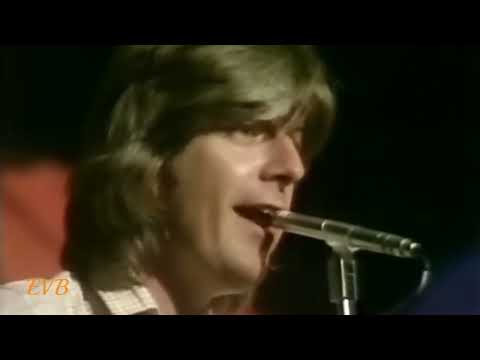 ×
× The comments were really touching, with people sharing stories about falling in love, connecting with the song, and feeling nostalgic.
That’s wonderful! It’s a really lovely record. I wish I’d been more proactive when I first signed with Columbia Records. Gregg Geller, the A&R person who signed both me and Elvis Costello, was a fantastic guy – we’re still friends. Elvis was the established artist at the time, and I was kind of an afterthought because I was producing him and had a few songs of my own. When I signed, I gave Mr. Geller all my demos, and he really liked this particular song, even though we hadn’t properly recorded it yet. He suggested I definitely record “Cruel to be Kind.”
I told Gregg I wasn’t interested anymore, and I’m pretty sure I was referring to that song about the actress Marie Prevost – the one where her dog supposedly ate her. He’s a really nice guy, kind of like a professor, and whenever we talked, he’d politely ask if I’d ever recorded it.
I initially resisted, saying “No” repeatedly, but then I shared a particular track with him. He kept pushing, and I eventually understood he wouldn’t back down. I went to the other members of Rockpile and apologized, explaining that we had to record this song because our producer, Geller, was insistent. I rushed the recording process, but he was certain it would be a success – and he was right, while I was completely wrong. Even now, when I hear the song, I remember quickly approving the vocal takes. But for some reason, whenever it plays on the radio, it still sounds incredibly fresh and enduring – truly timeless. A lot of that, I think, is thanks to my former… colleague.

Colleague?
Yes, thank you to my colleague, Dave Edmunds. Thankfully, he didn’t share my initial reservations and really put in the work – it’s wonderful!
I was thinking about the phrase “cruel to be kind” and how, nowadays, it might be seen as a problem – almost like a personality disorder, such as narcissism.
Mind you, Shakespeare got there first. [“I must be cruel only to be kind.”]
I recently saw Eddie Izzard perform a line from “Hamlet,” and it immediately reminded me of you. Did you grow up reading a lot, or were your parents big fans of literature?
I never really loved to read. My parents would suggest books they thought I’d enjoy. I specifically remember my mom wanting me to read “The Collector” when I was young. It was by John Fowles, and it’s about a man who collects butterflies. But his hobby becomes really disturbing when he kidnaps a girl and starts treating her like one of his specimens.
That explains so much! I mean, “Marie Prevost,” “Little Hitler” and other quirky subject matter.
The story of Marie Prevost is actually quite sad. But I was a pretty detached young man, and I was always searching for subjects that would shock or provoke people – that’s what I aimed to do. I realize now I shouldn’t have pursued it, but I did.
Do you really believe you shouldn’t have written it?
I rarely perform that song, even though people often request it. Honestly, I feel a little embarrassed playing some of my older material, especially at this point in my life. It’s a strange feeling – I’m thankful I’ve been able to earn a living doing music, but I also don’t want to feel like I’m compromising myself to do it.

I’ve seen no humiliation.
It’s part of being in the entertainment industry to occasionally feel embarrassed, and I’ve learned to cope with that over the years. I never expected to still be in situations like that at my age, though. There are definitely perks, because you improve with experience. When I rarely listen back to my older recordings – usually only when they play on the radio – I cringe at some of my past work. I realize now that was simply because I wasn’t a strong songwriter back then.
People often prefer an artist’s early work because it captures a raw, energetic impatience that comes with youth. As you get older, listening back can be a reminder of missed opportunities – a sense of ‘I could have done that better.’ Many artists try to recreate that youthful spark, but with the benefit of experience. While some succeed, it’s a constant challenge. The difficulty is that as you become more skilled, things can become less exciting. What once felt like a victory no longer feels satisfying, and it’s hard to recapture that initial thrill.
Your first solo album, originally called “Jesus of Cool,” was released in the UK in 1978. When it came out in the U.S., it was retitled “Pure Pop for Now People” and featured a different set of songs.
I was shocked when someone suggested the album title ‘Jesus of Cool!’ We actually thought it was a brilliant idea at the time. Back in the UK, records used to get banned if they were considered even slightly suggestive, and that’s exactly what would happen – they’d shoot straight to the top of the charts! Getting banned by the BBC was the best publicity you could ask for. We were hoping for that kind of attention.
Your album includes a song called “Rollers Show.” Were you acquainted with the Bay City Rollers before or after you wrote it?
I never actually met Rick Astley, and I really wish I had. I wrote a song years ago that playfully poked fun at a popular teenage singer – it wasn’t meant to be a serious criticism, and honestly, others reacted to it much more strongly than I did. I did feel bad about it afterwards. The song, “All Men Are Liars,” wasn’t a harsh attack, but as I’ve gotten older, I’ve become a fan of Rick’s. Looking back, what I said wasn’t very funny, but when I performed the song live, people always anticipated that line! I’d love to have met him and told him how much I admire his work.
Do you have regrets about people you’ve called out in songs or given a bit of a hard time to?
Yes, I definitely do. Back then, it was common to playfully tease or criticize people, even those you weren’t supposed to. It was also a way of showing that just because we all worked in music didn’t mean we all got along – which, honestly, wasn’t true anyway. I generally have good relationships with everyone, but that kind of behavior was popular at the time, and I do regret it now. However, it doesn’t keep me up at night.
2026-03-26 13:32