
While the “Odyssey” is considered a cornerstone of Western storytelling, its complex, sprawling narrative doesn’t easily translate to film. The 2,700-year-old epic, with its 24 chapters and ten years of adventures involving shipwrecks, mythical creatures, and divine intervention, would require significant adjustments to fit into even a lengthy, three-hour movie.
Christopher Nolan didn’t want to simply recreate Homer’s story; he used it as a foundation for something new. He explained that he aimed to make the tale feel as relevant and engaging for today’s viewers as it was for Homer’s original audience. His depiction of ancient Greeks avoids stuffy, academic language – Odysseus might complain about being stuck on “a terrible beach” for a decade, and characters casually refer to their parents as “Mom” and “Dad.” While Nolan maintains the overall journey of Odysseus trying to return home, he isn’t afraid to change details and focus more on the characters’ inner lives than on the myths themselves.
Movies
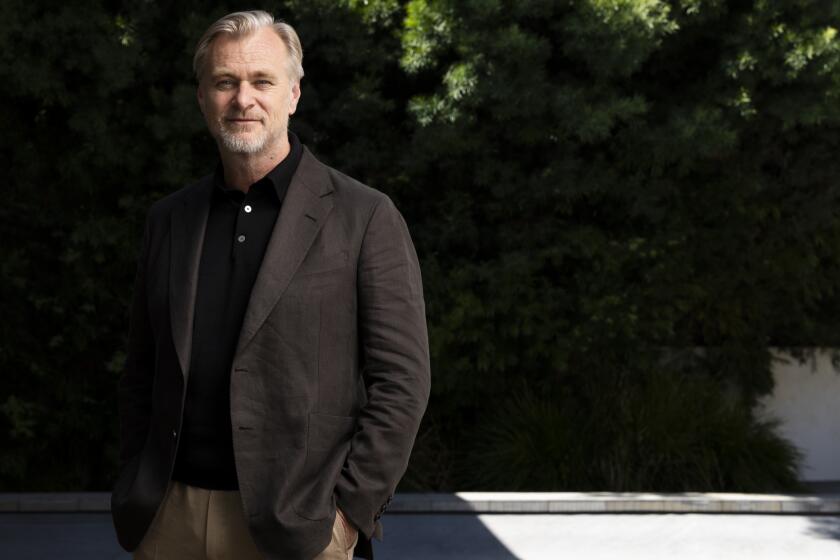
The intimate odyssey of Christopher Nolan’s latest epic: ‘I’ve been telling this story in all my films’
Director Christopher Nolan shares insights into his latest epic film, starring Matt Damon, and reveals how he utilized Imax cameras exclusively during production.
Fans of the original story will find many differences in this version. The episode with Aeolus’ bag of winds, which delayed Odysseus’s return home, and the helpful Phaeacians have been removed. The monstrous Laestrygonians are now depicted as giant, armored soldiers, and several parts of the story have been combined or completely rewritten, with new characters and plotlines added.
Be warned – major spoilers ahead! Here are eight significant differences between Christopher Nolan’s film and Homer’s original story.
The Trojan horse casts a longer shadow

Homer’s “Odyssey” starts after the Trojan War is over, with the war itself existing only as past stories. However, Nolan’s film focuses on the brutal reality of the conflict. He shows us the harrowing events inside the Trojan Horse and the violent aftermath, including the Greeks’ disrespectful treatment of a statue of Athena, which deeply affects Matt Damon’s character, Odysseus. Odysseus begins to view the Trojan Horse – once considered his cleverest achievement – as a transgression against the divine law of hospitality. In Nolan’s version, a defining moment of Odysseus’s success becomes more like a fundamental mistake.
The gods stay largely out of sight

In the original version of Homer’s story, the gods are very involved in human lives – they meet constantly, squabble amongst themselves, have clear favorites, and frequently interfere. Athena is so prominent she almost feels like a main character. Christopher Nolan’s adaptation takes a different approach, keeping the gods much more distant. We barely sense their presence; Zeus never appears (there’s only one instance of thunder), and Poseidon remains hidden even when Odysseus complains about rough seas caused by him. Only Athena, played by Zendaya, interacts with humans, but she’s far more mysterious than Homer’s actively helpful goddess. While the gods might still exist in this world, Nolan doesn’t offer us a glimpse into their realm like Homer did.
The Cyclops encounter gets more brutal

A well-known part of Homer’s story features Odysseus and his crew trapped in the cave of the Cyclops Polyphemus, where they try to outsmart him with tricks and deception. Nolan’s film simplifies this encounter. In the movie, Odysseus’s men don’t realize the Cyclops can talk at first, making it harder to fight him because they struggle to communicate. They still manage to blind him with a heated stake and escape by hiding amongst sheep, but there’s one key change: Damon’s version of Odysseus shoots an arrow into the blinded Cyclops’ eye while fleeing. This act angers Poseidon, the Cyclops’ father, and leads to even more trouble on Odysseus’s voyage home.
Circe trades seduction for something darker

In Homer’s story, Odysseus’s men meet the goddess Circe, who initially uses magic to turn them into pigs. However, Odysseus is able to resist her powers, and she changes his crew back to human form. Circe then becomes Odysseus’s lover and hosts the entire group for a year of feasting and recovery. Eventually, she assists them in getting ready for the next part of their voyage.
As a film buff, I was really struck by how Christopher Nolan handled Circe in his adaptation. She’s genuinely terrifying – not at all the seductive enchantress you might expect! Forget any romantic notions; this Circe is straight-up frightening, physically transforming Odysseus’ men into pigs in a truly unsettling scene. It felt very deliberate though, because Nolan seems to be downplaying the more… amorous adventures of Odysseus. He really wants to emphasize Odysseus’ loyalty to Penelope. So, instead of a long, dreamy stay with Circe, it’s brief, genuinely scary, and completely devoid of any sex appeal – turning what’s usually a strange detour in the story into something like a full-blown nightmare.
Hades becomes more personal

Homer’s journey to the underworld features ghosts from the stories of Odysseus and other Greek legends. In Nolan’s adaptation, Odysseus is haunted by more personal figures, including Sinon (played by Elliot Page), a character originally from Virgil’s “Aeneid” who isn’t present in Homer’s work. Nolan reimagines Sinon as a young, innocent soldier left behind after the Trojan Horse trick, tasked with carrying out Odysseus’s deception. The emotional impact of the underworld scene largely comes from Page’s performance as Sinon, who challenges Odysseus about the lie that led to his own death.
Calypso helps Odysseus forget
In Homer’s story, the goddess Calypso saves Odysseus after his ship is wrecked and holds him on her island for seven years, despite his yearning for his wife, Penelope, and his homeland, Ithaca. In the film, Nolan portrays Odysseus’ time with Calypso (played by Charlize Theron) not as a romantic entanglement, but as a kind of healing process. She offers him lotus flowers to ease his suffering, but they gradually cause him to lose his memories and sense of self. This is fitting for a director like Nolan, who is interested in how unreliable memory can be: Odysseus must first remember his desire to return home before he can continue his journey.
Father and son get an action-movie reunion

It was amazing reading about when Odysseus finally met his son, Telemachus, after so many years! It wasn’t a grand, public event though – it happened privately, almost secretly. Odysseus came home disguised as an old beggar, and Athena helped him reveal himself to Telemachus in the humble hut of this swineherd named Eumaeus. Seeing them reconnect after all that time was really touching, and then they immediately started planning how to deal with those awful suitors who had taken over their palace.
Nolan brings the characters together in a high-octane action setting. When Telemachus (played by Tom Holland) is attacked, Odysseus shows up to save him, but Telemachus doesn’t realize the seemingly helpless man fighting alongside him is actually his father. Instead of the subtle and emotional reunion described by Homer, Nolan creates an elaborate action scene. This also allows for a fun moment fans will love: seeing Spider-Man and Jason Bourne team up against their enemies.
The ending looks beyond Ithaca

The “Odyssey” concludes with Odysseus restoring order to his life and kingdom. After defeating the suitors, he proves his identity to his wife, Penelope, through a private secret about their marriage bed, and she finally accepts him. He then returns to his rightful place as king.
Nolan adds a twist to the traditional story. Rather than returning to rule, Odysseus chooses to live in exile, leaving his son, Telemachus, to take the throne. He and Penelope embark on a journey westward to remember those who died. The film ends with Odysseus reflecting on the coming end of the Bronze Age, envisioning a future where his world and experiences will be lost to time. He believes that while civilizations will rebuild, humanity is destined to repeat its past errors.
This is Nolan’s last link between the world of the poem and our own reality. While the poem concludes with a return to order, the film portrays history as a never-ending loop of destruction, renewal, and loss of memory.
2026-07-21 13:32