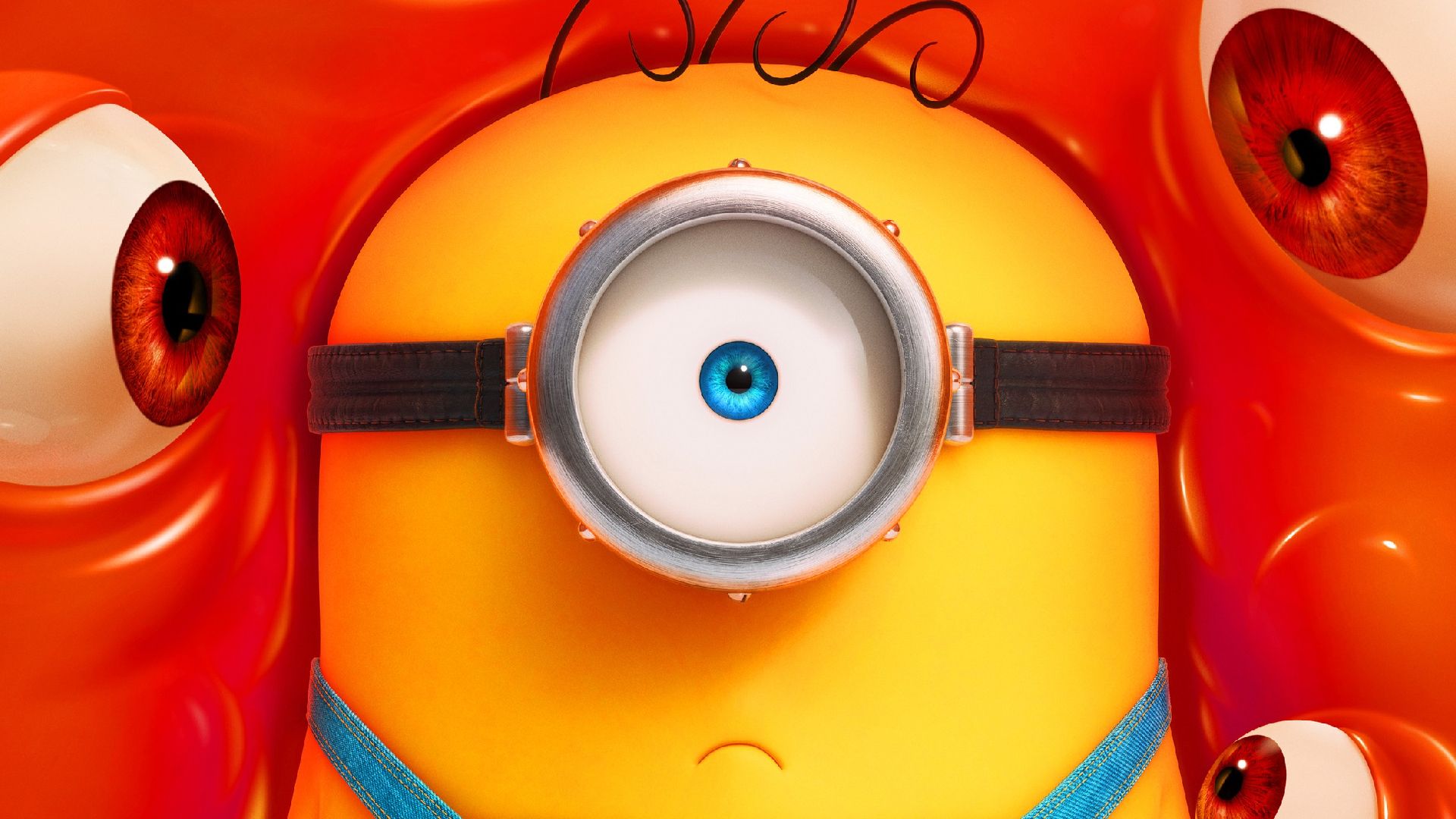
It’s amazing how many made-up languages have become popular in movies, TV, and other parts of pop culture. Many memorable characters use these nonsensical languages, and it actually helps make them famous. Whether it’s the Muppets pretending to speak a Scandinavian language while cooking, or Pokémon expressing themselves simply through their names, these fictional languages are often surprisingly well-developed and meaningful.
Creating fictional languages isn’t a recent trend – authors such as J.R.R. Tolkien famously developed detailed languages like Elvish. However, while some projects, like Klingon or Dothraki, strive for linguistic depth, many movies, TV shows, and games simply invent completely nonsensical languages.
I just saw Minions & Monsters and I’m still laughing about their language! It’s so silly – you only really catch words like “Banana” amidst all that fast, bubbly chatter. But it got me thinking, the Minions aren’t the first fictional characters to become famous while speaking complete nonsense. Actually, there’s a surprisingly long history of made-up languages in movies and books!
Penguinese (Pingu)

The Swiss stop-motion show Pingu has fans all over the world who love watching the funny adventures of Pingu, a penguin who acts like a person, and his family. What makes the show unique is that the characters communicate only in ‘Penguinese,’ a made-up language, so viewers have to figure out what they mean based on the situations and their expressions.
Sometimes, Penguinese gives us hints of what it means, using words borrowed from other languages. For example, words like ‘milk’ and ‘fish’ come from English, ‘Artz’ from German, and ‘caca’ from Spanish. Even common phrases like ‘thank you’ seem to have roots in multiple languages, suggesting that Penguinese might have different dialects, similar to what we see with human languages.
The language used in Pingu even includes a unique writing system, inspired by alphabets like Cyrillic and Hebrew. Robbie the seal, a friend of Pingu’s, briefly uses the Latin alphabet too. Like the show Teletubbies, Pingu’s made-up language sparked debate, as some parents in the 1990s feared it might hinder children’s speech development.
Chef Speak (The Muppets)

Jim Henson, the creator of The Muppets, is famous for characters like Kermit, Miss Piggy, and Grover. However, he really let his imagination run wild with some of the lesser-known characters. A great example is the Swedish Chef, whose unusual speech is based on the sounds and rhythm of Scandinavian languages.
The Swedish Chef is famous for his funny cooking sketches where he ‘sings’ made-up words while preparing food, always finishing with a cheerful “Bork, bork, bork!” He’ll sometimes throw in a real English word to hint at what he’s doing, then wildly uses items like guns, sports gear, or tools to complete his recipe in a chaotic way.
The Swedish Chef isn’t the only Muppet who speaks in nonsense! Many fans also remember Beaker, Dr. Bunsen Honeydew’s assistant, and his famous, high-pitched squeaks – “Mee-mee-mee-mee.” It’s just as recognizable as anything else from the show and contributes to why The Muppets remains so beloved.
Mr. Bean’s Mumbling (Mr. Bean)

Rowan Atkinson became famous worldwide thanks to his character, Mr. Bean. The comedy is universally loved, connecting with people everywhere – from small villages in Vietnam to cities like California. Mr. Bean’s relatable awkwardness and quirky personality are what make him so memorable.
Mr. Bean doesn’t really speak any language; he mostly communicates through grunts and the occasional word, often just saying “Teddy” – the name of his favorite stuffed animal. Because of this, he’s more similar to classic silent film comedians like Charlie Chaplin and Buster Keaton than to most other famous British characters from the 1990s.
When playing Mr. Bean, Rowan Atkinson relies on physical comedy, expressions, and precise timing to make the humor universally understood. However, it’s not just simple slapstick that made him famous. Bean’s awkward interactions and childlike innocence make audiences sympathize with him, even when he’s in the most absurd situations.
Simlish (The Sims)

Simlish is the fictional language used by characters in The Sims video game series. The games are designed to simulate real life – players create people and guide them through jobs, relationships, and all sorts of unexpected events. Characters communicate using made-up words, random sounds, and exaggerated expressions.
Simlish isn’t a true language, yet its use of tone, facial expressions, and body language creates the impression that you can follow along. While playing The Sims, it’s easy to tell if a Sim is feeling happy, upset, playful, or confrontational. Though players might think they begin to learn some Simlish words, it wasn’t actually created to be a fully usable language.
Despite being a made-up language, many people enjoy Simlish. In fact, pop star Katy Perry even recorded and performed her song “Last Friday Night” entirely in Simlish during a 2025 concert, according to GamesRant. Afterwards, she playfully apologized to the audience, saying the experience was something they had to witness firsthand.
Pokémon Language (Pokémon)

How Pokémon communicate is surprisingly complex. While it often sounds like simple repetition – mostly just saying their own name with different tones – this actually mimics the way humans use language, allowing for a basic level of understanding.
Beyond the commonly known examples, many Pokémon in the anime and games demonstrate language abilities. A prime example is Meowth from Team Rocket, who taught himself to speak and walk on two legs to win over a female Pokémon named Meowzie. Interestingly, Meowth doesn’t seem to possess any unique gifts – it suggests that any Pokémon with enough determination could potentially learn to speak.
While some Pokémon can communicate through telepathy – like the legendary Mewtwo from the 1998 movie – the most well-known way Pokémon ‘speak’ is surprisingly basic: “Pika pika, pike-chew.” This simple phrase is what most people associate with Pokémon language.
Minionese (Despicable Me)

Minionese is one of the most well-known made-up languages in recent history. These small, yellow characters first appeared in the movie Despicable Me in 2010 and quickly became popular enough to star in their own successful films – including Minions, Minions: The Rise of Gru, and Minions & Monsters – despite speaking complete nonsense.
Minionese, the language spoken by Minions, is actually voiced by Pierre Coffin, one of the creators of the characters, and he voices all of them. It sounds like a mix of many different languages – you can often hear bits of English, French, German, Spanish, Italian, and others thrown into their fast-paced chatter.
Although only the Minions actually speak their unique language, characters like Gru seem to understand it. Whether you enjoy it or not, Minionese has clearly resonated with audiences and is a key reason for the popularity of the Despicable Me and Minions films. The idea of characters speaking nonsense isn’t new, but the Minions may be the most successful example of a language that’s full of sound but lacks actual meaning.
2026-07-19 16:36