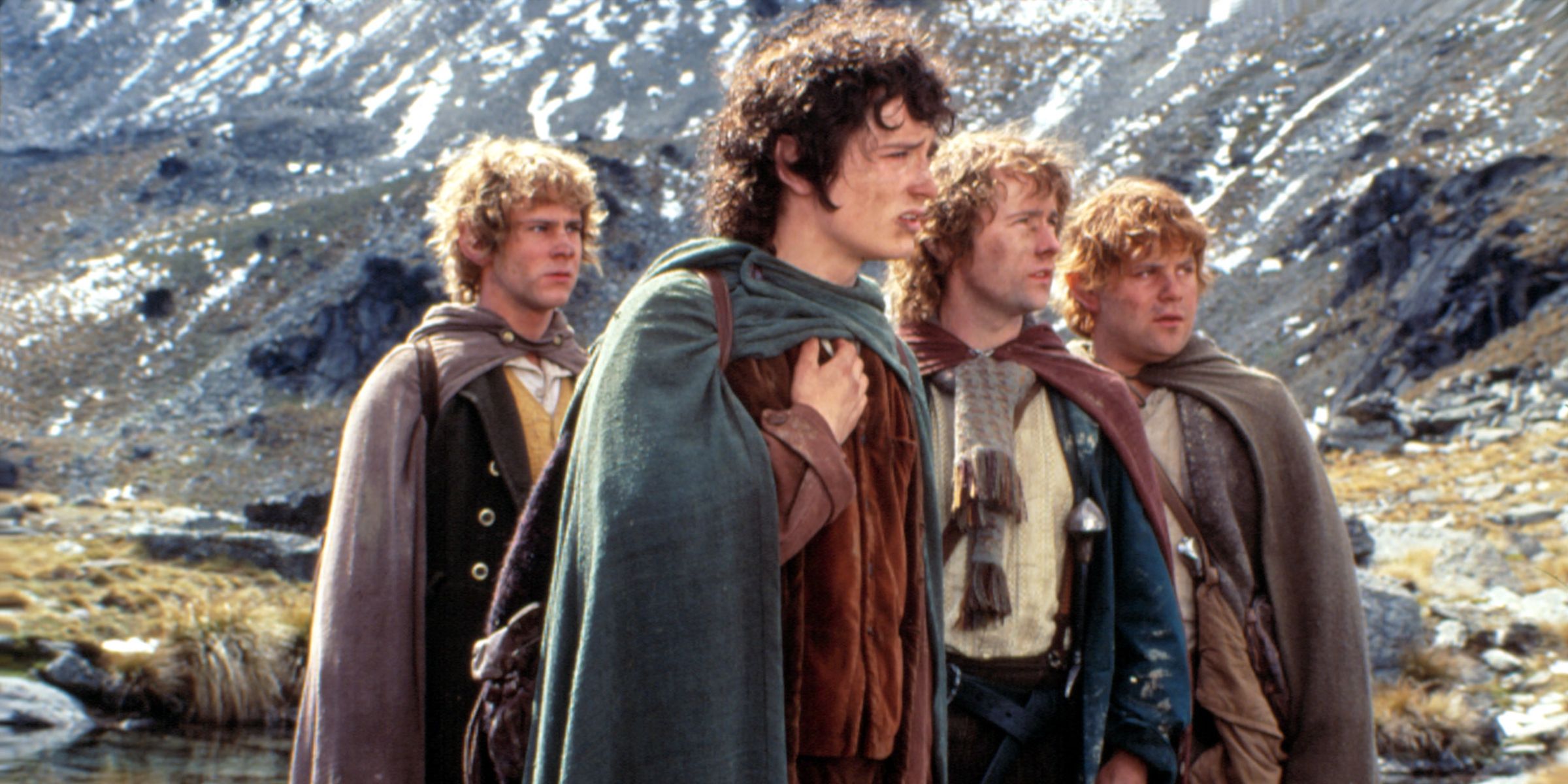
Peter Jackson’s films based on J.R.R. Tolkien’s work are among the most important and impactful fantasy movies ever made. He approached the story as a grand, realistic epic, which greatly expanded what was possible in terms of both visual effects and storytelling within the fantasy genre. These films essentially defined the standard for all subsequent fantasy movies, and continue to be used as a benchmark for quality.
After the success of The Lord of the Rings, many fantasy movies and TV shows tried to copy or build upon its style. Studios that once avoided the genre realized it could be profitable, leading to a surge of new, often lower-budget, fantasy films in the late 2000s. Here are five scenes from The Lord of the Rings that particularly captured audiences and influenced the future of fantasy filmmaking.
The Fellowship of the Ring’s Quietest Moment Defined the Entire Franchise
In the first film of Peter Jackson’s The Lord of the Rings trilogy, The Fellowship of the Ring, Ian McKellen gives a memorable performance. Before the group reaches the Mines of Moria, they discover they’ve been followed. Gandalf reveals that Gollum has been tracking them for a while, prompting Frodo to express regret that Bilbo didn’t kill Gollum when he had the chance.
Gandalf’s reply might have surprised Frodo, but it subtly hinted at the true importance of their quest. He cautioned Frodo against being quick to punish or condemn. In that moment, Gandalf revealed that their mission was about far more than simply destroying the Ring. He spoke not as a powerful wizard issuing commands, but as a caring father sharing vital advice.
This scene revolutionized how strength is portrayed in fantasy. Traditionally, fantasy stories rely on simple good versus evil, where heroes overcome villains with force. However, this moment demonstrated that real strength comes from understanding, kindness, and the decisions we make. It’s a pivotal scene not only for this series, but for the entire fantasy genre.
Boromir’s Sacrifice Reshaped the Fantasy Redemption Arc
The end of The Fellowship of the Ring is incredibly moving, and considered one of the most heartbreaking moments in the entire series. While the film changed how Boromir died from the original book, this choice powerfully emphasized the tragedy and sacrifice at the end of the first movie. The Fellowship breaks apart at the end, and Boromir’s death is the event that truly sets the story’s future conflicts in motion.
The series takes a significant turn with Boromir’s death. While The Fellowship of the Ring mainly focuses on setting up the quest, Boromir’s sacrifice truly highlights the danger of the One Ring and changes the entire tone of the story. For many viewers, this scene is the most emotionally impactful moment in the whole series.
The audience saw Boromir struggle with the Ring, but he ultimately overcame that weakness and sacrificed himself to allow the Hobbits to escape. His death was a redemptive act, but it also served as a stark reminder that no character was safe. This moment was significant for the fantasy genre, demonstrating that even in one’s final moments, redemption is possible. It signaled a shift towards more realistic consequences in fantasy stories and proved the genre could handle complex themes like grief and sacrifice with maturity.
The Battle of Helm’s Deep Revolutionized On-Screen Battles
As a huge cinema fan, I honestly believe the Battle of Helm’s Deep is right up there with the greatest battles ever filmed. It wasn’t just exciting – it really changed things for fantasy movies, showing everyone how to create a truly epic and physical war on screen in a way we hadn’t really seen before.
Given the sheer size of the battle, it’s amazing how clearly the audience can follow what’s happening and where the defenders are. Peter Jackson and his team famously used computer software to create a huge number of the Uruk-hai soldiers. This software wasn’t just for visuals; it allowed the soldiers to move and react convincingly, making the battle feel incredibly realistic.
By the start of the battle, the defending forces were almost defeated. The audience understands how much is at risk and what could happen if they fail. Unlike many fantasy films, The Battle of Helm’s Deep realistically portrays the brutal nature of war. Jackson skillfully avoided the typical plot armor that often shields characters in this genre.
Frodo’s Failure Subverted the Hero’s Journey
From the beginning, the One Ring had been subtly controlling Frodo. This control reaches its peak in the final scenes of Peter Jackson’s Return of the King. Despite his long and difficult journey carrying the Ring across Middle-earth, Frodo ultimately gives in to its power.
If Gollum hadn’t been driven by his obsession with the Ring, Frodo would have certainly failed. Both the books and the films suggest a guiding force – a kind of luck or divine help – played a role in its destruction. Throughout the films, we’ve seen how deeply the Ring affected Frodo, and ultimately, it was his compassion and acts of kindness during the journey that led to the Ring’s downfall.
The audience clearly sees the heavy burden the Ring places on Frodo, a performance powerfully conveyed by Elijah Wood. Even after the Ring is destroyed, Frodo will forever be marked by its influence and the hardships of his journey. Rather than succeeding at the crucial moment, Frodo is saved by the choices he made throughout the story, which offers a fresh take on the traditional hero’s journey in The Lord of the Rings.
Sam’s Speech was the Soul of the Franchise
At the end of The Lord of the Rings: The Two Towers, Sam gives a powerfully hopeful speech—one of the most memorable in the entire series. Frodo and Sam are surrounded by the destroyed city of Osgiliath, and things look incredibly grim. Frodo is nearing despair and is dangerously close to being consumed by the power of the One Ring.
Just then, Sam delivers a speech that captures the true heart of The Lord of the Rings. He doesn’t discuss fighting or plans, but instead shares a sincere and moving reflection on the power of stories, especially when things are at their worst. It’s a reminder to both Frodo and us about what’s most important.
The story’s central idea shines through, but feels natural and unforced. It echoes Gandalf’s earlier words about making the most of our time. Sam’s actions emphasize that it’s everyday people, through their bravery, who truly matter. This message deeply connects with audiences because it’s a powerful, relatable feeling that goes beyond the fantasy setting. The scene beautifully shows that even in the darkest moments, choosing hope takes courage.
Read More
- Invincible Season 4 Episode 4 Release Date, Time, Where to Watch
- How Martin Clunes has been supported by TV power player wife Philippa Braithwaite and their anti-nepo baby daughter after escaping a ‘rotten marriage’
- Beyond Accuracy: Gauging Trust in Human-AI Teams
- Gold Rate Forecast
- Clash Royale Balance Changes March 2026 — All Buffs, Nerfs & Reworks
- CookieRun: OvenSmash coupon codes and how to use them (March 2026)
- Roco Kingdom: World China beta turns chaotic for unexpected semi-nudity as players run around undressed
- eFootball 2026 is bringing the v5.3.1 update: What to expect and what’s coming
- The most surprising Hannah Montana cameos: From John Cena to Dwayne Johnson and even a Coronation Street soap star as show celebrates its 20th anniversary
- Charlie Day Confirms What Always Sunny Scene Is His Career Highlight
2026-01-27 02:13