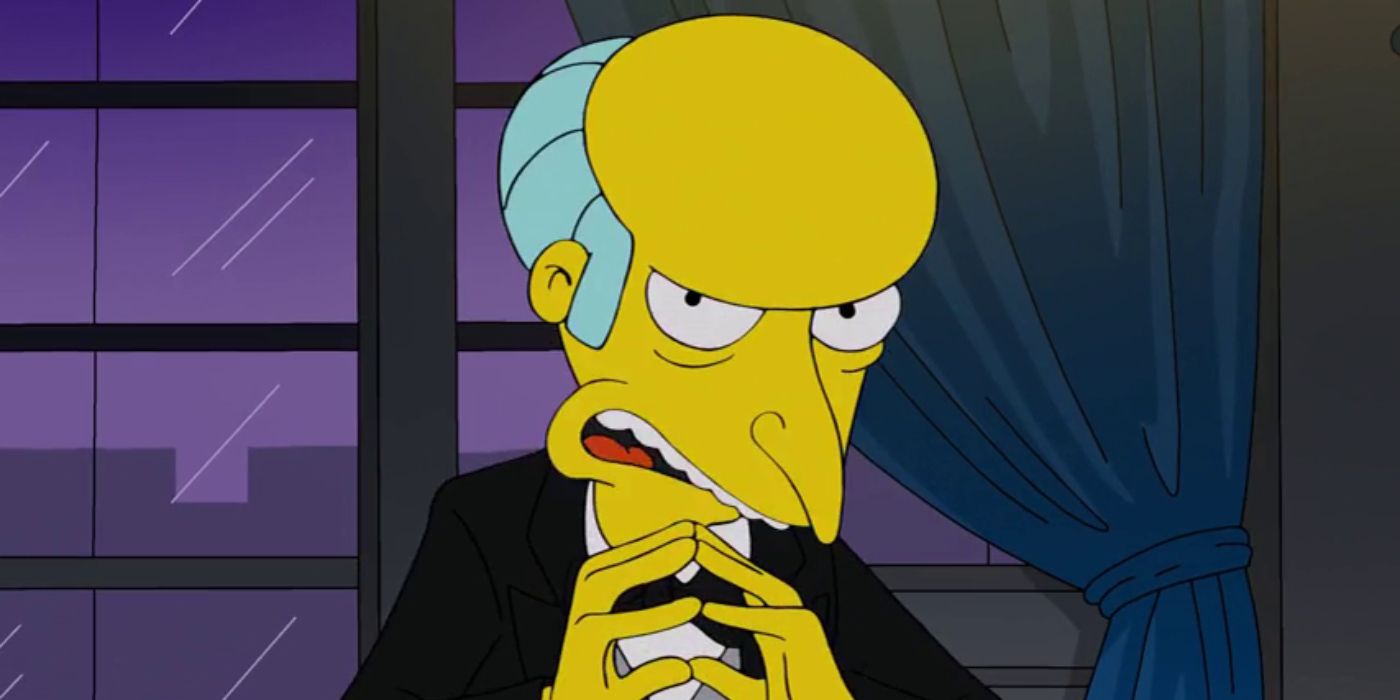
Even though some people feel it’s become too long, The Simpsons is still one of the most important shows in television history. Now in its 37th season, the animated sitcom has become a huge part of popular culture over the last few decades. While Homer Simpson isn’t a hero, Mr. Burns is definitely the show’s main villain.
Mr. Burns first appeared in the show’s Christmas episode, immediately establishing his reputation as a villain by canceling Christmas bonuses. Originally intended as a simple bad guy, he quickly became a popular and regular character. A key to his appeal is how out of touch he is with reality, which leads to hilariously exaggerated villainous lines like “release the hounds” and defines his memorable antagonistic style.
Mr. Burns’ Ferocious Hounds Symbolize His Violent Privilege in The Simpsons
I’ve known Mr. Burns for a long time, and he’s always been the main bad guy in Springfield, ever since he showed up. It seems like everything he does is about trying to get even richer and more important – that’s where all his schemes come from, really.
Mr. Burns is a billionaire who lives in an incredibly over-the-top mansion. It’s filled with unusual features, like a garden for vultures and a theater that constantly puts on shows. He enjoys the finest things in life and has amenities to match, including a massive television and even a bottomless pit! With 137 rooms, it’s clear Mr. Burns lives a life of extreme luxury.
Burns Manor is filled with a strange collection of items, ranging from legendary artifacts like King Arthur’s Excalibur and a Tyrannosaurus rex skull, to more unusual pieces like a nude photograph of Mark Twain and the remains of someone who trespassed on the property. It even houses a room full of valuable paintings, including stolen masterpieces like Vermeer’s The Concert. But maintaining such a privileged lifestyle sometimes requires defending oneself, and the wealthy, old-fashioned residents of Burns Manor are particularly fond of using a pack of fierce hunting dogs for protection.
Mr. Burns’ Dobermans perfectly represent his cruel and uncaring nature. The first instance of him threatening to ‘release the hounds’ appears in Season 1, Episode 4, ‘There’s No Disgrace Like Home,’ but initially it seems more like a bizarre announcement than a real danger. He simply warns his picnic guests to leave, stating the dogs will be unleashed in ten minutes.
Season 2, Episode 4, “Bart vs. Thanksgiving,” is when Mr. Burns delivered what would become his most famous line – other than his signature “Excellent!” with the finger-pinching gesture. He famously commands, “Release the hounds!” and a furious pack of dogs bursts from the bushes, all to stop Bart from taking a single pie.
Mr. Burns has repeatedly used his dogs to intimidate and threaten people. After Homer and Marge ask him to pay for hitting Bart with his car, he sends the dogs after them. He even threatens Apu with them just for asking for more electricity. It’s clear these dogs are his go-to method of control and are consistently used as weapons.
I always get a kick out of how The Simpsons uses the hounds! They’ve had some really funny moments with them. Remember when Mr. Burns tried to use them to guard Elon Musk, but then immediately changed his mind? That was classic! And it was hilarious when the hounds turned on Burns in “Them, Robot” and he had to run away! Oh, and who could forget when Santa’s Little Helper became one of Burns’ hounds for a little while in “Dog of Death”? It was a short scene, but so funny!
The Simpsons has cleverly used dogs in many episodes, creating memorable and varied scenes. Whether it’s dogs providing emotional support or the poodles Mr. Burns was forced to use when he lost his fortune, the show avoids making these canine appearances repetitive. Ultimately, though, Mr. Burns’ dogs best represent his cruel nature.
Mr. Burns’ Criminal Record Is a Tiny Part of His Pure Evil in The Simpsons
Mr. Burns is happy to do whatever it takes, even if it’s unpleasant, to get the job done – more so than the grime produced by his factories. However, because of his demanding nature and lack of consideration for his assistant, Waylon Smithers is usually the one who ends up doing the actual dirty work.
Mr. Burns has repeatedly harmed people and even tried to kill them. He clearly dislikes children, as shown by the terrible working conditions he forces on child laborers. He also treats his employees poorly, often firing people as a twisted way to motivate those who remain.
Throughout the series, the constant illegal dumping of nuclear waste became a central issue in The Simpsons Movie, which also revealed a forgotten, unused plant designed to handle such waste. Mr. Burns doesn’t seem to care about environmental concerns, however, especially when he’s focused on acquiring exotic animals to make new clothes – he’s essentially a less appealing, male version of Cruella de Vil.
It wasn’t much of a shock when The Simpsons ended its sixth season with a reveal—that Maggie Simpson was the baby in the mystery. However, the answer didn’t change anything, considering Mr. Burns had already behaved terribly. He shamelessly outbid Springfield Elementary for the oil discovered on their land, and then made things even worse by building a device to block out the sun, ensuring the town would remain dependent on his nuclear power plant.
Even when Mr. Burns tried to improve his public image in the episode “The Old Man and Lisa,” he ultimately used what he learned for selfish and malicious purposes. Compared to these shockingly cruel actions, his attack dogs seem almost minor in comparison.
This idea actually comes from historical instances of wealthy landowners and slave owners who used hunting dogs to kill people as a cruel pastime. Some believe this history is reflected in the story. The dogs’ aggressive nature symbolizes Mr. Burns’s intense greed, as both display an insatiable hunger and a relentless drive to destroy anything that stands in their way.
Mr. Burns Is Both Cartoonishly and Realistically Villainous in The Simpsons
Charles Montgomery Burns debuted as Homer Simpson’s boss in the show’s first season, quickly establishing himself as a villain – initially, a typical, stingy boss. As the series went on, he became known for his comically evil behavior, but viewers also noticed a surprising level of depth to his character from the start.
In the third episode of its first season, “Homer’s Odyssey,” Mr. Burns attempted a particularly underhanded scheme. Under public pressure to improve safety at his nuclear plant, he tried to manipulate Homer Simpson, who still works there today. While Homer ultimately wouldn’t go along with it, Mr. Burns’ plan showed he clearly understood how to use his power to get what he wanted.
The villain’s over-the-top evil actually helps hide how truly damaging his actions are. While it’s tempting to laugh at his ridiculous schemes – like blocking out the sun or using an army of monkeys to brainstorm – these absurdities overshadow the genuine criticism embedded in his story. This ironic, cartoonish approach, with dramatic pronouncements like “release the hounds!”, ultimately obscures the deeper meaning and solidifies his character development.
Mr. Burns is known for strongly opposing unions, and he’ll do almost anything to break up worker organizations and discourage protests. He’s obsessed with cutting costs, but avoids spending money to do it, which creates hazardous working conditions in Springfield. Burns also strives to control everything, using propaganda and manipulating the media to maintain his power.
Mr. Burns appears to be beyond saving, and this was evident as early as 1990 in the Season 2 episode, “Two Cars in Every Garage and Three Eyes on Every Fish.” The episode, a parody of Herbert Hoover’s promise of “a chicken in every pot and a car in every garage,” perfectly highlighted all of Mr. Burns’ negative qualities.
When a three-eyed fish named Blinky was found in a local stream, it led to an investigation of Mr. Burns, revealing $56 million worth of violations. To avoid paying the fines, Burns follows Homer’s suggestion and runs for Governor, leading a campaign filled with dishonest tactics.
A clearly fabricated makeover and a misleading claim about the deliciousness of three-eyed fish helped Mr. Burns pursue his scheme. However, it was Marge serving Blinky, the three-eyed fish, for dinner that revealed him as the phony he truly is.
That’s not the end of the story, though in a way, it is. Mr. Burns goes back to his mansion, tired but already planning more trouble for the next day. The issue of any punishment he might face is simply dropped and never discussed again. We never find out if he actually paid the huge fines, even though he had the money to do so. This happens in other episodes too, but this specific incident is never brought up again.
Although it seems clear, his famous line, “release the hounds,” always reinforces just how villainous he is, and it explains why he’s considered one of the greatest villains of all time.
Read More
- Clash Royale Best Boss Bandit Champion decks
- Mobile Legends January 2026 Leaks: Upcoming new skins, heroes, events and more
- Clash Royale Furnace Evolution best decks guide
- Vampire’s Fall 2 redeem codes and how to use them (June 2025)
- Best Hero Card Decks in Clash Royale
- Mobile Legends: Bang Bang (MLBB) Sora Guide: Best Build, Emblem and Gameplay Tips
- Best Arena 9 Decks in Clast Royale
- Brawl Stars Steampunk Brawl Pass brings Steampunk Stu and Steampunk Gale skins, along with chromas
- Clash Royale Witch Evolution best decks guide
- Brawl Stars December 2025 Brawl Talk: Two New Brawlers, Buffie, Vault, New Skins, Game Modes, and more
2025-12-10 18:40