Iconic tunes call for iconic performers; while this isn’t always the case, these three musicians undeniably embody that description. They might be familiar faces, but have you ever considered the immense influence they’ve wielded over rock music? Prepare to discover it!
In every instance, these artists collaborated with other prominent figures. They’ve each teamed up at least once, but unfortunately, they haven’t recorded as a trio. However, they have shared the stage together for an extraordinary performance. If only they had created another supergroup following that concert…
It seems reasonable. They’ve already given us an abundance of megawatt-strong bands, even some of the pioneering ones. Given that they were all born in quick succession – only three years apart – this isn’t surprising. With the extraordinary talent these three legends have, it’s not unexpected that their paths would intersect so frequently.
Three rock stars that powered more bands than you knew
Ronnie Wood
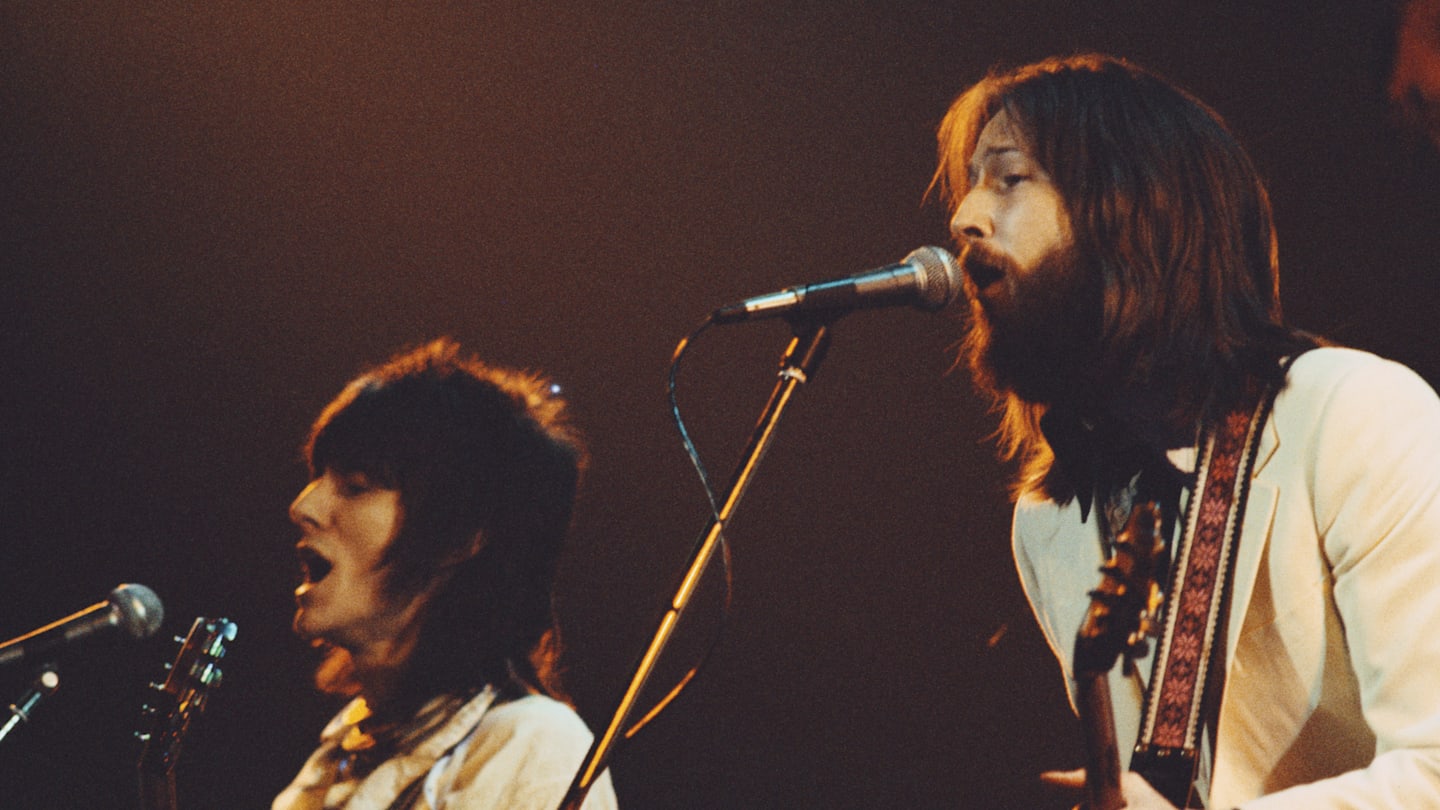
He’s the individual on the left in the picture. Those who are part of the classic rock community are certainly familiar with Wood, a member of the Rolling Stones. Just like the other two rock legends depicted here, Ronnie Wood didn’t rush to his final achievement. Unlike them, he remains with the band that granted him his most significant triumph. It might be hard to imagine him playing with anyone but Keith and Mick, but yes, he did collaborate with others as well.
In 1964, Wood kicked off his musical journey with a band called The Jeff Beck Group, which people sometimes mix up with the legendary L.A. band, The Byrds. After joining them in 1967, he teamed up with vocalist Rod Stewart and, of course, Jeff Beck. During this time, Wood both played guitar and bass on albums such as “Truth” and “Beck-ola”. When the group called it quits in 1969, Wood then partnered with Stewart to establish the band Faces.
It took some time for the band to achieve success; their initial albums, titled “First Step” and “Long Player,” didn’t make a significant impact on the charts. Their first album reached number 45 in the U.K., while their second album from 1971, also known as their follow-up, managed to enter the top 50 charts in both the United States and Great Britain.
The third studio release from them, titled “A Nod’s as Good as a Wink…to a Blind Horse“, came out in 1971 and revolutionized their musical landscape. It climbed to the second spot on U.K. charts and reached number six in the U.S., primarily due to the massive hit single, “Stay With Me.” During this album, Wood showcased his versatility on lead, slide, and acoustic guitars, as well as throwing in a few harmonicas for fun.
With Stewart’s increasing success from his solo ventures, the band began to disintegrate and officially ended in 1975. Meanwhile, Wood continued to flourish on his own path and put out the playful album “I’ve Got My Own Album To Do” in 1974.
In case you’re familiar, he collaborated with some of his bandmates in a group, specifically George Harrison and Keith Richards. He joined The Rolling Stones during their 1975 album, “Black and Blue,” and went on tour with them the same year.
Immediately following Faces’ disbandment, Wood joined what is known as “The World’s Greatest Rock ‘n Roll Band” on a permanent basis. Personally, I lean towards The Captain and Tennille, but it seems I may be an exception in that regard. Ronnie primarily uses slide guitar with The Rolling Stones, yet he also incorporates lap and pedal steel guitars into their music.
Apart from collaborating with diverse artists like Aretha Franklin, Bob Dylan, and B.B. King as a session musician, he also continues his individual projects. However, compared to the third artist on my list, Ronnie Wood may not be considered among the legendary guitar deities. Nevertheless, Ronnie Wood is the unifying element within one of the most remarkable bands in history.
Steve Winwood
You might be thinking that Steve Winwood is just an iconic singer, but there are several other Steves I could discuss instead, right? However, it’s important to note that while he is known primarily for his vocals, he is also a talented musician. This often sparks the question of whether singers can be considered musicians as well.
As a gamer, I can certainly relate the effort it takes to master my gaming skills to the dedication required to perfect playing a Fender bass. That’s why I proudly consider myself a musician too, just like vocalists. Plus, Steve Winwood didn’t just play keyboards; he was versatile, handling mandolin, bass, and percussion as well. But what truly sets him apart is his significant role in some of the most groundbreaking rock bands of all time.
He’s an excellent musician, yet what truly catapulted him to stardom was the richness of his high-pitched vocals. Winwood made his stage debut at the tender age of eight, performing alongside his father and elder brother. For a number of years, he accompanied different artists on keyboards before achieving success with The Spencer Davis Group in 1963.
By that point, he was already a seasoned professional, having reached the mature age of 14. The group experienced early triumphs in the UK, but achieved massive success both domestically and in the U.S. with their singles “Gimme Some Lovin'” (released in 1966) and “I’m a Man” (released in 1967).
In 1967, Winwood departed from his band and co-founded Traffic on the same day. However, things got a bit tricky. The group put out two albums, “Mr. Fantasy” in 1967 and “Traffic” in 1968 before disbanding the next year. Interestingly, “Last Exit” was released in 1969, even though the band had already broken up. Remarkably, they reassembled just a year later in 1970.
On that particular event, they celebrated with their highest-grossing U.S. debut, titled “John Barleycorn Must Die”. After this, four additional albums were produced until their disbandment in 1974. However, rest assured, Steve Winwood and original member Jim Capaldi reconnected after 20 years for the last Traffic album, called “Far From Home”.
After stepping away from Traffic for a bit, I found myself joining forces with some pretty amazing peers to form the precursor of supergroups – Blind Faith. You might recognize one of them soon enough. We only managed one album together in ’69, self-titled Blind Faith. Before we called it quits, we released gems like “Can’t Find My Way Home,” “Presence of the Lord,” and “Sea of Joy.
Following his two exits from Traffic (apologies for the complexity), Winwood collaborated with various bands prior to embarking on his solo journey in 1977. His second solo album, titled “Arc of a Diver,” released in 1980, marked his first solo hit single, “While You See a Chance.
Two years after another solo project, Winwood achieved platinum status with the 1986 release of “Back in the High Life.” The album’s leading single, “Higher Love,” reached number one on the charts, and it won a Grammy for Record of the Year. Quite impressive, considering he began his career as an eight-year-old keyboardist.
Eric Clapton
To put it simply, while Eric Clapton undeniably deserves a spot on this list, he might be an expected choice for some readers. Given that his career is extensive and well-known, I’ll go ahead and include him, but let’s remember that not everyone may be familiar with the journey he took to reach his successful solo phase.
Back in the day, I found myself joining forces with a legendary blues-rock band known as the Yardbirds – just like Clapton, Jeff Beck, and Jimmy Page did too. While we didn’t start our journey together from birth, it was quite close to that. I was 18 when I stepped into their ranks as the lead guitarist, setting the stage for the incredible musicians who followed in my footsteps – Beck and Page among them. But let’s not jump ahead; my time with the Yardbirds came first, paving the way for their arrival later on.
For two years, Eric Clapton served as the lead guitarist within the band. Beyond this fact, did you know? Their debut album, “Five Live Yardbirds” from 1964, showcases covers of American blues and R&B tunes by artists like Chuck Berry, Howlin’ Wolf, and John Lee Hooker. A year later in 1965, they released another album titled “For Your Love“, which included the song that had been previously released as a single with the same name earlier that year.
The overall vibe of the album is quite pop-rock in nature. Not surprisingly, the dedicated blues artist Eric Clapton decided to leave the project during the recording process. However, Beck took over as the lead guitarist on at least four different songs.
While Eric Clapton sought a band that better suited his musical preferences, he joined John Mayall and the Bluesbreakers. Their first studio album, titled Blues Breakers with Eric Clapton, was released in 1966. A mix of blues covers, such as “What’d I Say” by Ray Charles and “Ramblin’ On My Mind” by Robert Johnson, along with original compositions from Mayall and Clapton, reached number 6 on the U.K. charts.
Without a doubt, you’ll find it surprising: Eric Clapton has moved on. He left to become part of a powerful three-piece band known as Cream. The band’s momentum was largely driven by Ginger Baker, who had previously been with Blues Incorporated and the Graham Bond Organisation, before joining this new group.
He was accompanied by Eric Clapton and bassist Jack Bruce, who had previously worked with the Blues Breakers and briefly with Manfred Mann. It’s possible that Bruce was part of a band called GBO, although it could also have been some sort of financial venture, such as a hedge fund.
As a gamer, I’ve got to say, before the music world saw a split between Baker and Bruce that disbanded Cream, they had already dropped three killer albums. The first one, “Fresh Cream” from ’66, was a massive hit in both the U.K. and the States, even spawning a chart-topper like “I Feel Free.” And then came “Disraeli Gears,” released in ’67, which etched Cream’s name forever in rock history.
Although it wasn’t the initial instance of psychedelic rock, it continues to be one of the most exceptional examples. It managed to reach the top five charts on both sides of the Atlantic Ocean.
One standout track, titled “Sunshine of Your Love,” significantly shaped the band’s enduring legacy. Musicians ranging from Jimi Hendrix and Elvis Costello to the Police, Santana, and even Ella Fitzgerald have paid tribute to this legendary song. It is crucial to remember that the full 4-minute-and-8-second album version is the one that truly captures its essence; a shorter 3-minute-and-3-second single edit falls short of its true potential.
Back in ’68, I got my hands on this epic double album called “Wheels of Fire” by the band. It blew up the charts, hitting number 3 in the U.K. and taking the top spot in the U.S. Amazingly, it was the first double album to earn a platinum certification. The first disc was studio-recorded and included some timeless tunes like “White Room” and “Born Under a Bad Sign.
The second recording was made live at Fillmore West and contains only four tracks in total. Eric Clapton has made “Crossroads,” a timeless blues song by Robert Johnson, his signature tune, but it’s undeniable that the trio showcases their exceptional skill during the extended improvisations on the pieces “Spoonful” and “Toad.
Earlier on, I mentioned that the band produced just three albums prior to their disbandment in 1968. Notably, they released a fourth album titled “Goodbye”, which seems incredibly fitting. This final album was recorded in November of 1968, as if they were recording it while the clock was ticking towards their breakup.
The collection features three recordings made in a studio setting and three performances from live events. Combining classic blues tunes such as “I’m So Glad” and “Sittin’ On Top of the World” with fresh compositions, it served as a fitting farewell for the sometimes contentious band.
Let’s go back to a group you’ve encountered earlier: Blind Faith. Eric Clapton earned his initial solo writing recognition with “Presence of the Lord,” which was quite beneficial for him beyond a successful U.S. tour and increased admiration. Yet, there’s no need to fret about Eric, as he also toured with Delaney & Bonnie and the Plastic Ono Band, and released his debut solo album titled “Eric Clapton.
The album showcased the songs “Rain It Down” (a similar rendition to “Let It Rain”) and an energetic, soulful version of J.J. Cale’s “After Midnight”. From 1969 to 1970, Clapton collaborated with some of the biggest names in music, including Dr. John, Billy Preston, Howlin’ Wolf, Stephen Stills, Ringo Starr, and many more.
In 1970, Eric Clapton opted to form his own band instead of joining an all-star group. He selected three musicians from Delaney & Bonnie and Friends (essentially, the backing band), and thus Derek and the Dominos were born. They embarked on a three-week club tour that summer to refine their skills, and in September, they recorded their first album, a double LP titled “Layla and Other Love Songs.
Layla, indeed, shines as the highlight, but it’s not without its other gems like “Bell Bottom Blues” and a rendition of Hendrix’s “Little Wing.” The band embarked on tour that fall and started recording their second album in the spring of 1971.
Prior to its completion, the band disbanded as a result of escalating tension since their inception. The saga of Derek and the Dominos is extensive enough to fill multiple books. At present, understand that Eric Clapton took a break from music for a span of three years.
People familiar with Clapton’s life story also understand why he took an extended break from music. The concert I brought up a while ago was the Rainbow Concert, marking his comeback. Following that, in 1974, he released his solo album titled “461 Ocean Boulevard“.
Although he released a total of 91 singles and 20 solo albums following this, his rendition of Bob Marley’s “I Shot the Sheriff” was the sole one to reach number-one on the Billboard charts.
These individuals, though advanced in age, are nevertheless active and making great contributions to rock music, which undeniably benefits from their continued participation.
Read More
- Clash Royale Best Boss Bandit Champion decks
- Mobile Legends: Bang Bang (MLBB) Sora Guide: Best Build, Emblem and Gameplay Tips
- Vampire’s Fall 2 redeem codes and how to use them (June 2025)
- Best Hero Card Decks in Clash Royale
- Clash Royale Furnace Evolution best decks guide
- Best Arena 9 Decks in Clast Royale
- Dawn Watch: Survival gift codes and how to use them (October 2025)
- Clash Royale Witch Evolution best decks guide
- Wuthering Waves Mornye Build Guide
- ATHENA: Blood Twins Hero Tier List
2025-08-04 13:01