
Endlessly watching TikToks that feel strangely personal. Staying at Iceland’s fanciest hotel. And wondering, maybe unnecessarily, what really separates a joint from a blunt.
The New York Times brought together six musicians who are nominated for the 68th Grammy Awards in February to talk about their nominated work and the creative process behind it.
Our panelists:
Cirkut, age 39, has been nominated for seven Grammy Awards. He’s known for his work with major artists like Lady Gaga, Rosé, and the Weeknd. His productions have earned nominations for Album of the Year (Lady Gaga’s “Mayhem”) as well as Record and Song of the Year for both Lady Gaga’s “Abracadabra” and Rosé and Bruno Mars’s “Apt.”
• Coco Jones, 27, whose “Why Not More?” is nominated for R&B album
Carter Lang, age 35, is nominated for Album of the Year for his work as a producer and songwriter on Justin Bieber’s album, “Swag.”
• Laufey, 26, whose “A Matter of Time” is nominated for traditional pop vocal album
Raphael Saadiq, age 59, is nominated for a prize for his song “I Lied to You,” featured in the film “Sinners.” The song is also being considered for a Golden Globe award for original song.
• Alex Warren, 25, who’s nominated for best new artist
Some of the people present already knew each other before meeting at the Sun Rose in West Hollywood that December. Cirkut had previously worked with Jones on one of his album tracks, and Saadiq’s nephew, Dylan Wiggins, collaborated with Lang on both the original “Swag” and its follow-up, “Swag II.”
“It feels like everyone is connected through a friend of a friend,” Cirkut explained while sitting with the other panelists in the hotel’s intimate music venue. “We all move in overlapping circles.”
After a photoshoot, Laufey jokes about being ‘in the high school of music’ as she kicks off her heels. This prompts photographer Jones to ask her assistant for a pair of sandals from a nearby box.
Where do heels rank among the worst things about pop stardom?
Sometimes I really can’t stand how difficult it is. Honestly, the worst part of performing is spending two hours getting hair and makeup done every single time.
Coco Jones: The guys are like, “What glam?”
Being on tour means a lot of time is spent on travel and preparation, which can be overwhelming. I often find myself getting lost online for too long and feeling down as a result.

Jones: That is so real. What would y’all say is the worst part of this job?
Raphael Saadiq: Awards season.
Laufey: It’s like a humiliation ritual.
Cirkut: Do we all have some sort of impostor syndrome?
Jones: I’ve got a touch. It sucks, though — I worked my a— off. It’s not a lottery I won.
Laufey believes experiencing impostor syndrome is actually a positive sign. It suggests you still connect with who you used to be. If you don’t feel like an impostor, she thinks it means you’ve fully transformed into someone new.
Alex Warren: I love that.
Jones: Did anyone know that the thing that put them on the map — that that would be what did it?
I started making records back in 1988, so I’ve seen a lot of success and failure in the music industry. Now, I realize the biggest satisfaction comes from being in the studio and truly enjoying the songs I’ve created – I listen to my work over and over again, honestly more times than I can count.
Jones: That’s fire.
Saadiq: So the answer is no — you never know.
Warren says his wife is his best judge of his music. She’s usually unimpressed with his songs, but when he played her “Ordinary,” she loved it immediately. She was so impressed she made him play it repeatedly during a 45-minute drive.
Carter Lang: That was before or after it came out?
Warren: Before. Then I had to fight for it.
Jones: What do you mean?
I really like my record label, but we disagreed on which song should be released as the next single. They wanted me to release a song I hadn’t written, and I wasn’t happy about it. So, I decided to put ‘Ordinary’ on TikTok as a test. It didn’t do well at first – it was a complete failure for about two weeks.
Jones: Shut up.
I posted to the platform about thirty times before I saw any results. It started gaining traction just as TikTok was facing a potential ban. Then, when the ban actually happened, I figured my opportunity was gone.
Jones: You posted it before your label agreed that it was the next single?
Cirkut: You leaked the record.
Laufey: What a beautiful show of persistence, though.
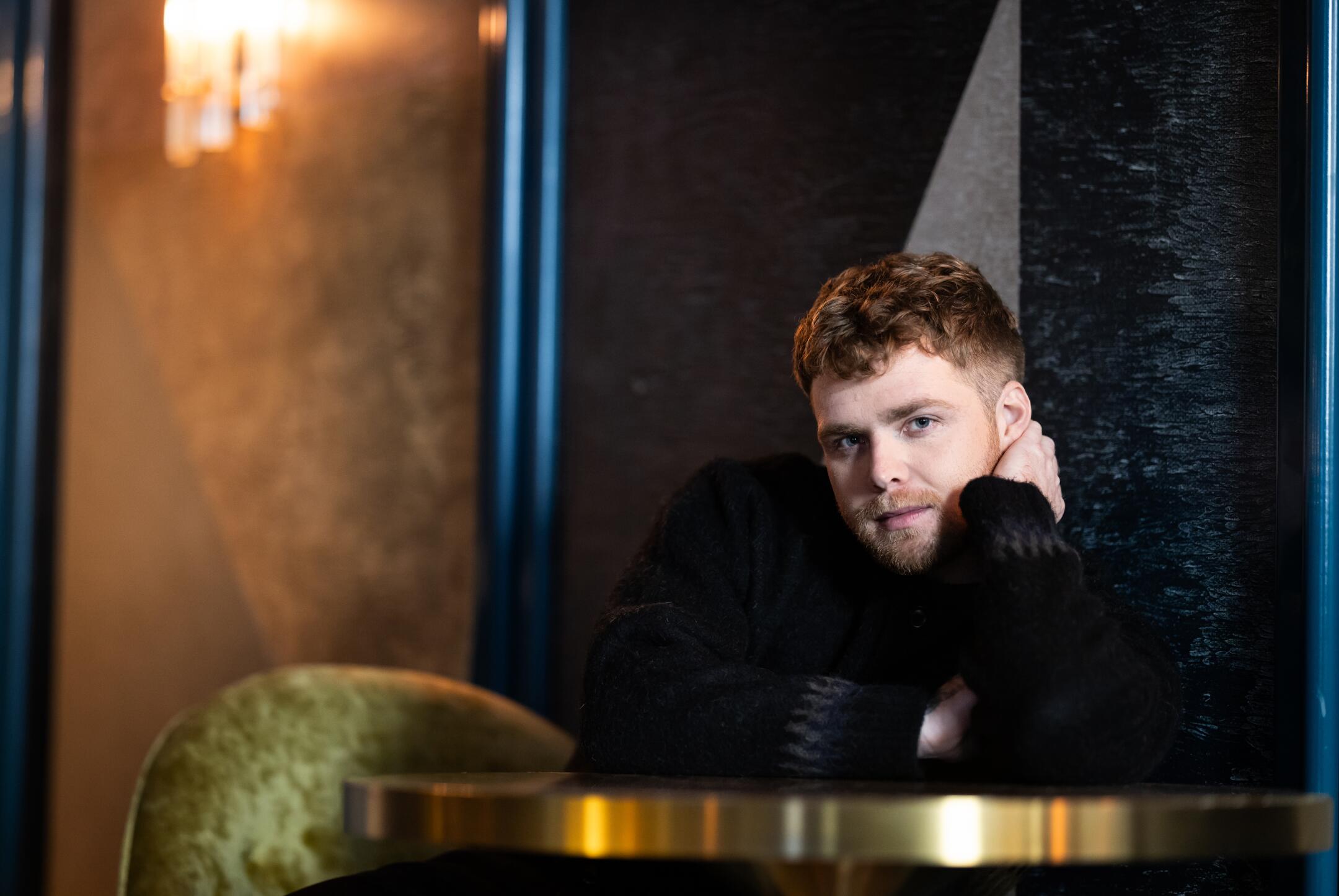
Artists are regaining control of their work. Working with Justin recently taught me that he’s determined to release music exactly as he envisions it, trusting his fans will embrace it. He’s incredibly bold, and I think that reflects the current trend in the industry.
When I first started out, record labels would ask me what kind of artist I wanted to be, and I always had trouble answering. My music is a unique mix of jazz, classical, and pop, and I felt like I was failing at those meetings because I just wanted to be myself. It’s different now – artists who are original are really appreciated. My breakthrough came with my last album, and the song that really took off was a classic bossa nova track.
What’s the takeaway?
Laufey believes that every artist can find their audience, and it’s no longer realistic to try and appeal to everyone. It’s better to focus on finding a specific group of fans who appreciate your work.
Warren: The algorithm is so tailored.
Laufey: It’s not one big audience — it’s many.
How does that manifest in the way you make records?
Saadiq believes it’s important for artists to stay true to their own taste. He’s fortunate to have never worked with an A&R representative throughout his career, though he acknowledges there were talented ones in the past. He feels current A&Rs are often young people focused on trends rather than genuine musical understanding. They might know what’s popular, but lack real insight.
Let’s consider artificial intelligence. Isn’t it a little unsettling that I can simply ask my phone to generate a song based on a quick idea?
I asked the AI to create a song like mine, and it was honestly pretty bad, which is reassuring. People connect with more than just the music itself. They want a full album that tells a story, and an artist they feel understands them – someone they can relate to and even emulate, like copying their style. They want to connect with me, not an AI.
I was writing a song recently and, honestly, I used an AI tool to help me with a section I was stuck on. It was amazing how it worked, but I immediately felt bad about it. It just felt…wrong, like a strange ethical issue.
Lang: It feels like it’s treating music like it’s some type of task.
Warren believes people are drawn to the flaws in music, but AI is producing something flawlessly polished, which feels a bit strange.

I haven’t heard an AI voice that feels emotionally convincing.
Lang: It’s just the beginning, though.
You can see it coming?
Saadiq: Oh, yeah.
Laufey: But it won’t stand onstage in front of people and sing.
But will it truly be the same? This new creation won’t experience pain or pleasure, and it doesn’t fear death. It also has no understanding of birth or what it means to be alive.
Warren compares AI-generated music to an episode of “Modern Family” where characters fall for a talking refrigerator. He explains that while people might enjoy listening to it and even add it to their playlists, it likely won’t have a lasting emotional impact or truly change them.
Many of you have created a large number of songs. Have you ever rediscovered a piece of music you’d completely forgotten you made?
You know, as someone who’s been making music for a while, it’s always a trip hearing stuff I did years ago. Sometimes I’ll stumble on a track I produced back in 2012 and be genuinely impressed – like, ‘Hey, that actually holds up!’ But other times? Let’s just say I definitely have some cringe moments revisiting the older stuff.
Everybody have their cringe items?
Jones: Please — I did Disney Channel first.
I might criticize my own work, but I don’t like it when others do. It’s personal – I feel like I’m the only one who gets to evaluate it, like an old picture of myself.
Jones: Great analogies over there, babe.
Laufey: I deleted TikTok three weeks ago, so I’ve been doing a lot of soul-searching [laughs].

Jones is asking the producers if collaborating with artists is different now compared to ten years ago, considering the rise of new platforms. He’s curious if these changes have impacted how they work.
I approach things with the same sense of wonder as a child, learning alongside others. If we’re not exploring and having fun, I quickly lose interest. I love it when someone introduces something unexpected – a unique instrument or unusual software – and just lets creativity flow.
Cirkut: Half the time I don’t even know what I’m doing. We’re starting with a blank canvas.
Is that true even with an artist like Lady Gaga, who has such an established identity?
I went into the project wanting to capture the feeling of Lady Gaga’s older music, that nostalgic sound we all enjoy. But I also wanted to reimagine that sound for today’s music landscape. It was a lot of fun experimenting and seeing what we could come up with.
The people who worked on the “Mayhem” project were a close-knit group, and that was also true for the teams behind Laufey’s, Alex’s, and Justin Bieber’s albums.
When you build a strong, supportive group around you and share a common vision, things naturally fall into place. Everyone involved, including the artist, becomes an equal part of the creative process, without anyone feeling superior or inferior.
Laufey: It scares me having more than two or three people in the room.
I keep a journal where I write about my life, and then jot down song titles and sounds that capture how I’m feeling. I also record lyric ideas on my phone. When I revisit these notes, it’s like a really personal check-in with myself – I try to understand what those feelings mean.
Saadiq felt like the other person was implying he was disorganized. He explained that he doesn’t usually write things down, although he does sometimes record things on his phone – he just tends to forget he saved them there.
Warren: What do you do when you get writer’s block?
Saadiq doesn’t believe in writer’s block. He thinks it’s something people convince themselves they have.
Warren: You don’t get stuck on a verse or something?
Saadiq: Oh, that’s just me not liking homework.

Growing up in a family of athletes taught me to control my emotions, even though I’m naturally expressive. And starting out as a child actor, you just couldn’t afford to be afraid – you had to push through and perform, or you wouldn’t get the part.
I grew up with classical music training, and that means you don’t give up when something is difficult. You keep practicing, even if it’s frustrating and makes you upset. You work through it until you get it right.
Jones: Definitely crying-in-the-car vibe.
Laufey: I cry so much in the car.
Jones: “Thank you — great session!” Then you’re alone: “I hated that.”
Laufey believes songwriting requires both creativity and hard work. While many people expect inspiration to strike suddenly – like having an idea on a beautiful day – she points out that Cole Porter famously described inspiration as something you have to actively pursue, like answering a phone call.
Warren: I wish I had cool quotes like that.
Laufey explained that her father found inspiration for his musicals when he received a request to write one. Essentially, he’d get a call saying, ‘I need a musical,’ and that would kickstart the creative process.
Jones: Period.
What’s a subtle part of your work that you’re particularly pleased with, even if it’s something most people wouldn’t pick up on?
Warren mentioned the guitar part in his song “Ordinary.” People often assume it’s a harp, but it’s actually played on a guitar with a rubber bridge. He joked that he’d stop talking about the song soon.
Saadiq: From the house in Echo Park?
Lang: Old Style.
Warren: The guy, he takes old guitars and he puts a rubber bridge on. It’s like 200 bucks.
I used the same guitar on the song “I Lied to You.” Whenever you buy an instrument, you always hope it will be perfect for a particular project, and that guitar was exactly what I needed.

When I made the album “Swag,” many of the tracks began with just a drum machine and a simple synthesizer sound I had on my computer. Looking back, the songs actually sound quite different from one another, but those basic sounds definitely sparked the initial ideas.
Laufey explained that she set a unique challenge for herself while creating the album: she wanted to compose melodies based on the letters of people’s names, essentially using their names as a musical code.
Warren: Jesus.
You Da Vinci Coded it.
Laufey explained that Shostakovich cleverly hid his initials within a musical phrase, repeating it throughout his compositions.
I was really frustrated when my album release had to be pushed back because of clearance issues. I had a specific date in mind, but when it became clear we wouldn’t make it, I finally admitted to myself the album wasn’t ready. I realized something was still missing, and that delay allowed me to find what it needed.
It might sound a little obsessive, but I really focused on the kick drum in “Abracadabra.” I tried about a hundred different sounds before I found the right one. It’s just a drum, but it’s super important – it’s the core of any dance track. We’d actually already started mixing the song when I replaced it, and that’s when I knew it was perfect.
Laufey: It had me on my feet at the Mayhem tour.
Name something you loved this year not connected to anyone here.
Warren: I’ve been listening to Sienna Spiro’s project on repeat for the last three weeks.
I recently discovered a live recording from 1975 by an artist named Junie Morrison on a streaming service. I’d never heard him perform live before, and I’ve been listening to it constantly in the car.
Jones: Destin Conrad. Whatever he’s doing, I really see him in it.
Cirkut: I absolutely loved the documentary about the creation of “We Are the World.”
I’ve recently rediscovered Joni Mitchell, especially her album “Both Sides Now.” The orchestral arrangements are gorgeous – they feel both new and timeless. I learned they were done by Vince Mendoza, and that led me to explore a lot of his other work.
I’ve been really rediscovering the music of Darondo lately. He only released a few albums, but they’re incredible. Back when I was in a band in Chicago, we used to cover his song “Didn’t I,” and I’ve been playing it again myself recently. It just hits different now.
Saadiq: Darondo’s from my hometown. He lived right next door to my friend.
He really turned my day around. There’s something about that song that just makes me happy. I sent it to my friends today with a simple “Happy Friday!” message.
Laufey: Can I be in this group chat?
Read More
- Clash Royale Best Boss Bandit Champion decks
- Vampire’s Fall 2 redeem codes and how to use them (June 2025)
- Mobile Legends January 2026 Leaks: Upcoming new skins, heroes, events and more
- World Eternal Online promo codes and how to use them (September 2025)
- Clash Royale Season 79 “Fire and Ice” January 2026 Update and Balance Changes
- M7 Pass Event Guide: All you need to know
- Best Arena 9 Decks in Clast Royale
- Clash Royale Furnace Evolution best decks guide
- Best Hero Card Decks in Clash Royale
- Clash of Clans January 2026: List of Weekly Events, Challenges, and Rewards
2025-12-16 14:04