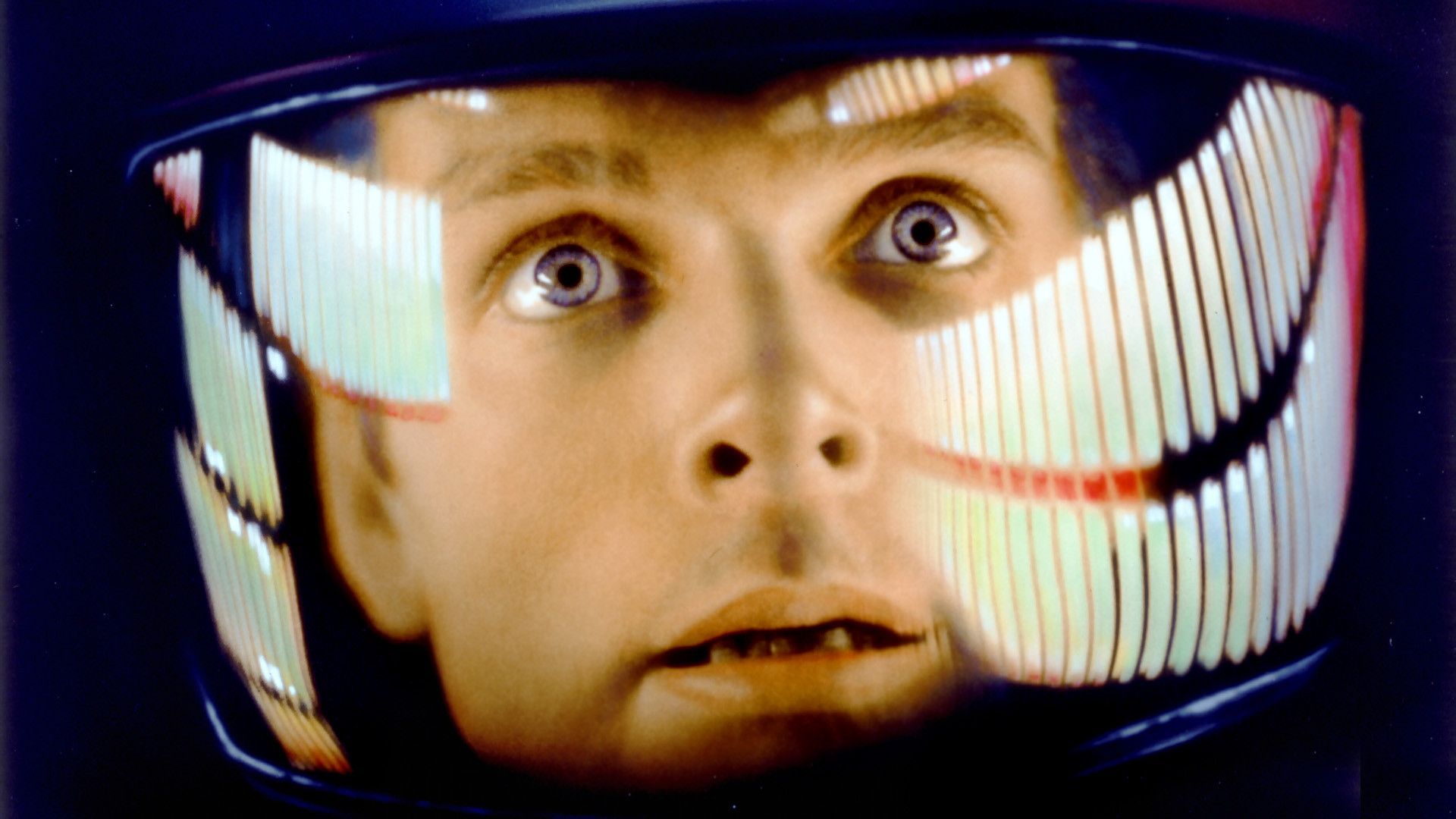
Science fiction is arguably the most influential genre in film history, consistently driving innovation and pushing creative boundaries. While many excellent sci-fi movies have been made – from grand adventures to small, thoughtful stories – one film truly stands out as the most important and definitive example of the genre.
As a huge movie fan, I truly believe Stanley Kubrick’s 2001: A Space Odyssey is one of the most ambitious and brilliantly made films ever. And even after nearly sixty years, it still takes my breath away as a sci-fi masterpiece. While the whole movie is full of unforgettable scenes, for me, the extended sequence where the spacecraft docks really solidifies its place as the greatest sci-fi film ever. It’s just that impactful in establishing the futuristic world of the film.
The Narrative Structure of 2001: A Space Odyssey Brilliantly Juxtaposes Historical Eras
What makes 2001: A Space Odyssey so groundbreaking is its deliberate pace and subtle storytelling. Rather than immediately overwhelming the audience with special effects and mystery, the film begins with a slow, meaningful introduction showing the very beginnings of humankind. It allows viewers to witness humanity’s evolution, from basic instincts to intelligent thought and creativity.
A famous and impactful editing technique appears in 2001: A Space Odyssey when the film jumps from the distant past to the future. The scene shows an early human discovering and using an animal bone – first as a weapon, then as a tool. This bone helps the human break things, hunt for food, and establish power over others.
The discovery of tools marks humanity’s earliest steps in evolution, and it’s central to the story and deeper meaning of 2001: A Space Odyssey. The film’s first proto-human throws a bone into the air, and we see it spinning against the sky. As the bone falls, the film immediately jumps forward in time to a future where the bone has been transformed into a spacecraft.
The film’s opening moments establish a powerful foundation, making a later edit particularly striking. This edit shifts the focus to humanity’s progress and development, becoming central to the rest of the movie. It’s not just a jump from the past to the future; it clearly shows viewers what the film is about and why it matters. This deliberate and unhurried choice prepares the audience for everything that follows, and introduces what many consider the greatest sequence in science fiction history.
2001: A Space Odyssey’s Docking Sequence Is The Finest 10 Minutes In Sci-Fi History
After that incredible jump from prehistoric times, the spaceship really grabs your attention, and that’s when Kubrick and his team launch into one of the most iconic sequences in cinema history. It’s a moment that just stays with you, and it’s brilliantly done – a real visual feast. As a film lover, it’s a sequence I keep coming back to, always noticing something new.
The docking sequence, presented without any spoken words, offers a stunning and detailed look at space travel and human progress. Set to the famous classical piece “The Blue Danube,” it beautifully and efficiently introduces viewers to this exciting new world, creating a sense of both wonder and precision.
When the film was first released, humans hadn’t even set foot on the moon, much less built a base in space. Because of this, the detailed and realistic space sequence had a much bigger impact on audiences, as space travel felt incredibly distant and futuristic at the time.
The scene felt like a pure dream, brought to life with incredible skill and attention to detail. Each shot of the docking process is visually stunning, and the deliberate pacing and careful editing create a truly captivating experience.
As a huge film fan, I’ve always seen 2001: A Space Odyssey as fundamentally a story about how things change and grow – evolution, basically. It’s not your typical sci-fi with silly robots and laser battles. It feels incredibly grounded and realistic, even when it gets really weird and explores mind-bending, almost otherworldly ideas. It’s as believable a vision of space travel as I’ve ever seen.
The final act of 2001: A Space Odyssey succeeds because of the meticulous detail and artistry in everything that came before. The film establishes a strong sense of realism – like the incredibly believable docking sequence – which prepares the audience to accept and connect with its more abstract and challenging ideas.
The Film’s Technical Abilities Match Its Spectacular Thematic Core
Many science fiction movies excel at either creating amazing visuals or telling a gripping story with well-developed worlds and characters you can connect with. It’s unusual to find a film that truly delivers on both fronts, but 2001: A Space Odyssey is a notable exception. Interestingly, the main character isn’t who you might expect. Dave, the astronaut, doesn’t appear until nearly an hour into the film and serves more as a symbol for the audience to relate to. He represents all of humanity – a stand-in for a grand idea that’s best understood on a personal level. He’s meant to be everyone and anyone.
What I love about 2001: A Space Odyssey is how it feels both incredibly vast and strangely intimate. It’s a really human story, even with all the mystery and sci-fi elements. Seeing Dave Bowman at the end feels so powerful, especially after everything we’ve witnessed throughout the film. The finale, with its echoes of the amazing docking scene, just hits differently because of who Dave represents – all of us.
The docking sequence is central to understanding the entire film 2001: A Space Odyssey, and it’s what makes the rest of the movie so effective. Technically, it’s a perfect combination of all the visual effects available then, and thematically, it provides the key to understanding the more puzzling second half of the film.
Since 2001: A Space Odyssey came out, many science fiction movies have tried to capture its sense of wonder and scale. However, few have come close to matching the impact of even a small part of it, like the famous docking scene. Often, filmmakers try to make scenes more engaging with explanations, dialogue, and special effects, but these additions can actually make the scene less effective.
The docking sequence in 2001: A Space Odyssey respects the viewer, inviting them to appreciate the visuals and think deeply about what they’re seeing. Many consider it the greatest ten minutes in science fiction film, and it’s likely to remain so for years to come.
Read More
- Clash Royale Best Boss Bandit Champion decks
- Vampire’s Fall 2 redeem codes and how to use them (June 2025)
- Mobile Legends January 2026 Leaks: Upcoming new skins, heroes, events and more
- World Eternal Online promo codes and how to use them (September 2025)
- Clash Royale Season 79 “Fire and Ice” January 2026 Update and Balance Changes
- Best Arena 9 Decks in Clast Royale
- Best Hero Card Decks in Clash Royale
- Clash Royale Furnace Evolution best decks guide
- FC Mobile 26: EA opens voting for its official Team of the Year (TOTY)
- Clash Royale Witch Evolution best decks guide
2026-01-09 01:10